


How demographic change is fracturing our politics.
Opinion | The White Rebellion (Published 2018)
Trump’s ability to project the petrifying fear young white men feel is a large part of the reason he is president today.

The Mississippi Plan of 1875
How white “redeemers” stole an election and why it matters before the 2026 midterms.
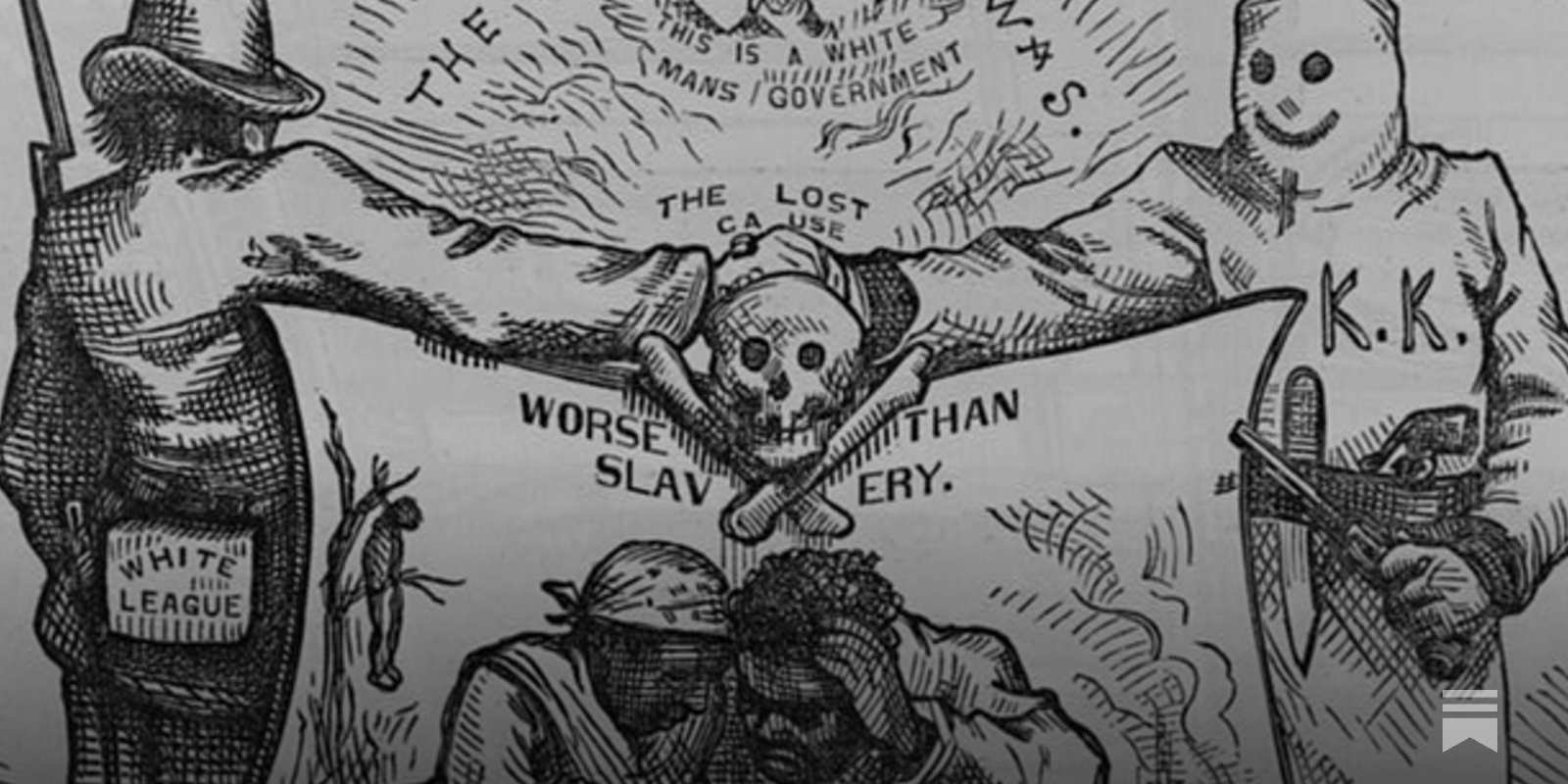
Race Science, Slavery, And The Unreality Of White Supremacy
The unreality that justifies white supremacy has shape shifted
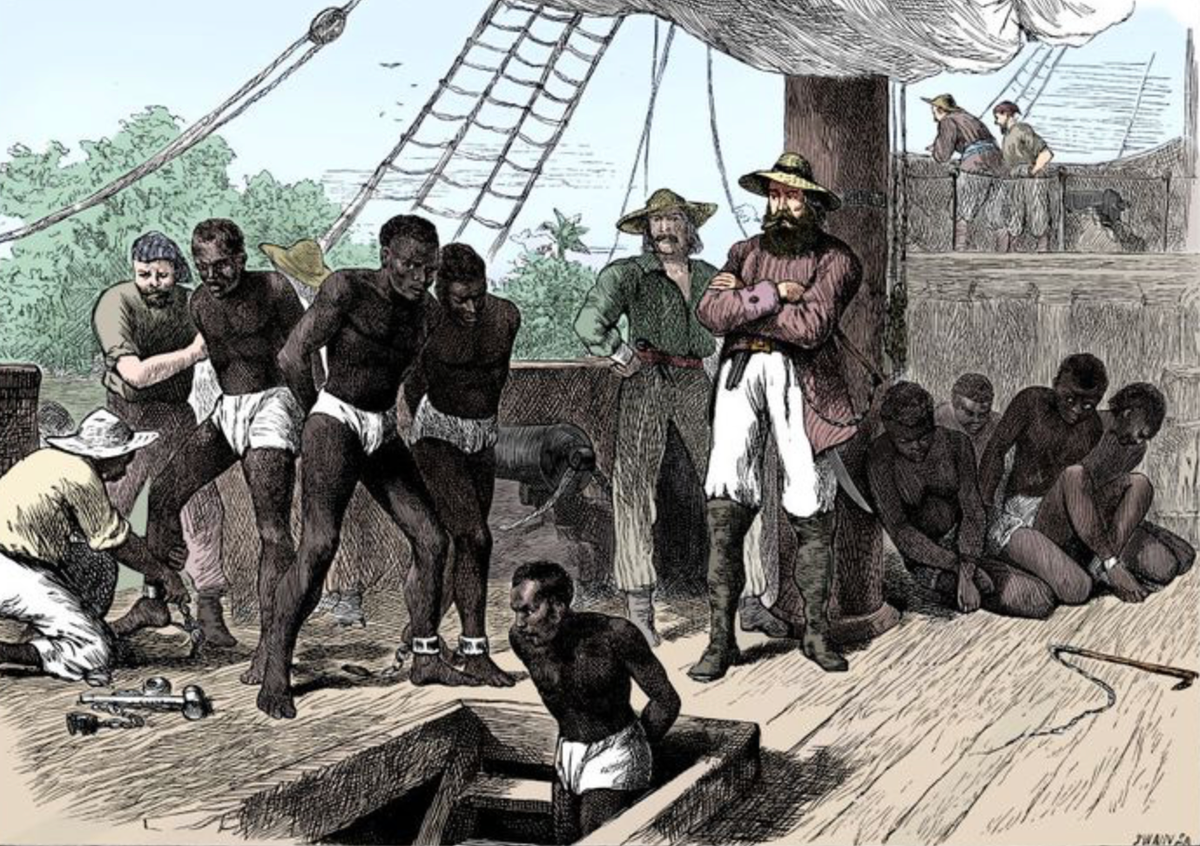
Opinion | The Policies of White Resentment (Published 2017)
Trump won on the politics of racial backlash. Now he’s following through with an agenda meant to stoke it further.

Between Threat and Reality: The National Association for the Advancement of Colored People and the Emergence of Armed Self-Defense in Clarksdale and Natchez, Mississippi, 1960-1965
Annelieke Dirks, Between Threat and Reality: The National Association for the Advancement of Colored People and the Emergence of Armed Self-Defense in Clarksdale and Natchez, Mississippi, 1960-1965, Journal for the Study of Radicalism, Vol. 1, No. 1 (Spring 2007), pp. 71-98
Voluptuous Disintegration: A Future History of Black Computational Thought
I really think that I know that Americans now are simply overwhelmed; like what is happening, what can we do. Everybody's tendency is understandably to try to take care of yourself; cover your back, make sure you have a house, a door for the key. I say that as understandable as that is, it seems to me that we cannot afford to divorce ourselves from what is happening in South Africa, for example, or for that matter, what is happening in West Germany, or Poland any more than the Reagan administration divides these issues. I think that the Reagan Administration and people in that; they see everything in global terms. From Brooklyn to Angola is not a big jump for them at all. I think that unless we, the people, begin to think in the same way, to make these connections, really on a visceral level, I feel for the survival of the species [Jordan 1981]
Masculist pushback: the threatened extinction of the great, white Judeo-Christian male
A political ideology rooted in fear is remaking the world in its own image and dragging us with it

Political polarization at its worst since the Civil War
Data scientists try to explain the U.S. government’s shifting ideologies over the past four decades.
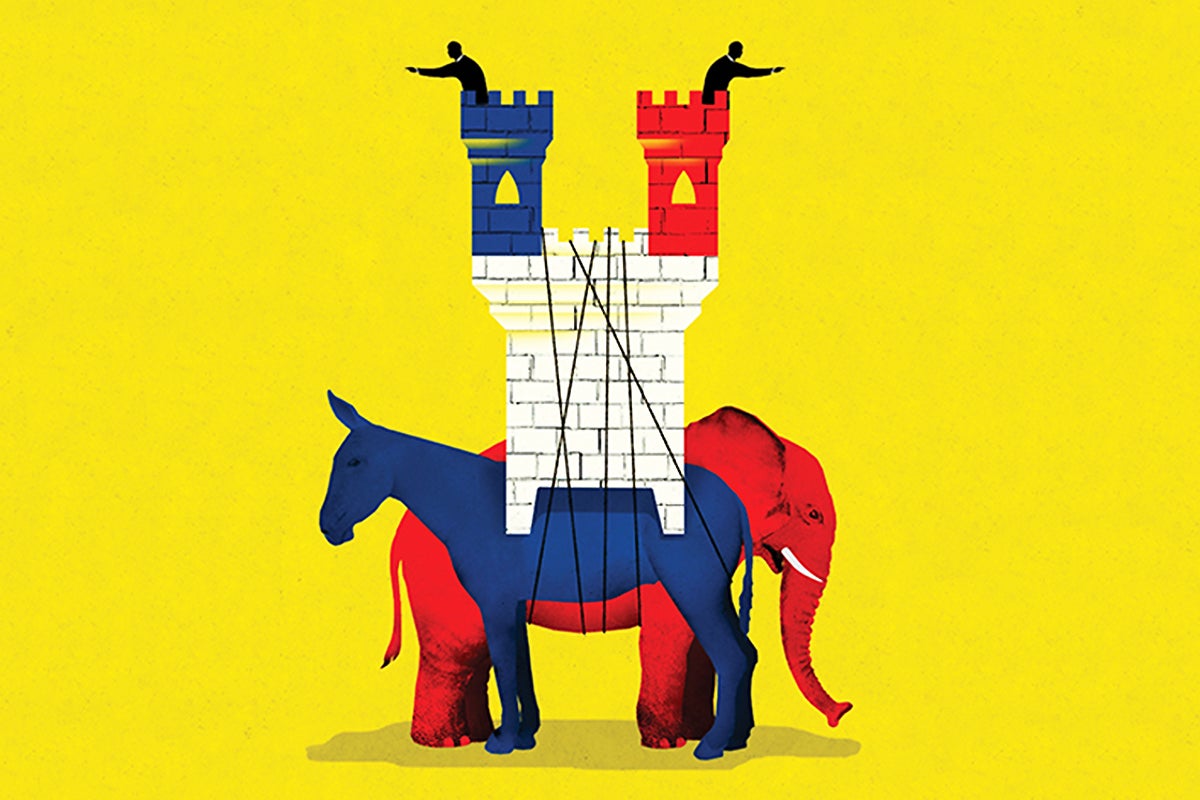
In Victoria, some fear One Nation's rhetoric is stirring ugly divides
Some Victorian multicultural leaders warn of a rise in acts of racism in the community, as the national debate on migration filters into the state election campaign.
Hyperpolitics: Extreme Politicization without Political Consequences
POLITICS AFTER THE END OF THE END OF HISTORYWhat happens when politics is everywhere, yet nothing seems to change? From the abandoned dance floors of Thatcher’s London to the mass mobilizations of Black Lives Matter, Anton Jäger traces how public life has become infused with protest, spectacle, and moral urgency — while the old infrastructure of parties, unions, and civic solidarity has been hollowed out.Hyperpolitics revisits the illusions of the “end of history” and dissects the strange energies that replaced them: viral outrage, endless culture wars, and the digital rush of causes that flare and vanish overnight. Jäger shows how the promises of post–Cold War liberalism gave way to a restless, unsteady public sphere where private passions overflow into politics but rarely build enduring power.Ranging from Guy Debord and Wolfgang Tillmans to Houellebecq’s disenchanted fictions, Hyperpolitics makes sense of a world in which collective action remains fragmented and the social fabric thinner than ever. For anyone trying to grasp why our age feels so charged yet so inconsequential, this book offers a vital map through the new contradictions of our hyperpolitical moment.
CRISES AVERTED. How A Few Past Societies Found Adaptive Reforms in the Face of Structural-Demographic Crises
Historians and social scientists have long been preoccupied with understanding and documenting periods of crisis. Such emphasis is only growing, and becoming more pressing, as the world continues to face a number of interrelated stressors in the form of irreversible climate change, major ecological shocks and disease outbreaks, eruptions of military violence, economic disruptions and deepening inequalities, political polarization and unrest, the rise of authoritarian and nationalist regimes. Crises in these domains are not new, but have been recurrent features of past societies. Although these periods have typically led to massive loss of life, the failure of critical institutions, and even complete societal collapse, there are instances in the historical record of societies managing to turn the tide of crisis even as violence and social turmoil grow. Here, we focus on four such cases of crises mitigated with structural reforms revealed from our previous historical analyses: early Republican Rome, mid-19th century England and Russia, USA during the the late 20th to early 21st centuries. Utilizing structural demographic theory as a lens to explore these cases, we seek to expose the pressures that built up leading to crisis and the early signs of violent confrontation revealed by these societies, as well as to examine the conditions and key decisions made in the midst of this unrest that allowed these societies to turn the tide and enact significant structural adaptations. Our findings have clear relevance to understanding and navigating similar crises in contemporary societies.
News for Black America - NewsOne
Breaking news for and about Black America: politics, original stories, diverse opinions, current events and their impact on Black lives.

We Will Shoot Back: Armed Resistance in the Mississippi…
"Ranging from Reconstruction to the Black Power period,…

The Color of Power — Oakland Public Library
The Color of Power — Douzet, Frédérick — <p></p><p> <i>The Color of Power </i>is a fascinating examination of the changing politics of race in Oakland, California. Oakland has been at the forefront of California’s multicultural changes for decades. Since the 1960s, the city has been a shining example of a fruitful liberal black-and-white political partnership and the successful incorporation of black politicians into the political landscape. But over the past forty years, the balance of power has changed as a consequence of dramatic demographic trends and economic circumstances. The city’s formerly dominant biracial political machine has been challenged by the demands of new multiracial interests.</p><p></p><p>The city, once governed by a succession of black mayors and majority black city councils, must now accommodate rapidly growing Asian and Latino communities. While the black-led coalition still relies on white progressive support, this alliance has weakened due to a shift in the progressives’ agenda and the voting habits of the black community, the rise of a Hispanic-Asian coalition, and a strong demographic decline of the African American population. With similar demographic changes taking place across the nation, Oakland’s experience provides insight in to the multiracial future of other American cities.</p><p></p><p> <i>The Color of Power</i> investigates Oakland’s contemporary racial politics with a detailed study of conflicts over issues like education, elections and political representation, and crime. Trained as a journalist, a political scientist, and a geographer, the author provides a unique perspective supported by numerous maps and extensive interviews.</p><p>Winner of awards from the French Society of Geography and the French National Academy of Sciences</p><br/>Trained as a journalist, a political scientist, and a geographer, the author provides a unique perspective supported by numerous maps and extensive interviews.<p>Winner of awards from the French Society of Geography and the French National Academy of Sciences</p>
Trump Voters Driven by Fear of Losing Status, Not Economic Anxiety, Study Finds (Published 2018)
A new study suggests that the white, Christian and male voters who supported Donald J. Trump were driven by concerns over losing their privilege.

