Doctored photos can easily create false memories. What happens when there’s fake video?
People are trying to claim real videos are deepfakes. The courts are not amused
The unleashing of powerful, generative AI on the public is raising concerns that as the technology becomes more prevalent, it will become easier to claim that anything is fake.
What AI can't fake about the real world (yet)
Commoditisation of AI, digital forgery and the end of trust: how we can fix it · giorgio patrini
TLDR; It is becoming widely evident that technology will enable total manipulation of video and audio content, as well as its digital creation from scratch. As a consequence, the meaning of evidence and trust will be critically challenged and pillars of the modern society such as information, justice and democracy will be shaken up and go through a period of crisis. Once tools for fabrication becomes a commodity, the effects will be more dramatic than the current phenomenon of fake news. In the tech circles the issue are discussed only at a philosophical level; no clear solution is known at present time. This post discusses pros and cons of two classes of potential solutions: digital signatures and learning based detection systems. We also ran a brief “weekend experiment” to measure the effectiveness of machine learning for detection of face manipulation, on the wave of deepfakes. In the limited scope of the experiment, our model is able to spot image manipulation that is imperceptible to the human eye.
AI Fakes Spread Disinformation. Is the Distrust They Create Even Worse?
Manipulated images undermine our shared reality—and the democracy built upon it.

The Verification Ladder: A Framework for Evaluating Video When You Can’t Tell What’s Real
"Is this real?" isn't a straightforward question anymore. What to ask instead, and why the source often matters more than the footage itself.

Our Shared Reality Will Self-Destruct in the Next 12 Months
What happens when you can't trust photos, videos, text, or the entire web?

Deepfake detection by human crowds, machines, and machine-informed crowds
Significance The recent emergence of deepfake videos raises theoretical and practical questions. Are humans or the leading machine learning model more capable of detecting algorithmic visual manipulations of videos? How should content moderation systems be designed to detect and flag video-based misinformation? We present data showing that ordinary humans perform in the range of the leading machine learning model on a large set of minimal context videos. While we find that a system integrating human and model predictions is more accurate than either humans or the model alone, we show inaccurate model predictions often lead humans to incorrectly update their responses. Finally, we demonstrate that specialized face processing and the ability to consider context may specially equip humans for deepfake detection. , The recent emergence of machine-manipulated media raises an important societal question: How can we know whether a video that we watch is real or fake? In two online studies with 15,016 participants, we present authentic videos and deepfakes and ask participants to identify which is which. We compare the performance of ordinary human observers with the leading computer vision deepfake detection model and find them similarly accurate, while making different kinds of mistakes. Together, participants with access to the model’s prediction are more accurate than either alone, but inaccurate model predictions often decrease participants’ accuracy. To probe the relative strengths and weaknesses of humans and machines as detectors of deepfakes, we examine human and machine performance across video-level features, and we evaluate the impact of preregistered randomized interventions on deepfake detection. We find that manipulations designed to disrupt visual processing of faces hinder human participants’ performance while mostly not affecting the model’s performance, suggesting a role for specialized cognitive capacities in explaining human deepfake detection performance.
AI-Assisted Fake Porn Is Here and We’re All Fucked
Someone used an algorithm to paste the face of 'Wonder Woman' star Gal Gadot onto a porn video, and the implications are terrifying.

Deep Fakes: A Looming Challenge for Privacy, Democracy, and National Security — California Law Review
Harmful lies are nothing new. But the ability to distort reality has taken an exponential leap forward with “deep fake” technology. This capability makes it possible to create audio and video of real people saying and doing things they never said or did. Machine learning techniques are escalating th
Bringing Photos to Life: Gaussian Splatting with Jiggle Physics in VisionOS
What if your photos could move? Not just play back as videos, but actually exist in space around you—touchable, interactive, alive with physics?

How to tell if an image is AI-generated
Scammers are using AI-generated images to make fake stories more convincing. Here's how to separate real from fake.

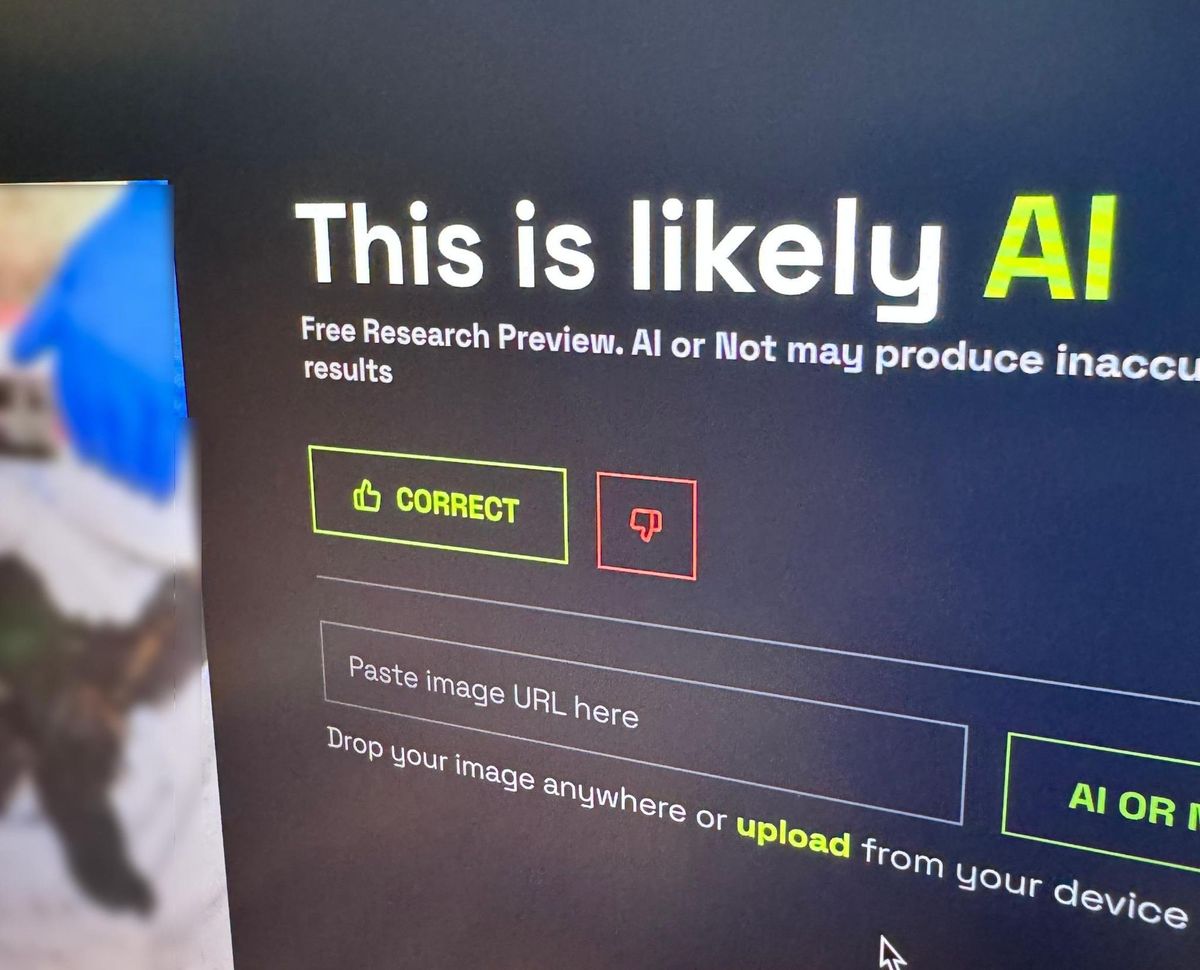
AI Images Detectors Are Being Used to Discredit the Real Horrors of War
Online AI image detecting tools that may or may not work are labeling real photographs from the war in Israel and Palestine as fake, creating what a world leading expert called a “second level of disinformation.”
Russian Bots Manipulate View Counts on Fake Videos Ahead of US Midterms
State-backed Matryoshka campaign targeting Democrats inflates view counts of fabricated stories, creating illusion of popularity.