


A top tech exec thinks we need to slow down the internet a bit. He’s right.
Should we design for iffy internet?
Around 97% of US households have internet access, but bandwidth and latency are likely worse than you expect.
tech isn’t the future it’s just capitalism faster
responding with slowness in relations

Seven Rules For Internet CEOs To Avoid Enshittification
It seems that we’ve had a rash of formerly loved internet services going down the enshittification curve. As coined (brilliantly) by Cory Doctorow, enshittification is the process by which a compan…

About Us
Around the world, building the internet’s operating system—and a better way to work. In a world of tech companies fighting for growth at any cost, imagine one that gives away its most successful pr…


Regretful Accelerationism
The Internet removed constraints from the analog world, and AI is finishing the job. That this may be the final blow for the Internet as a source for truth may ultimately be for the best.

How web bloat impacts users with slow devices
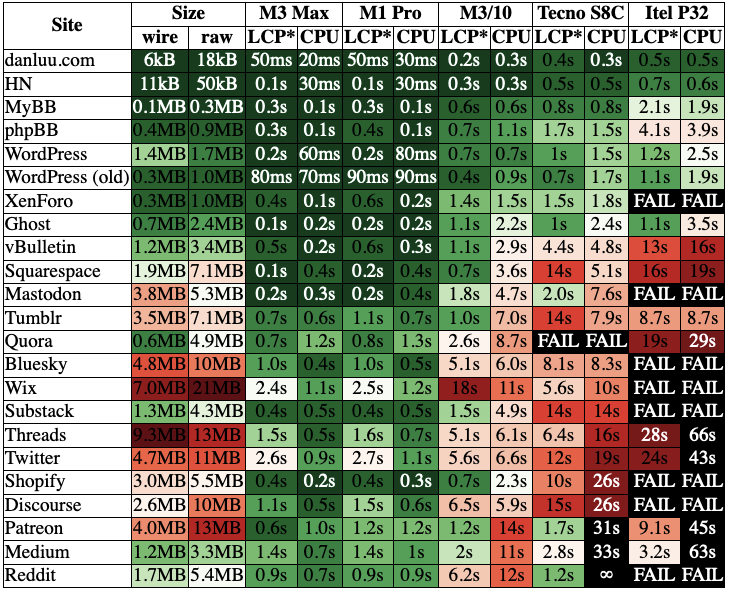
In 2017, we looked at how web bloat affects users with slow connections. Even in the U.S., many users didn't have broadband speeds, making much of the web difficult to use. It's still the case that many users don't have broadband speeds, both inside and outside of the U.S. and that much of the modern web isn't usable for people with slow internet, but the exponential increase in bandwidth (Nielsen suggests this is 50% per year for high-end connections) has outpaced web bloat for typical sites, making this less of a problem than it was in 2017, although it's still a serious problem for people with poor connections.
The one and future internet
The internet has become inextricably entangled into our economies, cultural and social lives. We stand on the brink of the next technological revolution, in which the internet of things transforms ...

Council Post: How To Apply First Principles Thinking To Make The Internet Better
Is the internet ready for an overhaul through first principles thinking?

How One 1990s Browser Decision Created Big Tech’s Data Monopolies (And How We Might Finally Fix It)
There’s a fundamental architectural flaw in how the internet works that most people have never heard of, but it explains nearly every frustration you have with modern technology. Why your pho…
It’s Time to Dismantle the Technopoly
As technology accelerates, we need to stop accepting the bad consequences along with the good ones.

Competitive Compatibility: Let's Fix the Internet, Not the Tech Giants
Tech's market concentration—summed up brilliantly by Tom Eastman, a New Zealand software developer, as the transformation of the Internet into "a group of five websites, each consisting of screenshots of text from the other four"—has aroused concern from regulators around the world.

Slow down to speed up: so much has changed in 6 months’ time
An overview of what’s changed in engineering during the last six months, how various tech companies are changing how they work, and why slowing down could be a sensible strategy

Internet for the People: The Fight for Our Digital Future
"For all the informational convenience the internet offers, it is deeply flawed. How can it be improved? Writer Ben Tarnoff proposes one possibility in this intriguing book, which urges the development of 'a public lane on the information superhighway.' It's worth checking out for yourself." – Seth MacFarlane Why is the internet so broken, and what could ever possibly fix it? In Internet for the People, leading tech writer Ben Tarnoff offers an answer. The internet is broken, he argues, because it is owned by private firms and run for profit. Google annihilates your privacy and Facebook amplifies right-wing propaganda because it is profitable to do so. But the internet wasn't always like this—it had to be remade for the purposes of profit maximization, through a years-long process of privatization that turned a small research network into a powerhouse of global capitalism. Tarnoff tells the story of the privatization that made the modern internet, and which set in motion the crises that consume it today. The solution to those crises is straightforward: deprivatize the internet. Deprivatization aims at creating an internet where people, and not profit, rule. It calls for shrinking the space of the market and diminishing the power of the profit motive. It calls for abolishing the walled gardens of Google, Facebook, and the other giants that dominate our digital lives and developing publicly and cooperatively owned alternatives that encode real democratic control. To build a better internet, we need to change how it is owned and organized. Not with an eye towards making markets work better, but towards making them less dominant. Not in order to create a more competitive or more rule-bound version of privatization, but to overturn it. Otherwise, a small number of executives and investors will continue to make choices on everyone’s behalf, and these choices will remain tightly bound by the demands of the market. It's time to demand an internet by, and for, the people now.