


“The question you have to ask yourself is: Why are there so many people in our society who don’t have a lot to lose?” says sociologist Darnell Hunt.
The tragedy of the commons is a false and dangerous myth | Aeon Essays
Far from being profoundly destructive, we humans have deep capacities for sharing resources with generosity and foresight
It's never been easier to keep waste from landfills, but are you doing your part? | CBC News
'You have to find your why and for me it started out with the environment and I needed to feel like I was doing my part,' says zero waste blogger Katelin Leblond. 'For some people it's the financial aspect, some people it's the minimalist aspect but I have yet to meet a person who has adopted any sort of level of zero waste that has regretted it.'

Craigslist, Wikipedia, and the Abundance Economy
You’ve heard it before. Maybe you’ve even said it. “There’s no such thing as a free lunch.” “You can’t get something for nothing.” “Somebody has to pay.” People recite these sayings with confidence, as though they were quoting Newton’s Laws of Motion...

The Joy of Becoming Worthless…except to each other — Douglas Rushkoff
My last piece, The Intentional Collapse, seems to have agitated a few people. I know it came off a bit dark. I talked about how the Uber wealthy believe the world as we know it is ending and that there won’t be enough essential resources to go around, so they need to take control of as much money and stuff and land as possible in order to position themselves for the end of days.
The Fediverse of Things
One of the most frustrating things in modern technology is the effort spent trying to artificially restrict abundance. Take, for example, this tale from museum-worker Aaron Cope: I was out with a friend who worked for Twitter and I asked them whether it would be possible for the museum to “create 200,000 Twitter accounts, one for each object in the Cooper Hewitt’s collection”. My friend looked a…

Tend the System. Know the System.
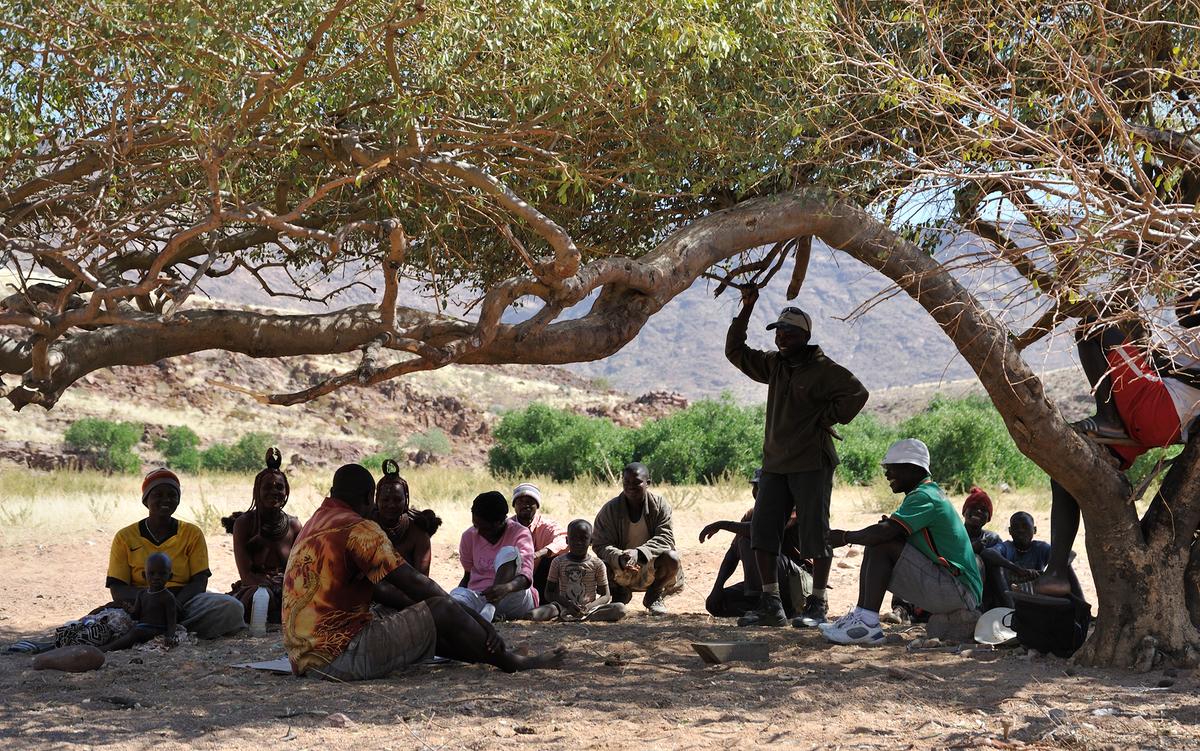
They didn't wander. That's the first thing to understand. The popular image of the hunter-gatherer is someone moving through an indifferent landscape, taking what they find. It's not wrong about the movement. It's wrong about the indifference — theirs and the land's. What the archaeological and ecological record increasingly shows is
Has America Wasted Its Wealth?
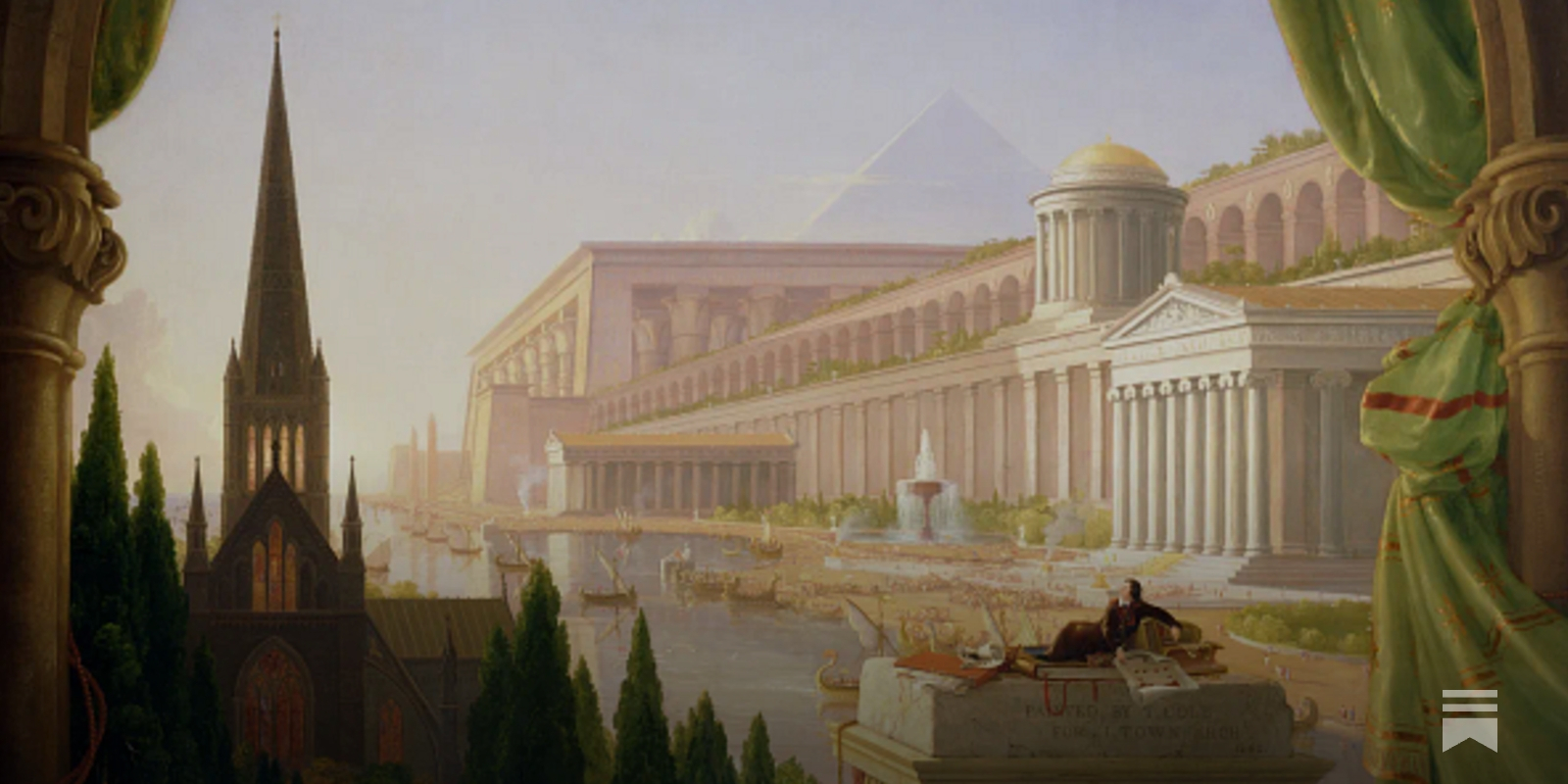
On Modern Philanthropy, And Why We Don't Have A Modern Florence
Why is everyone so busy?
Time poverty is a problem partly of perception and partly of distribution

A Relentless Widening of Disparity in Wealth (Published 2014)
The economic forces concentrating more and more wealth into the hands of the fortunate few are almost sure to prevail for a long time, according to a new book by the economist Thomas Piketty.

The Psychology of Inequality
Researchers find that much of the damage done by being poor comes from feeling poor.

Why The Rich Think The Poor Are Lazy
Whale Hunting
Discovering the hidden stories of how the world really works — by Project Brazen.
Revisiting evidence for an attentional tunneling effect caused by scarcity
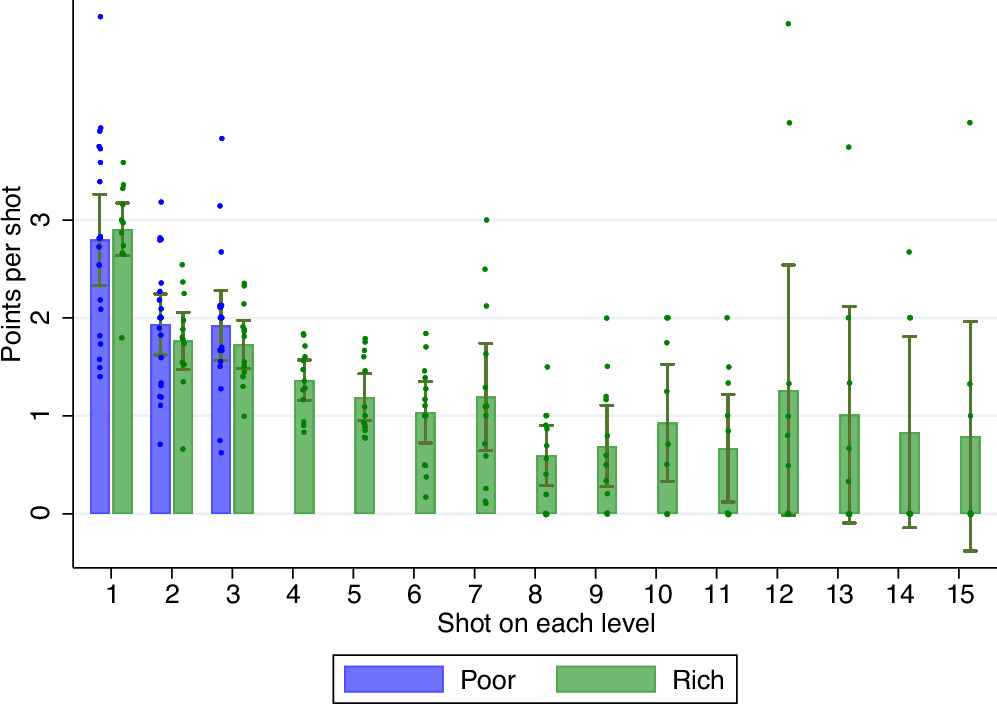
People in poverty sometimes behave in ways that perpetuate their socioeconomic condition. By one influential account, these behaviors arise from psychological effects of scarcity on attention that create greater focus toward managing scarce resources, at the cost of attention to potentially-beneficial information outside of this ‘tunnel’. Although the tunneling hypothesis has been widely discussed in academia and beyond, its direct empirical support derives primarily from a landmark study by Shah et al. (2012) in which participants played games while their access to resources was experimentally manipulated, rendering participants either ‘rich’ or ‘poor’. Here, we present new analyses that contest the original interpretation of the data, showing that the behavioral differences between ‘rich’ and ‘poor’ participants are more parsimoniously explained by the game’s structure than by an attentional shift caused by the scarcity manipulation—a conclusion we substantiate through an additional experiment. We contextualize our findings within the literature on scarcity and attention, and highlight the need for greater clarity regarding the tunneling hypothesis itself.
Food, foragers, and folklore: the role of narrative in human subsistence
Narrative is a species-typical, reliably developing, complex cognitive process whose design is unlikely to have emerged by chance. Moreover, the folklore record indicates that narrative content is consistent across widely divergent cultures. I have argued elsewhere that a storyteller may use narrative to manipulate an audience's representations of the social and/or physical environment to serve his or her own fitness ends. However, my subsequent research suggests that such manipulation results from a broader selection pressure which narrative effectively alleviates: information acquisition. By substituting verbal representations for potentially costly first-hand experience, narrative enables an individual to safely and efficiently acquire information pertinent to the pursuit of fitness in local habitats. If this hypothesis is true, narrative should be rich with information useful to the pursuit of fitness. One class of information integral to the accomplishment of this task is foraging knowledge. In this paper, then, I present evidence that foraging peoples use narrative to transmit subsistence information: specifically, I demonstrate how various narrative devices (e.g., setting, description, mimicry, anthropomorphism) are used to communicate foraging knowledge.
Unstacking the deck, by Nick Cassella
A review of Dream Hoarders - It's comforting to blame the 1 percent for economic inequity in the US. But surprise — the enemy is us.

Dami Lee on Instagram: "What holds up a society? This art piece in Korea stopped me cold, and I haven’t stopped thinking about it since. 180,000 tiny figures. Arms raised. A glass floor you’re meant to walk on. The artist is Do Ho Suh, and the question he’s asking feels more urgent than ever right now: is it the collective that holds everything up, or the individual? Because both stories have produced extraordinary things. Korea’s GDP per capita in the 1960s was lower than Sudan’s. Sixty years later, it’s the twelfth largest economy in the world. Built on coordination, sacrifice, twelve-hour days, families who gave everything for the next generation. And then there’s the Western story. The entrepreneur. The innovator. The one who puts a car in space but somehow can’t build affordable housing or a high-speed rail. As the world order gets reshaped in real time, I keep coming back to this floor. Who’s actually holding it up? And does the person walking on it ever think to look down? Tell me what you think in the comments. #DoHoSuh #KoreaArt #ContemporaryArt #PublicArt #SeoulArt"
14K likes, 59 comments - damileearch on June 11, 2026: "What holds up a society? This art piece in Korea stopped me cold, and I haven’t stopped thinking about it since. 180,000 tiny figures. Arms raised. A glass floor you’re meant to walk on. The artist is Do Ho Suh, and the question he’s asking feels more urgent than ever right now: is it the collective that holds everything up, or the individual? Because both stories have produced extraordinary things. Korea’s GDP per capita in the 1960s was lower than Sudan’s. Sixty years later, it’s the twelfth largest economy in the world. Built on coordination, sacrifice, twelve-hour days, families who gave everything for the next generation. And then there’s the Western story. The entrepreneur. The innovator. The one who puts a car in space but somehow can’t build affordable housing or a high-speed rail. As the world order gets reshaped in real time, I keep coming back to this floor. Who’s actually holding it up? And does the person walking on it ever think to look down? Tell me what you think in the comments. #DoHoSuh #KoreaArt #ContemporaryArt #PublicArt #SeoulArt".
