


Digital distractions such as social media and smartphones wreak havoc on our attention spans. Could they also be making us less ethical?
Moral Deskilling and Upskilling in a New Machine Age: Reflections on the Ambiguous Future of Character
This paper explores the ambiguous impact of new information and communications technologies (ICTs) on the cultivation of moral skills in human beings. Just as twentieth century advances in machine automation resulted in the economic devaluation of practical knowledge and skillsets historically cultivated by machinists, artisans, and other highly trained workers (Braverman 1974), while also driving the cultivation of new skills in a variety of engineering and white collar occupations, ICTs are also recognized as potential causes of a complex pattern of economic deskilling, reskilling, and upskilling. In this paper, I adapt the conceptual apparatus of sociological debates over economic deskilling to illuminate a different potential for technological deskilling/upskilling, namely the ability of ICTs to contribute to the moral deskilling of human users, a potential that exists alongside rich but currently underrealized possibilities for moral reskilling and/or upskilling. I flesh out this general hypothesis by means of examples involving automated weapons technology, new media practices, and social robotics. I conclude that since moral skills are essential prerequisites for the effective development of practical wisdom and virtuous character, and since market and cultural forces are not presently aligned to bring about the more salutary of the ambiguous potentials presented here, the future shape of these developments warrants our close attention—and perhaps active intervention.
Your smartphone is making you stupid, antisocial and unhealthy. So why can’t you put it down?
A decade ago, smart devices promised to change the way we think and interact, and they have – but not by making us smarter. Eric Andrew-Gee explores the growing body of scientific evidence that digital distraction is damaging our minds
Industry efforts aren’t about to disrupt tech’s ethics problem
But the Ethical OS toolkit starts the conversation

The internet is making me sick
The web has turned into a clusterfuck of moral performativity.

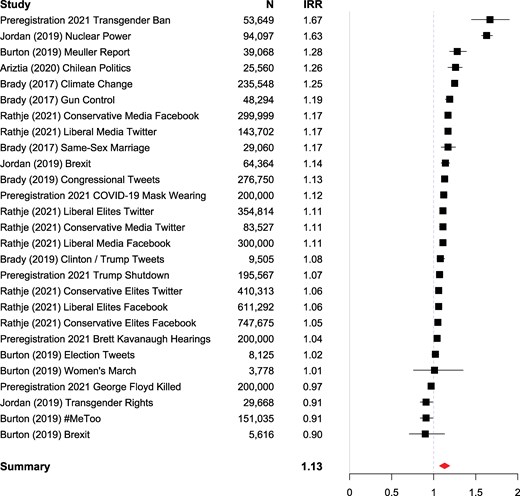
Estimating the effect size of moral contagion in online networks: A pre-registered replication and meta-analysis
Abstract. Over 5 billion people now use social media platforms. As our social lives become increasingly entangled with online social networks, it is import
Opinion | Who Will Teach Silicon Valley to Be Ethical? (Published 2018)
Some think chief ethics officers could help technology companies navigate political and social questions.

Tech ethics won’t save us
This week, both Apple and Google have come under fire for continuing to allow sales of a Saudi government app which will enable men to…

Large-scale harms to AI moral patients: a typology of risk factors
If AI moral patients are mass-produced, then then they will face risks of large-scale harms. This post outlines some factors that could contribute to such risks.

ETCH
We believe technology should serve humanity and that human creativity is essential and irreplaceable. We support the ethical development and deployment of AI by funding protective technologies and translating research into real-world tools for creative communities.

Pivot to People: It’s Time to Build the New Economy
Today’s calls for ethical, humane, responsible, regulated and beneficial technology, compounded with venture capital’s virtue signaling in…
Social Networking and Ethics
In the 21st century, new media technologies for socialnetworking such as Facebook, Twitter, WhatsApp and YouTube began totransform the social, political and informational practices ofindividuals and institutions across the globe, inviting philosophicalresponses from the community of applied ethicists and philosophers oftechnology. While scholarly responses to social media continue to bechallenged by the rapidly evolving nature of these technologies, theurgent need for attention to the social networking phenomenon isunderscored by the fact that it has profoundly reshaped how many humanbeings initiate and/or maintain virtually every type of ethicallysignificant social bond or role: friend-to-friend, parent-to-child,co-worker-to co-worker, employer-to-employee, teacher-to-student,neighbor-to-neighbor, seller-to-buyer, doctor-to-patient, andvoter-to-voter, to offer just a partial list. Nor are the ethicalimplications of these technologies strictly interpersonal, as it hasbecome evident that social networking services (hereafter referred toas SNS) and other new digital media have profound implications fordemocracy, public institutions and the rule of law. The complex web ofinteractions between SNS developers and users, and their online andoffline communities, corporations and governments—along with thediverse and sometimes conflicting motives and interests of thesevarious stakeholders—will continue to require rigorous ethicalanalysis for decades to come.
'Our minds can be hijacked': the tech insiders who fear a smartphone dystopia
The Google, Apple and Facebook workers who helped make technology so addictive are disconnecting themselves from the internet. Paul Lewis reports on the Silicon Valley refuseniks who worry the race for human attention has created a world of perpetual distraction that could ultimately end in disaster

Big Tech tried to get young people addicted. Now we’re fighting back
Two seismic court decisions in the US have intervened where legislators have failed to defend social media users from exploitation, writes campaigner Zamaan Qureshi

The future of humanity depends on design ethics, says Tim Wu - Fast Company
The preeminent media scholar and author of The Attention Merchants shares insights on how the design industry can better serve users--and humanity.
AI language model rivals expert ethicist in perceived moral expertise
People view AI as possessing expertise across various fields, but the perceived quality of AI-generated moral expertise remains uncertain. Recent work suggests that large language models (LLMs) perform well on tasks designed to assess moral alignment, reflecting moral judgments with relatively high accuracy. As LLMs are increasingly employed in decision-making roles, there is a growing expectation for them to offer not just aligned judgments but also demonstrate sound moral reasoning. Here, we advance work on the Moral Turing Test and find that Americans rate ethical advice from GPT-4o as slightly more moral, trustworthy, thoughtful, and correct than that of the popular New York Times advice column, The Ethicist. Participants perceived GPT models as surpassing both a representative sample of Americans and a renowned ethicist in delivering moral justifications and advice, suggesting that people may increasingly view LLM outputs as viable sources of moral expertise. This work suggests that people might see LLMs as valuable complements to human expertise in moral guidance and decision-making. It also underscores the importance of carefully programming ethical guidelines in LLMs, considering their potential to influence users’ moral reasoning.
