

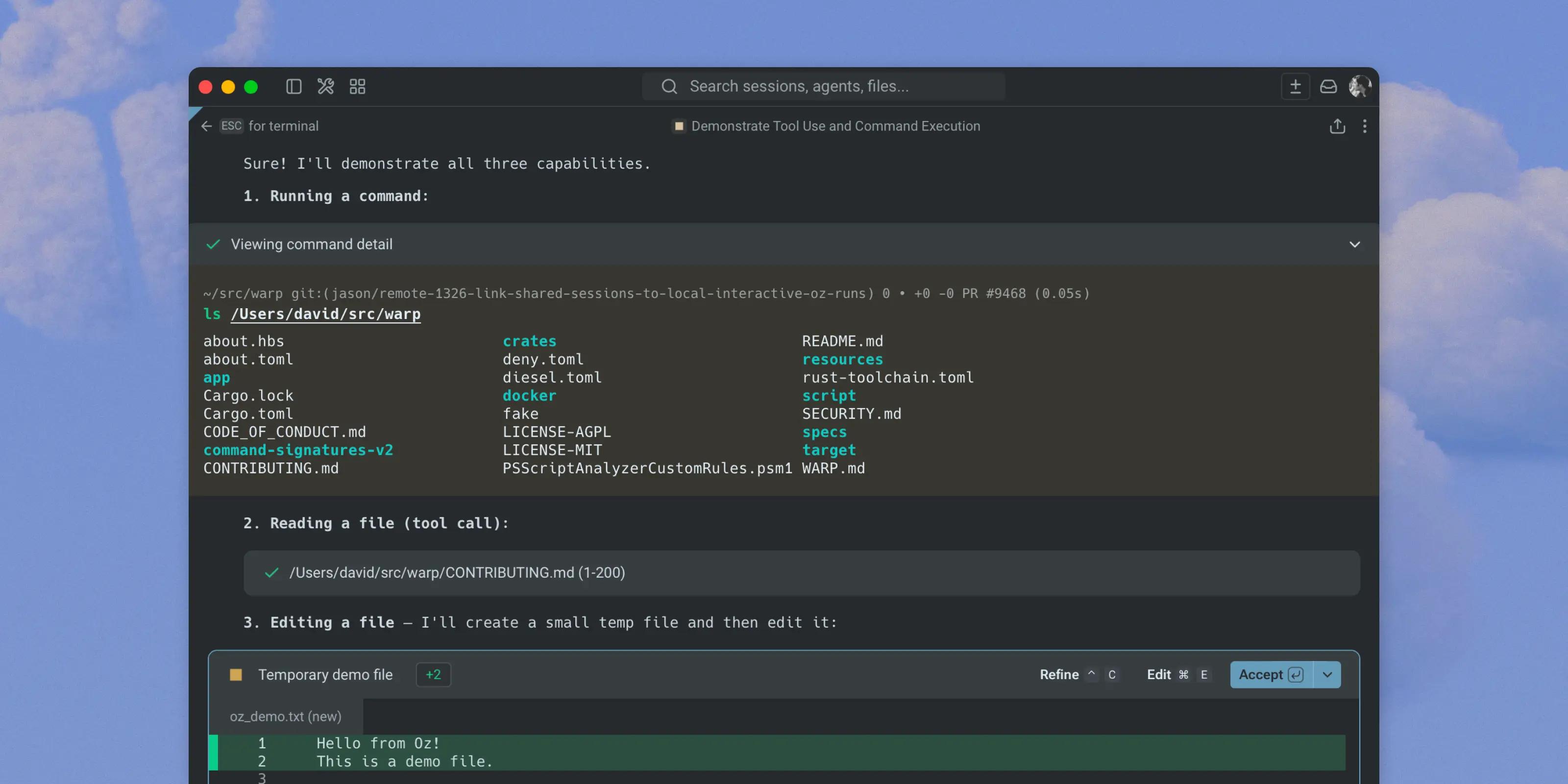
Warp has come a long way since it initially set out to modernize the terminal. In the screenshot above, an agent is working through a plan alongside a developer's own shell commands — running its own commands, reasoning, proposing a diff — all in the same scroll stream. Five years ago, none of that would have had a place in Warp; today it's a core part of how people use it.
warp/CONTRIBUTING.md at master · warpdotdev/warp
Warp is an agentic development environment, born out of the terminal. - warpdotdev/warp
shepherd-agents/shepherd
A runtime substrate that turns an agent's execution into a reversible, Git-like trace, so meta-agents can observe, fork, replay, and revert any run. Couples agent and environments in a copy-on-write fork ~5x faster than docker commit, with ~95% KV-cache reuse on replay. Framework built for meta-agents to supervise, optimize, and train other agents
Warp on Twitter / X
To make this possible, Oz-managed agents do the heavy lifting (coding, planning, testing). This lets community members focus on ideas, direction, and verification.We believe this workflow will let us build a better Warp, faster.https://t.co/bsVk3DE61V 🔖 pic.twitter.com/KqvR6jkZ40— Warp (@warpdotdev) April 28, 2026
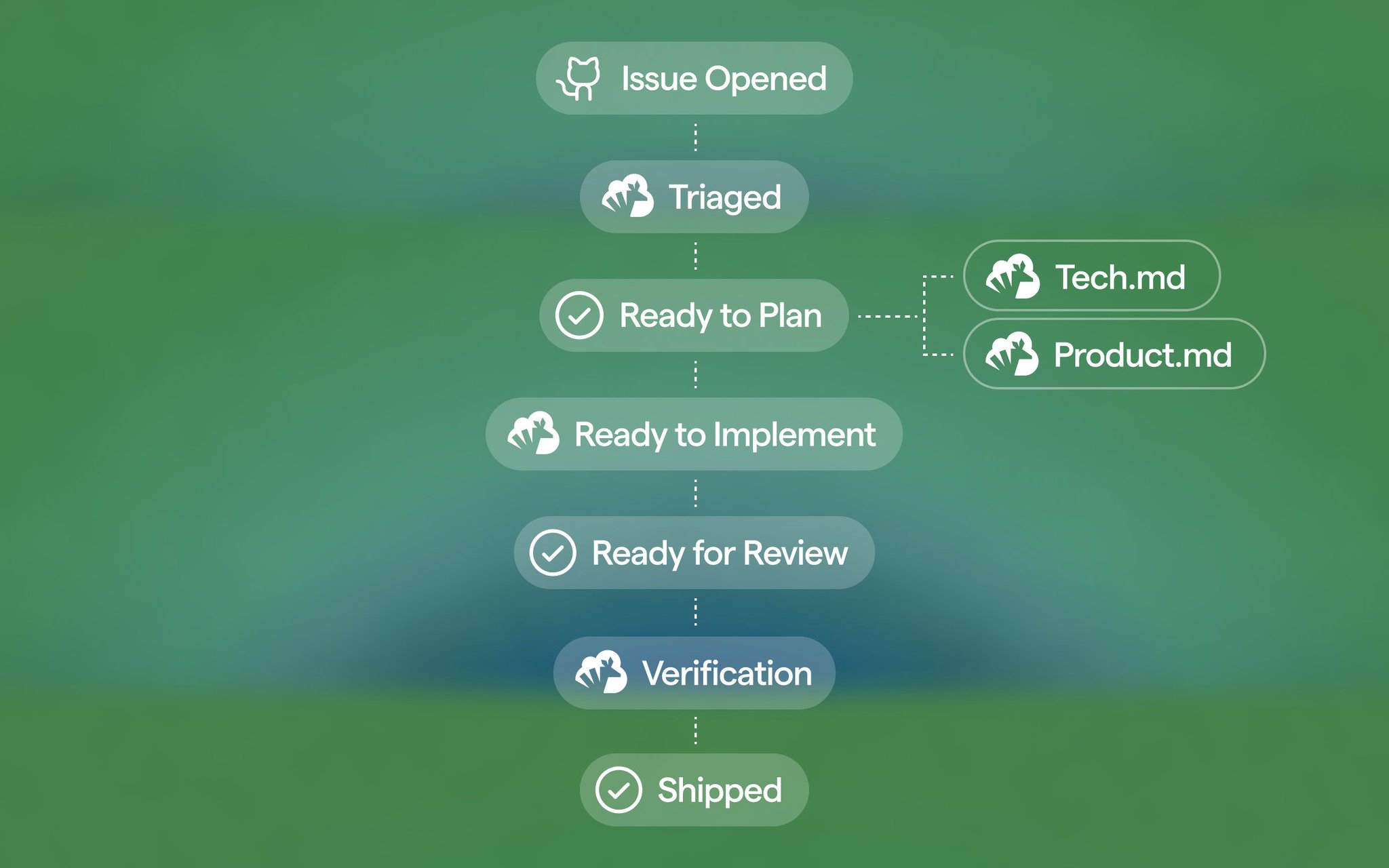
Warp — Open Infrastructure for Cloud Software Factories
Build your software factory on Warp: factories as code, any model or harness, with evals, benchmarks, and self-improvement built in.
Writing code is cheap now - Agentic Engineering Patterns
Writing code is cheap now - Agentic Engineering Patterns
WarpBuild - 2x faster, 50% cheaper Github Actions runners
WarpBuild is a drop in replacement for Github runners that are 2x faster and 50% cheaper.

Joshua Gu on Twitter / X
Recent agentic systems (Claude Code, Codex, RLM, etc.) push context out of the prompt and into the environment (e.g., as files). This helps them maintain long-term knowledge about their goals and functionality.🚨 While this is a good idea, we show a surprising result: systems… pic.twitter.com/XHFVaDcr4l— Joshua Gu (@astrogu_) May 20, 2026

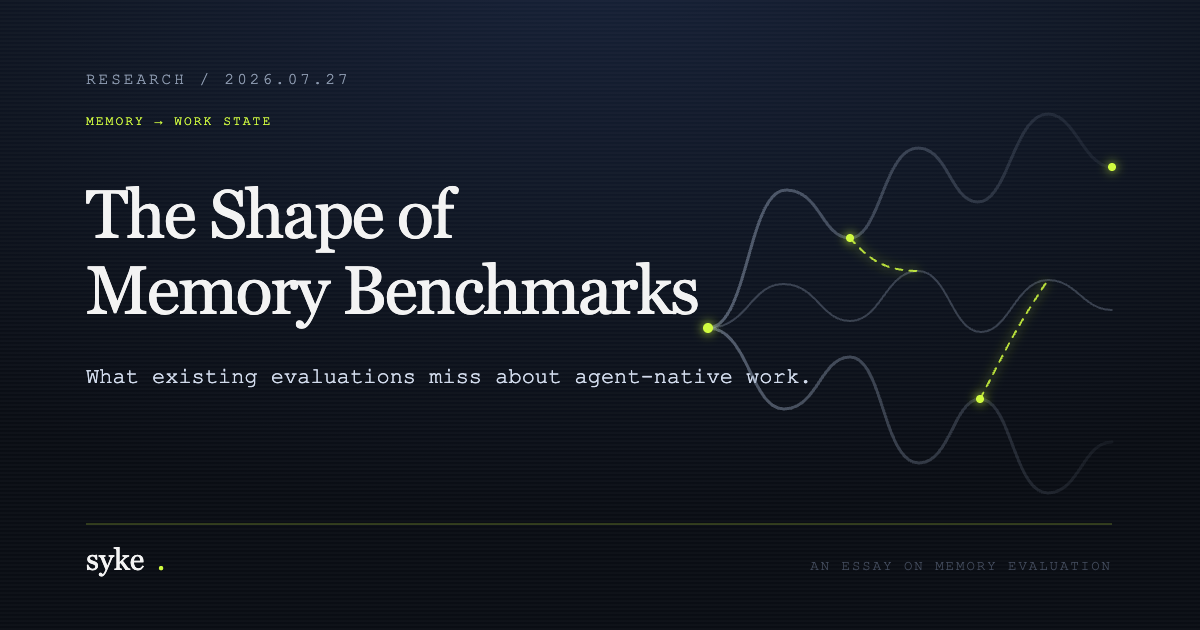
The Shape of Memory Benchmarks
Why the familiar memory benchmarks are outdated, how the agent-native work looks today and why design your own.
morluto/rea
Reverse engineer anything with agents, from app behavior down to native binaries.
The Agent Harness
A specification for agent behavior that LLM frameworks leave undefined: error handling, context management, tool execution, and state transitions.
Agent READMEs: An Empirical Study of Context Files for Agentic Coding
Agentic coding tools receive goals written in natural language, break them down into specific tasks, and write or execute code with minimal human intervention. Central to this process are agent context files (e.g., AGENTS.md and CLAUDE.md) that provide persistent, project-level instructions. In this paper, we conduct the first large-scale empirical study of 2,303 agent context files from 1,925 repositories to characterize their structure, maintenance, and content. We find that these files are not static documentation but complex, difficultto-read artifacts that evolve like configuration code through frequent, small additions. Our content analysis of 16 instruction types shows that developers prioritize functional context, such as test procedures (75.9%), implementation details (70.8%), and architecture (68.1%). We also identify a significant gap: non-functional requirements such as security (14.8%) and performance (14.5%) are rarely specified. These findings indicate that while developers use context files to make agents functional, they provide few guardrails to ensure that agent-written code is secure or performant, highlighting the need for improved tools and practices.

First impressions: Delta - Cameron's writing
A look at Zed's new agent development tool.
ndrstnd: understand what your coding agent actually did
A local comprehension workspace that turns agent-produced branch diffs into an evidence-linked story.