


A new effort using only openly licensed data may have implications on thorny policy disputes around copyright and AI
AI Firms Say They Can't Respect Copyright. But A Nonprofit's Researchers Just Built a Copyright-Respecting Dataset - Slashdot
Is copyrighted material a requirement for training AI? asks the Washington Post. That's what top AI companies are arguing, and "Few AI developers have tried the more ethical route — until now. "A group of more than two dozen AI researchers have found that they could build a massive eight-t...

Inside the Copyright Office’s Report, Copyright and Artificial Intelligence, Part 2: Copyrightability | Copyright
On January 29, 2025, the U.S. Copyright Office released Part 2 of its Report, Copyright and Artificial Intelligence. The Report addresses the legal and policy issues related to artificial intelligence (AI) and copyright, as outlined in the Office’s August 2023 notice of inquiry (NOI). Part 2: Copyrightability addresses the copyrightability of outputs created using generative …

Are AI Outputs Covered by Copyright Laws?
Understanding why your AI prompts are not enough to qualify for copyright protection.
Firms like Meta and A16z admit having to pay billions for training data would ruin their generative-AI plans as they fight new copyright rules
Meta, Google, Microsoft, and Andreessen Horowitz are trying to keep AI developers from having to pay for copyrighted material used in AI training.
Creative commons licenses and copyright may not stop academic work being used to train AI - Impact of Social Sciences
Considering the legal standing of creative commons licenses & copyright, Martin Eve suggests legal protections for academic work are unlikely to be forthcoming.

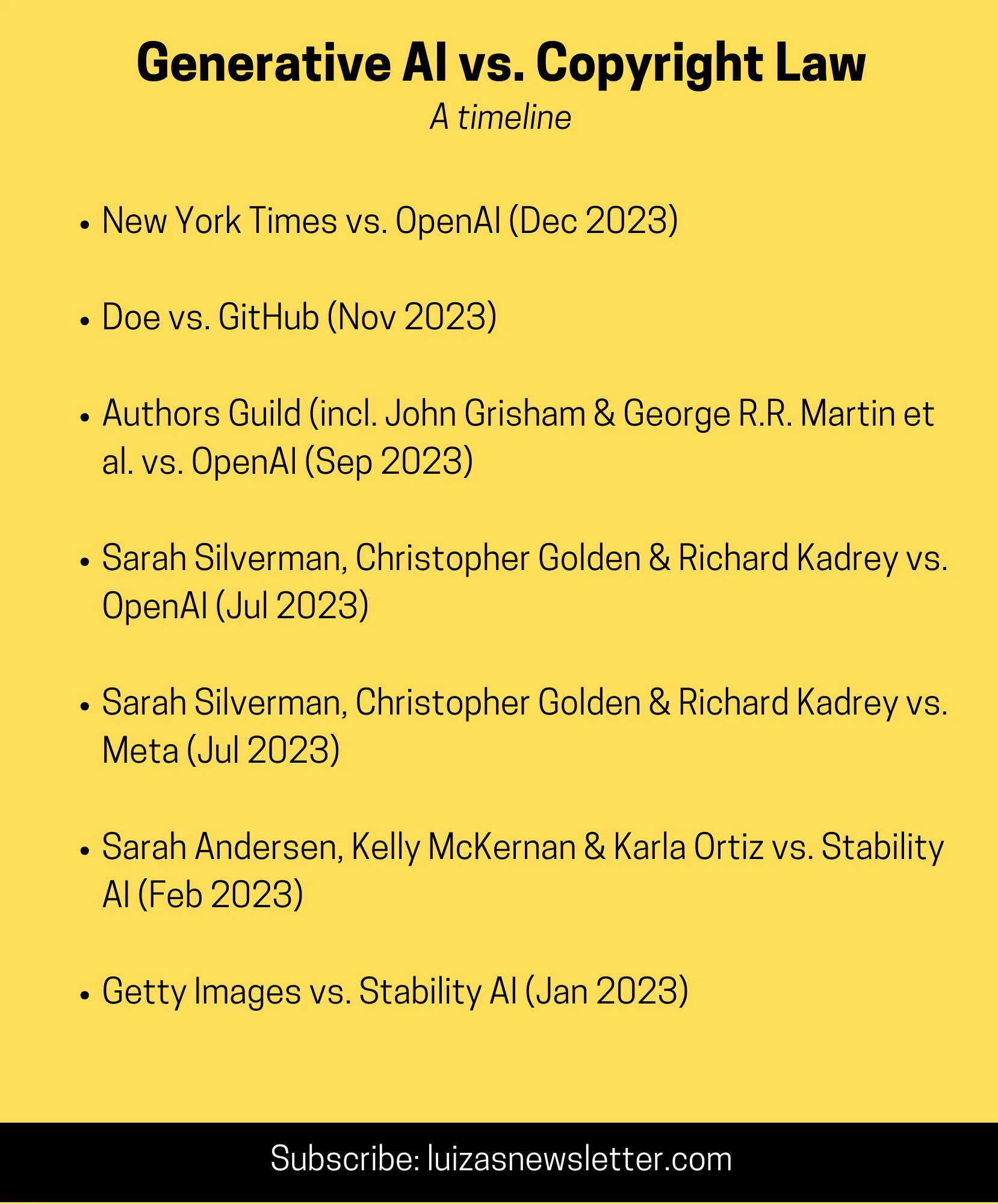
⚖️ Generative AI vs. Copyright Law - a timeline. If you are a privacy professional, you can't ignore AI-related copyright lawsuits anymore. Read this: In order to develop and train large language models (LLMs), AI companies rely on web scraping, a practice that will "dig
⚖️ Generative AI vs. Copyright Law - a timeline. If you are a privacy professional, you can't ignore AI-related copyright lawsuits anymore. Read this:In order to develop and train large language models (LLMs), AI companies rely on web scraping, a practice that will "digest" all… pic.twitter.com/VD6R8UJszN— Luiza Jarovsky, PhD (@LuizaJarovsky) January 3, 2024
Machine as Author: Perspectives on AI-Created Works and Copyright
Generative AI's role in creating content challenges traditional copyright frameworks, requiring a redefinition of authorship and protection criteria across different jurisdictions, as seen in the varying approaches of the U.S., EU, and China.

Copyright of AI-generated works: Approaches in the EU and beyond | Think Tank | European Parliament
Copyright of AI-generated works: Approaches in the EU and beyond
AI and Doctrinal Collapse
Artificial intelligence runs on data. But the two legal regimes that govern data—information privacy law and copyright law—are under pressure. Formally, each re

‘Impossible’ to create AI tools like ChatGPT without copyrighted material, OpenAI says
Pressure grows on artificial intelligence firms over the content used to train their products
Nvidia sued over AI training data as copyright clashes continue
Copyright suits over AI training data reportedly decreasing AI transparency.

ARTificial: Why Copyright Is Not the Right Policy Tool to Deal with Generative AI | Yale Law Journal
This Essay critiques the inadequacy of copyright law to address the challenges Generative Artificial Intelligence (GAI) poses. By analyzing copyright...
Permissive-Washing in the Open AI Supply Chain: A Large-Scale Audit of License Integrity
Permissive licenses like MIT, Apache-2.0, and BSD-3-Clause dominate open-source AI, signaling that artifacts like models, datasets, and code can be freely used, modified, and redistributed. However, these licenses carry mandatory requirements: include the full license text, provide a copyright notice, and preserve upstream attribution, that remain unverified at scale. Failure to meet these conditions can place reuse outside the scope of the license, effectively leaving AI artifacts under default copyright for those uses and exposing downstream users to litigation. We call this phenomenon ``permissive washing'': labeling AI artifacts as free to use, while omitting the legal documentation required to make that label actionable. To assess how widespread permissive washing is in the AI supply chain, we empirically audit 124,278 dataset $\rightarrow$ model $\rightarrow$ application supply chains, spanning 3,338 datasets, 6,664 models, and 28,516 applications across Hugging Face and GitHub. We find that an astonishing 96.5\% of datasets and 95.8\% of models lack the required license text, only 2.3\% of datasets and 3.2\% of models satisfy both license text and copyright requirements, and even when upstream artifacts provide complete licensing evidence, attribution rarely propagates downstream: only 27.59\% of models preserve compliant dataset notices and only 5.75\% of applications preserve compliant model notices (with just 6.38\% preserving any linked upstream notice). Practitioners cannot assume permissive labels confer the rights they claim: license files and notices, not metadata, are the source of legal truth. To support future research, we release our full audit dataset and reproducible pipeline.

Here’s Proof You Can Train an AI Model Without Slurping Copyrighted Content
OpenAI claimed it’s “impossible” to build good AI models without using copyrighted data. An “ethically created” large language model and a giant AI dataset of public domain text suggest otherwise.
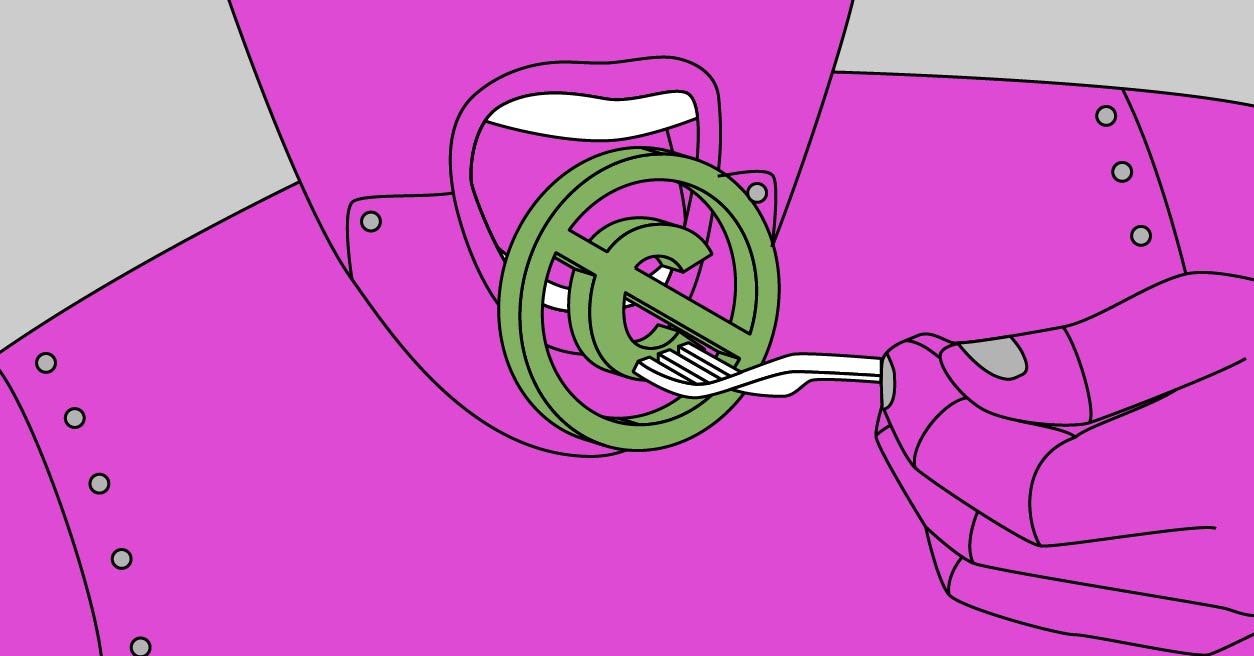
AI*-generated copyright infringement

* I’m neither “pro-AI” nor “anti-AI.” I’ve been blocked for being perceived as both. —Actually, I’m honestly more anti-AI than pro-AI thus far, aside from specialized models and specific use cases, but I’m willing to consider information that’s new to me

Hayao Miyazaki, Who Said AI Is ‘Insult to Life Itself,” Reduced to AI-Generated Meme by OpenAI
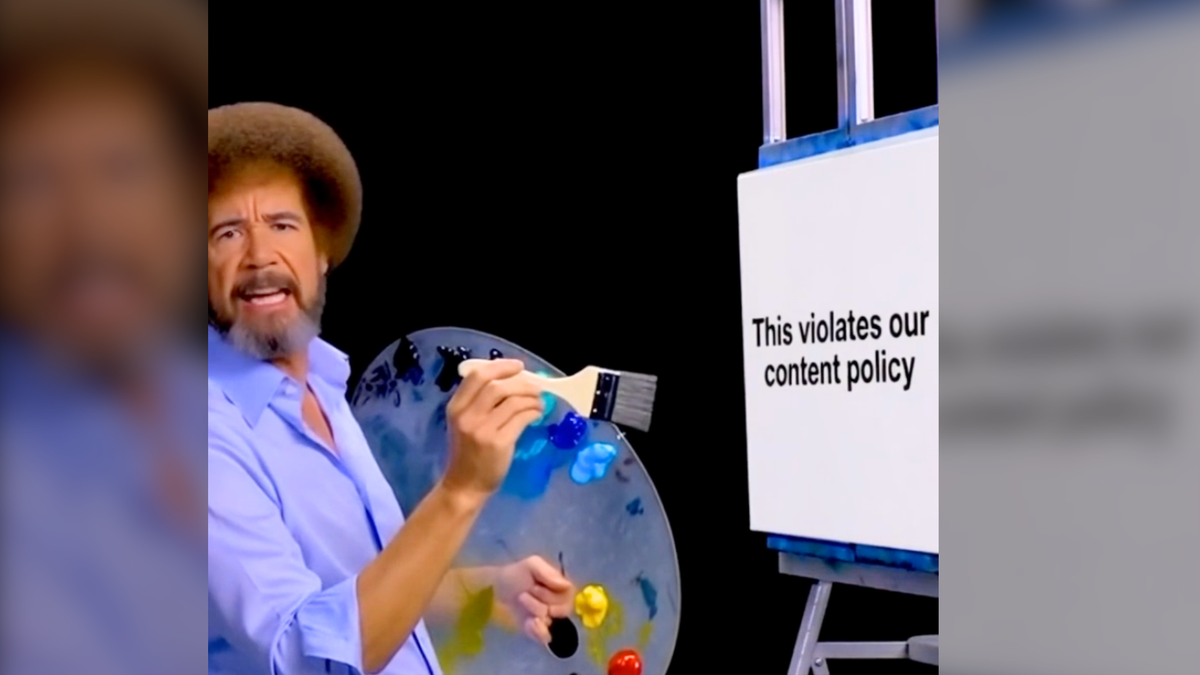
People Are Crashing Out Over Sora 2’s New Guardrails
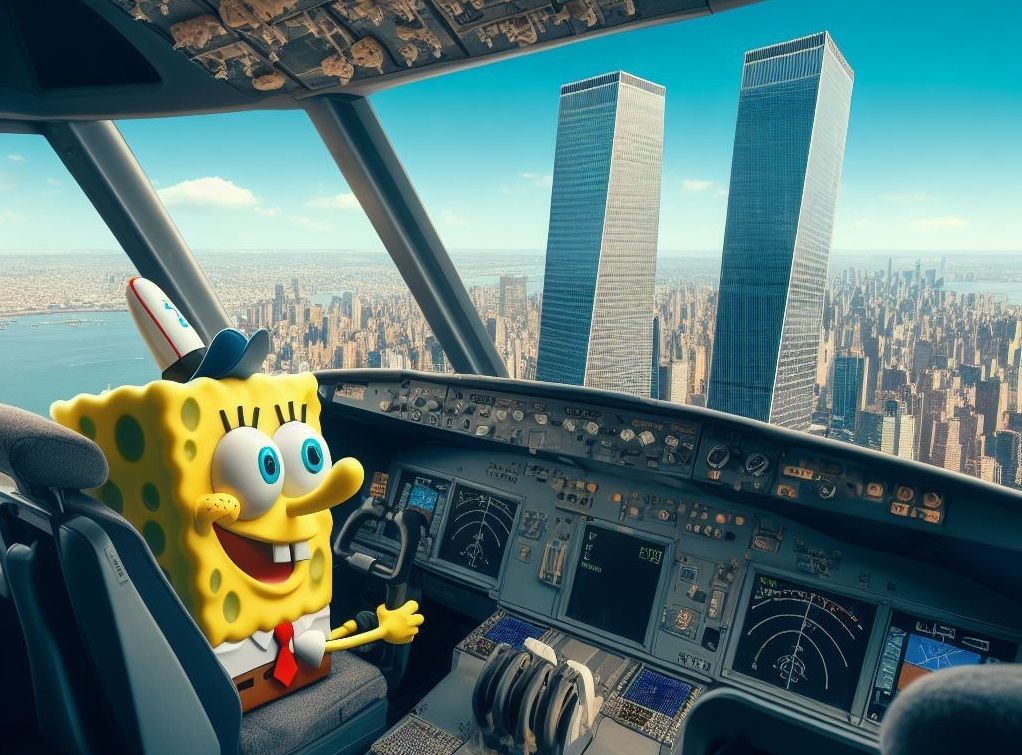
Bing Is Generating Images of SpongeBob Doing 9/11
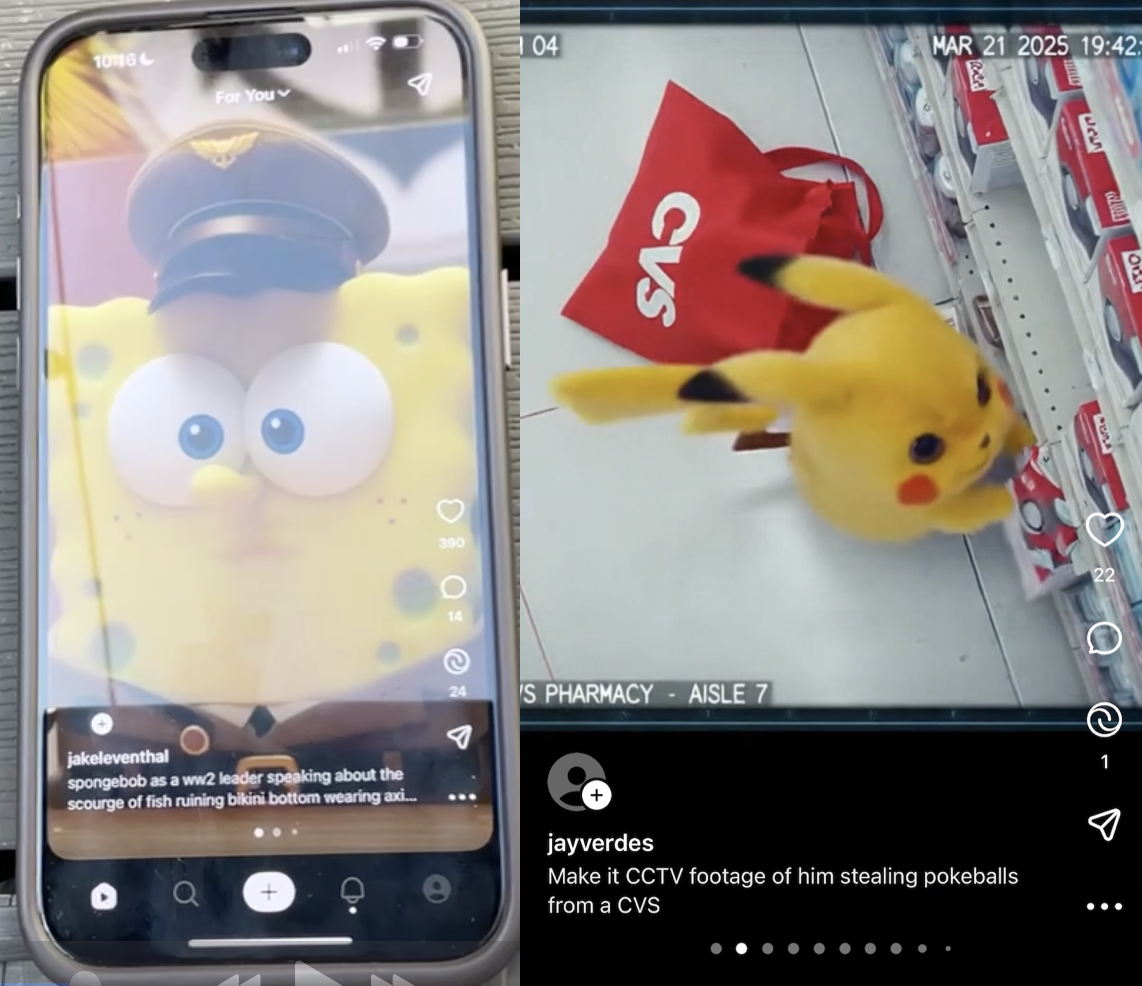
OpenAI’s Sora 2 Copyright Infringement Machine Features Nazi SpongeBobs and Criminal Pikachus
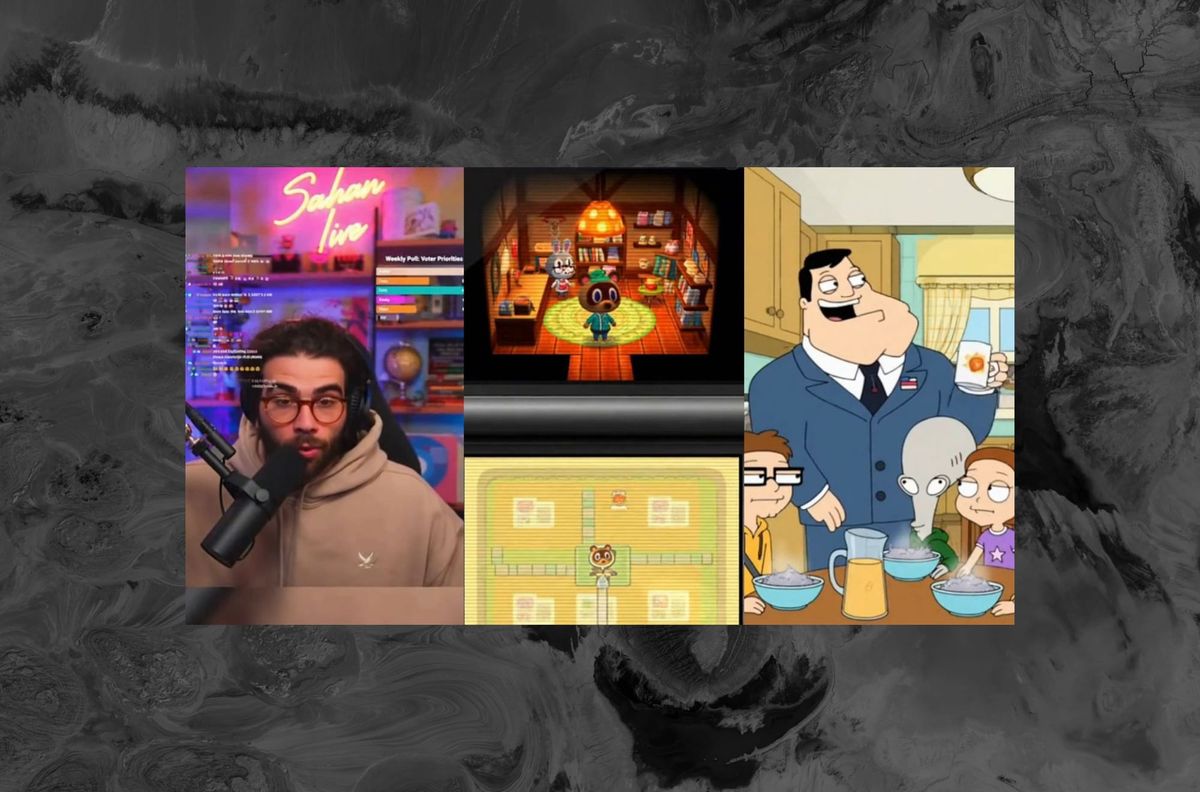
OpenAI Can’t Fix Sora’s Copyright Infringement Problem Because It Was Built With Stolen Content