
Forming new friendships as an adult can seem like an impossible feat. Psychologist Marisa G. Franco shares her top tips for making genuine connections.
You have more ways to connect than ever, but deep friendship feels hard to find – here’s how to build better connections
Despite being more connected than any previous generation, many young people report struggling to build friendships that provide a genuine sense of closeness.

The Science of Making Friends
Starting in early adulthood, our number of friends starts to decrease steadily; there are ways to reverse the tide, writes Elizabeth Bernstein.

Why Is It Hard to Make Friends Over 30? (Published 2012)
The period for making B.F.F.’s, the way you did in your teens or early 20s, is pretty much over. It’s time to resign yourself to situational adult friends.

Loneliness is taking friend-making apps mainstream
Post-pandemic loneliness is driving young adults to seek friends more intentionally.

Young people five times more likely to have no friends than a decade ago | IPPR
The number of young people with no close friends has increased five-fold since 2014Gen Z are more isolated, more distressed and less productive than previo

We've Lost the Spaces That Foster Friendship
We keep offering individual fixes for loneliness while ignoring the disappearance of the spaces where adults once built real relationships.


s21e02: What Does it Mean to be Friends?
0.0 Context Setting Wednesday, 14 January 2026 in Portland, Oregon where while the conditions in the U.S. may not be argued to be fascist as such (i.e. the...
An Adult’s Guide to Social Skills, for Those Who Were Never Taught (Published 2020)
It’s a shame so few of us are taught the basics of how to interact constructively with each other. If you never were, we’re here to help.

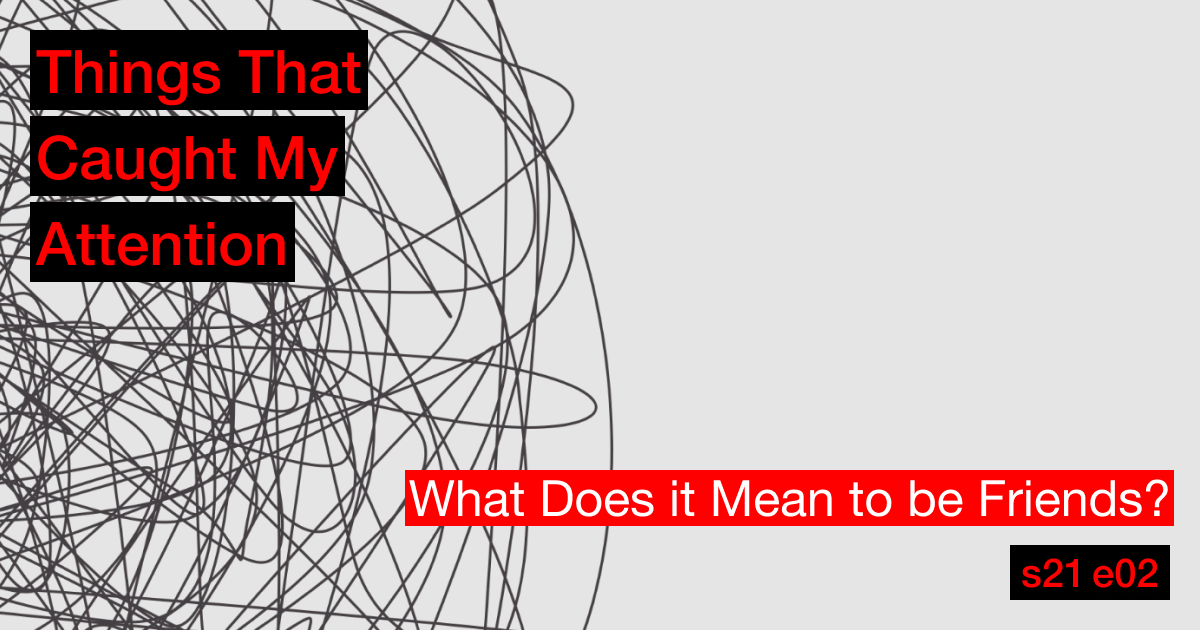
How to make a friend fast — the scientific method
Believe-it-or-not, we actually know exactly how to create friendships in the lab!
Meet My A.I. Friends (Published 2024)
Our columnist spent the past month hanging out with 18 A.I. companions. They critiqued his clothes, chatted among themselves and hinted at a very different future.

"It's Great Because It's Ran By Us": Empowering Teen Volunteer Discord Moderators to Design Healthy and Engaging Youth-Led Online Communities
Online communities can offer many benefits for youth including peer learning, cultural expression, and skill development. However, most HCI research on youth-focused online communities has centered communities developed by adults for youth rather than by the youth themselves. In this work, we interviewed 11 teenagers (ages 13-17) who moderate online Discord communities created by youth, for youth. Participants were identified by Discord platform staff as leaders of well-moderated servers through an intensive exam and application-based process. We also interviewed 2 young adults who volunteered as mentors of some of our teen participants. We present our findings about the benefits, motivations, and risks of teen-led online communities, as well as the role of external stakeholders of these youth spaces. We contextualize our work within the broader teen online safety landscape to provide recommendations to better support, encourage, and protect teen moderators and their online communities. This empirical work contributes one of the first studies to date with teen Discord moderators and aims to empower safe youth-led online communities.
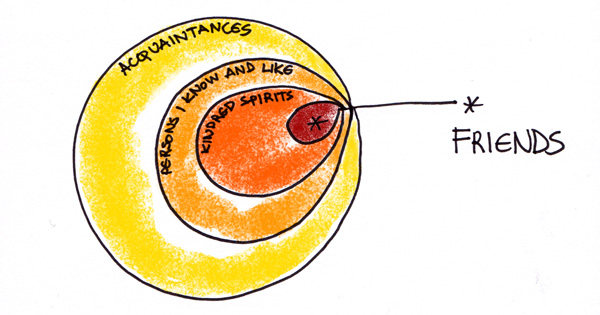
Reclaiming Friendship: A Visual Taxonomy of Platonic Relationships to Counter the Commodification of the Word “Friend”
Exploring the concentric circles of human connection through the lens of our ideal and real selves.
The Innovation of Loneliness
What is the connection between Social Networks and Being Lonely? Quoting the words of Sherry Turkle from her TED talk - Connected, But Alone. (http://www.ted.com/talks/sherry_turkle_alone_together.html) Also Based on Dr. Yair Amichai-Hamburgers hebrew article -The Invention of Loneliness. Script, Design & Animation: Shimi Cohen Translation to Portuguese: Letícia Dabés (vimeo.com/leticiatranslation //leticiadabes@gmail.com) Translation to French: Marie-Caroline Braud (http://mariecarolinetranslation.jimdo.com/) Final Project at Shenkar College of Engineering and Design.

Dunbar’s number: why my theory that humans can only maintain 150 friendships has withstood 30 years of scrutiny
The claim that our brain size limits us to 150 meaningful friendships has been challenged by a recent paper.