WIthout strong unions, “democratic capitalism” is an oxymoron.
Democracy in trade unions, democracy through trade unions?
Since the Webbs published Industrial Democracy at the end of the nineteenth century, the principle that workers have a legitimate voice in decision-making in the world of work – in some versions through trade unions, in others at least formally through separate representative structures – has become widely accepted in most West European countries. There is now a vast literature on the strengths and weaknesses of such mechanisms, and we review briefly some of the key interpretations of the rise (and fall) of policies and structures for workplace and board-level representation. We also discuss the mainly failed attempts to establish broader processes of economic democracy, which the eclipse of nationally specific mechanisms of class compromise makes again a salient demand. Economic globalization also highlights the need for transnational mechanisms to achieve worker voice (or more radically, control) in the dynamics of capital–labour relations. We therefore examine the role of trade unions in coordinating pressure for a countervailing force at European and global levels, and in the construction of (emergent?) supranational industrial relations. However, many would argue that unions cannot win legitimacy as a democratizing force unless manifestly democratic internally. Therefore we revisit debates on and dilemmas of democracy within trade unions, and examine recent initiatives to enhance democratization.

Fighting for women’s liberation – Victorian Socialists
Women’s oppression is part of the fabric of capitalism. We’re fighting for free, accessible abortion, expanded paid parental leave, and free childcare.
Why WORKERS should OWN companies
Market Socialism
The Paper Pilot's digital garden of thoughts on philosophy, politics, and sociology. Reading time: ~4 minute read | Published: Jan 1, 2025 | Updated: Nov 16, 2025

Pluralistic: All bets are off (29 Jan 2025) – Pluralistic: Daily links from Cory Doctorow
When unions are outlawed, only outlaws will have unions. Unions don't owe their existence to labor laws that protect organizing activities. Rather, labor laws exist because once-illegal unions were formed in the teeth of violent suppression, and those unions demanded – and got – labor law.
The Myth of Capitalism Exposed
We need a revolution to cast off monopolies and restore entrepreneurial freedom. First of two excerpts from “The Myth of Capitalism.”

Will capitalism end capitalism? | Steve Loftus | The Critic Magazine
Imagine waking up one morning to discover your job still exists, but your services are no longer required. The work is being done, just not by you, not by anybody. Somewhere, a machine is doing it…
Cognitive Capitalism - Public Seminar
There are broadly three ways of thinking historically about capitalism. One draws on Marx’s value theory and pretty much treats...Read More

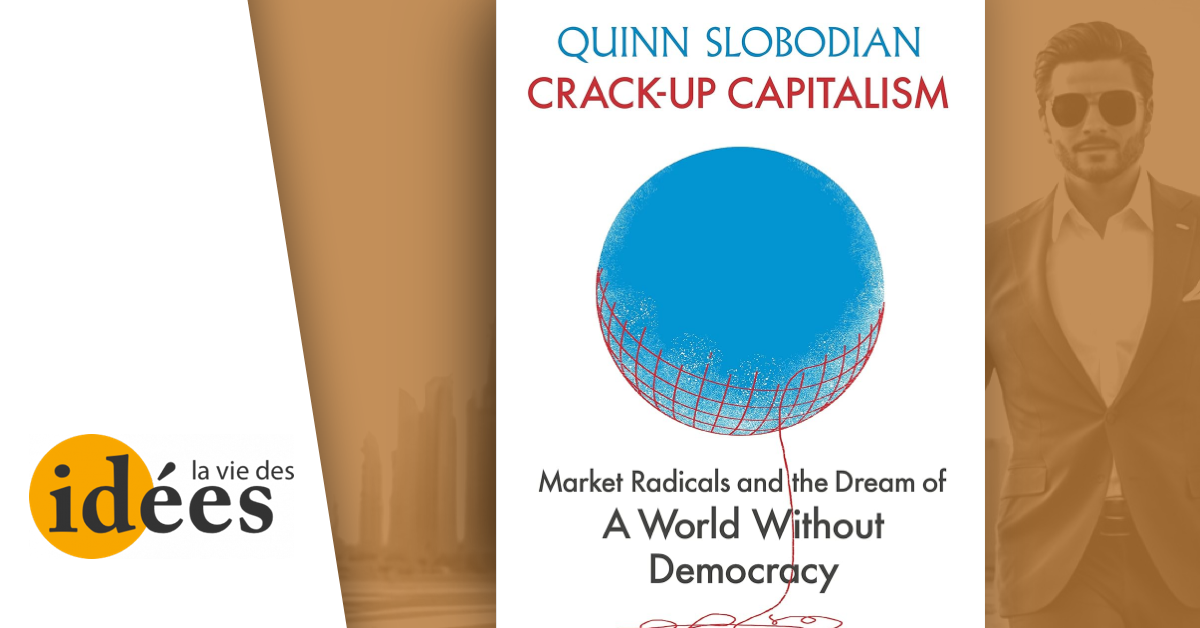
Le capitalisme d’enclaves et la fin de la démocratie
À propos de : Quinn Slobodian, Crack-Up Capitalism. Market Radicals and the Dream of a World Without Democracy, Metropolitan Books

Pluralistic: Metabolizing the theory of “political capitalism” (06 Dec 2025) – Pluralistic: Daily links from Cory Doctorow
It's a strange fact that the more sophisticated and polished a theory gets, the simpler it tends to be. New theories tend to be inspired by a confluence of many factors, and early attempts to express the theory will seek to enumerate and connect everything that seems related, which is a lot.
Capitalism | The Paper Pilot
The Paper Pilot's digital garden of thoughts on philosophy, politics, and sociology
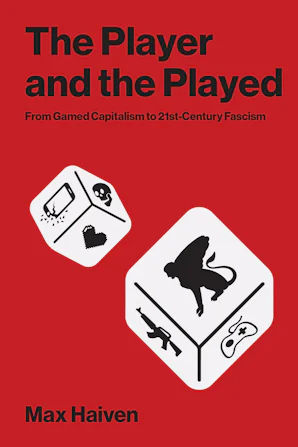
The Player and the Played
In an age when capitalism feels like an unwinnable game, extreme reactionary ideas and politics are on the rise. The Hunger Games, Game of Thrones, Squid Gam...
Preface | The World After Capital
Since publishing the previous version of The World After Capital, I have met with people across the political spectrum to discuss the ideas from the book. When I present these in person, I emphasize that the ideas are neither left nor right but forward (credit to Scott Santens who first used this phrase about Universal Basic Income). My writing, however, at times has alienated readers who identify as being more on the right. In this new edition, I am therefore making an extra effort to emphasize how both my diagnosis of where we are at and my suggestions for how to move forward do not map onto the existing political divides. Instead this is a new way of understanding our challenges and opportunities that can be the basis for movements and parties that are not trapped in Industrial Age ideology.
New Capitalism II: Compositional vs income inequality
Are all class-based societies unequal?