


Tom Goodwin on the five key attributes we should help kids develop instead of focusing on knowledge.
Don't Learn to Code - Learn to Automate - DaedTech
Does anyone remember a few years ago, when the mayor of New York decided to learn to program? It was a heady time, because it wasn’t just him. I remember these surreal commercials where Miami Heat forward Chris Bosh was encouraging children to learn to code for the good of humanity or something. There was...

Learning to code is overrated: An accomplished programmer would rather his kids learn to read and reason
Mayor de Blasio is winning widespread praise for his recent promise that, within 10 years, all of New York City’s public schoolchildren will take computer science classes. But as a career programmer who founded two successful software…

Why should children program - a review of Seymor Paperts Mindstorms
This is an essay about what it means to teach a kid to program, using Seymor Paperts groundbreaking book Mindstorms as a reference.
Stop saying learning to code is easy.
(The photo above was taken at the Microsoft NYC office of three amazing young ...

We should rethink how we teach people to code | deadSimpleTech
It's fair to say that the tech industry at the moment is not in a good place. Software engineers tend to be detached, demotivated and unwilling to care much about the work they're doing beyond their paycheck. Code quality is poor on the whole, made worse by the current spate of vibe coding and whatever other febrile ideas come out of Sam Altman's brain. Much of the software that we write is either useless or actively hurts people. And the talented, creative people that we most need in the industry are pushed to the margins of it.

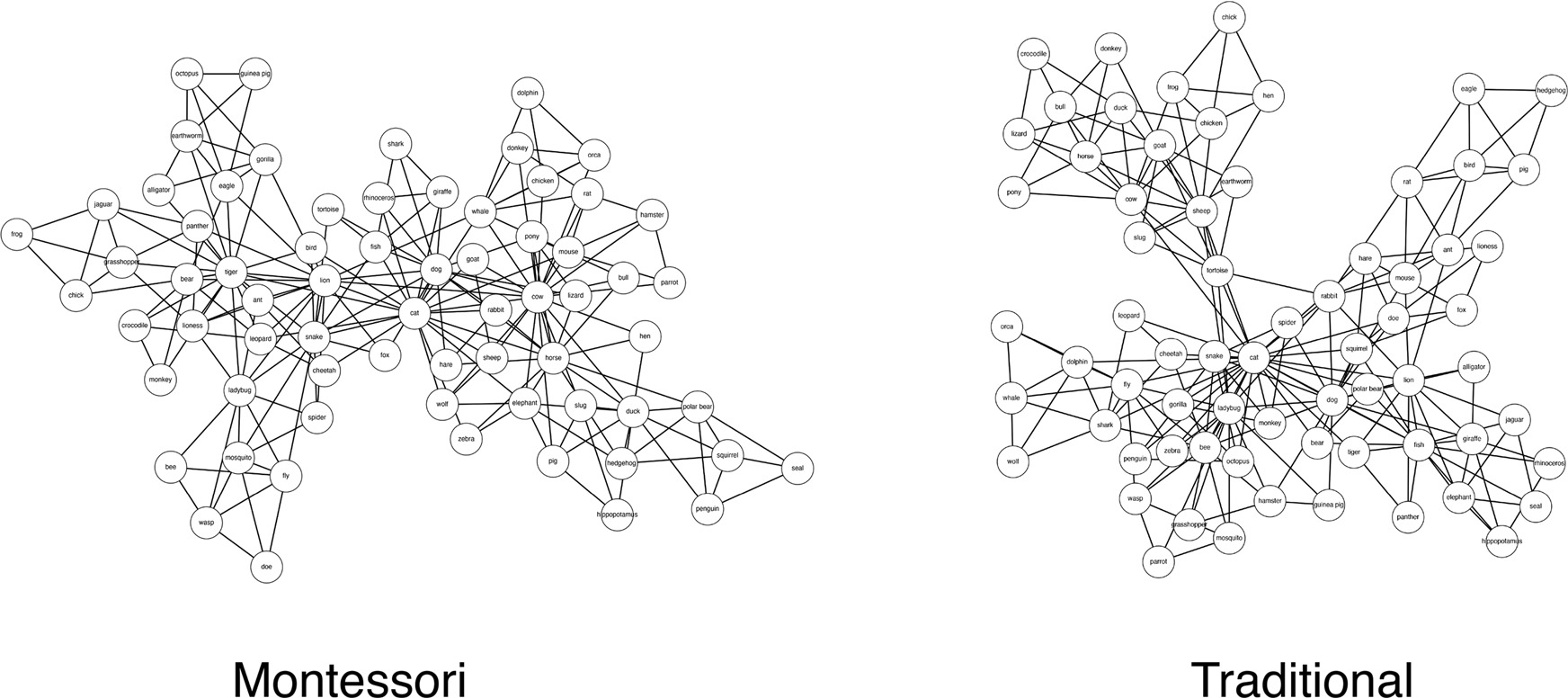
Education shapes the structure of semantic memory and impacts creative thinking
Education is central to the acquisition of knowledge, such as when children learn new concepts. It is unknown, however, whether educational differences impact not only what concepts children learn, but how those concepts come to be represented in semantic memory—a system that supports higher cognitive functions, such as creative thinking. Here we leverage computational network science tools to study hidden knowledge structures of 67 Swiss schoolchildren from two distinct educational backgrounds—Montessori and traditional, matched on socioeconomic factors and nonverbal intelligence—to examine how educational experience shape semantic memory and creative thinking. We find that children experiencing Montessori education show a more flexible semantic network structure (high connectivity/short paths between concepts, less modularity) alongside higher scores on creative thinking tests. The findings indicate that education impacts how children represent concepts in semantic memory and suggest that different educational experiences can affect higher cognitive functions, including creative thinking.
depatchedmode/oughta
How we oughta do things. Skills, conventions, and guidance for coding agents.
What Parents Need to Know About AI in the Classroom | Stanford HAI
From immersive learning and personalized tutors to lesson plans and grading, AI is everywhere in K-12 education.

Learn Anything With My /teach Skill
Learn to use the /teach skill in Claude Code to create personalized AI-powered lessons on anything—languages, coding, skills—with interactive exercises.
A Message from Our Executive Director on Diversity, Equity, and Inclusion
As the Executive Director of the Scratch Foundation, the world’s largest and most diverse coding community for children with 90M+ users…

The 70% problem: Hard truths about AI-assisted coding
A field guide and why we need to rethink our expectations
The 70% problem: Hard truths about AI-assisted coding
A field guide and why we need to rethink our expectations
A Lost Secret: How To Get Kids To Pay Attention
Maya kids do better on tests measuring attention, researchers say it's because these kids have something that many American kids have lost.

My Thoughts on the Bun Rust Rewrite - Andrew Kelley
When Jarred joined the Zig community about 5 years ago, I described him as someone who had strong "beginner energy". That is, he moved fast and tried a lot of different stuff, jumping head first into problems that he was not yet equipped to solve, leading to mediocre outcomes in terms of engineering, but learning a whole heck of a lot in the process. I see it as quite a healthy attitude, particularly for young people and students. This is the best way to level up and learn new things.
Chris Granger - Coding is not the new literacy
Despite the good intentions behind the movement to get people to code, both the basic premise and approach are flawed. The movement sits on the idea that “coding is the new literacy,” but that takes a narrow view of what literacy really is.