

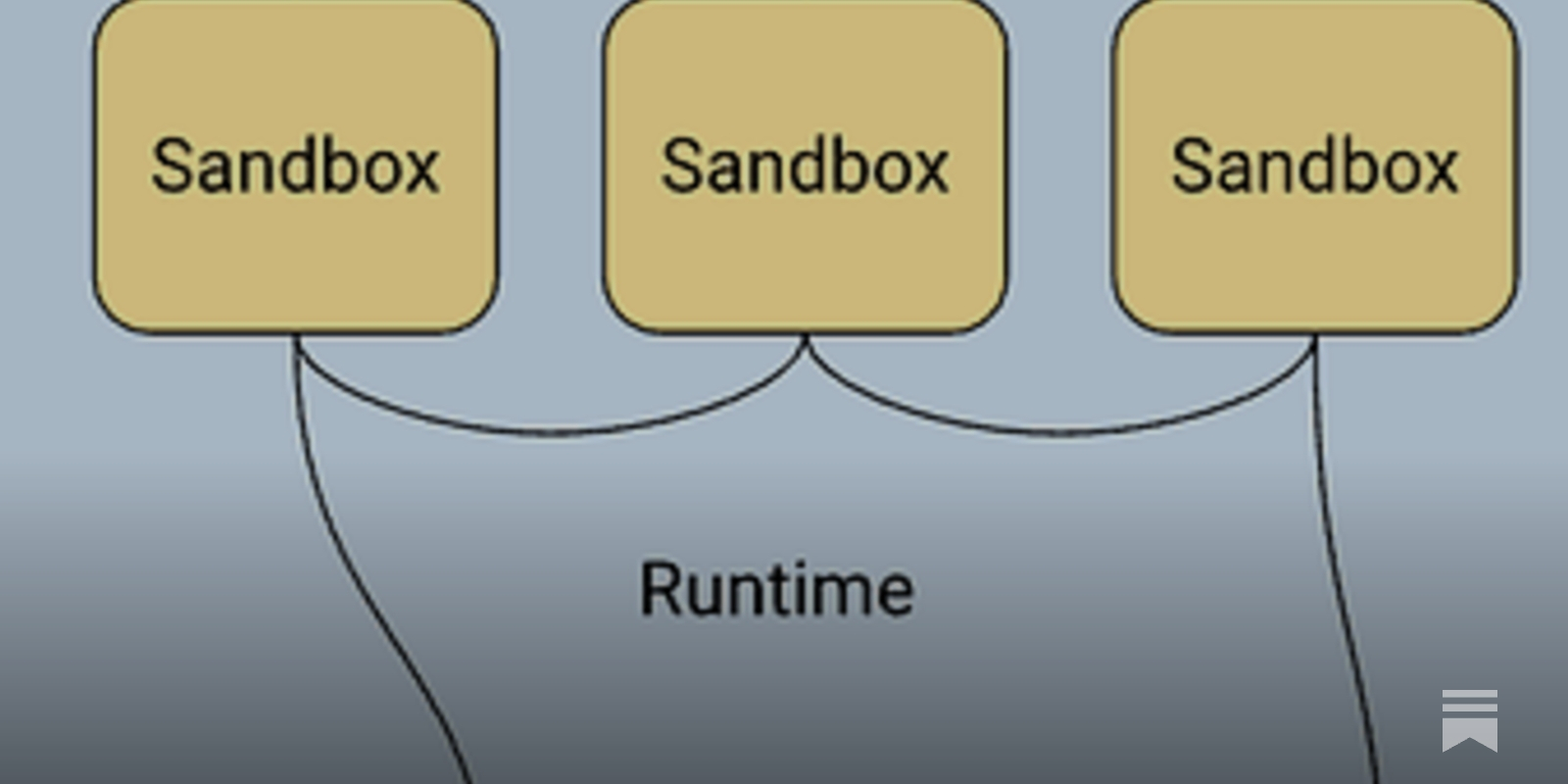
A vision for three key changes to how apps and services work today
On Relational Infrastructure
Exploring the role of relationships, trust and mutualistic approaches to change.

App Dissection
Breaking down the design details of well-crafted mobile apps. In-depth analysis of UI patterns, interactions, and user experience.

Evolving App Store Business Models - David Smith, Independent iOS Developer
I’ve been thinking this past week (as I often do) about the ever-changing landscape of the App Store. This year has seen some of the biggest changes in policy and structure that I can remember. We have new subscription pricing models, search ads, a substantial purge of older apps, new requirements for app names and a variety of little changes to the App Store app itself in iOS 10.
Malleable software: Restoring user agency in a world of locked-down apps
The original promise of personal computing was a new kind of clay. Instead, we got appliances: built far away, sealed, unchangeable. In this essay, we envision malleable software: tools that users can reshape with minimal friction to suit their unique needs.

Software Acceleration and Desynchronization
A look at the ever-present drive to make software delivery faster and how it might break down various activity loops in organizations.

The Twelve-Factor App
A methodology for building modern, scalable, maintainable software-as-a-service apps.
User Intents as Living Data — A Descriptive Meta-Framework
A response to Bluesky's User Intents proposal: instead of prescribing a fixed set of intent categories, treat them as living data and use panproto lenses to map between the vocabularies that different communities will inevitably create.
The New Software Lifecycle
I co-wrote a Google whitepaper about how AI is changing the software lifecycle. I'm not going to summarize the whole thing. Instead, here are the handful of ...
Why Executive Interest In APIs Is Booming
A decade ago, API awareness was limited, with evangelists educating a mostly unaware C-suite. Today, APIs are integral to business, widely embraced by executives and developers alike, reflecting a significant shift in digital transformation strategies.
psf (@psf@oldbytes.space)
In their article ["Malleable Software"](https://www.inkandswitch.com/essay/malleable-software), Ink & Switch list various ways that modern software applications fail to serve the user: - Software is too rigid: users can’t tailor it to suit their workflow, except by entering the role of programmers. - Software applications are overspecialized "avocado slicers", not general tools like "knives", so their lack of tailorability is keenly felt. - Software doesn’t provide a reasonable learning curve from beginner to expert; in other words, time spent learning an application doesn’t unlock tailorability, instead the end user must learn an unrelated skill like a markup/scripting language or even the tool’s implementation language. - Software applications are increasingly siloed, so sharing data between apps, let alone orchestrating cross-app workflows, is overly difficult. These are real problems. From what I can tell, Ink & Switch are software researchers, and view the problems from a highly technical perspective, focusing on novel infrastructure that enables end-user programmability. They pose questions such as "how do we ease users into programming?" and "instead of shipping a dead, static binary, can we ship a living image containing programming tools allowing it to be modified in arbitrary ways while still running?" These ideas are technologically exquisite, but they fail to provide a gentle learning curve. (cont'd) 🧵
Replacing Middle Management with APIs by Peter Reinhardt
There’s a trend in Silicon Valley startups to create a software layer in industries that were traditionally pure human services. Uber and Lyft have created software layers in the taxi industry, 99designs Tasks in the visual design industry, Homejoy in the cleaning industry, and so on. These new software services employ armies of human workers, optimizing their output, productivity and quality while driving price down.

