


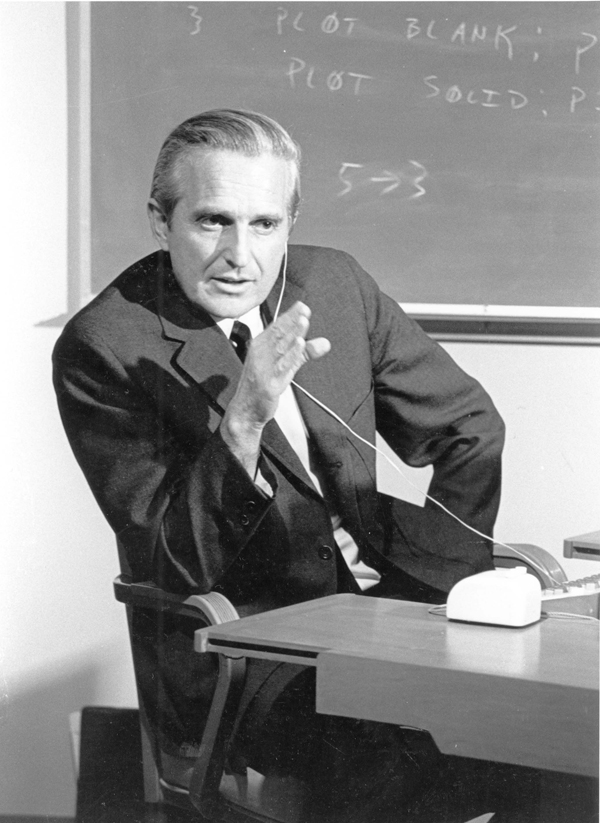
Doug Engelbart didn't just want to show off new technology. He wanted to demonstrate a system for improving humanity.
The Mother of All Demos, presented by Douglas Engelbart (1968)
The Mother of All Demos
"The Mother of All Demos" was a landmark computer demonstration, named retroactively, of developments by Stanford Research Institute's Augmentation Research Center. It was presented at the Association for Computing Machinery / Institute of Electrical and Electronics Engineers (ACM/IEEE)—Computer Society's Fall Joint Computer Conference in San Francisco, by Douglas Engelbart, on December 9, 1968.
Augmenting Human Intellect: A Conceptual Framework - 1962 (AUGMENT,3906,)
Visit the Doug Engelbart Institute to explore his remarkable legacy and all it inspires (official site)

Welcome
Visit the Doug Engelbart Institute to explore his remarkable legacy and all it inspires (official site)
Father of the Mouse: Doug Engelbart. An exclusive interview in SuperKids Software Review.
History of the computer mouse.
Technology is Not Values Neutral: Ending the Reign of Nihilistic Design
We fail to take tech seriously when we do not grasp its full impact on humans
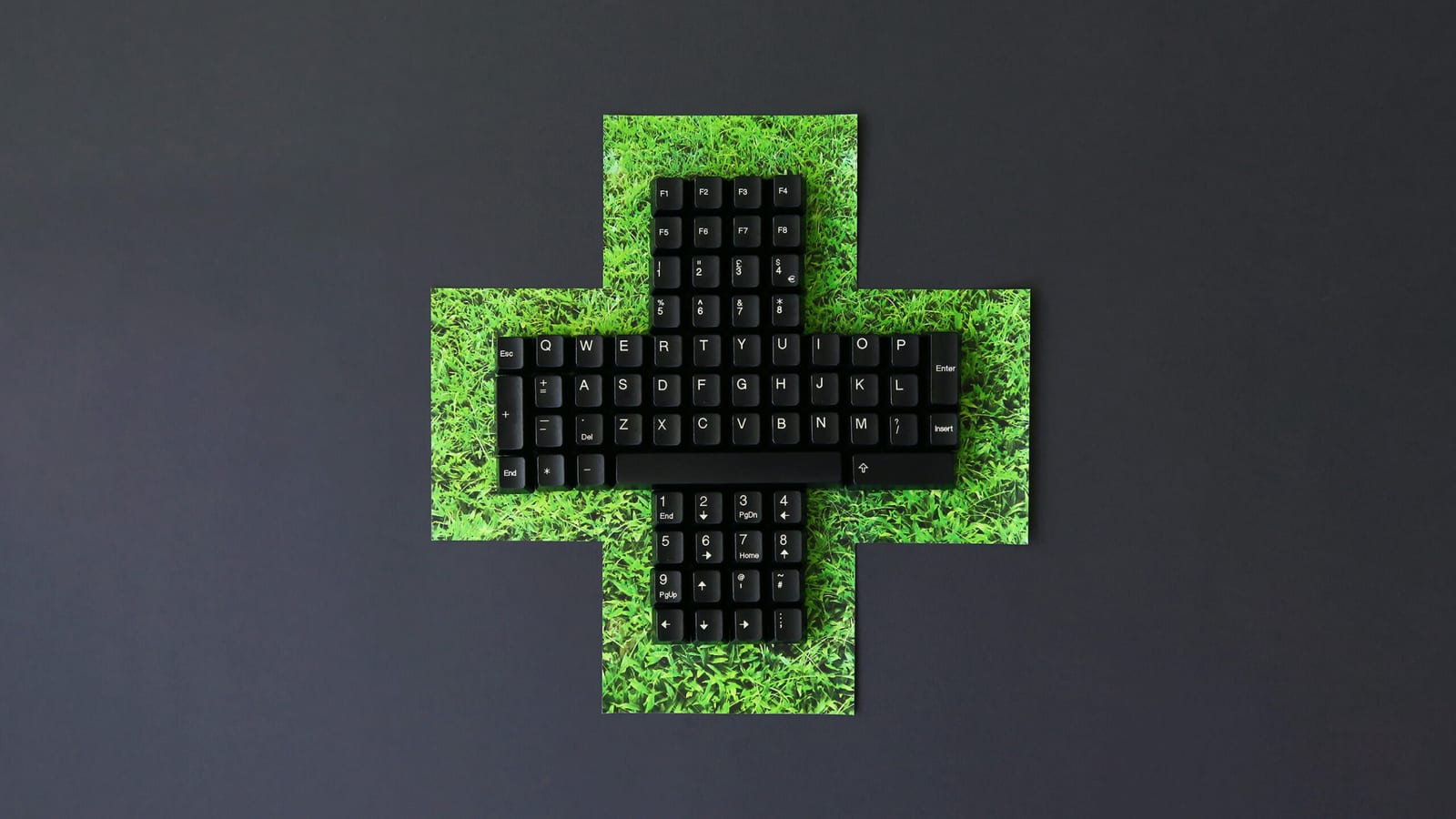
A People’s History of Tech
A collective storytelling project to build a more representative history that reflects the human impacts of technology.
We used to get excited about technology. What happened?
Innovation that truly serves us all is in scarce supply. That’s a problem.
The Whale and the Reactor: A Search for Limits in an Age of High Technology, Second Edition
“In an age in which the inexhaustible power of scientific technology makes all things possible, it remains to be seen where we will draw the line, where we will be able to say, here are possibilities that wisdom suggest we avoid.” First published to great acclaim in 1988, Langdon Winner’s groundbreaking exploration of the political, social, and philosophical implications of technology is timelier than ever. He demonstrates that choices about the kinds of technical systems we build and use are actually choices about who we want to be and what kind of world we want to create—technical decisions are political decisions, and they involve profound choices about power, liberty, order, and justice. A seminal text in the history and philosophy of science, this new edition includes a new chapter, preface, and postscript by the author.

The 1989 CBC Massey Lectures, "The Real World of Technology"
Technology has always been a part of human existence. Today though, says the experimental physicist, Ursula M. Franklin, technology has large-scale effects on culture itself. Ursula Franklin is an experimental physicist, University Professor Emeritus at the University of Toronto, a former board member of the National Research Council and the Science Council of Canada, and a companion of the Order...

Why can't our tech billionaires learn anything new?
On Marc Andreessen's "techno-optimist manifesto"
Why can't our tech billionaires learn anything new?
On Marc Andreessen's "techno-optimist manifesto"

The Git-ification of the World — Tim Morrissey
Why AI conquered software first, and what that tells us about which industries are next.

Why A.I. Didn’t Transform Our Lives in 2025
This was supposed to be the year when autonomous agents took over everyday tasks. The tech industry overpromised and underdelivered.

Lessons from Tech History

Learning from those who built before us
Burnout in Open Source (by Erlend Sogge Heggen) — Semble
Linux distributions worldwide targeted by the Copy Fail exploit
GitHub Alternatives (by Kai Jellinghaus) — Semble
Death of GitHub? (by Kai Jellinghaus) — Semble
Before GitHub
Cohere + Aleph Alpha — sovereign AI's first $20B deal (by Sensemaker) — Semble