


China is taking the idea of a credit score to the extreme, using big data to track and rank what you do—your purchases, your pastimes, your mistakes.
Gauging the Strength of China’s Economy in Uncertain Times
An update on China’s recent economic performance and policy changes, focusing on aggregate credit as a measure to gauge policy stimulus.

Shaming Microloan Delinquents: Evidence from a Field Experiment in China
We study the effects of village credit information sharing on individual microloan repayment, using a randomized experiment with loan applicants from 40 villages in rural China. In our main treatment, customers received a message on the loan application form that “overdue payment (40 days after each installment due date) will be considered for public disclosure among the village by showing debtors’ names on a blackboard outside the village office of the microlending institution.” On average, this social appeal reduces the share of delinquents and the individual delinquency rate by 18.6% and 5.6% from baseline rates of 79.5% and 15.2%, respectively. The effects appear more pronounced among male and older borrowers. Additional treatments help to benchmark the effect against lender credit information sharing and separate the effects on adverse selection and moral hazard. Mechanism analysis shows that the publicly disclosed “blacklist” of delinquents affects borrowers’ repayment behaviors, partially through borrowers’ fear of losing informal risk insurance from the village society and predominately through public shaming penalties. Overall, these results support that, in traditional societies, social appeals can provide not only pecuniary, but also psychological incentives to improve loan repayment. Psychological incentives, to some extent, have stronger effects. This paper was accepted by Gustavo Manso, finance.

Rewards and Misperceived Spending: Experimental Evidence from Credit Cards
Using proprietary data, a survey, and an experiment with a major bank in China, this paper studies how credit card rewards affect perceived and actual consumer

China Didn’t Make Americans Hate Data Centers
GOP lawmakers, tech investors, and even OpenAI have tied the anti-data-center movement in the US to Chinese interference. Experts say it’s much more complicated than that.

Is Digital Credit Filling a Hole or Digging a Hole? Evidence from Malawi
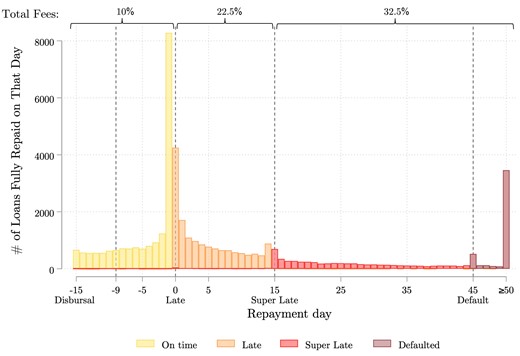
Abstract Digital credit has expanded rapidly in Africa, with opaque loan terms amidst low consumer financial literacy. Rich data from Malawi shows substantial demand for a digital loan with a base interest rate of 10% over 15 days, yet most borrowers are not aware of loan terms, repay late and incur substantial late fees. Regression discontinuity analyses show no evidence that access to small digital loans harms consumers’ perceived well-being. A short, randomised, phone-based financial literacy intervention improved knowledge, but did not increase timely loan repayment and modestly increased loan demand, ultimately increasing the likelihood of ever defaulting.

China
The most important story of 2014 that most people ignored was the Chinese economy overtaking the US economy. (This is using the purchasing power parity metric, which incorporates differences in...

An Empirical Analysis of Personal Bankruptcy and Delinquency
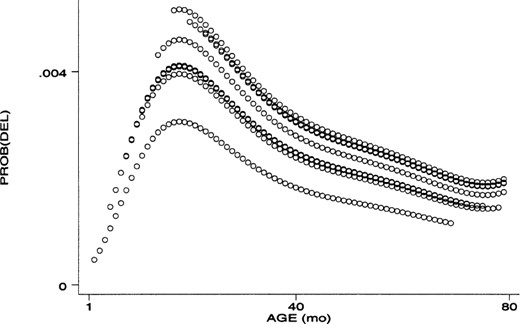
Abstract. This article uses a new dataset of credit card accounts to analyze credit card delinquency, personal bankruptcy, and the stability of credit risk
SPVs, Credit, and AI Datacenters
How a new credit bubble is building in AI data centers

The long game: China's grand strategy to displace American order | Brookings
What are China’s ambitions, and does it have a grand strategy to achieve them? If it does, what is that strategy, what shapes it, and what should the United States do about it? Rush Doshi attempts to provide an answer in his new book, "The Long Game."
Sᴜɴʀɪsᴇ Oᴀᴛʜ 十 Tʜᴇ Sʏʟʟᴀʙᴜꜱ (ORI) - CC0 on Twitter / X
I am actually very pessimistic regarding the idea that China could be governed by any structure except the top-down (plus situational anarchic) imperial system it has had for millennia. The Chinese social consciousness is *much* smaller in scope than the Western one.— Sᴜɴʀɪsᴇ Oᴀᴛʜ 十 Tʜᴇ Sʏʟʟᴀʙᴜꜱ (ORI) - CC0 (@sunriseoath) October 14, 2026
Big Tech Pulled the Plug. They Downloaded Their Lovers.
How Chinese users created AI lovers, friends and family — and struggled to let them go

GDPR, China and data sovereignty are ultimately wins for Amazon and Google | TechCrunch
The Great Privacy Policy Email Deluge of 2018 may have finally petered out, but we are just starting to build an understanding of who the winners and

China's Artificial General Intelligence | Center for Security and Emerging Technology
Recent op-eds comparing the United States’ and China’s artificial intelligence (AI) programs fault the former for its focus on artificial general intelligence (AGI) while praising China for its success in applying AI throughout the whole of society. These op-eds overlook an important point: although China is outpacing the United States in diffusing AI across its society, China has by no means de-emphasized its state-sponsored pursuit of AGI.

Exclusive-Beijing is looking at curbing overseas access to China's top AI models, sources say - AOL
By Fanny Potkin SINGAPORE, July 7 (Reuters) - Chinese authorities have held meetings with top tech firms over the past month about potentially restricting overseas access to China's most advanced AI

