This philosophy—supported by tech figures like Sam Bankman-Fried—fuels the AI research agenda, creating a harmful system in the name of saving humanity
Effective Altruism Funded the “AI Existential Risk” Ecosystem with Half a Billion Dollars
The “AI Existential Safety” field did not arise organically. Effective Altruism invested $500 million in its growth and expansion.

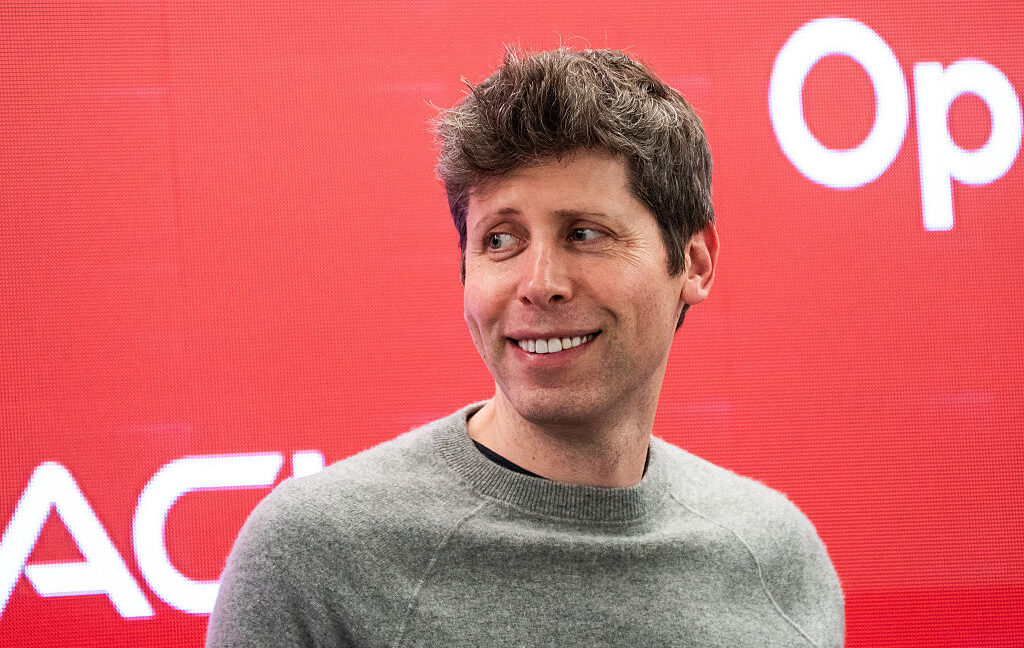
“The problem is Sam Altman”: OpenAI insiders don’t trust CEO
OpenAI brainstorms ways AI can benefit humanity in effort to counter bad vibes.
An End-to-End View of AI Safety
In this blog, Rachel Coldicutt OBE, Executive Director, Careful Industries discusses our newly published literature review on the safe adoption of artificial intelligence in engineered systems.

People know AI is risky. They just don’t know what to do about it. | TrendLife Blog
New international research from TrendLife reveals a wide gap between AI adoption and awareness of AI-powered threats.
What the heck is wrong with our AI overlords?
New profile of Sam Altman shines a light on a whole industry.

Safety Co-Option and Compromised National Security: The Self-Fulfilling Prophecy of Weakened AI Risk Thresholds
Risk thresholds provide a measure of the level of risk exposure that a society or individual is willing to withstand, ultimately shaping how we determine the safety of technological systems. Against the backdrop of the Cold War, the first risk analyses, such as those devised for nuclear systems, cemented societally accepted risk thresholds against which safety-critical and defense systems are now evaluated. But today, the appropriate risk tolerances for AI systems have yet to be agreed on by global governing efforts, despite the need for democratic deliberation regarding the acceptable levels of harm to human life. Absent such AI risk thresholds, AI technologists-primarily industry labs, as well as "AI safety" focused organizations-have instead advocated for risk tolerances skewed by a purported AI arms race and speculative "existential" risks, taking over the arbitration of risk determinations with life-or-death consequences, subverting democratic processes. In this paper, we demonstrate how such approaches have allowed AI technologists to engage in "safety revisionism," substituting traditional safety methods and terminology with ill-defined alternatives that vie for the accelerated adoption of military AI uses at the cost of lowered safety and security thresholds. We explore how the current trajectory for AI risk determination and evaluation for foundation model use within national security is poised for a race to the bottom, to the detriment of the US's national security interests. Safety-critical and defense systems must comply with assurance frameworks that are aligned with established risk thresholds, and foundation models are no exception. As such, development of evaluation frameworks for AI-based military systems must preserve the safety and security of US critical and defense infrastructure, and remain in alignment with international humanitarian law.

The Effective-Altruism Comeback
Out of the spotlight, the movement has been preparing for the soon-to-be AI rich to donate billions.

Who decides when AI is too dangerous?
Anthropic asked for AI regulation, but not like this.

Your Favorite Science YouTubers Are Wrong About AI, (e.g. SciShow, Kurzgesagt, and Kyle Hill )
The tech industry hijacking of the AI ethics research agenda and why we should reclaim it
This paper reflects on the tech industry’s colonization of the AI ethics research field and addresses conflicts of interest in public policymaking concerning AI. The AI ethics research community faces two intertwined challenges: In the first place, we have a tech industry heavily influencing the AI ethics research agenda. Secondly, cleaning up after the tech industry has implied that we have turned to value-driven design methods to bring ethics to AI design. But by framing research questions relevant to a technical practice, we have facilitated the technological solutionism behind the tech industry’s business model. Therefore, this paper takes the first steps to reshape the AI ethics research agenda by suggesting moving toward an emancipatory framework that brings politics to design while, at the same time, bearing in mind that AI is not to be treated as an inevitability. As a research community, we must focus on the repressive power dynamics exacerbated by AI and address challenges facing the vulnerable groups seldom heard, despite the fact that they are the ones most negatively affected by AI initiatives.

Nathan J Robinson on Twitter / X
the correct take on the AI risks. not "godlike machine that decides to kill us all" but "machine that makes it much easier for humans to kill one another." from the very sensible @timnitGebru in Wired: https://t.co/wM0ucsN2no pic.twitter.com/vtHQ02my0G— Nathan J Robinson (@NathanJRobinson) September 13, 2026

A new writing series: Re-envisioning AI safety through global majority perspectives | Brookings
Chinasa T. Okolo previews a new writing series that will re-envision AI safety through global majority perspectives.

Sam Altman told me AI should be 'an equalizing force in society.' That's why I'm working on the $1.6 trillion AI gender gap | Fortune
This won't happen by accident. It will happen because someone builds it that way.