


Hackers. AI data scrapes. Government surveillance. Yeah, thinking about where to start when it comes to protecting your online privacy can be overwhelming. Here’s a simple guide for you—and anyone who claims they have nothing to hide.
How GDPR Will Change The Way You Develop — Smashing Magazine
GDPR requires you to be more thoughtful about the sites and services you build, more transparent about the ways you collect and use data, more considerate of your users, and more thorough in your development and documentation processes. In this article, Heather Burns will explore what you, as a developer, need to know about the new data protection regime. At the end, you’ll understand how the challenges posed by the privacy overhaul will ultimately help to make you a better developer.
How to Protect Your Privacy from ChatGPT and Other Chatbots
Do AI chatbots spook your privacy spidey sense? You’re not alone! Here’s how you can protect more of your privacy while using ChatGPT and other AI chatbots.
We Need A Massive Surveillance Program (Idle Words)
I am a privacy activist who has been riding a variety of high horses about the dangers of permanent, ubiquitous data collection since 2012.
The WIRED Guide to Protecting Yourself From Government Surveillance
Donald Trump has vowed to deport millions and jail his enemies. To carry out that agenda, his administration will exploit America’s digital surveillance machine. Here are some steps you can take to evade it.

Home
A socially motivated website which provides information about protecting your online data privacy and security.
A Strategy for Protecting Content from AI
Because that’s the world we live in these days.

How to Protest Safely in the Age of Surveillance
Law enforcement has more tools than ever to track your movements and access your communications. Here’s how to protect your privacy if you plan to protest.

Tinfoil - Private AI
AI that keeps your data private at all times. Fast, powerful, and verifiable, thanks to secure hardware enclaves.

How to Protect Yourself From Phone Searches at the US Border
Customs and Border Protection has broad authority to search travelers’ devices when they cross into the United States. Here’s what you can do to protect your digital life while at the US border.

Unauthorized access, personal data leaks surge in Japan | NHK WORLD-JAPAN News
A series of cyberattacks have led to leaks of large amounts of personal data from companies across Japan. Experts say the misuse of AI may be contributing to the growing threat. As this new challenge emerges, how should companies, and society as a whole, respond?

User Privacy and Large Language Models: An Analysis of Frontier Developers' Privacy Policies
Hundreds of millions of people now regularly interact with large language models via chatbots. Model developers are eager to acquire new sources of high-quality training data as they race to improve model capabilities and win market share. This paper analyzes the privacy policies of six U.S. frontier AI developers to understand how they use their users' chats to train models. Drawing primarily on the California Consumer Privacy Act, we develop a novel qualitative coding schema that we apply to each developer's relevant privacy policies to compare data collection and use practices across the six companies. We find that all six developers appear to employ their users' chat data to train and improve their models by default, and that some retain this data indefinitely. Developers may collect and train on personal information disclosed in chats, including sensitive information such as biometric and health data, as well as files uploaded by users. Four of the six companies we examined appear to include children's chat data for model training, as well as customer data from other products. On the whole, developers' privacy policies often lack essential information about their practices, highlighting the need for greater transparency and accountability. We address the implications of users' lack of consent for the use of their chat data for model training, data security issues arising from indefinite chat data retention, and training on children's chat data. We conclude by providing recommendations to policymakers and developers to address the data privacy challenges posed by LLM-powered chatbots.

User Privacy and Large Language Models: An Analysis of Frontier Developers' Privacy Policies
Hundreds of millions of people now regularly interact with large language models via chatbots. Model developers are eager to acquire new sources of high-quality training data as they race to improve model capabilities and win market share. This paper analyzes the privacy policies of six U.S. frontier AI developers to understand how they use their users' chats to train models. Drawing primarily on the California Consumer Privacy Act, we develop a novel qualitative coding schema that we apply to each developer's relevant privacy policies to compare data collection and use practices across the six companies. We find that all six developers appear to employ their users' chat data to train and improve their models by default, and that some retain this data indefinitely. Developers may collect and train on personal information disclosed in chats, including sensitive information such as biometric and health data, as well as files uploaded by users. Four of the six companies we examined appear to include children's chat data for model training, as well as customer data from other products. On the whole, developers' privacy policies often lack essential information about their practices, highlighting the need for greater transparency and accountability. We address the implications of users' lack of consent for the use of their chat data for model training, data security issues arising from indefinite chat data retention, and training on children's chat data. We conclude by providing recommendations to policymakers and developers to address the data privacy challenges posed by LLM-powered chatbots.
How to Enter the US With Your Digital Privacy Intact
Crossing into the United States has become increasingly dangerous for digital privacy. Here are a few steps you can take to minimize the risk of Customs and Border Protection accessing your data.

Surveillance Self-Defense
We’re the Electronic Frontier Foundation, a member-supported non-profit working to protect online privacy for over thirty-five years. This is Surveillance Self-Defense: our expert guide to protecting you and your friends from online spying. Read the BASICS to find out how online surveillance works. Dive into our TOOL GUIDES for instructions...
Home | Protecting Kids Online
Our mission is to protect children and defend parental rights by equipping families and citizens with the tools to keep kids safe online. We oppose government surveillance disguised as child safety legislation and seek to build an informed, independent parent-led coalition to #ProtectKidsOnline.

Travel safety guides

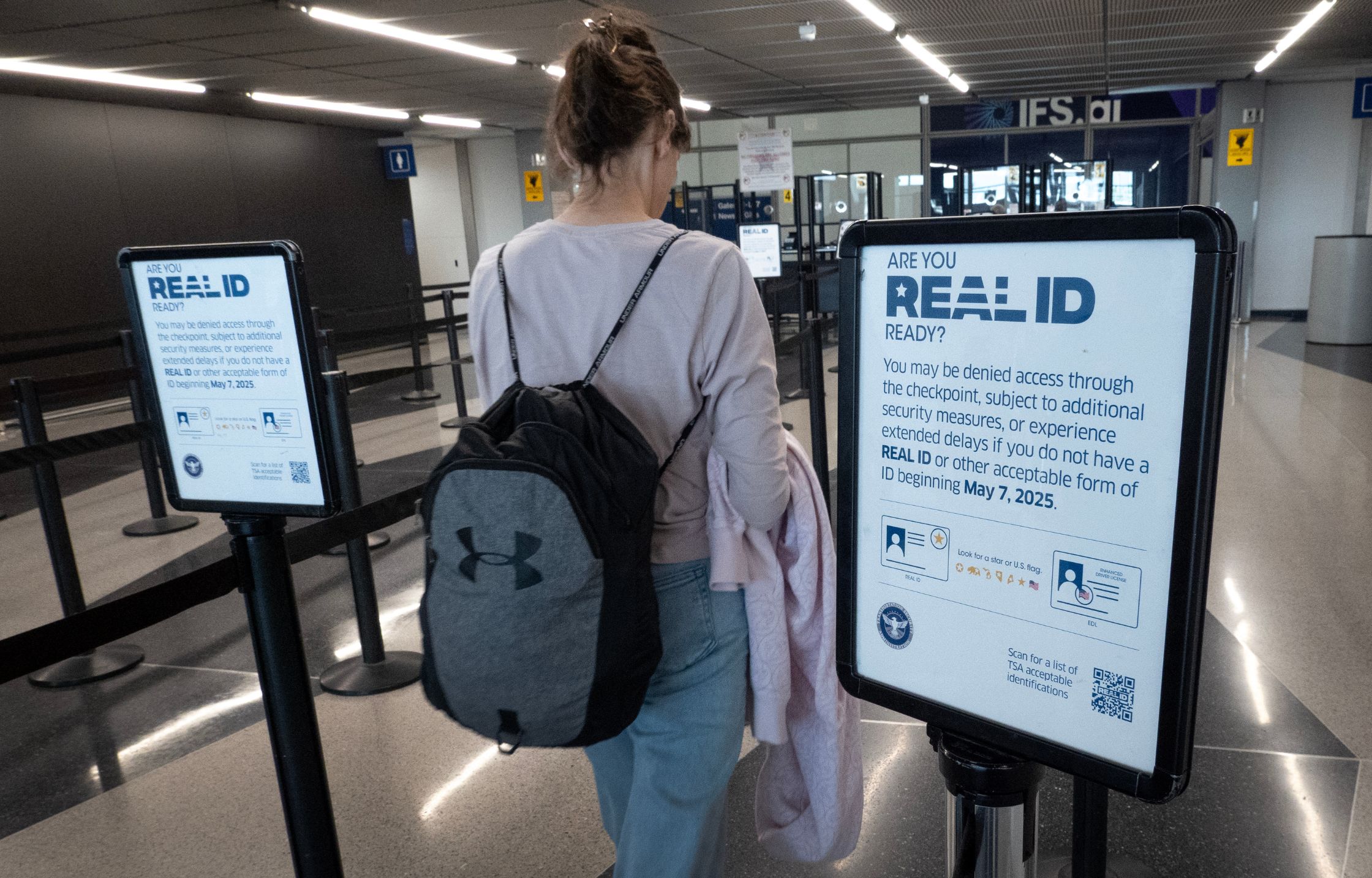
Community Alert: Immigration Arrests at Airports

公衆Wi-Fiを安全に使うために。知っておきたい7つのポイント

7 Useful Tips for Anyone Connecting to Public Wi-Fi

Can Border Agents Search Your Electronic Devices? It’s Complicated. | ACLU

Know Your Rights | Enforcement at the Airport | ACLU

Is it safe to travel with your phone right now?