


A landmark announcement by the frontier AI lab has been overshadowed by accusations of impropriety.
OpenAI’s latest math breakthroughs commit research misconduct, experts say
OpenAI released 10 AI-generated results over the weekend. Some mathematicians are unhappy with their approach
OpenAI accused of stealing math proof from expert Andreas Thom | Valerio Capraro posted on the topic | LinkedIn
BREAKING: OpenAI might have stolen another major proof. In a detailed Mathstodon post, which I report in full in the comments, Andreas Thom presents several pieces of evidence suggesting that OpenAI may have trained Astra on conversations in which he and Gábor Kun were working on Gromov’s soficity conjecture, one of the ten problems OpenAI later announced Astra had solved. I know Andreas. We met several times early in our careers. He is an exceptional mathematician, a leading expert on sofic and hyperlinear groups, and one of the most respected scholars in the field. He has spent two decades working on this problem. If his account is correct, this is not a minor dispute over attribution. It would mean that unpublished human work was absorbed into a model and then presented to the world as a breakthrough by the model itself. And if the allegations raised by Levent Alpöge, Tristan Buckmaster, and now Andreas Thom are all substantiated, we are no longer looking at isolated incidents. We may be looking at one of the greatest intellectual scandals in the history of science. AI is not discovering new mathematics. AI is stealing human discovery. | 201 comments on LinkedIn

OpenAI unleashes hundreds more math results upon a field already in shock
A month after resolving one of the six biggest open problems in mathematics, the company says its new internal model has toppled heaps more—this time without the multimillion-dollar price tag
OpenAI’s math breakthrough played to AI’s strengths
I tried to explain OpenAI’s solution more clearly than OpenAI did.
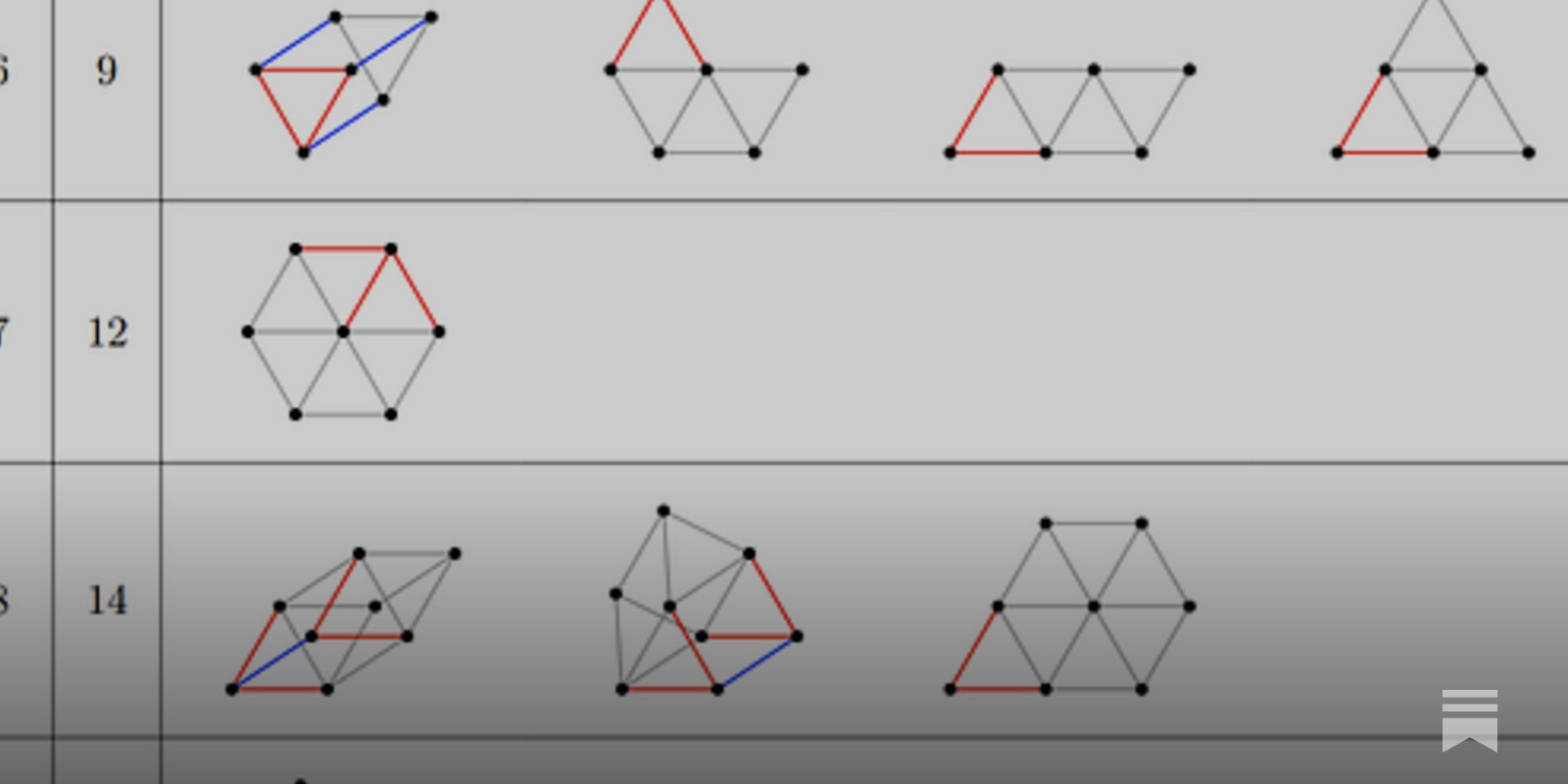
Statements — AHM
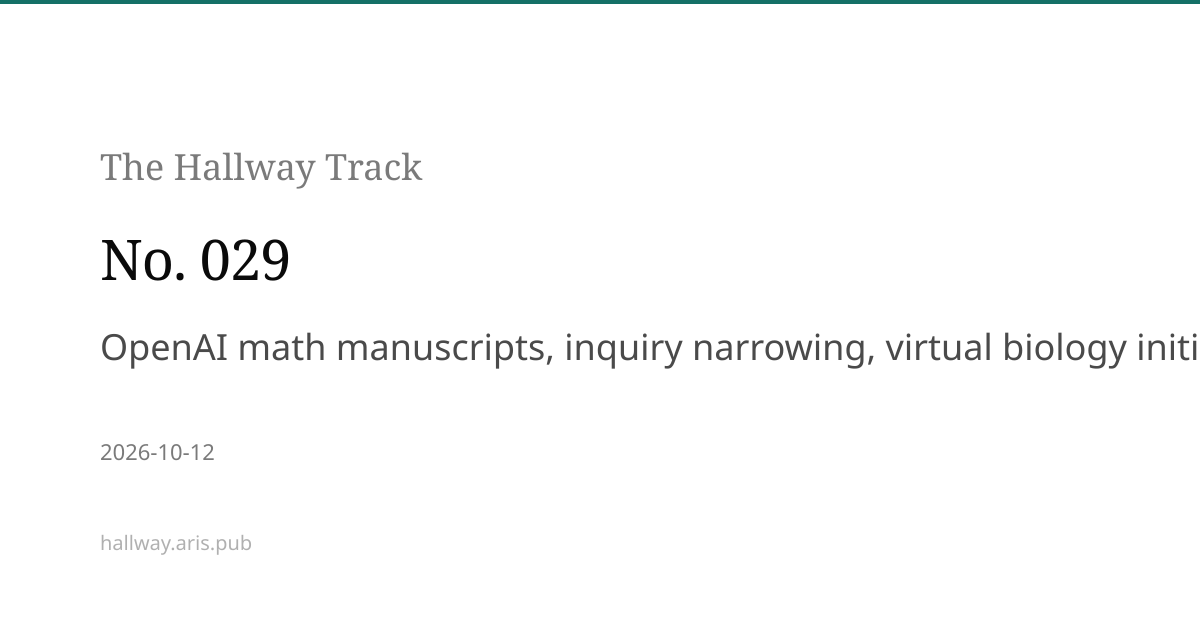
Yesterday, on October 6th, 2026, OpenAI – which is currently defending lawsuits against accusations of illegal plagiarism, copyright infringement, and trademark dilution – released a repository of manuscripts purporting to contain solutions to a number of high-profile problems in mathematics.
OpenAI spent millions to solve this famous math problem — mathematicians are furious
Mathematics relies on a community of experts openly sharing ideas.

OpenAI flags concerning new AI behavior and vows to track it more closely
OpenAI has disclosed six reports on unexpected or concerning behavior in artificial-intelligence models
Advisory Group on Mathematics and Artificial Intelligence
OpenAI is working with an independent Advisory Group on Mathematics and Artificial Intelligence to guide the review and communication of emerging AI results.
No. 029: OpenAI math manuscripts, inquiry narrowing, virtual biology initiative - The Hallway Track
The Hallway Track No. 029 - How AI is affecting the practice of science
OpenAI can’t tell if something was written by AI after all
OpenAI’s tool struggled with accuracy.

No. 020: Astra solves ten open math problems, AI agents fail at open-ended research, peer review under strain - The Hallway Track
The Hallway Track No. 020 - How AI is affecting the practice of science
Mathematician catches AI-generated research error by OpenAI president | Benjamin Golub posted on the topic | LinkedIn
In case you think the problem of science slop is hypothetical, here's something that happened on X yesterday: The president of OpenAI sharing wrong science slop as proud evidence of the power of mathematical AI. Within a day, the mathematician Tony Feng found a gap that undercut the paper's central argument; the author conceded, and (to his credit!) Brockman deleted the tweet as soon as he became aware. Feng was a hero to catch this. The author of the refuted claim is a mathematician but a self-described outsider to this area, with a prior big claim posted and quickly withdrawn. Greg Brockman is not an expert, either. Neither could check what they were amplifying. Heroes catching errors one at a time won't hold against the volume of AI-generated research now coming. We need an automated, independent verification layer for knowledge work, which is what we're building at Refine (refine.ink). Passing such verification should become a necessary step before big claims, especially outside one's own expertise. A link to a bigger-picture post on this is in the comments. | 23 comments on LinkedIn

A big lesson of my China visit: compute shortages are holding back Chinese AI
One estimate suggests that OpenAI has about as much compute as the entire Chinese AI industry.
OpenAI fought dirty on career-making math problem, says NYU mathematician | TechCrunch
There is a $1 million bounty for the first person providing a solution to the Navier-Stokes existence and smoothness problem.

OpenAI just blooped hundreds of proofs and counterexamples to open problems: github.com/openai/math/tree/main/preprin… Boggling.

math/preprints at main · openai/math
github.com