


The new generation of space architects can learn from our successes and failures in protecting the internet commons and build a better paradigm for space.
NASA
What we want is a hunter gatherer lifestyle with space age tools
Those who are convinced that there is more to things spend their time chasing it and not finding it often as not, and those who are convinced there isn't find themselves frustrated at the abyss.
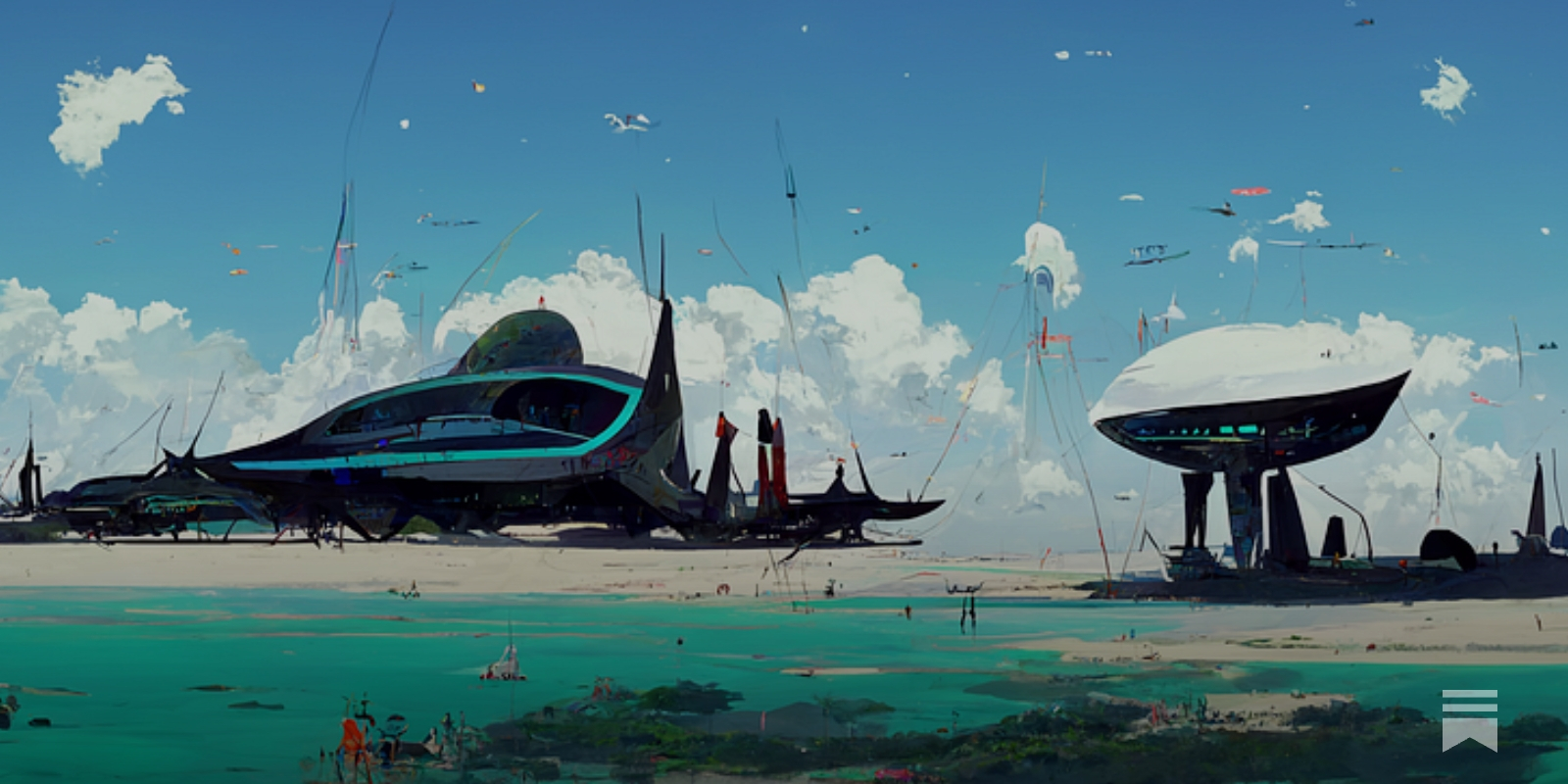
Architecture and the Internet: Designing places in cyberspace
Cyberspace, as the information space is called, has become accessible in the past decade through the World Wide Web. And although it can only be experienced through the mediation of computers, it is quickly becoming an alternative stage for everyday economic, cultural, and other human activities. As such, there is a potential and a need to design it according to place–like principles. Making places for human inhabitation is, of course, what architects, landscape architects, and town planners have been doing in physical space for thousands of years. It is curious, therefore, that Cyberspace designers have not capitalized on the theories, experiences, and practices that have been guiding physical place–making. While most 3D environments closely mimic physical spaces, they are, by and large, devoid of the essential characteristics that differentiate a ‘place’ from mere ‘space.’ And only rarely are they sensitive to, and take advantage of, the peculiarities of Cyberspace. We believe that this state of affairs is temporary, characteristic of early adoption stages of new technologies. As the Web matures, and as it assumes more fully its role as a destination rather than as means of communication, there will be a growing need to design it according to place–making principles. By looking at physical architecture as a case study and metaphor for organizing space into meaningful places, this paper explores the possibility of organizing Cyberspace into spatial settings that not only afford social interaction, but, like physical places, also embody and express cultural values. At the same time, because Cyberspace lacks materiality, is free from physical constraints, and because it can only be ‘inhabited’ by proxy, these ‘places’ may not necessarily resemble their physical counterparts.
ATmosphere technology to support organizing and activism
There has been some good writing by Mosh, Erlend, and Meri about this topic worth pulling in. Permissioned spaces coming to atproto will also unlock a lot of important affordances for crafting protected spaces for organizers. For example, permissioned spaces on semble would turn into community-run search engines. My hope is that atproto is the missing infrastructural piece that enables us to really shape digital spaces around the specific needs organizers and their communities rather the...

Ponomareva, The Human Factor in Space Exploration
by Valentina Ponomareva in Vladimir Orel, ed., Institut istorii estestvoznaniia i tekhinki. Godichnaia nauchnaia konferentsiia, 1998 [Proceedings of the 1998 annual conference of the Institute for the History of Natural Science and Technology], Moscow, pp. 614-18.
The Astrosky Ecosystem
We're building social media tools for the astronomy & space science communities. From feeds to hosting, we're billionaire-proofing scientific discussion for good.
Space to Grow — the privatisation of the solar system
A useful primer explains how cosmic exploration has been commercialised and explores the challenges in policing this new wild west

Introducing Ringspace: A Proposal for the Human Web
For months, I've been working on a project to demonstrate how we can preserve humanity on the web. It's finally ready for testing.

Erlend Sogge Heggen (@erlend.sh)
hey so, @roomy.space is now generally available for real-world use! 🥳 make atmospheric group spaces for friends & community, chat in real-time, progressively structure emergent topics into evergreen threads and cultivate enduring knowledge.

SpaceX signs an agreement with Anthropic to provide access to Colossus 1, and says Anthropic expressed interest in partnering for orbital compute capacity
xAI: SpaceX signs an agreement with Anthropic to provide access to Colossus 1, and says Anthropic expressed interest in partnering for orbital compute capacity

Launch into the future - Spaceship
Get online seamlessly with Spaceship Domains, Hosting, Email and other online products and solutions. Spaceship connects you with digital products empowering your ideas with top tier products, security and privacy, managed through a powerful and fast platform.

Launch into the future - Spaceship
Get online seamlessly with Spaceship Domains, Hosting, Email and other online products and solutions. Spaceship connects you with digital products empowering your ideas with top tier products, security and privacy, managed through a powerful and fast platform.
On Verticality
Explorations into the human need to escape the surface of the earth. A mashup of architecture, aeronautics, evolutionary psychology, anthropology, anatomy and human pre-history

Future of Science Social Media - ATmosphereConf 2026
The shock of the anthropocene: the earth, history and us
Dissecting the new theoretical buzzword of the "Anthrop…

hey so, @roomy.space is now generally available for real-world use! 🥳 make atmospheric group spaces for friends & community, chat in real-time, progressively structure emergent topics into evergreen threads and cultivate enduring knowledge.

Roomy is generally available
blog.roomy.space