


A government committee says that the country’s growing dependence on the data analytics company is a serious liability.
Anthropic Data Fears Prompt Nvidia, Palantir and Booz Allen to Restrict Model Use
As paranoia rises over whether Anthropic or OpenAI could learn from their customers’ intellectual property, large firms involved in sensitive corporate work, such as Palantir Technologies, Nvidia and Booz Allen Hamilton, have started demanding new guarantees or reducing or eliminating use of the ...

Britain’s grid operator gave Palantir contract without inviting rival bids
[FREE TO READ] Neso cited a legal exemption that removes the requirement to consider other suppliers if dependencies leave no alternative

Palantir
Palantir Technologies Inc. is a data analytics company founded in 2003 with early backing from tech investor Peter Thiel and In-Q-Tel, the venture capital arm of...

Opinion | These A.I. Policies Will Hurt Our Business. We Should Do Them Anyway.
The risks posed by A.I. are too great to forgo any regulation, even for those who stand to gain tremendously from the technology’s rise.

Revealed: Britain's contracts with Palantir hit £1bn
Newly surfaced disclosures reveal the government has spent or agreed to spend at least £992m with Peter Thiel’s controversial AI company – as pressure mounts on Andy Burnham to block them. Max Colbert reports

NDIS data may have ended up in Palantir’s analytics platform as part of efforts to curb fraud
Exclusive: The Australian Criminal Intelligence Commission, which has access to NDIA data, used Palantir as part of a multi-agency fraud taskforce
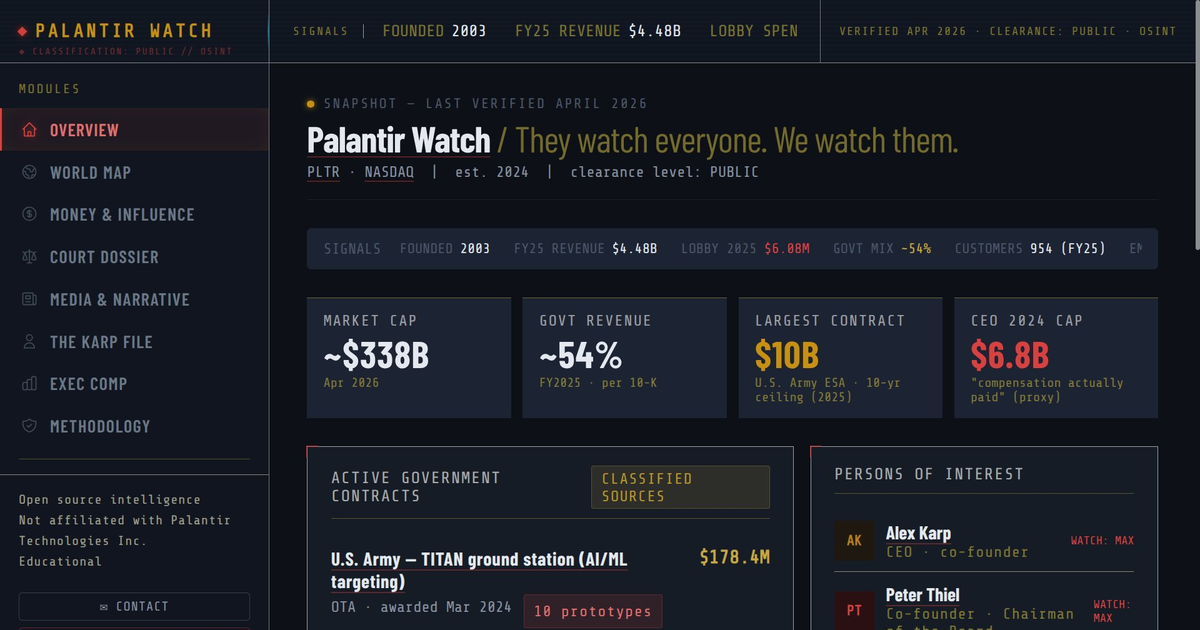
PalantirWatch — Tracking Palantir Technologies
Independent watchdog tracking Palantir's contracts, executives, lobbying, legal exposure, and global footprint.
NHS FDP Season Finale: UK Parliament vs Palantir - it's the last days of Isengard.
Arnaud Bertrand on Twitter / X
After reflection, this new narrative by Palantir is probably much more consequential than people may assume.Palantir is basically being the canary in the coal mine announcing the death of two major assumptions propping up the US economy right now: 1) that AI labs will be able… https://t.co/oLRdkWe8nL— Arnaud Bertrand (@RnaudBertrand) July 3, 2026
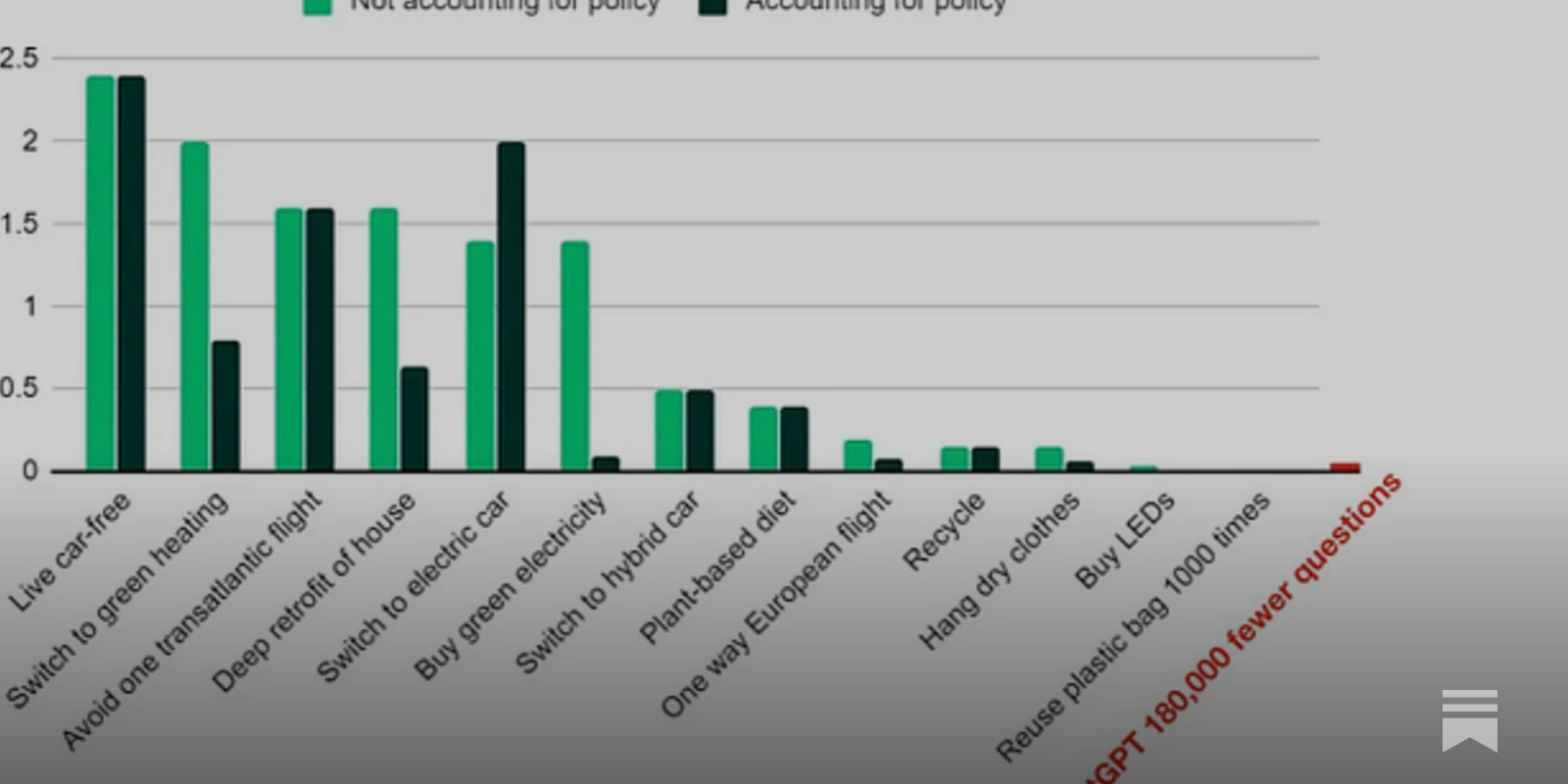
A short summary of my argument that using ChatGPT isn't bad for the environment
To share with anyone still worried
Palantir posted a manifesto that reads like the ramblings of a comic book villain
Palantir shared 22 points excerpted from CEO Alex Karp and Nicholas W. Zamiska's 2025 book, The Technological Republic, and they're troubling.

A Duty of Loyalty for Privacy Law
Data privacy law fails to stop companies from engaging in self-serving, opportunistic behavior at the expense of those who trust them with their data. This is a

What Does Palantir Actually Do?
Palantir is often called a data broker, a data miner, or a giant database of personal information. In reality, it’s none of these—but even former employees struggle to explain it.

Can “Conscious Data Contribution” Help Users to Exert “Data Leverage” Against Technology Companies?
Tech users currently have limited ability to act on concerns regarding the negative societal impacts of large tech companies. However, recent work suggests that users can exert leverage using their role in the generation of valuable data, for instance by withholding their data contributions to intelligent technologies. We propose and evaluate a new means to exert this type of leverage against tech companies: "conscious data contribution" (CDC).
