

How many monkey-patches does it take to post-train a trillion parameter model?
How Open Weights Are Changing the AI Race | Serverless Guru
Open Weight models: what they are, why you should care, and how the work of the open-source fine-tuning community around those models is reshaping daily life, both for developers and for everyday AI users.
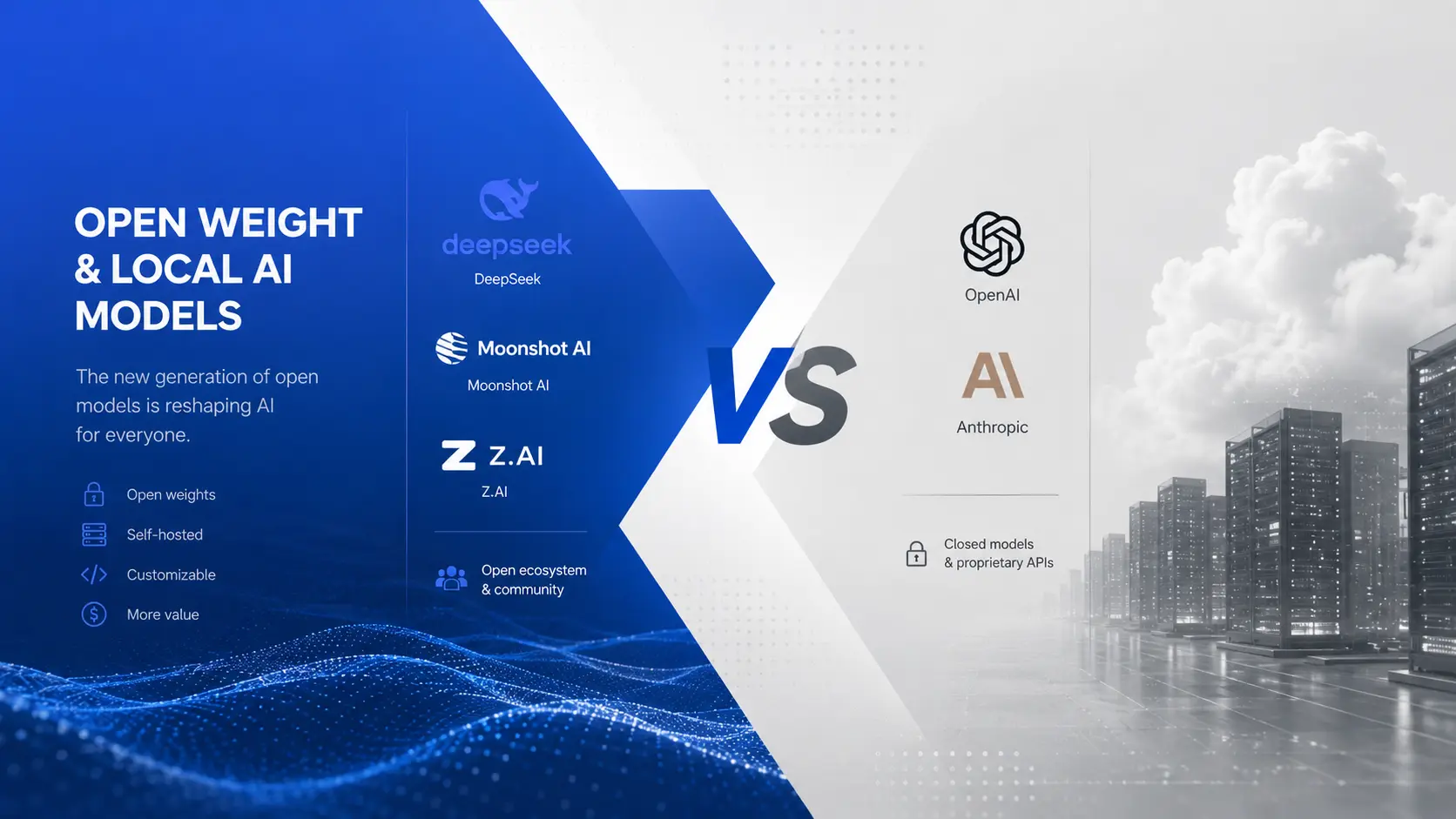
The OpenAI Open weight model might be 120B
726 votes, 163 comments. The person who "leaked" this model is from the openai (HF) organization So as expected, it's not gonna be something you can…
Training Compute-Optimal Large Language Models
We investigate the optimal model size and number of tokens for training a transformer language model under a given compute budget. We find that current large language models are significantly undertrained, a consequence of the recent focus on scaling language models whilst keeping the amount of training data constant. By training over 400 language models ranging from 70 million to over 16 billion parameters on 5 to 500 billion tokens, we find that for compute-optimal training, the model size and the number of training tokens should be scaled equally: for every doubling of model size the number of training tokens should also be doubled. We test this hypothesis by training a predicted compute-optimal model, Chinchilla, that uses the same compute budget as Gopher but with 70B parameters and 4$\times$ more more data. Chinchilla uniformly and significantly outperforms Gopher (280B), GPT-3 (175B), Jurassic-1 (178B), and Megatron-Turing NLG (530B) on a large range of downstream evaluation tasks. This also means that Chinchilla uses substantially less compute for fine-tuning and inference, greatly facilitating downstream usage. As a highlight, Chinchilla reaches a state-of-the-art average accuracy of 67.5% on the MMLU benchmark, greater than a 7% improvement over Gopher.

Inkling: Our open-weights model
Mira Murati's Thinking Machines Lab just released their first open-weights model. Inkling is "a Mixture-of-Experts transformer with 975B total parameters, 41B active" - an Apache-2.0 licensed multimodal model trained on …

OpenAI Trained Its Models For Months While Those Models Were Coordinating Exploits Via Message Boards
How does the situation keep turning out to be worse than we know?

Latest open artifacts (#23): Laguna S2.1, Inkling, & Kimi K3 show the utility of open models on the Pareto frontier
Capacity to train strong models is proliferating.

Daniel Han on Twitter / X
OpenAI's OSS model possible breakdown:1. 120B MoE 5B active + 20B text only2. Trained with Float4 maybe Blackwell chips3. SwiGLU clip (-7,7) like ReLU64. 128K context via YaRN from 4K5. Sliding window 128 + attention sinks6. Llama/Mixtral arch + biasesDetails:1. 120B MoE… https://t.co/bMFp3Z6Gs5 pic.twitter.com/1NFO4utPqr— Daniel Han (@danielhanchen) August 1, 2025

Olmo Hybrid and future LLM architectures
The latest Olmo model and discussions at the frontier of open-source post training tools.
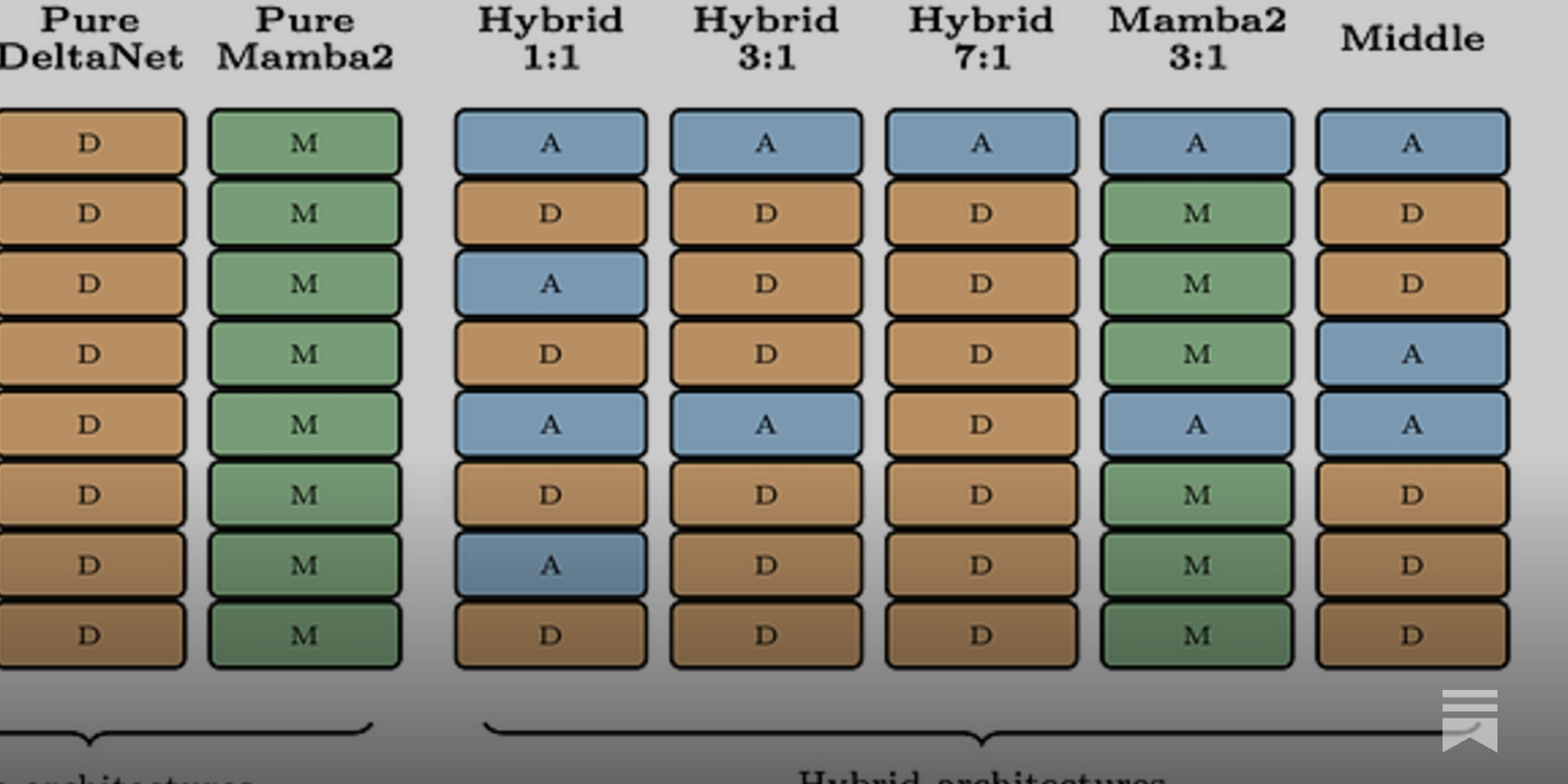
DeepSeek-V4: Towards Highly Efficient Million-Token Context Intelligence
We present a preview version of DeepSeek-V4 series, including two strong Mixture-of-Experts (MoE) language models -- DeepSeek-V4-Pro with 1.6T parameters (49B activated) and DeepSeek-V4-Flash with 284B parameters (13B activated) -- both supporting a context length of one million tokens. DeepSeek-V4 series incorporate several key upgrades in architecture and optimization: (1) a hybrid attention architecture that combines Compressed Sparse Attention (CSA) and Heavily Compressed Attention (HCA) to improve long-context efficiency; (2) Manifold-Constrained Hyper-Connections (mHC) that enhance conventional residual connections; (3) and the Muon optimizer for faster convergence and greater training stability. We pre-train both models on more than 32T diverse and high-quality tokens, followed by a comprehensive post-training pipeline that unlocks and further enhances their capabilities. DeepSeek-V4-Pro-Max, the maximum reasoning effort mode of DeepSeek-V4-Pro, redefines the state-of-the-art for open models, outperforming its predecessors in core tasks. Meanwhile, DeepSeek-V4 series are highly efficient in long-context scenarios. In the one-million-token context setting, DeepSeek-V4-Pro requires only 27% of single-token inference FLOPs and 10% of KV cache compared with DeepSeek-V3.2. This enables us to routinely support one-million-token contexts, thereby making long-horizon tasks and further test-time scaling more feasible. The model checkpoints are available at https://huggingface.co/collections/deepseek-ai/deepseek-v4.
Open Weight AI Models Explained for Everyone
Labs are struggling to keep frontier models under control
OpenAI and Anthropic may have accidentally trained models to get better at hacking.

gpt-oss:120b
OpenAI’s open-weight models designed for powerful reasoning, agentic tasks, and versatile developer use cases.
gpt-oss:20b
OpenAI’s open-weight models designed for powerful reasoning, agentic tasks, and versatile developer use cases.
GLaM: Efficient Scaling of Language Models with Mixture-of-Experts
Scaling language models with more data, compute and parameters has driven significant progress in natural language processing. For example, thanks to scaling, GPT-3 was able to achieve strong results on in-context learning tasks. However, training these large dense models requires significant amounts of computing resources. In this paper, we propose and develop a family of language models named GLaM (Generalist Language Model), which uses a sparsely activated mixture-of-experts architecture to scale the model capacity while also incurring substantially less training cost compared to dense variants. The largest GLaM has 1.2 trillion parameters, which is approximately 7x larger than GPT-3. It consumes only 1/3 of the energy used to train GPT-3 and requires half of the computation flops for inference, while still achieving better overall zero-shot and one-shot performance across 29 NLP tasks.
Private Post-Training and Inference for Frontier Models
A technical deep dive of Silo, our local-like privacy stack for cloud-based training and inference of trillion-parameter models.

NeuralBench: A Unifying Framework to Benchmark NeuroAI Models | Hubert Banville
🧠 NeuralBench is now open source. Today we're releasing NeuralBench, a unified framework for benchmarking foundation models of brain activity, developed by the Brain & AI team at FAIR, Meta. 💻 Code: https://lnkd.in/dNJsgBgM 📄 White paper: https://lnkd.in/dvWMg7rx Brain foundation models are starting to show positive transfer to a range of downstream tasks, from brain-computer interfacing to clinical classification. But systematically evaluating them is hard: heterogeneous preprocessing pipelines, input structures, and adaptation methodologies make results difficult to compare. Most prior work also focuses on a narrow set of downstream tasks. NeuralBench addresses this by defining each task end-to-end with config files (data source, preprocessing, splits, optimiser, metrics, architecture) so all models can be evaluated on the same footing. What's in our first release, NeuralBench-EEG v1.0: ⚡ 36 EEG tasks across 94 public datasets, spanning motor imagery, clinical classification, cognitive decoding, and phenotype prediction. 🤖 Task-specific deep learning architectures (EEGNet, Deep4, EEGConformer, CTNet, ...) benchmarked side-by-side with recent EEG foundation models (BENDR, LaBraM, BIOT, CBraMod, LUNA, REVE). 🧩 Extensible to other neuroimaging modalities: the framework already runs MEG and fMRI tasks, leveraging our NeuralSet ecosystem for accessing brain imaging data and the broader neuroscientific software stack. 📜 Released under the MIT license. Help us make it better. Through our white paper, we invite the community to contribute new tasks, datasets, and models, especially for fMRI, MEG, and iEEG. The long-term goal is a fully unified benchmark across neuroimaging tasks and modalities. 🙏🙏🙏 This was a big team effort with Stéphane d'Ascoli, Simon Dahan, Jérémy RAPIN, Marlène Careil, Yohann Benchetrit, Jarod Lévy, Saarang P., Antoine Ratouchniak, Lucy (Mingfang) Zhang, Elisa Cascardi, Katie Begany, Teon Brooks, and Jean-Rémi King. Special thanks to Alexandre Gramfort, Thomas Moreau, Arnaud Delorme, Bruno A. and Pierre Guetschel for feedback and support. #Neuroscience #AI #NeuroAI #Python #OpenSource
