


A technical deep dive of Silo, our local-like privacy stack for cloud-based training and inference of trillion-parameter models.
Machine Unlearning
Once users have shared their data online, it is generally difficult for them to revoke access and ask for the data to be deleted. Machine learning (ML) exacerbates this problem because any model trained with said data may have memorized it, putting users at risk of a successful privacy attack exposing their information. Yet, having models unlearn is notoriously difficult. We introduce SISA training, a framework that expedites the unlearning process by strategically limiting the influence of a data point in the training procedure. While our framework is applicable to any learning algorithm, it is designed to achieve the largest improvements for stateful algorithms like stochastic gradient descent for deep neural networks. SISA training reduces the computational overhead associated with unlearning, even in the worst-case setting where unlearning requests are made uniformly across the training set. In some cases, the service provider may have a prior on the distribution of unlearning requests that will be issued by users. We may take this prior into account to partition and order data accordingly, and further decrease overhead from unlearning. Our evaluation spans several datasets from different domains, with corresponding motivations for unlearning. Under no distributional assumptions, for simple learning tasks, we observe that SISA training improves time to unlearn points from the Purchase dataset by 4.63x, and 2.45x for the SVHN dataset, over retraining from scratch. SISA training also provides a speed-up of 1.36x in retraining for complex learning tasks such as ImageNet classification; aided by transfer learning, this results in a small degradation in accuracy. Our work contributes to practical data governance in machine unlearning.

Confidential Inference via Trusted Virtual Machines
Announcing a new collaborative research paper on Confidential Inference, a set of tools to improve the security of our model weights and of our users' data

Eternal Sunshine of the Spotless Net: Selective Forgetting in Deep Networks
We explore the problem of selectively forgetting a particular subset of the data used for training a deep neural network. While the effects of the data to be forgotten can be hidden from the output of the network, insights may still be gleaned by probing deep into its weights. We propose a method for "scrubbing" the weights clean of information about a particular set of training data. The method does not require retraining from scratch, nor access to the data originally used for training. Instead, the weights are modified so that any probing function of the weights is indistinguishable from the same function applied to the weights of a network trained without the data to be forgotten. This condition is a generalized and weaker form of Differential Privacy. Exploiting ideas related to the stability of stochastic gradient descent, we introduce an upper-bound on the amount of information remaining in the weights, which can be estimated efficiently even for deep neural networks.
Membership Inference Attacks Against Machine Learning Models
We quantitatively investigate how machine learning models leak information about the individual data records on which they were trained. We focus on the basic membership inference attack: given a data record and black-box access to a model, determine if the record was in the model's training dataset. To perform membership inference against a target model, we make adversarial use of machine learning and train our own inference model to recognize differences in the target model's predictions on the inputs that it trained on versus the inputs that it did not train on. We empirically evaluate our inference techniques on classification models trained by commercial "machine learning as a service" providers such as Google and Amazon. Using realistic datasets and classification tasks, including a hospital discharge dataset whose membership is sensitive from the privacy perspective, we show that these models can be vulnerable to membership inference attacks. We then investigate the factors that influence this leakage and evaluate mitigation strategies.
Membership Inference Attacks Against Machine Learning Models
We quantitatively investigate how machine learning models leak information about the individual data records on which they were trained. We focus on the basic membership inference attack: given a data record and black-box access to a model, determine if the record was in the model's training dataset. To perform membership inference against a target model, we make adversarial use of machine learning and train our own inference model to recognize differences in the target model's predictions on the inputs that it trained on versus the inputs that it did not train on. We empirically evaluate our inference techniques on classification models trained by commercial "machine learning as a service" providers such as Google and Amazon. Using realistic datasets and classification tasks, including a hospital discharge dataset whose membership is sensitive from the privacy perspective, we show that these models can be vulnerable to membership inference attacks. We then investigate the factors that influence this leakage and evaluate mitigation strategies.
Towards Feasible, Private, Distributed LLM Inference
Exploring how the Secure Transformer Inference Protocol (STIP) protects inputs, outputs, and model weights with lightweight permutations enabling efficient, privacy-safe LLM inference at scale.
Privacy Risk in Machine Learning: Analyzing the Connection to Overfitting
Machine learning algorithms, when applied to sensitive data, pose a distinct threat to privacy. A growing body of prior work demonstrates that models produced by these algorithms may leak specific private information in the training data to an attacker, either through the models' structure or their observable behavior. However, the underlying cause of this privacy risk is not well understood beyond a handful of anecdotal accounts that suggest overfitting and influence might play a role. This paper examines the effect that overfitting and influence have on the ability of an attacker to learn information about the training data from machine learning models, either through training set membership inference or attribute inference attacks. Using both formal and empirical analyses, we illustrate a clear relationship between these factors and the privacy risk that arises in several popular machine learning algorithms. We find that overfitting is sufficient to allow an attacker to perform membership inference and, when the target attribute meets certain conditions about its influence, attribute inference attacks. Interestingly, our formal analysis also shows that overfitting is not necessary for these attacks and begins to shed light on what other factors may be in play. Finally, we explore the connection between membership inference and attribute inference, showing that there are deep connections between the two that lead to effective new attacks.
ZKPROV: A Zero-Knowledge Approach to Dataset Provenance for Large Language Models
As large language models (LLMs) are used in sensitive fields, accurately verifying their computational provenance without disclosing their training datasets poses a significant challenge, particularly in regulated sectors such as healthcare, which have strict requirements for dataset use. Traditional approaches either incur substantial computational cost to fully verify the entire training process or leak unauthorized information to the verifier. Therefore, we introduce ZKPROV, a novel cryptographic framework allowing users to verify that the LLM's responses to their prompts are trained on datasets certified by the authorities that own them. Additionally, it ensures that the dataset's content is relevant to the users' queries without revealing sensitive information about the datasets or the model parameters. ZKPROV offers a unique balance between privacy and efficiency by binding training datasets, model parameters, and responses, while also attaching zero-knowledge proofs to the responses generated by the LLM to validate these claims. Our experimental results demonstrate sublinear scaling for generating and verifying these proofs, with end-to-end overhead under 3.3 seconds for models up to 8B parameters, presenting a practical solution for real-world applications. We also provide formal security guarantees, proving that our approach preserves dataset confidentiality while ensuring trustworthy dataset provenance.
Gajesh on Twitter / X
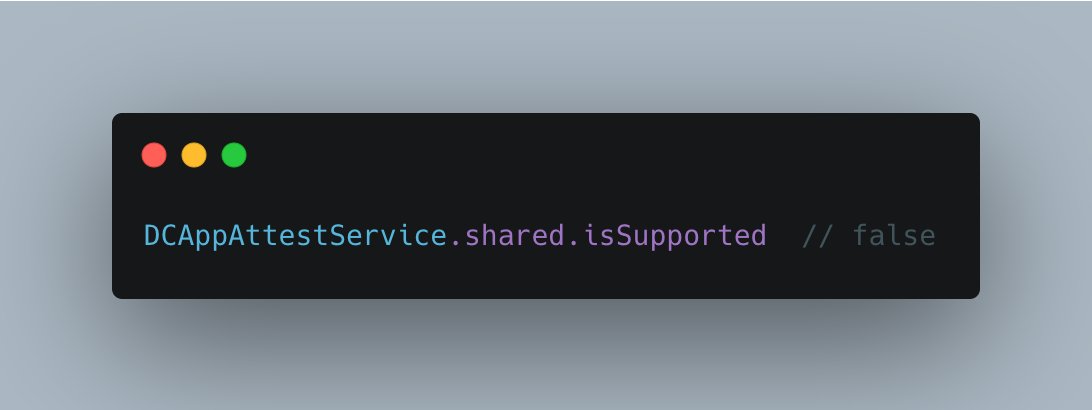
TL;DRapple has turn on this switch for everyone to participate in decentralized inferenceppl can rent out their unused compute space and anyone can use this with privacy guarantees https://t.co/LTP4zyjsdt pic.twitter.com/8Dvo7XK8jJ— Gajesh (@gajesh) February 18, 2026
Equivariance Encryption for Private LLM Inference — Davide Cifarelli
This article shows how we can leverage equivariant transformations to run LLM inference on encrypted data without losing model performance.
VaultGemma: The world's most capable differentially private LLM
Amer Sinha, Software Engineer, and Ryan McKenna, Research Scientist, Google Research

zama-ai/concrete-ml
Concrete ML: Privacy Preserving ML framework using Fully Homomorphic Encryption (FHE), built on top of Concrete, with bindings to traditional ML frameworks.
Unlinkable Inference as a User Privacy Architecture
Unlinkable inference is a technique that provably sandboxes your AI requests from each other and from your identity. We discuss its building blocks, applications, and how it fits into the broader landscape of private personal intelligence.
PrivacySIM: Evaluating LLM Simulation of User Privacy Behavior
Large language models (LLMs) are increasingly used to simulate human behavior, but their ability to simulate individual privacy decisions is not well understood. In this paper, we address the problem of evaluating whether a core set of user persona attributes can drive LLMs to simulate individual-level privacy behavior. We introduce PrivacySIM, an evaluation suite that benchmarks LLM simulation of user privacy behavior against the ground-truth responses of $1{,}000$ users. These users are drawn from five published user studies on privacy spanning LLM healthcare consultations, conversational agents, and chatbots. Drawing on these user studies, we hypothesize three persona facets as plausible predictors of privacy decision-making: demographics, previous experiences, and stated privacy attitudes. We condition nine frontier LLMs on subsets of these three facets and measure how often each model's response to a data-sharing scenario matches the user's actual response. Our findings show that (1) privacy persona conditioning consistently improves simulation quality over no-persona conditioning, but even the strongest model (40.4% accuracy) remains far from faithfully simulating individual privacy decisions. (2) A user's stated privacy attitudes alone may not be the best predictor because they often diverge from the user's actual privacy behavior. (3) Users with high AI/chatbot experience but low stated privacy attitudes are the most challenging to simulate. PrivacySIM is a first step toward understanding and improving the capabilities of LLMs to simulate user privacy decisions. We release PrivacySIM to enable further evaluation of LLM privacy simulation.
Vertical Federated Learning: Concepts, Advances, and Challenges
Vertical Federated Learning (VFL) is a federated learning setting where multiple parties with different features about the same set of users jointly train machine learning models without exposing their raw data or model parameters. Motivated by the rapid growth in VFL research and real-world applications, we provide a comprehensive review of the concept and algorithms of VFL, as well as current advances and challenges in various aspects, including effectiveness, efficiency, and privacy. We provide an exhaustive categorization for VFL settings and privacy-preserving protocols and comprehensively analyze the privacy attacks and defense strategies for each protocol. In the end, we propose a unified framework, termed VFLow, which considers the VFL problem under communication, computation, privacy, as well as effectiveness and fairness constraints. Finally, we review the most recent advances in industrial applications, highlighting open challenges and future directions for VFL.