

Investigative essays on corporate enshittification — how the brands you trusted made everything worse on purpose, and who profits when they do.
Digital products and services are getting worse – but the trend can be reversed
A new report from the Norwegian Consumer Council shows how enshittification affects both consumers and society at large. Luckily, it‘s possible to turn the tide.
Seven Rules For Internet CEOs To Avoid Enshittification
It seems that we’ve had a rash of formerly loved internet services going down the enshittification curve. As coined (brilliantly) by Cory Doctorow, enshittification is the process by which a compan…

Cory Doctorow at CF 25: How Enshittification Conquered the 21st Century and How We Can Overthrow It
Pluralistic: You can’t fight enshittification (31 Jul 2025) – Pluralistic: Daily links from Cory Doctorow
I need to tell you something unsatisfying: your personal consumption choices will not make a meaningful difference to the amount of enshittification you experience in your life.
Enshittification | The Paper Pilot
The Paper Pilot's digital garden of thoughts on philosophy, politics, and sociology
Q&A: Robin Berjon on freeing journalists' feeds.
The AT protocol and “long-term, lifelong, sustainable protection against enshittification.”

When Nature Calls: The Enshittification of Science and Its Enablers
Proof-of-work papers, policy laundering, and the collapse of self-correction

The Reversal Test: Eliminating Status Quo Bias in Applied Ethics
View all available purchase options and get full access to this article.
Pluralistic: Enshittification isn’t caused by venture capital (20 Jan 2025) – Pluralistic: Daily links from Cory Doctorow
Many of us have left the big social media platforms; far more of us wish we could leave them; and even those of us who've escaped from Facebook/Insta and Twitter still spend a lot of time trying to figure out how to get the people we care about off of them, too.
“CEO said a thing!”
A blistering guide to what lazy journalism too often looks like
So maybe now we can agree that having an unchecked research integrity militia who unfortunately has the ear of the press and increasingly that of the the publishers, but who fiercely rejects any… | Ioana A. Cristea
So maybe now we can agree that having an unchecked research integrity militia who unfortunately has the ear of the press and increasingly that of the the publishers, but who fiercely rejects any minimal ethics or code of conduct, is a (growing) problem? Also, that 1. problems have to be investigated before deciding they are are legitimate and serious; 2. this investigation is not social media, blogs and the press; 3. this investigation should not be on the front page of journals and Retraction Watch; 4. there are degrees of seriousness and some things can just be corrected or are simply not very consequential (no, it's not a house of bricks where we have to check every brick, that's a dumb analogy), so being absolutely hysterical and overdramatic about any lie, inaccuracy or mistake is purposeful at worse and should be ignored at best and 5. it is not only unnecessary, but harmful, to also go into other, non-academic things the person did or does to complete "investigations" that you (press, sleuth, blogger, etc) do not have the tools and information to do completely and accurately (this fixation would be called harassment in the before times). Others will justly write about what the institutions did or did not do, but what I want to say is that we really should end it with the blank credit we give to any and all allegations that come from the establish research integrity truth fighters.

Debunking the science of advertising
We delve into the world of advertising, worth hundreds of billions of dollars annually, to find out if it's really even that effective. A collection with 3 stories from The Correspondent.
Pluralistic: Tiktok’s enshittification (21 Jan 2023) – Pluralistic: Daily links from Cory Doctorow
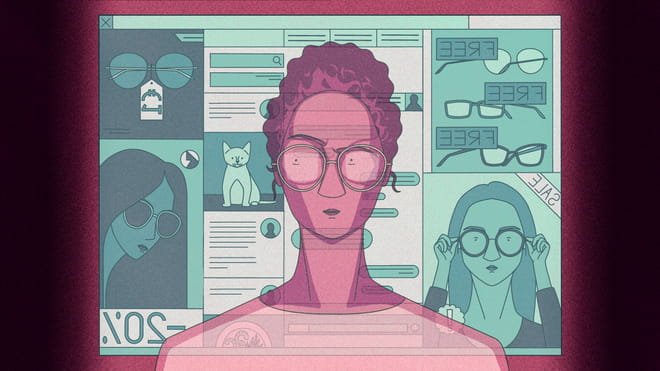
Here is how platforms die: first, they are good to their users; then they abuse their users to make things better for their business customers; finally, they abuse those business customers to claw back all the value for themselves. Then, they die.
The Rise of ``Worse is Better''
Corporate Bungling And Political Scandal Abound In Jesse Eisinger's New Book
Why don't crooked corporate CEO's go to jail anymore? Pulitzer Prize-winning journalist Jesse Eisinger uncovers culture of cowardice, incompetence, and corruption in both government and finance.

Howtown