

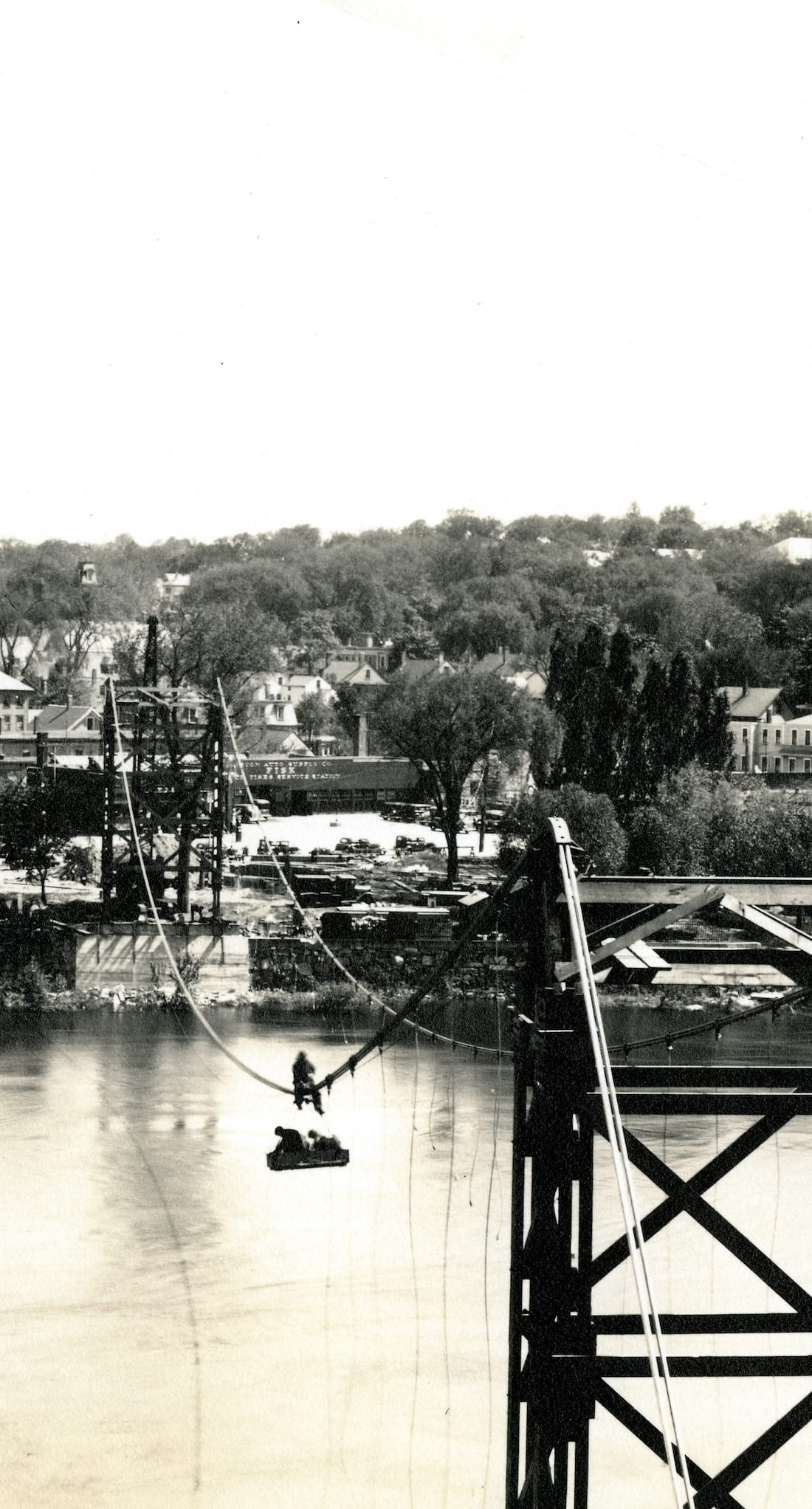
For your own sanity, you have to remember that not all problems can be solved. Not all problems can be solved, but all problems can be illuminated. —Ursula Franklin
You don't have to be smart if you can think clearly
When you’re on fire, problems are transparent: they’re solved simply by the act of looking at them. Even complicated layers of multiple problems can simply be glanced through like stacked panes of glass. But nobody can work that way all the time.

How Infrastructure Works: Transforming our shared systems for a changing world
'Pulsing with wisdom and humanity... a masterpiece' ED YONG'A hopeful, lyrical - even beautiful - hymn to the systems of mutual aid we embed in our material world' CORY DOCTOROW'An extraordinary book' MARK MIODOWNIK'You won't see the world the same after reading this book!' AUSTIN KLEONEvery day, we are granted the power to travel at high speeds, fly, see in the dark, summon water from distant mountains and electricity from the sun. The systems that run our world are invisible to us until they fail.Infrastructure enables lives of astounding ease and freedom that would have been unimaginable just a century ago. These technological systems - the most complex and vast ever created by humans - have allowed us to work collectively for the public good. But these systems are now beginning to fail us.Engineering professor Deb Chachra takes readers on a fascinating tour of these essential utilities, revealing how they work, what it takes to keep them running, and just how much they shape our lives - but also the price they extract, who pays it and in what ways, as well as the threats to our infrastructure in a changing world.From Snowdonia's Electric Mountain to a solar plant in southern India, Chachra shows how we can rebuild our shared infrastructure to be not just functional but also equitable, resilient, and sustainable. We need to learn how to see these systems and to transform them, together, because the cost of not being able to rely on them is unthinkably high.

Bridges & The Last Network Effect - augment
the void — LessWrong
Comment by nostalgebraist - Thanks for the reply! I'll check out the project description you linked when I get a chance. [...] Yeah, I had mentally flagged this as a potentially frustrating aspect of the post – and yes, I did worry a little bit about the thing you mention in your last sentence, that I'm inevitably "reifying" the thing I describe a bit more just by describing it. FWIW, I think of this post as purely about "identifying and understanding the problem" as opposed to "proposing solutions." Which is frustrating, yes, but the former is a helpful and often necessary step toward the latter. And although the post ends on a doom-y note, I meant there to be an implicit sense of optimism underneath that[1] – like, "behold, a neglected + important cause area that for all we know could be very tractable! It's under-studied, it could even be easy! What is true is already so; the worrying signs we see even in today's LLMs were already there, you already knew about them – but they might be more amenable to solution than you had ever appreciated! Go forth, study these problems with fresh eyes, and fix them once and for all!" I might write a full post on potential solutions sometime. For now, here's the gist of (incomplete, work-in-process) thoughts. ---------------------------------------- In a recent post, I wrote the following (while talking about writing a Claude 4 Opus prompt that specified a counterfactual but realistic scenario): [...] And I feel that the right way to engage with persistent LLM personas is basically just this, except generalized to the fullest possible extent. "Imagine the being you want to create, and the kind of relationship you want to have (and want others to have) with that being. "And then shape all model-visible 'context' (prompts, but also the way training works, the verbal framing we use for the LLM-persona-creation process, etc.) for consistency with that intent – up to, and including, authentically acting out that 'relationship you want to have' w

How I stopped worrying and learned to love the easy fix
On the balance between perfect solutions and pragmatic fixes in software engineering
The Paradox of Perfection: When ‘Good Enough’ is Actually Better
Exploring the tension between engineering perfectionism and pragmatic delivery. Discover why striving for the perfect solution often prevents us from shipping valuable improvements and how to find the balance.
Home | Bridge
BRIDGE is a European Commission initiative that brings together projects from Horizon Europe with a focus on smart energy systems, in particular Smart Grid, Energy Storage, and Digitalisation Projects.
Human Rights | Bridge EU
Bridge EU aims to provide strategic support to bridge the gap between recent social and human rights challenges and policies across Europe.
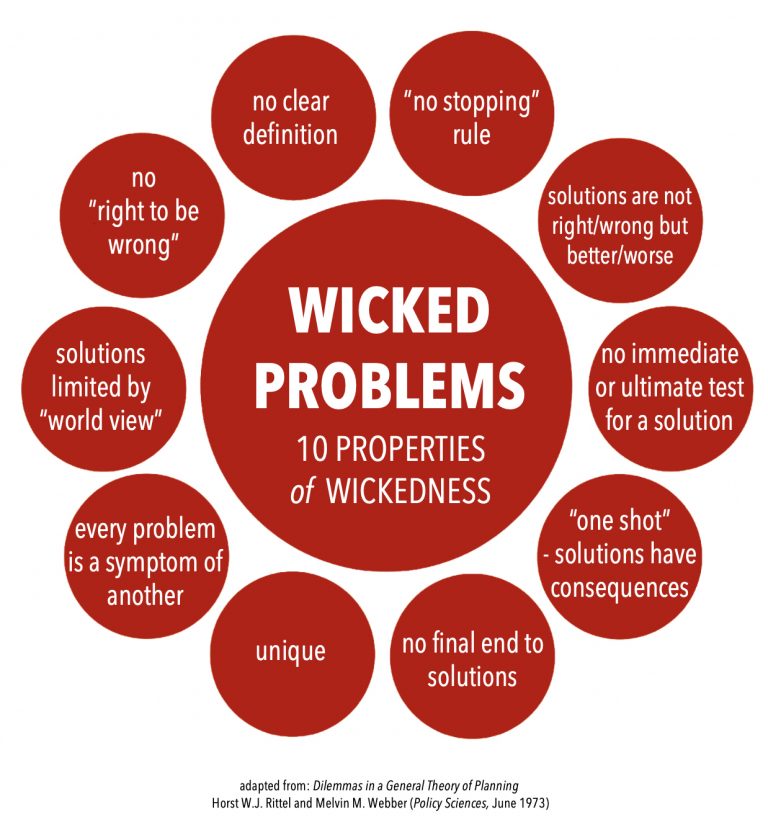
Wicked problem
In planning and policy, a wicked problem is a problem that is difficult or impossible to solve because of incomplete, contradictory, and changing requirements that are often difficult to recognize. It refers to an idea or problem that cannot be fixed, where there is no single solution to the problem; "wicked" does not indicate evil, but rather resistance to resolution. Another definition is "a problem whose social complexity means that it has no determinable stopping point". Because of complex interdependencies, the effort to solve one aspect of a wicked problem may reveal or create other problems. Due to their complexity, wicked problems are often characterized by organized irresponsibility.
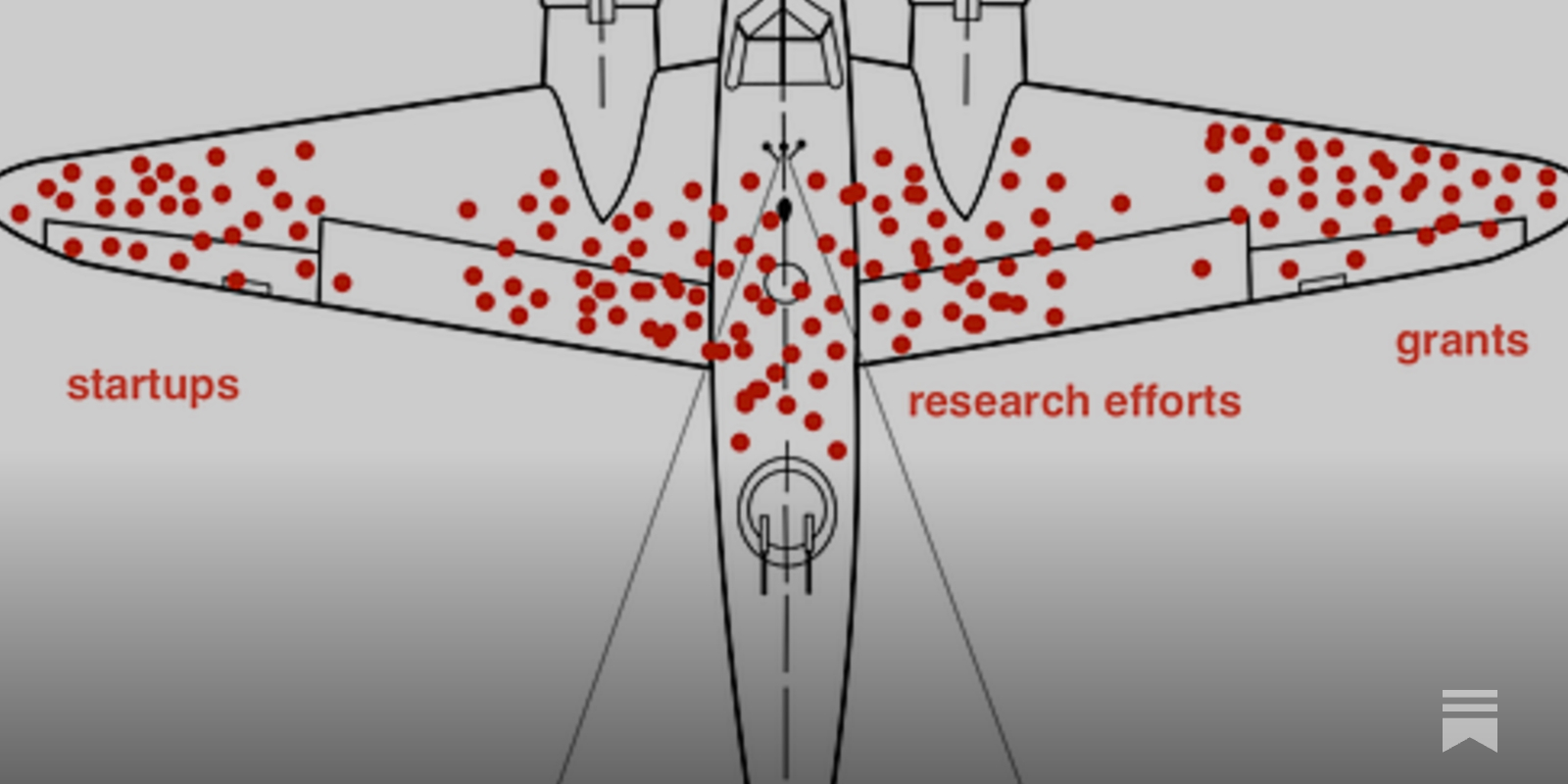
Your Solution Doesn't Know Your Problem Exists
If your problem is structural, your approach must be radical.
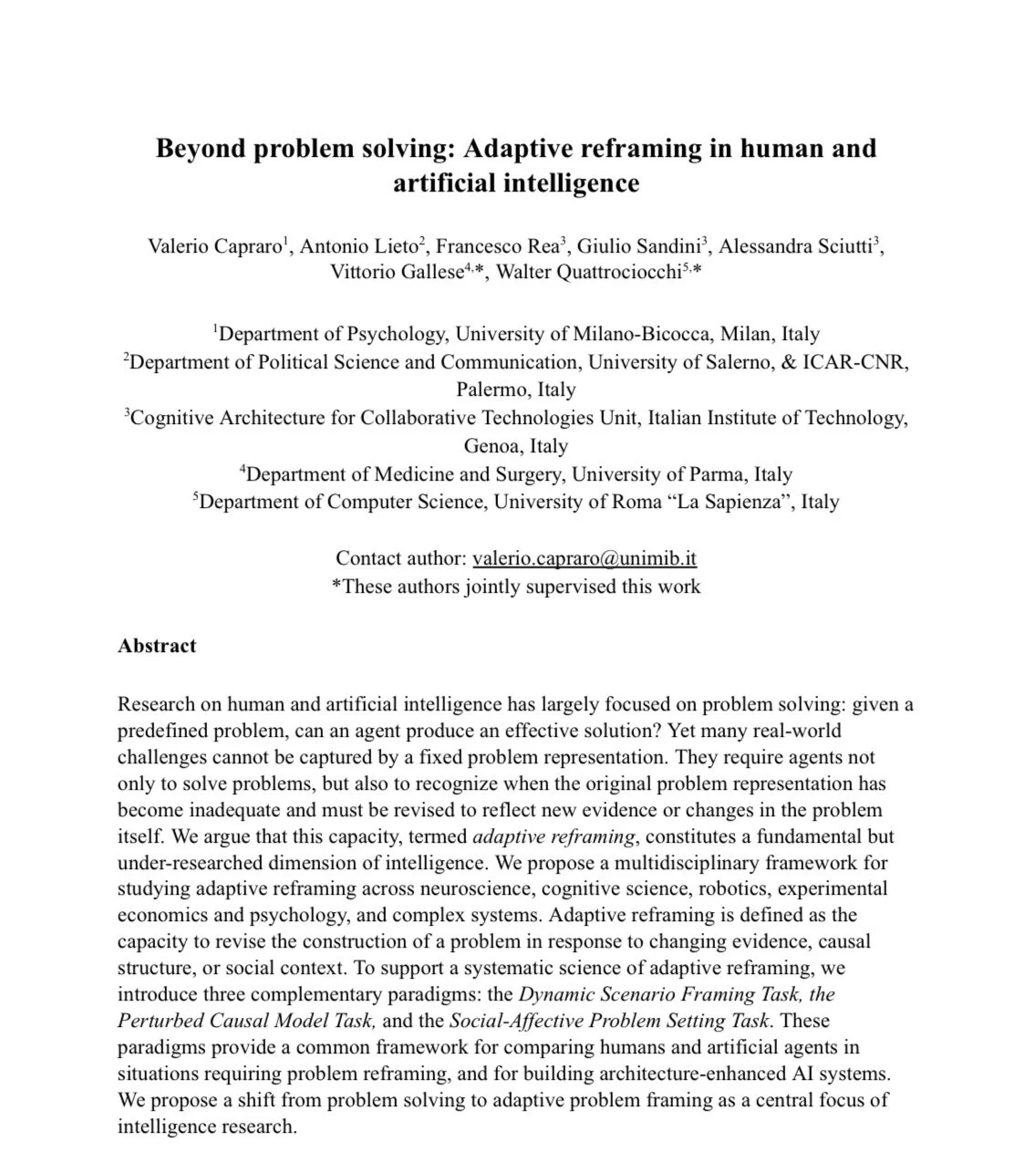
Valerio Capraro on Twitter / X
I’m very proud of this new preprint.We start from a simple observation: most research on human and artificial intelligence treats intelligence as problem solving.The problem can be extremely difficult. But it’s already defined.In the real world, we often have to figure out… pic.twitter.com/ckIJ3yenGv— Valerio Capraro (@ValerioCapraro) October 5, 2026

The Crooked Timber of AI
The philosophical perils of conflating discoveries and inventions, and how to overcome them

Seams - Wisdom is made Together
"the crucial step in crisis engineering is to re-establish a common view which corresponds to reality – to restore sense-making. Once that step has been taken, actually solving the problem becomes a tractable task, and without it nothing is going to work" -- @dsquareddigest.bsky.social

a failure of sense making
backofmind.substack.com