

This post introduces the written version of some optimistic and constructive thinking on knowledge in networks that I’ve been wrestling with since the end of last year.
Network of Knowledge | The Paper Pilot
The Paper Pilot's digital garden of thoughts on philosophy, politics, and sociology
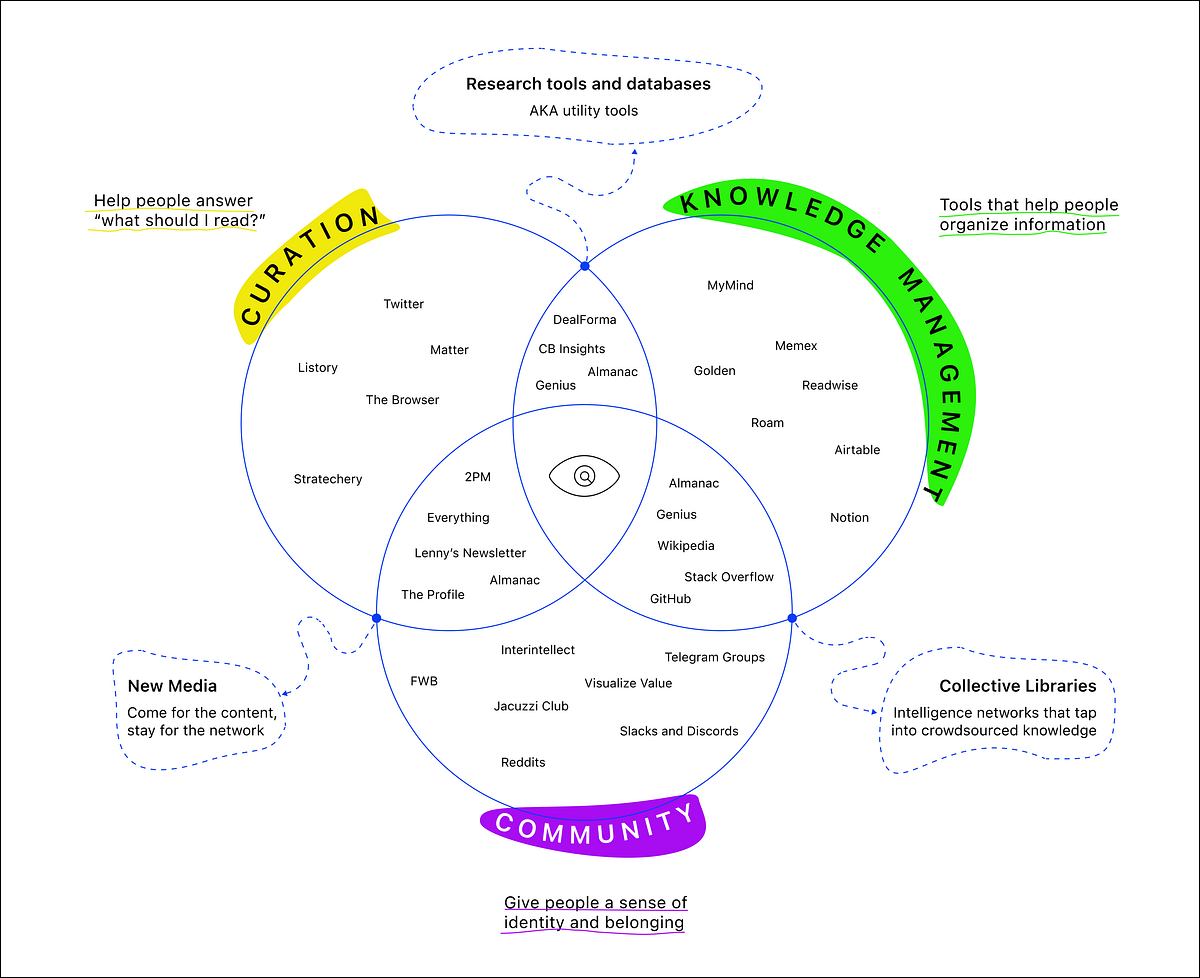
The rise of community-curated knowledge networks
The Internet put thousands of years of human thought at our fingertips, and enabled billions of people to create content. At least 2.5…

Dear Alt-Twitter Designers: It’s about the network! | danah boyd | apophenia
Last week, tech commentators were flush with stories about the speed of new users on Threads. Unprecedented downloads! A sign that Meta is stronger than ever! Networks born in one service can transfer to another! This week? There’s a lot of speculation that Threads is crashing. Folks keep asking me what my take is on Threads (and Mastodon and Bluesky and …) and I keep responding with the same story: we’ll see. And every time I do, I’m reminded of talking to historians who, when you ask them about the last hundred years, they say “we’ll see.”
This Knowledge Hub | The Paper Pilot
The Paper Pilot's digital garden of thoughts on philosophy, politics, and sociology
Collective knowledge foraging in trail-based social networks beyond feeds
Sharing insights about moving beyond feeds from building Semble, a community knowledge garden built on the AT Protocol. The World Wide Web is called a web for good reason. We navigate this web of interconnected websites by clicking hyperlinks and opening new tabs in tools called browsers. This kind of browsing experience is defined by its open-endedness and interwoveness; every website we visit becomes a step along a path. With the rise of social media, we lost touch with this vast trail network. Rather than creating a social web where our trails got woven onto a shared map, they were instead paved over by information superhighways: the algorithmic feeds. Hyper-scaled social media platforms reduced the vast web of interconnected pages into a stripped down ad-ridden and attention-extracting monoculture. Our online experiences became reduced to the flick of a finger, the doom scroll. With the rise of open social protocols, like ATProto, we have an opportunity to leave these misaligned profit-driven and ad-based feeds behind and rediscover the magic of shared knowledge trails. what might that look like? In this lightning talk I’ll share insights and lessons my team and I have learned from building [Semble](https://semble.so/), a community knowledge garden built on ATProto. Semble is an open social network based on knowledge trails rather than feeds. I’ll explore what trail-based social networks of the future could look like, grounded in features and use-cases we’ve uncovered while building Semble. In the transition from feeds back to trails, we aim to co-create an open social web that centres the value of human attention and sparks a new era of collective wisdom. This lightning talk is an invitation to co-create this future together. It will similar to a prior [lightning talk](https://www.youtube.com/watch?v=ptOMKK1lC4Q) we gave at ATmosphereConf 2026, adapted for DWeb Camp. Recorded at DWeb Camp 2026, Open Social Space, 2026-07-10. Schedule entry: https://talx.dod.ngo/dwebcamp-2026/talk/TA3NY7/
Landslide / Holdfast
Notes on what’s happening to our ability to collectively know things, and a look ahead to what this community is especially well positioned to do to support and revitalize our info ecosystems and the humans inside them.

From Social Network to Sense Making
How to beat LinkedIn: The Game
A strategy guide for using a semi-pointless social network in all the wrong ways.

Semble: Collective knowledge foraging in trail-based social networks beyond feeds (Lightning Talk)
Latest Posts
Daily broadsides from The Baffler’s just-in-time corps of knowledge workers
Your intellectual fly is open | The Observation Deck
Note: This was originally published as a LinkedIn post on November 11, 2025. I need to make a painful confession: somehow, LinkedIn has become an important social network to me. This isn’t necessarily due to LinkedIn’s sparkling competence, of course. To the contrary, LinkedIn is the Gerald Ford of social networks: the normal one that was left standing as the Richard Nixons and the Spiro Agnews of social media imploded around them. As with Gerald Ford, with LinkedIn we know that we’re getting something a bit clumsy and boring, but (as with post-Watergate America!), we’re also getting something that isn’t totally crooked — and that’s actually a bit of a relief.
Nuxt | The Paper Pilot
The Paper Pilot's digital garden of thoughts on philosophy, politics, and sociology
Incremental Social | The Paper Pilot
The Paper Pilot's digital garden of thoughts on philosophy, politics, and sociology
Are You in the Simcluster?
A diagnostic, philosophical, and mildly uncomfortable guide to network membership.