


The agency says its surveillance program searches for threats to agents, but critics see free-speech infringements.
US Department of Homeland Security has reportedly demanded personal information about ICE's critics from Discord, Reddit, Google, and Meta—and at least 3 of those platforms have complied
DHS has issued hundreds of subpoenas to major online platforms to obtain the names, email addresses, and phone numbers of accountholders who criticize ICE.
Court: The First Amendment Allows You To Tell The ICE Director He’s A ‘Sad, Despised Man’
You may recall that back in July we had the ridiculous story of how ICE decided to go all gestapo on its critics, including tracking down and threatening David Streever, who had emailed then-acting…

How ICE Is Tracking Down its Online Critics
How Hackers Are Fighting Back Against ICE
A few enterprising hackers have started projects to do counter surveillance against ICE, and hopefully protect their communities through clever use of technology.
ICE Is Paying a Controversial AI Firm to Hide the Identities of Agents
In a leaked memo, an ICE official tells employees the new AI tech will protect them. Some worry it could be used to root out whistleblowers.

Digital Social Norm Enforcement: Online Firestorms in Social Media
Actors of public interest today have to fear the adverse impact that stems from social media platforms. Any controversial behavior may promptly trigger temporal, but potentially devastating storms of emotional and aggressive outrage, so called online firestorms. Popular targets of online firestorms are companies, politicians, celebrities, media, academics and many more. This article introduces social norm theory to understand online aggression in a social-political online setting, challenging the popular assumption that online anonymity is one of the principle factors that promotes aggression. We underpin this social norm view by analyzing a major social media platform concerned with public affairs over a period of three years entailing 532,197 comments on 1,612 online petitions. Results show that in the context of online firestorms, non-anonymous individuals are more aggressive compared to anonymous individuals. This effect is reinforced if selective incentives are present and if aggressors are intrinsically motivated.
Digital Social Norm Enforcement: Online Firestorms in Social Media
Actors of public interest today have to fear the adverse impact that stems from social media platforms. Any controversial behavior may promptly trigger temporal, but potentially devastating storms of emotional and aggressive outrage, so called online firestorms. Popular targets of online firestorms are companies, politicians, celebrities, media, academics and many more. This article introduces social norm theory to understand online aggression in a social-political online setting, challenging the popular assumption that online anonymity is one of the principle factors that promotes aggression. We underpin this social norm view by analyzing a major social media platform concerned with public affairs over a period of three years entailing 532,197 comments on 1,612 online petitions. Results show that in the context of online firestorms, non-anonymous individuals are more aggressive compared to anonymous individuals. This effect is reinforced if selective incentives are present and if aggressors are intrinsically motivated.
The Algorithmic Management of Polarization and Violence on Social Media
Access the PDF version of this essay by clicking the icon to the right.
Morally Motivated Networked Harassment as Normative Reinforcement
While online harassment is recognized as a significant problem, most scholarship focuses on descriptions of harassment and its effects. We lack explanations of why people engage in online harassment beyond simple bias or dislike. This article puts forth an explanatory model where networked harassment on social media functions as a mechanism to enforce social order. Drawing from examples of networked harassment taken from qualitative interviews with people who have experienced harassment ( n = 28) and Trust & Safety workers at social platforms ( n = 9), the article builds on Brady, Crockett, and Bavel’s model of moral contagion to explore how moral outrage is used to justify networked harassment on social media. In morally motivated networked harassment, a member of a social network or online community accuses a target of violating their network’s norms, triggering moral outrage. Network members send harassing messages to the target, reinforcing their adherence to the norm and signaling network membership. Frequently, harassment results in the accused self-censoring and thus regulates speech on social media. Neither platforms nor legal regulations protect against this form of harassment. This model explains why people participate in networked harassment and suggests possible interventions to decrease its prevalence.

The Faux Free Speech Warriors Attacking Free Speech
There’s a particularly insidious and cynical form of censorship gaining prominence in America: the weaponization of “free speech” rhetoric, combined with abuses of the judicial sy…
Meta and TikTok let harmful content rise after evidence outrage drove engagement - whistleblowers
Companies allowed more harmful content on user’s feeds, knowing their algorithms ran on outrage, BBC hears.
ICE Office Of Professional Responsibility Ditches ICE Oversight, Starts Hunting Down ICE Critics
ICE has already been operating like a paramilitary kidnapping squad. Officers roam through neighborhoods, stake out hardware store parking lots, and even occasionally enjoy some ethnic food just so…
Right-leaning groups say MN 15 prosecution violates free speech of anti-ICE activists
Free speech and conservative legal groups are urging a federal judge to order prosecutors to release documents in the Minnesota activists conspiracy case that defendants say could reveal political targeting and First Amendment violations tied to a Trump administration directive.
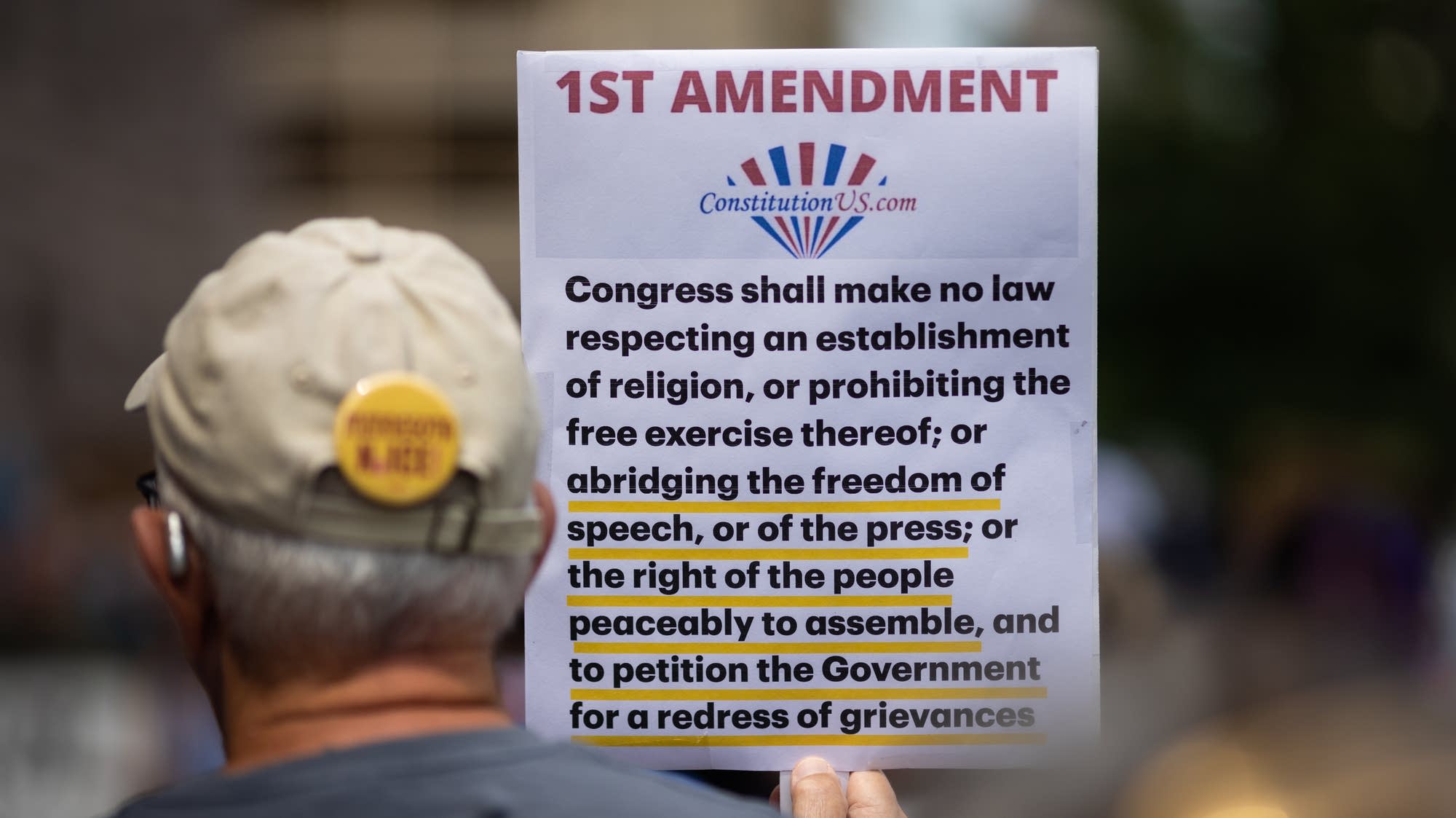
ICE’s Internal Watchdog Is Now Investigating Online Critics
The Office of Professional Responsibility has opened more than 100 cases over what ICE officials call “incidents of doxing and threats” against ICE employees.

Evaluating Twitter’s algorithmic amplification of low-credibility content: an observational study
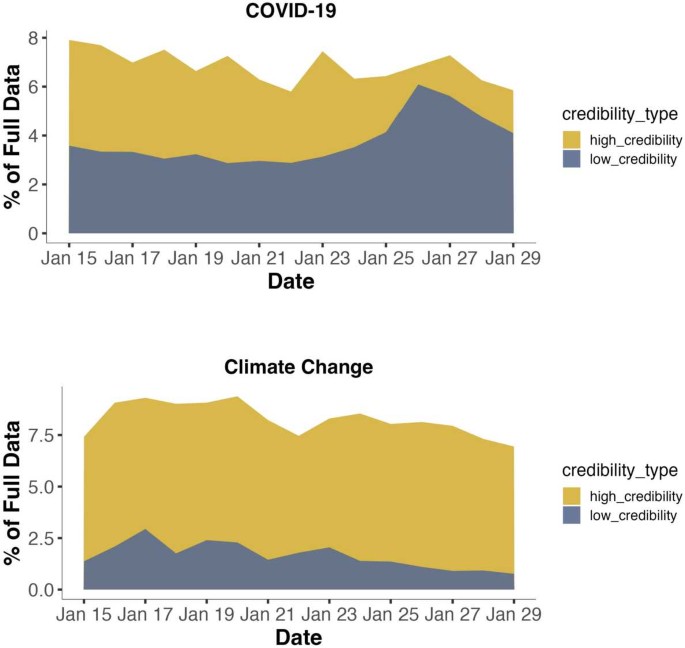
Artificial intelligence (AI)-powered recommender systems play a crucial role in determining the content that users are exposed to on social media platforms. However, the behavioural patterns of these systems are often opaque, complicating the evaluation of their impact on the dissemination and consumption of disinformation and misinformation. To begin addressing this evidence gap, this study presents a measurement approach that uses observed digital traces to infer the status of algorithmic amplification of low-credibility content on Twitter over a 14-day period in January 2023. Using an original dataset of ≈ 2.7 million posts on COVID-19 and climate change published on the platform, this study identifies tweets sharing information from low-credibility domains, and uses a bootstrapping model with two stratifications, a tweet’s engagement level and a user’s followers level, to compare any differences in impressions generated between low-credibility and high-credibility samples. Additional stratification variables of toxicity, political bias, and verified status are also examined. This analysis provides valuable observational evidence on whether the Twitter algorithm favours the visibility of low-credibility content, with results indicating that, on aggregate, tweets containing low-credibility URL domains perform better than tweets that do not across both datasets. However, this effect is largely attributable to a difference in high-engagement, high-followers tweets, which are very impactful in terms of impressions generation, and are more likely receive amplified visibility when containing low-credibility content. Furthermore, high toxicity tweets and those with right-leaning bias see heightened amplification, as do low-credibility tweets from verified accounts. Ultimately, this suggests that Twitter’s recommender system may have facilitated the diffusion of false content by amplifying the visibility of low-credibility content with high-engagement generated by very influential users.
Evaluating Twitter’s algorithmic amplification of low-credibility content: an observational study
Artificial intelligence (AI)-powered recommender systems play a crucial role in determining the content that users are exposed to on social media platforms. However, the behavioural patterns of these systems are often opaque, complicating the evaluation of their impact on the dissemination and consumption of disinformation and misinformation. To begin addressing this evidence gap, this study presents a measurement approach that uses observed digital traces to infer the status of algorithmic amplification of low-credibility content on Twitter over a 14-day period in January 2023. Using an original dataset of ≈ 2.7 million posts on COVID-19 and climate change published on the platform, this study identifies tweets sharing information from low-credibility domains, and uses a bootstrapping model with two stratifications, a tweet’s engagement level and a user’s followers level, to compare any differences in impressions generated between low-credibility and high-credibility samples. Additional stratification variables of toxicity, political bias, and verified status are also examined. This analysis provides valuable observational evidence on whether the Twitter algorithm favours the visibility of low-credibility content, with results indicating that, on aggregate, tweets containing low-credibility URL domains perform better than tweets that do not across both datasets. However, this effect is largely attributable to a difference in high-engagement, high-followers tweets, which are very impactful in terms of impressions generation, and are more likely receive amplified visibility when containing low-credibility content. Furthermore, high toxicity tweets and those with right-leaning bias see heightened amplification, as do low-credibility tweets from verified accounts. Ultimately, this suggests that Twitter’s recommender system may have facilitated the diffusion of false content by amplifying the visibility of low-credibility content with high-engagement generated by very influential users.