

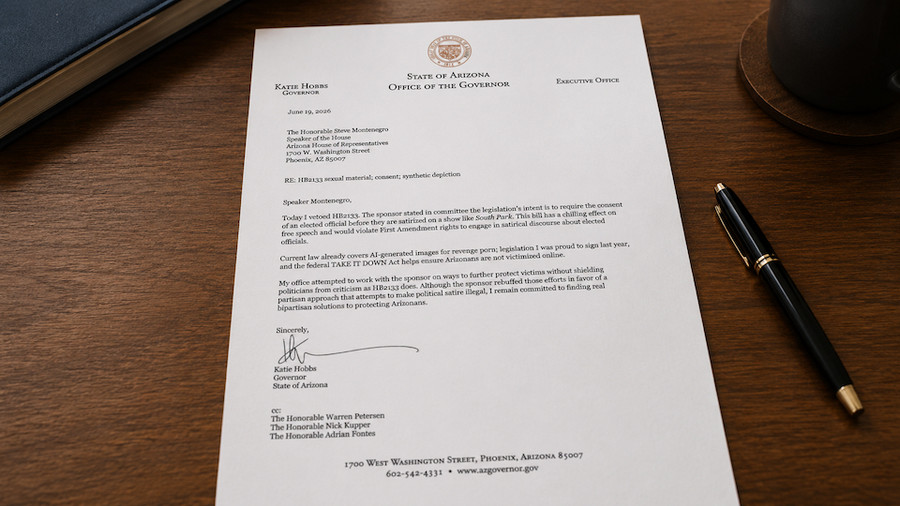
Arizona Governor Kate Hobbs on Friday vetoed HB 2133, the “Protect Act,” which would have imposed new requirements for adult content uploaded online.
EFF to Governor Newsom: Veto California’s AB 1709
The California legislature passed Assembly Bill 1709 (A.B. 1709) today, which functions as a sweeping ban on social media use for young people under the age of 16. This well-intentioned, but deeply
New Idaho Law mandates parental consent and age verification for social media - Local News 8
A new law intends to regulate and limit social media use for Idaho minors, but critics warn the state could be walking into a lawsuit. On April 2nd, Governor Brad Little officially signed House Bill 542, the Stop Addictive Social Media Act, into law. The legislation aims to curb the influence of social media on Idaho's youth by mandating age verification and stripping platforms of features the bill's sponsors deem "addictive."

Congress Has Another Site-Blocking Bill, And This One Targets VPNs
Congress is taking another run at site-blocking, a deeply flawed concept that would undermine basic internet infrastructure. Rep. Darrell Issa (R-CA) has introduced the American Copyright Protection

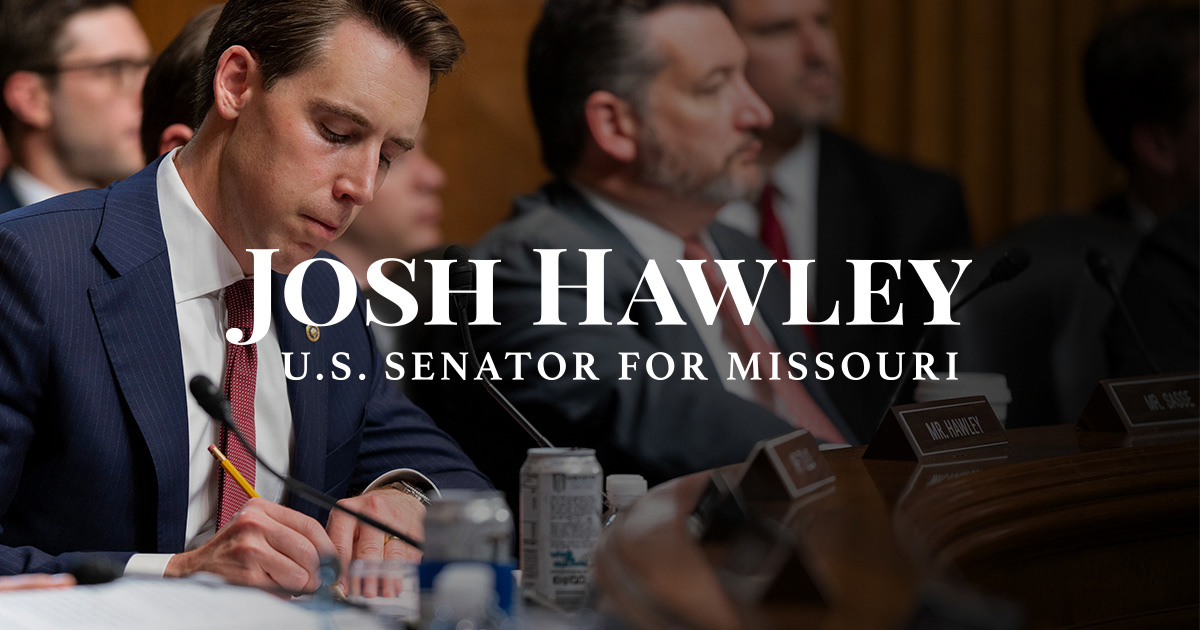
Hawley Negotiates Inclusion of STOP CSAM Act in Senate NDAA
WASHINGTON --Today, U.S. Senator Josh Hawley (R-Mo.) announced that his legislation to combat child sex abuse material online, the STOP CSAM Act, was added to the text of the defense policy bill
Act Now to Stop California’s Paternalistic and Privacy-Destroying
California lawmakers are fast-tracking A.B. 1709—a sweeping bill that would ban anyone under 16 from using social media and force every user, regardless of age, to verify their identity before

Online Safety Bills Are Fueling a New Wave of Internet Censorship
State and federal bills seek to limit minors’ access to social media, but civil liberties advocates warn that the resulting online censorship threatens constitutional rights without delivering real safety.

Sex educators say they're being harmed by age-verification laws
Plus: Wisconsin governor vetoes porn age-check bill, more charges for penis protester, the Komodo dragon theory of social media, and more...

Bill to ease data protection law for AI development clears Japan's lower house
TOKYO (Kyodo) -- A bill to revise Japan's personal data protection law passed the House of Representatives on Tuesday, paving the way for eased restri
Site Blocking and Age Verification for Twitter, Instagram, Snap and Twitch?: Age Verification Lobby Confirms it Wants Bill S-210 to Cover All Social Media Sites - Michael Geist
Bill S-210 - the Protecting Young Persons from Exposure to Pornography Act - burst onto the public scene late last year as a majority of the House voted for the bill at second reading, sending it to the Public Safety committee for review. The bill, which is the brainchild of Senator Julie Miville-Dechêne, was supported by the Conservatives, Bloc and NDP with a smattering of votes from backbench Liberal MPs (the cabinet voted against, signalling it is not supported by the government). The bill raises significant concerns with the prospect of government-backed censorship, mandated age verification to use search engines or social media, and a framework for court-ordered website blocking (I appeared before the Senate committee that studied by the bill in February 2022, arguing that “by bringing together website blocking, face recognition technologies, and stunning overbreadth that would capture numerous mainstream services, the bill isn’t just a slippery slope, it is an avalanche.”). In response to the public criticism of the bill, Senator Julie Miville-Dechêne has suggested that concerns about it extending to general purpose social media sites is overstated since the intent is to target adult content sites. Yet that is not what the bill provides as it applies to anyone who makes sexually explicit material available on the Internet for commercial purposes:
California enacts laws restricting chatbots and banning teens from ‘addictive’ social media
Gov. Gavin Newsom signed a set of bills intended to protect children by regulating internet use, including limiting chatbot sessions.

Ineffective, Unconstitutional, and Dangerous: The Problem with Age Verification Mandates – Action Center
In the wake of Louisiana’s new law mandating the use of age verification (AV) on adult content websites, a flurry of copycat legislation has been introduced by well-meaning but poorly-informed politicians who don’t understand the real-world impacts of the laws they are proposing.
Gov. Pritzker Pauses New Data Center Tax Incentives
Governor outlines framework to protect consumers and lower energy costs, calls on General Assembly to act in veto session
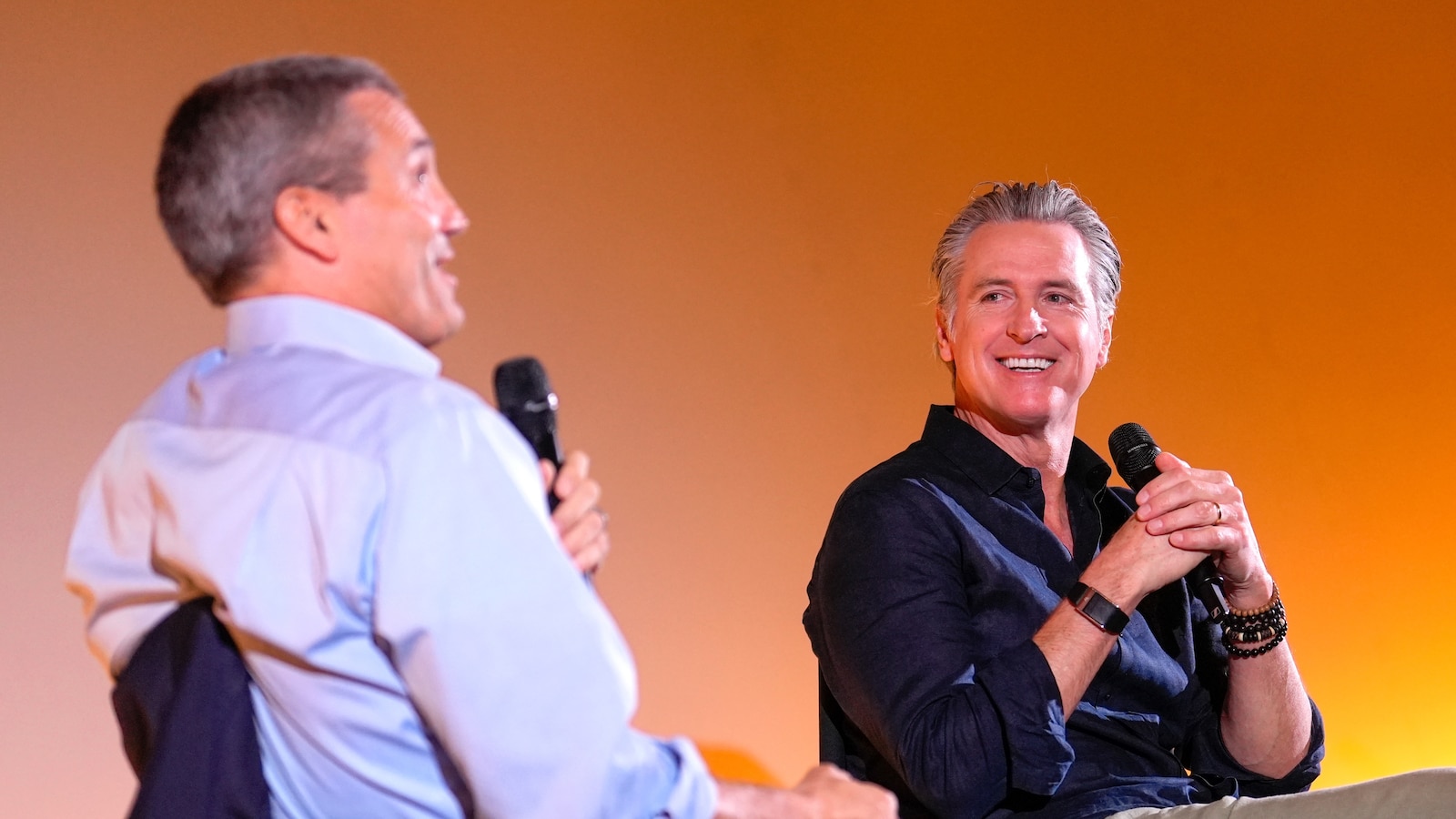
Newsom vetoes measure that would have penalized the use of smart glasses to secretly record people
California Gov. Gavin Newsom has vetoed a bill that would have penalized people for using smart glasses to record people without their permission in changing rooms, doctor’s offices and other spaces people generally consider private
Opinion | One Senator’s Plea for Tariff Breaks
How protectionism works in practice: Public support, but seeking exemptions in private.
Ohio's New Porn Age Verification Law: Big Brother Dressed Up as Child Protection - Nick's Blog
Ohio's new age verification law requiring ID to access adult websites (starting September 29, 2025) fails to protect children while forcing adults to surrender personal data to access legal content. This "small government" Republican law creates a surveillance system that invades privacy without addressing the real online dangers kids face.
LA Times Owner Denies Vetoing Presidential Endorsement: ‘The Editorial Board Chose to Stay Silent’
Los Angeles Times owner Patrick Soon-Shiong denied vetoing the editorial board's endorsement of Kamala Harris for president
