

The National Young Farmers Coalition is a farmer-led, grassroots network shifting power and changing policy to equitably resource the new generation of working farmers. We are the largest unified voice calling for farm policy that will deliver a bright future for young farmers and ranchers in the U.S.
Young Agrarians
Young Agrarians is a farmer to farmer educational resource network for new and young ecological, organic and regenerative farmers in Canada.

National Black Food & Justice Alliance
The National Black Food and Justice Alliance represents hundreds of Black urban and rural farmers, organizers, and land stewards based nationwide working together towards an intergenerational, urban/rural movement to map, assess, train and deepen the organizing, institution building and advocacy work protecting Black land and work towards food sovereignty.

A social-ecological framework for analyzing and designing integrated crop–livestock systems from farm to territory levels
Integrated crop–livestock systems are often considered a promising way to address agricultural sustainability issues. Many authors claim that complementarities and synergies between crops and livestock can improve nutrient cycling and delivery of ecosystem services (ES) in agricultural systems. They have analyzed effects of interactions at the farm level and affirmed the potential advantage of developing crop–livestock interactions at the territory level. However, potential benefits of developing synergies beyond the farm level have not been clearly identified. Thus, we developed a conceptual framework that can be used to analyze, design and perform integrated assessment of crop–livestock systems at the territory level. To address crop–livestock interaction issues, we define it as a social-ecological system called the territorial crop–livestock system (TCLS). The ecological system is represented as three interacting components, crops, grasslands and animals, allowing description of various land uses and their potential effects on nutrient cycling and ES. The social system, represented as farmers interacting with natural-resource managers and agro-food chain actors, determines land use and the nature and intensity of ES delivered. We highlight the importance of coordination and learning among actors to support implementation of complex adaptive systems such as TCLSs. We illustrate the expressive power of our conceptual framework through development of a generic typology of crop–livestock systems. Then we show how our conceptual framework can be used as an intermediary object with stakeholders in participatory design approaches. We illustrate this process by representing four archetypal TCLSs. We provide an example of the design approach implemented in Southwestern France to address severe recurrent water shortages, which includes analysis of land use in the current crop–livestock system and the associated key metabolic and ES issues, identification of options for change and multi-criteria analysis of these options. We conclude that this framework shows great potential to support development of sustainable farming systems at the territory level.
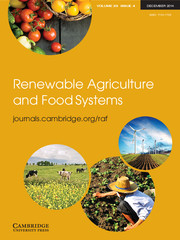
Crop–livestock integration beyond the farm level: a review
AbstractParadoxically, the number of crop–livestock farms is declining across Europe, despite the fact that crop-livestock farms are theoretically optimal to improve the sustainability of agriculture. To solve this issue, crop–livestock integration may be organized beyond the farm level. For instance, local groups of farmers can negotiate land-use allocation patterns and exchange materials such as manure, grain, and straw. Development of such a collective agricultural system raises questions, rarely documented in the literature, about how to integrate crops and livestock among farms, and the consequences, impacts, and conditions of integrating them. Here, we review the different forms of crop–livestock integration beyond the farm level, their potential benefits, and the features of decision support systems (DSS) needed for the integration process. We identify three forms of crop–livestock integration beyond the farm level: local coexistence, complementarity, and synergy, each with increasingly stronger temporal, spatial, and organizational coordination among farms. We claim that the forms of integration implemented define the nature, area, and spatial configuration of crops, grasslands, and animals in farms and landscapes. In turn, these configurations influence the provision of ecosystem services. For instance, we show that the synergy form of integration promotes soil fertility, erosion control, and field-level biological regulation services through organizational coordination among farmers and spatiotemporal integration between crops, grasslands, and animals. We found that social benefits of the synergy form of integration include collective empowerment of farmers. We claim that design of the complementarity and synergy forms of crop–livestock integration can best be supported by collective participatory workshops involving farmers, agricultural consultants, and researchers. In these workshops, spatialized simulation modeling of crop–livestock integration among farms is the basis for achieving the upscaling process involved in integrating beyond the farm level. Facilitators of these workshops have to pay attention to the consequences on governance and equity issues within farmers groups.
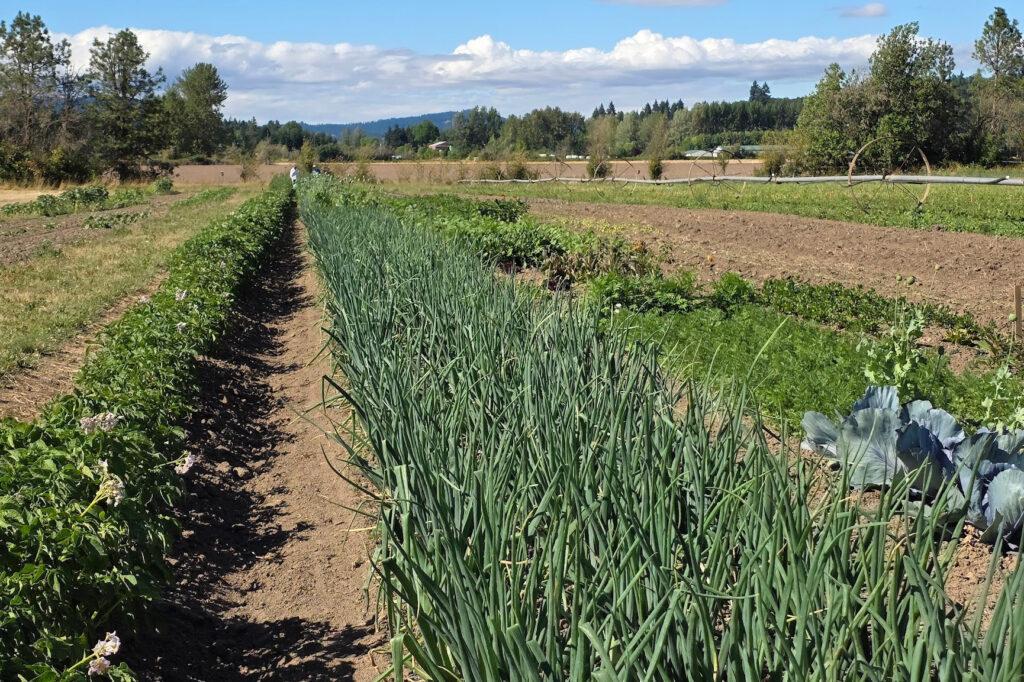
We started a farming club. Why you should start one too
We are long overdue for a return to growing our own food, and the farming club offers a promising way to reconnect with that tradition.
Canopy | The UK umbrella group of tree campaigners
Canopy is the national coalition of grassroots tree campaigners and campaign groups. By coming together we can have a louder voice in the fight to save our trees and green spaces.

Slow Food Cycle Sunday Video Series - Helmer's Organic Farm & Pemberton Valley Supermarket
INVESTING IN REGENERATIVE AGRICULTURE AND FOOD
THE INVESTING IN REGENERATIVE AGRICULTURE AND FOOD PODCASTThrough 400+ interviews with farmers, investors, scientists, and entrepreneurs, the podcast puts the spotlight on the pioneers in the regenerative food and agriculture space to learn more on how to put our money to work to regenerate soil, people, local communities and ecosystems while making an appropriate and fair return.
Soil Assembly
Soil Assembly brings together diverse communities working across ecology, culture, agriculture, research, and collective practice. We invite practitioners, learners, and communities to contribute to a growing network rooted in living soil, regenerative thinking, and shared ecological futures.
Ruth Watson: Inside the new grassroots movement that wants your support
THE fields near my home are bursting with life. Lambs are big enough to rampage through their flocks in headlong, head-butting gangs. Highland cows…

Ma Earth | Collective funding for community-led regeneration
Ma Earth is a collective funding platform for community-led regeneration.

Home Page : 11th Hour Project
We work with farmers and food systems workers to develop technology that is responsive to the needs of small-holder producers.
About - Open Collective
Open Collective was founded by idealists to make online communities more sustainable. What began as a tool for open source and grassroots groups has grown into a global infrastructure for transparency, collaboration, and shared financial stewardship.

Opensocial.community proposal
Hey folks! This is an opinionated proposal I put together for the community WG. Still a few open questions/uncertainties that I list at the ned. Check it out here: opensocial communities proposal - Google Docs Feel free to comment here or we can chat more in the next WG meeting.
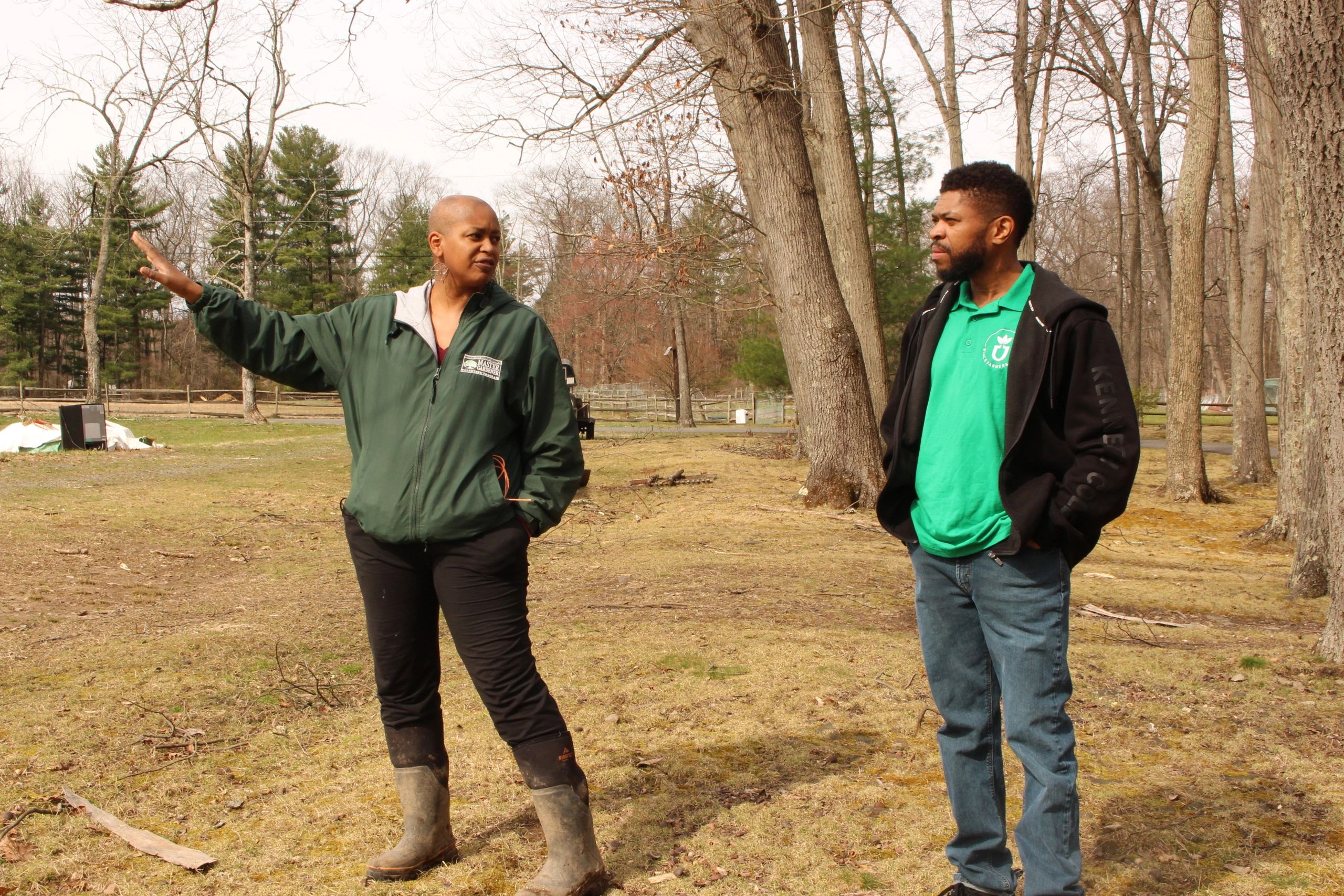
Black Farmers Index
Black Farmers Index drives resources and exposure to agriculturalists with an online directory, workshops, events, data gathering/reporting and media features
Tech Workers Coalition
A coalition of tech industry workers, labor organizers, community organizers, and friends cultivating solidarity among all workers in tech.