


Computers were supposed to reduce office labor. They accomplished the opposite
Why Hasn’t AI Made Work Easier? - Cal Newport
I’ve been studying the intersection of digital technology and office work for quite some time. (I find it hard to believe that my book, Deep ... Read more

AI Was Supposed To Take Your Job. Why Hasn't It?
Automation is coming for the gig economy
A safety net for people who have fallen out of the formal labour market is being dismantled

Cyber-Marx: Cycles and Circuits of Struggle in High Technology Capitalism
Cycles and Circuits of Struggle in High Technology Capitalism

Technological Disruption in the US Labor Market • The Aspen Institute Economic Strategy Group
DAVID DEMING, CHRISTOPHER ONG, LAWRENCE H. SUMMERS This paper explores past episodes of technological disruption in the US labor market, with the goal of learning lessons about the likely future impact of artificial intelligence (AI). The authors measure changes in the structure of the US labor market going back over a century in two ways. ...

Thousands of CEOs just admitted AI had no impact on employment or productivity—and it has economists resurrecting a paradox from 40 years ago | Fortune
In the 1980s, economist Robert Solow made an observation that reminded economists of today’s AI boom: “You can see the computer age everywhere but in the productivity statistics.”

Thousands of CEOs admit AI had no impact on employment or productivity—and it has economists resurrecting a paradox from 40 years ago | Fortune
In the 1980s, economist Robert Solow made an observation that reminded economists of today’s AI boom: “You can see the computer age everywhere but in the productivity statistics.”
‘Deskilling’: a dangerous side effect of AI use
Workers are increasingly reliant on the new technology
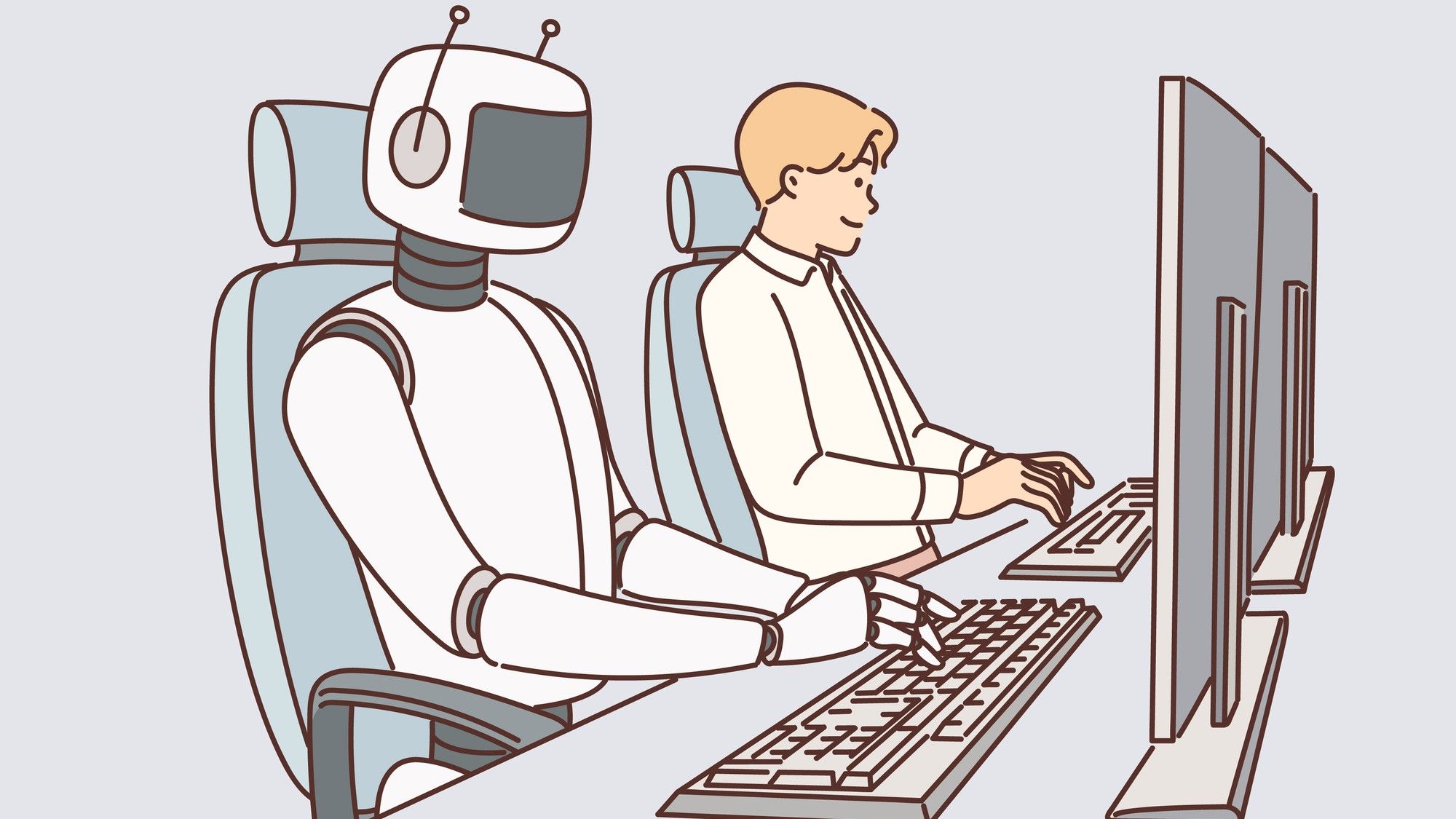
Rethinking the Luddites in the Age of A.I.
Brian Merchant’s new book, “Blood in the Machine,” argues that Luddism stood not against technology per se but for the rights of workers in the face of automation.

Care at the Edge of Automation – Topos Institute
Technologies don’t just solve problems, they change us. We invent technologies, and they invent us in turn, shaping our lives and worlds. This is the phenomenon that Terry Winograd and Fernando Flores, in Understanding Computers and Cognition (1986), called “ontological design.” It matters now more than ever—along with a second lesson they saw clearly. Technological research is always guided (and sometimes misguided) by deep ontological assumptions about, e.g., the nature of cognition, agency, and communication. If we are to create technologies that truly serve human flourishing and care, we must bring these hidden assumptions into the open and question them at their roots.

Technological parables and iconic illustrations: American technocracy and the rhetoric of the technological fix
This paper traces the role of American technocrats in popularizing the notion later dubbed the ‘technological fix’. Channeled by their long-term ‘chief’, Howard Scott, their claim was that technolo...

Moral Deskilling and Upskilling in a New Machine Age: Reflections on the Ambiguous Future of Character
This paper explores the ambiguous impact of new information and communications technologies (ICTs) on the cultivation of moral skills in human beings. Just as twentieth century advances in machine automation resulted in the economic devaluation of practical knowledge and skillsets historically cultivated by machinists, artisans, and other highly trained workers (Braverman 1974), while also driving the cultivation of new skills in a variety of engineering and white collar occupations, ICTs are also recognized as potential causes of a complex pattern of economic deskilling, reskilling, and upskilling. In this paper, I adapt the conceptual apparatus of sociological debates over economic deskilling to illuminate a different potential for technological deskilling/upskilling, namely the ability of ICTs to contribute to the moral deskilling of human users, a potential that exists alongside rich but currently underrealized possibilities for moral reskilling and/or upskilling. I flesh out this general hypothesis by means of examples involving automated weapons technology, new media practices, and social robotics. I conclude that since moral skills are essential prerequisites for the effective development of practical wisdom and virtuous character, and since market and cultural forces are not presently aligned to bring about the more salutary of the ambiguous potentials presented here, the future shape of these developments warrants our close attention—and perhaps active intervention.

Enterprise Philosophy and the First Wave of AI
The first wave of successful AI implementations will probably look more like the first wave of computing, which was dominated by large-scale enterprise installations that eliminated jobs. Consumer …

Push-button science
Technological advances change not only what we can learn as scientists, but also how science is conducted. Here we explore how automation and outsourcing are affecting the act of doing science.
Thinking about how computers can support intentional work. youtube.com/watch?v=Q7pbAW470qA

Attention architecture - thinking about todos, timeblocks, and calendars
www.youtube.com