


Two people can start from almost the same place. Same age. Similar intelligence. Same 24 hours in a day. Five years later, their lives can look completely different. 1 One has built valuable skills
Learning From Older Adults: An Intergoal Compatibility Account for Successful Happiness Pursuit
Academic Abstract People want to pursue happiness but often fail, a phenomenon known as the paradox of pursuing happiness. The mechanisms underlying this paradox remain elusive. Age differences in happiness—specifically that older adults appear more successful in pursuing happiness (the emotion paradox of aging)—provide valuable insights into effective happiness pursuit. Drawing on this literature, we propose an intergoal compatibility account to interpret both paradoxes through the lens of intergoal interactions, an intuitively critical yet underexplored factor in existing interpretations. This account asserts that greater compatibility (fewer conflicts and greater facilitation) between happiness pursuit and other important personal goals enhances the effectiveness of happiness pursuit, and such compatibility can be enhanced through contextual influences (e.g., age-graded developmental tasks) and strategic self-regulation (e.g., goal adjustments). This account generates testable predictions and practical implications for enhancing happiness pursuit across the lifespan. Public Abstract Why do people often struggle to achieve happiness? And why are older adults happier than younger adults, even though they face more losses in life? While these questions have drawn extensive attention, they remain puzzling. A crucial yet insufficiently explored factor in successful happiness pursuit is intergoal compatibility —the extent to which the pursuit of happiness aligns or conflicts with other important personal goals. For younger adults, the demands of age-related developmental tasks (e.g., educational and career aspirations) often create conflicts with the pursuit of happiness, diminishing its effectiveness. Conversely, in older adults, happiness becomes more prioritized and compatible with other important personal goals, thereby enhancing the effectiveness of pursuing happiness. A lesson we can learn from older adults is to pursue happiness in ways compatible with other important personal goals.

Increlution
Survive the ever increasing pressure of time for as long as you can! A minimalistic incremental game about time management that takes inspiration from roguelite games, with a focus on meta-progression. Every generation has a better chance at survival, because previous lives influence its instincts

The People Who Will Thrive in the AI Age
What will differentiate people is not how smart they are but their relationship to mental effort.

Why older people are happier and what we can learn from them | Psyche Ideas
Around the world, happiness tends to peak later in life. It has more to do with balancing priorities than elderly wisdom

Nurturing Our Humanity: How Domination and Partnership Shape Our Brains, Lives, and Future - The Center for Partnership Systems
By Riane Eisler and Douglas P. Fry Nurturing Our Humanity: How Domination and Partnership Shape Our Brains, Lives, and Future, by Riane Eisler and Douglas P. Fry, holds the key to a clear perspective on our personal and social options in today’s world, showing how to structure our environments – from family and gender relations […]

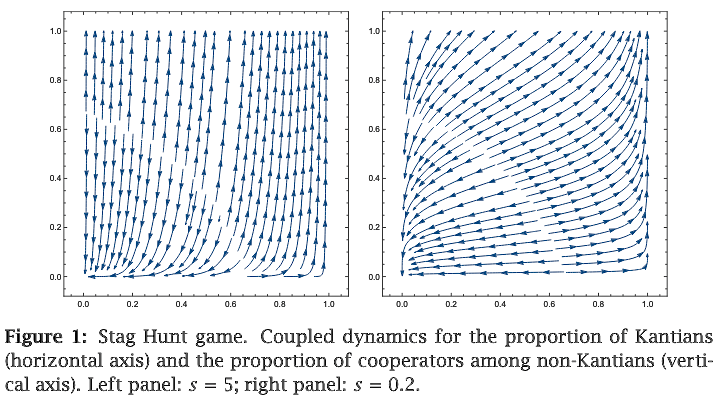
Quick Summaries of Two Papers on Kant and Game Theory — LessWrong
It's not obvious from a Darwinian point of view why people (even people who aren't related) often cooperate with one another. Researchers like Axelro…
Six Ways to Think Long-term: A Cognitive Toolkit for Good Ancestors
None of these six ways is enough alone to create a long-term revolution of the human mind — a fundamental shift in our perception of time. But together — and when practised by a critical mass of people and organisations — a new age of long-term thinking could emerge out of their synergy.

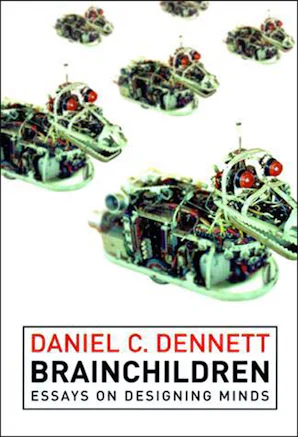
Brainchildren
Minds are complex artifacts, partly biological and partly social; only a unified, multidisciplinary approach will yield a realistic theory of how they came i...
Positive Alignment: Artificial Intelligence for Human Flourishing
Existing alignment research is dominated by concerns about safety and preventing harm: safeguards, controllability, and compliance. This paradigm of alignment parallels early psychology's focus on...

Why do some people always get lost?
Research suggests that experience may matter more than innate ability when it comes to a sense of direction

Just You Wait, by Chris Shiflett
On turning 50: a personal story about luck, curiosity, disillusionment, and hope.
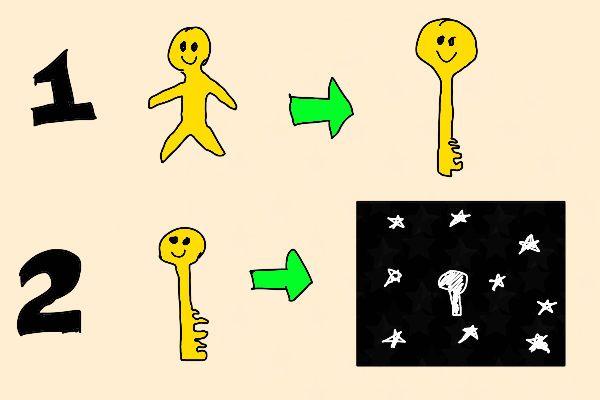
The Key to Act Two
How do you top life rules ? With a life script, that's how. Here's an absolutely minimalist 2-step one. Guaranteed to work for 90% of humanity. Across all…
Young children would rather explore than get rewards
Young children will pass up rewards they know they can collect to explore other options, a new study suggests. Researchers found that when adults and 4- to 5-year-old children played a game where certain choices earned them rewards, both adults and children quickly learned what choices would give them the biggest returns. But while adults ...

The Evolution of Trust
an interactive guide to the game theory of why & how we trust each other
Is personality so predictably linked to chronological age that unique experiences usually play only a minor role in personality development? Comments and criticism are welcome on the intro draft of a paper proposing and testing this hypothesis. shorturl.at/QPKpw

