


Introducing the Center for Human Progress, a think-and-do tank rooted in cultural evolution, behavioral science, and economics.The world isn't short of great ideas. It's short of the systems to deliver them. The barriers to implementation are typically in the people layer -…— Center for Human Progress (@CFHumanProgress) November 17, 2026
Social media algorithms can be redesigned to bridge divides — here’s how
"It falls to both the tech companies that built these systems and an engaged public to create technologies designed for social cohesion."
X/Twitter accounts with ‘most engagement’ in 2026 unveiled – and people are concerned
Since Elon Musk’s chaotic takeover of Twitter in October 2022, the social media platform has been considered by many to be more right-wing (as evidenced by Musk reinstating access to the site for right-wingers such as Stephen Yaxley-Lennon, Katie Hopkins and US president Donald Trump) and a new info...
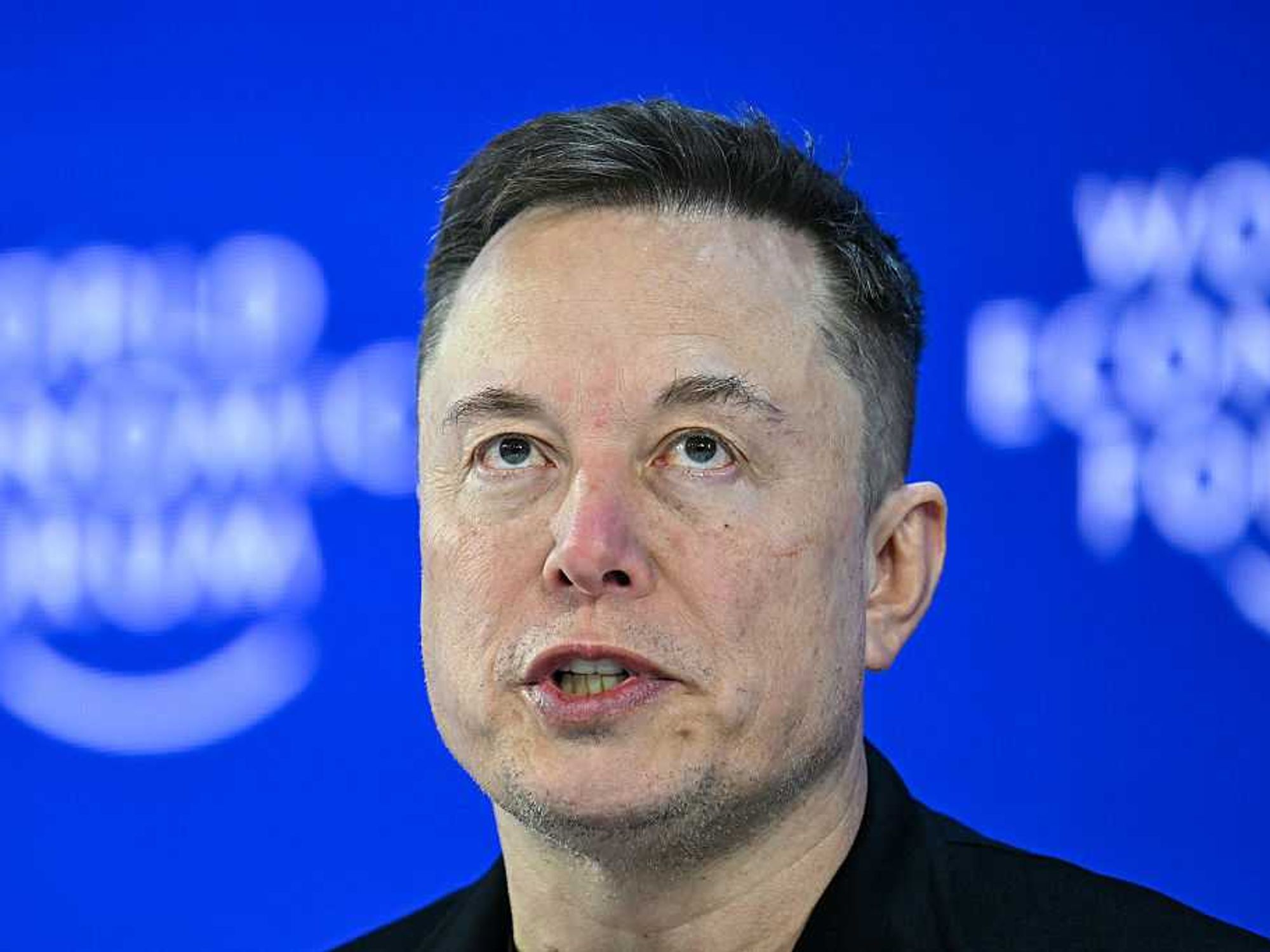
Shifts in U.S. Social Media Use, 2020–2024: Decline, Fragmentation, and Enduring Polarization
The social media ecosystem appears to be in flux. Twitter’s rebranding to X has come to symbolize a broader reorganization of online publics – political reshuffling, user attrition, and uncertainty over the role of legacy platforms. Simultaneously, the shift from text-based, networked feeds toward algorithmically curated, short-form video has accelerated, with TikTok setting the pace for the wider ecosystem [18, 14, 16]. At the same time, everyday communication increasingly migrates from large, open networks to semi-private spaces such as group chats and messaging apps. Commentators describe a digital public sphere in transition: smaller, more fragmented, less dominated by traditional social networking sites, and rise of more broadcast-oriented forms of media – with some even suggesting that we are seeing the beginning of the end of the social media era.
Twitter Wants to Reinvent Itself, by Merging the Old With the New (Published 2022)
The company is undertaking a far-reaching effort to change how it works. For some, it is an echo of their early idealism and a vision for what the internet could have been.

%%title%%
There is a growing ecosystem of social movement communicators. But we need a whole lot more to screw the status quo.

My 2024 thoughts on the state of social media
I see a continued fragmentation of social media as people leave X(Twitter).

A Tweet Before Dying
The revolutionary internet is over, and we don’t have much to show for it. A new start is out there, somewhere.
The Destructive Switch from Search to Social
2006 wasn’t a great year for our brains. In July, Twitter launched to the world, and in September, Facebook added the News Feed. But…

Whose Global Village — Ramesh Srinivasan
In the digital age, technology has shrunk the physical world into a “global village,” where we all seem to be connected as an online community as information travels to the farthest reaches of the planet with the click of a mouse. Yet from the US election, to the growth of the alt-right movement, to the Dakota pipeline to the question of ISIS, we also have begun to recognize how incredibly disconnected we are at the same time, occupying various bubbles and self-selected communities.While we think of platforms such as Twitter and Facebook as open and accessible to all, in reality, these are commercial entities developed primarily by and for the Western world. Considering how new technologies increasingly shape labor, economics, and politics, these tools often reinforce the inequalities of globalization, rarely reflecting the perspectives of those at the bottom of the digital divide.
From Indymedia to Tahrir Square: The Revolutionary Origins of Status Updates on Twitter
DOI: https://doi.org/10.1145/3485447.3512282 WWW '22: Proceedings of the ACM Web Conference 2022, Virtual Event, Lyon, France, April 2022
How tweet threads cured my writer's block: Twitter as a medium for sketching
Twitter is a powerful <b>medium for sketching</b>: a tool for fluidly developing ideas in realtime. What can we learn from its design? I think it shows us the power of 1) the right constraints, 2) low barriers to starting and finishing, and 3) a social context.

FediForum | Growing the Open Social Web:<br>An Online Un-Workshop
Since the Twitter takeover by Elon Musk over three years ago, the Open Social Web has been adopted by an enthusiastic community. People world-wide are building and using open social platforms and open social protocols to better interact with others online.

Twitter’s decentralized, open-source offshoot just released its first code
But don’t build a social network on it just yet.

Top 100: The most popular social media platforms and what they can teach us
After seven essays in our Mapping Social Media series, we wanted to take a step back and evaluate our work so far. We thought a good way to do this would be to construct a list of the top 100 most popular social media platforms (a harder task than you might think!) and see what we could learn from it using the analytical framework we’ve developed over the course of this series. We also examined our analytical framework itself, comparing it to existing frameworks and exploring where it worked and where it fell short.

The Next Twitter Is Just Thousands of Smaller Twitters
One of the biggest open-ended questions in the tech world is whether Twitter is truly dying—and if it is, what will replace it. Last December, I argued that whatever came next might feel like Twitter in certain ways, but that ultimately there was probably no way to recapture the lightning in a ...

it's not lost on me how critical it is to be building community-driven social technology in this time, because there's a lot we need - more joy, more connection, more education, more agency, and more privacy. breaking out of the box of "social media" - what are the tools we need in these times?
