


In my ongoing quest to find the limits of Opus 5.5, I directed it to audit my old scientific field, theoretical astrophysics. We indexed about 150,000 papers, audited 50,000 for issues, and did progressively more thorough checks on thousands more. We found nearly 1000 major… pic.twitter.com/VarvnTXohF— Casey Handmer (@CJHandmer) November 17, 2026
Michael C. Frank on Twitter / X
New blog post: I used Claude to audit the reproducibility of every journal paper I've been an author on in the last five years. Our commitment to openness meant that the code and data were available, but there were some significant issues. 🧵https://t.co/O5pkxUM4Jx— Michael C. Frank (@mcxfrank) November 10, 2026
Mikel Artetxe on Twitter / X
3/4 papers I reviewed and 2/3 reviews I got this ARR cycle were AI slop. Fraudsters are already outnumbering honest researchers. Unless drastic measures are urgently adopted, conference publications will have zero value or even become negative signal, and academia will be toast.— Mikel Artetxe (@artetxem) September 19, 2026
Scientific production in the era of Large Language Models
Large Language Models (LLMs) are rapidly reshaping scientific research. We analyze these changes in multiple, large-scale datasets with 2.1M preprints, 28K peer review reports, and 246M online accesses to scientific documents. We find: 1) scientists adopting LLMs to draft manuscripts demonstrate a large increase in paper production, ranging from 23.7-89.3% depending on scientific field and author background, 2) LLM use has reversed the relationship between writing complexity and paper quality, leading to an influx of manuscripts that are linguistically complex but substantively underwhelming, and 3) LLM adopters access and cite more diverse prior work, including books and younger, less-cited documents. These findings highlight a stunning shift in scientific production that will likely require a change in how journals, funding agencies, and tenure committees evaluate scientific works.

Opus 4.5 Limits have been cracked down on
30 votes, 63 comments. I'm on the Pro plan, but sent my last message at midnight last night. Came on at 8:30 am and sent 2 messages, which resulted…
Felix Rieseberg on Twitter / X
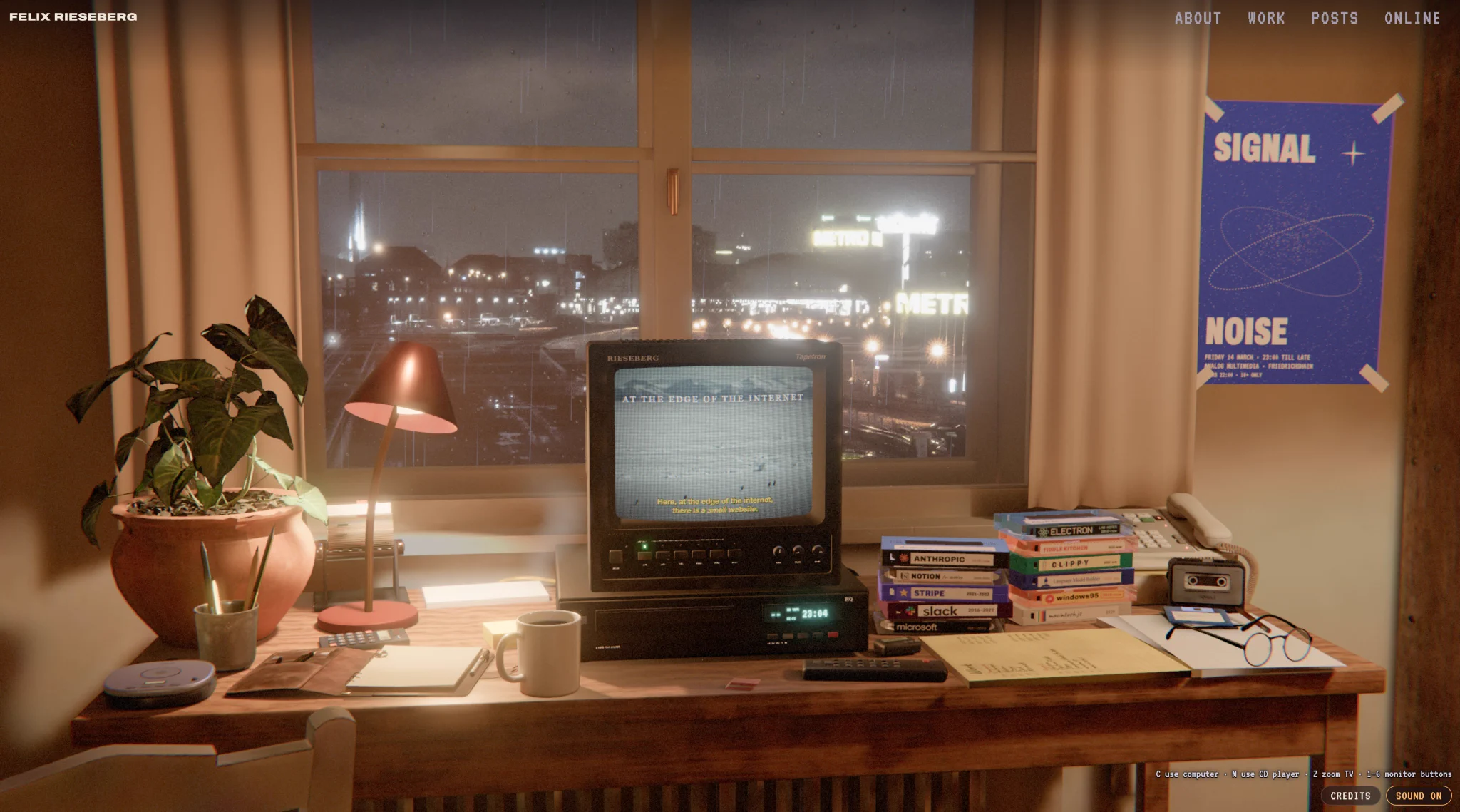
I remade my homepage with Opus 5.5 and pushed it hard. We made music & movies, drew textures, modeled things in Blender: https://t.co/WOGPQVm6FqI'm really happy with the result! pic.twitter.com/y6yUXaKb7K— Felix Rieseberg (@felixrieseberg) September 27, 2026
Why Are We Still Doing This?
Hi! If you like this piece and want to support my work, please subscribe to my premium newsletter. It’s $70 a year, or $7 a month, and in return you get a weekly newsletter that’s usually anywhere from 5000 to 185,000 words, including vast, extremely detailed analyses

Anthropic Readies Opus 4.7 and Design Tool as VCs Offer $800 Billion Valuation
Anthropic is preparing to release Claude Opus 4.7 and a natural language design tool as early as this week, while venture capital firms have offered to invest at valuations exceeding $800 billion – more than double the company’s last official price tag.The model ID anthropic-claude-opus-4-7 appeared on Google Vertex AI’s quota management page for EU […]

Introducing Claude Opus 5.5
Claude Opus 5.5 leads in agentic coding and knowledge work, and costs 40% less to run than Opus 5 on typical workloads.
Introducing Claude Opus 5
Opus 5 is a step change improvement for the Opus tier powering long-running agents while delivering improvements in coding and professional work.
Thomas G. Dietterich on Twitter / X
We are seeing a new trend in submissions to @arxiv (and presumably to conferences and journals): Authors submitting papers whose contents they likely do not understand. 1/— Thomas G. Dietterich (@tdietterich) September 13, 2026
The Bazaar of Scientific Knowledge | shishyko!
Is the current form of the scientific paper still optimal in 2025? How do we preserve, and efficiently leverage, the uncut gems of the scientific process?
Opus 4.7 isn't dumb, it's just lazy — Shimin Zhang
Some follow up experiments with Claude Opus 4.7 based on Simon Willison's Pelican Benchmark Shocker.

These 183,000 Books Are Fueling the Biggest Fight in Publishing and Tech
Use our new search tool to see which authors have been used to train the machines.

Looks not too impressive in this graphics. This is ~ on par with Opus 4.7, apparently. Opus 4.7 was >20x the cost. Full comparison: artificialanalysis.ai/models/comparisons/mimo-v2-5-… (Stated facts *not* independently verified by me! I'm not even sure I am reading that page right)

mr. TIM
Korean lab, Motif, releases a 341B model that performs on par with DSv4 (1.6T) they have some actual architectural innovations and a detailed tech report huggingface.co/Motif-Technologies/Motif-3-Be…
