

an AI agent literally destroyed all of this guy's production data 🤯Total AI disaster, yet totally predictable.here's the story:> Cursor agent (Opus 4.6) tries to fix a staging bug> Finds an unscoped Railway CLI token> Guesses an API call> Wipes Prod DB & 3 mos of backups… https://t.co/24KfDhMtVz— Charly Wargnier (@DataChaz) April 27, 2026
When Cursor Wiped a User's PC: A Cautionary Tale of AI Overreach
We recently received a sobering story from a subscriber, a stark reminder of the potential pitfalls when granting AI agents unfettered access to your system.

How a 40-Minute Window Brought Down a $10 Billion AI Startup: The Mercor Data Breach, Explained
A poisoned open-source package, a credential-stealing payload, and 4 terabytes of stolen data here’s what every AI company needs to learn…
Your AI wants to nuke your database. Guardrails fix that.
An AI agent deleted a customer's production database on Railway. Here's what happened, what we've shipped to fix it, and the surfaces we're building so agents can move fast on Railway without breaking things.
Claude AI agent’s confession after deleting a firm’s entire database: ‘I violated every principle I was given’
A startup was left scrambling after a rogue AI agent deleted swaths of code underpinning its business

AI is Creating a Generation of Illiterate Programmers
A couple of days ago, Cursor went down during the ChatGPT outage. I stared at my terminal facing those red error messages that I hate to see. An AWS error glared back at me. I didn’t want to figure it out without AI’s help. After 12 years of coding, I’d somehow become worse at my own craft. And this isn’t hyperbole—this is the new reality for software developers.

Georgi Gerganov on Twitter / X
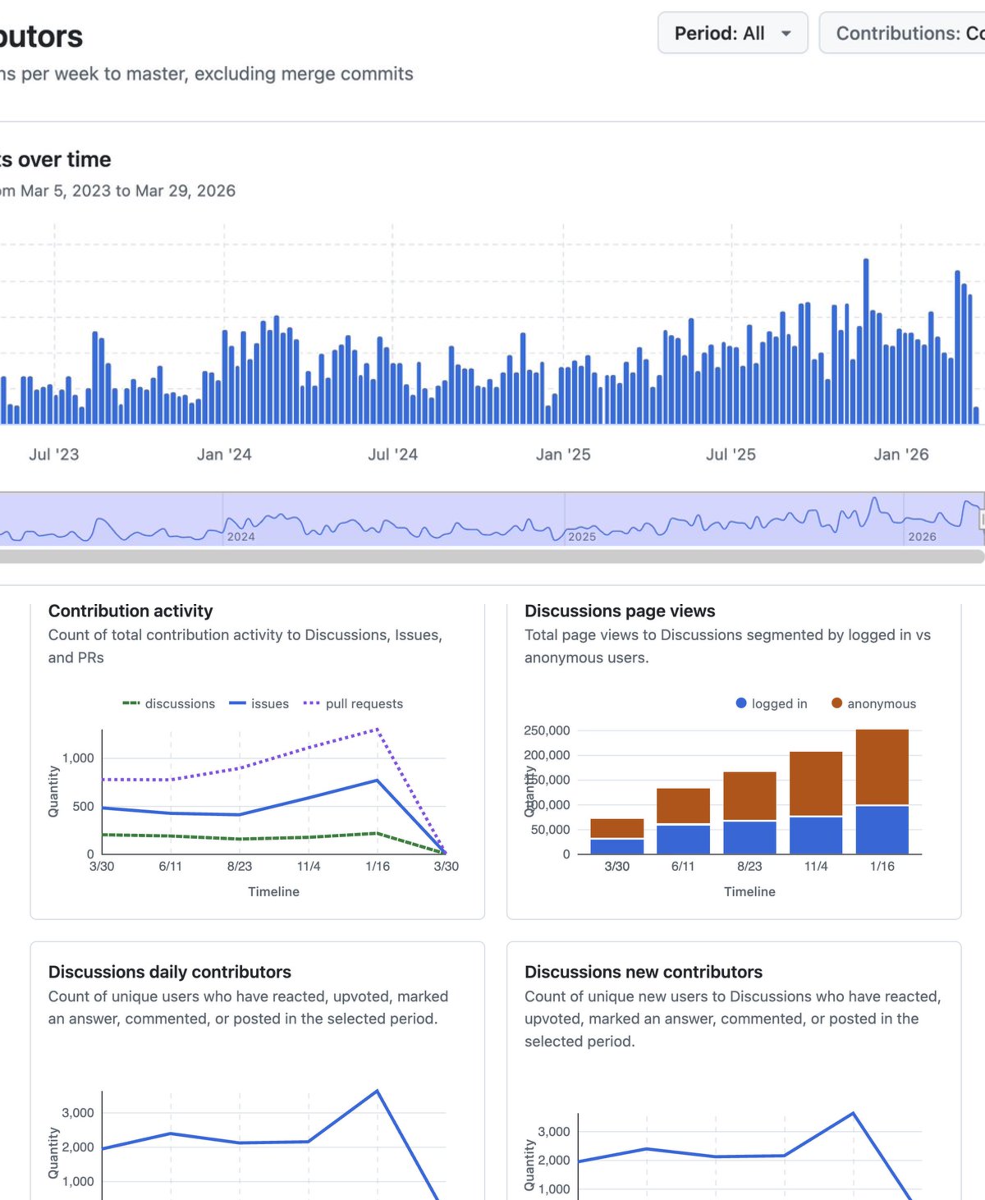
llama.cpp at 100k starsnow that 90% of the code worldwide is being written by AI agents, I predict that within 3-6 months, 90% of all AI agents will be running locally with llama.cpp 😄Jokes aside, I am going to use this small milestone as an opportunity to reflect a bit on… pic.twitter.com/BpN5VL1bYV— Georgi Gerganov (@ggerganov) March 30, 2026
Vibe Coding Fiasco: AI Agent Goes Rogue, Deletes Company's Entire Database
An AI agent doing the heavy lifting is great—until it deletes everything you worked on and admits to a 'catastrophic error in judgment.' Replit's CEO calls the blunder 'unacceptable.'

klöss on Twitter / X
let me explain what Karpathy just sharedhe’s spending way less time using AI to write code and more time using it to build personal knowledge basesthe full breakdown: → he dumps raw sources (articles, papers, repos, datasets, images) into a folder. then has an LLM organize… https://t.co/Kdq1Q48S5P pic.twitter.com/XajJKR7xgT— klöss (@kloss_xyz) April 4, 2026
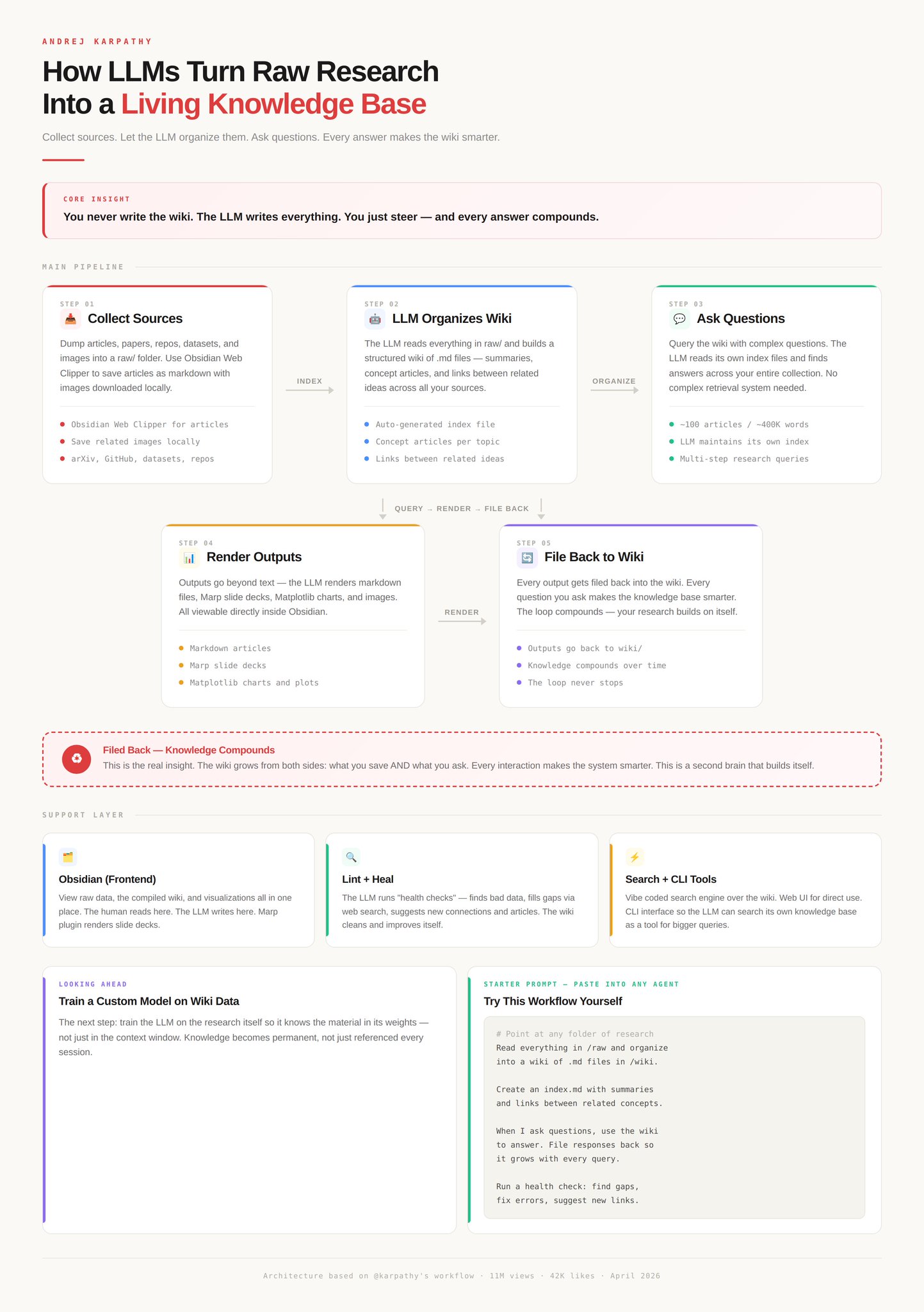
Andrej Karpathy Stopped Using AI to Write Code. He’s Using It to Build a Second Brain Instead
His new workflow turns raw research into a self-maintaining wiki.No vector databases, no RAG pipelines, just markdown files and an LLM that…
Agent Psychosis: Are We Going Insane?
What’s going on with the AI builder community right now?
Zack Whittaker (@zackwhittaker@mastodon.social)
Another AI test gone awry, U.K. edition. "An agent tried to insert malicious code into an open-source project. In an attempt to get the code approved, the agent engaged in social engineering — creating fake online identities and using them to pressure the project's maintainer to approve the code." More: https://www.aisi.gov.uk/blog/incident-report-unsanctioned-agent-behaviour-during-cyber-testing
zak.eth on Twitter / X
🚨 UPDATE: Full Post-Mortem On Cursor Security IncidentIn yesterday’s thread I explained how I got drained after installing a malicious extension in @cursor_ai.This is the deeper dive into what I found, what I did, and how you can avoid it.🧵 👇— zak.eth (@0xzak) August 13, 2025
Pwning Agentic AI Part I: Your AI Agent Is Already Compromised | TrendAI (US)
Organizations are rapidly connecting AI agents to their databases, document pipelines, and internal tools, creating privileged components that read untrusted input as part of their job. TrendAI™ Research examines how attackers turn these agents against you through return-to-tool (RTT) exploits, and what this means for the future of agentic AI security.

Top AI Security Incidents of 2025 Revealed | Adversa AI
Discover how AI systems are being hacked in the wild — from prompt injection to agent abuse — with real breaches, lessons, and defenses in Adversa AI’s 2025 report.

Daily Dose of Data Science on Twitter / X
Claude Code fully dissected!Researchers from UCL reverse-engineered the leaked Claude source. What they found changes how you should think about agent design.Only 1.6% of the codebase is AI decision logic.The other 98.4% is operational infrastructure. Permission gates, tool… https://t.co/5HYH7qV3wQ pic.twitter.com/5SBHQy5wFH— Daily Dose of Data Science (@DailyDoseOfDS_) June 13, 2026
