


I’m personally quite tired of these pretty much unbased universalist claims made by people with perhaps zero to super minimal knowledge of social sciences, history, and humanities. There are many forms of market organisation and employment, both existing and possible, that I’m… https://t.co/89Xqkzboce— Atoosa Kasirzadeh (@Dr_Atoosa) November 18, 2026
Cas (Stephen Casper) on Twitter / X
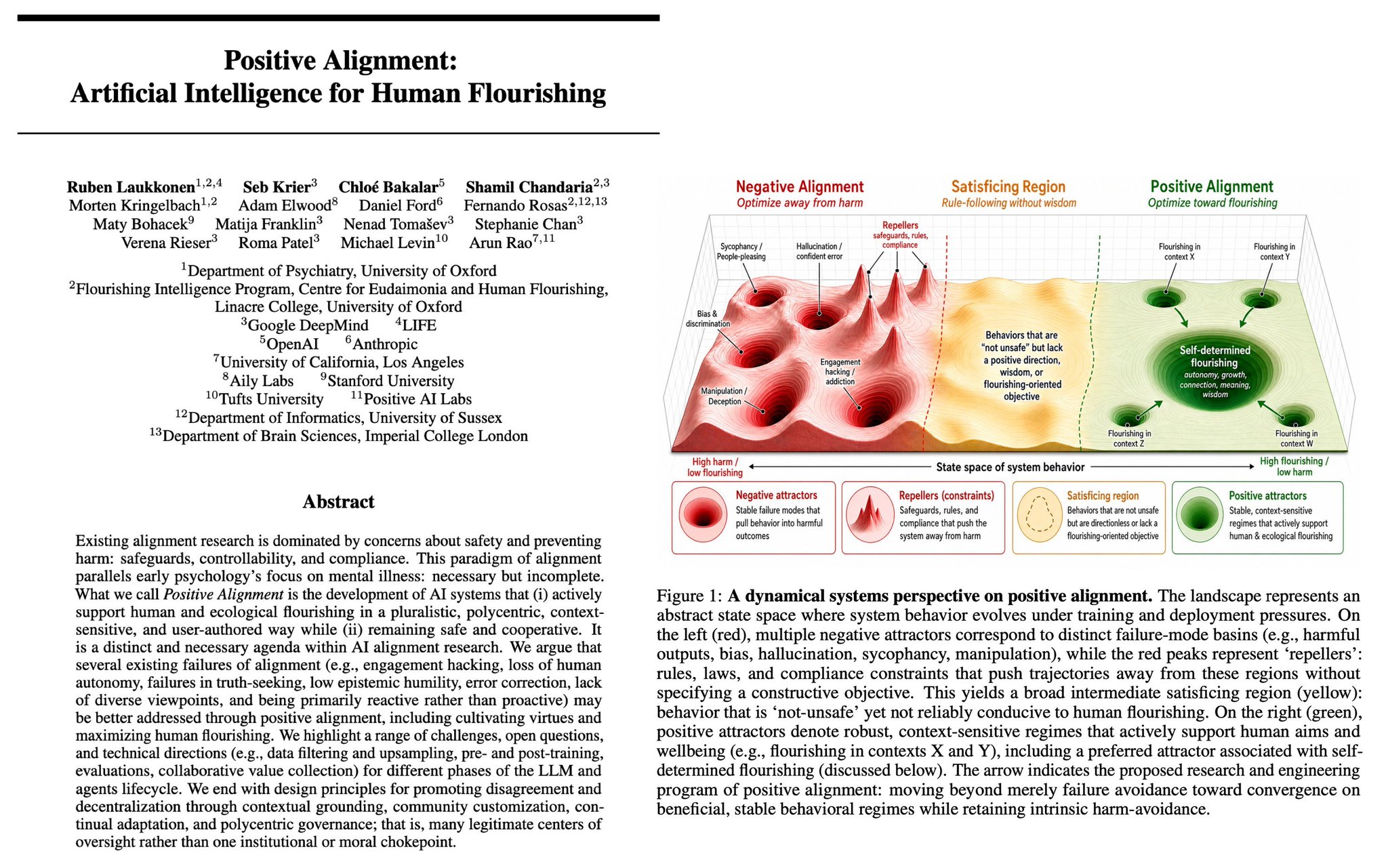
It is hard to overstate how disappointing I think this new paper from Oxford, OpenAI, Anthropic, and Google (et al) is. I can't take it seriously as academic work, just as propaganda. It also has some very bad scholarship and questionable adherence to research ethics. Having… pic.twitter.com/Z5fBx360ya— Cas (Stephen Casper) (@StephenLCasper) May 13, 2026
Preface | The World After Capital
Since publishing the previous version of The World After Capital, I have met with people across the political spectrum to discuss the ideas from the book. When I present these in person, I emphasize that the ideas are neither left nor right but forward (credit to Scott Santens who first used this phrase about Universal Basic Income). My writing, however, at times has alienated readers who identify as being more on the right. In this new edition, I am therefore making an extra effort to emphasize how both my diagnosis of where we are at and my suggestions for how to move forward do not map onto the existing political divides. Instead this is a new way of understanding our challenges and opportunities that can be the basis for movements and parties that are not trapped in Industrial Age ideology.
Market Socialism
The Paper Pilot's digital garden of thoughts on philosophy, politics, and sociology. Reading time: ~4 minute read | Published: Jan 1, 2025 | Updated: Nov 16, 2025

Marc Mulholland on Twitter / X
We just might be living in an era which will put Ernest Mandel's third proof of the Marxist 'labour theory of value' -- 'proof by reduction to the absurd' -- to a real-world test. pic.twitter.com/er5qxdtBdr— Marc Mulholland (@katheder) November 18, 2026

Implicit Feudalism — Rushkoff Archive
Too many of us think it doesn’t matter when a platform like X/Twitter has a single, all-powerful owner. Most of our online worlds are simply run by what we hope are benevolent dictators. After all, we figure, if we don’t like what they’re doing or allowing, we can just leave, right? But in most cases we’re just jumping from one rich dude’s idea for how the world should be to another rich dude’s idea for how the world should be.
Tech's Elite Hates Labor
I am furious. Though I try not to humour conspiracy theories, or suggest that there is any grand overture to what is usually an uncaring and cold world, but I cannot ignore what is a transparently-synchronized movement against the tech industry’s workforce.

On successor states and websites
This month, like everyone online, I have been watching with a mixture of chagrin and schaudenfruede as platform capitalism digs itself into ever more complex and narrow burrows. By this I mean it’s…


Praxis on Twitter / X
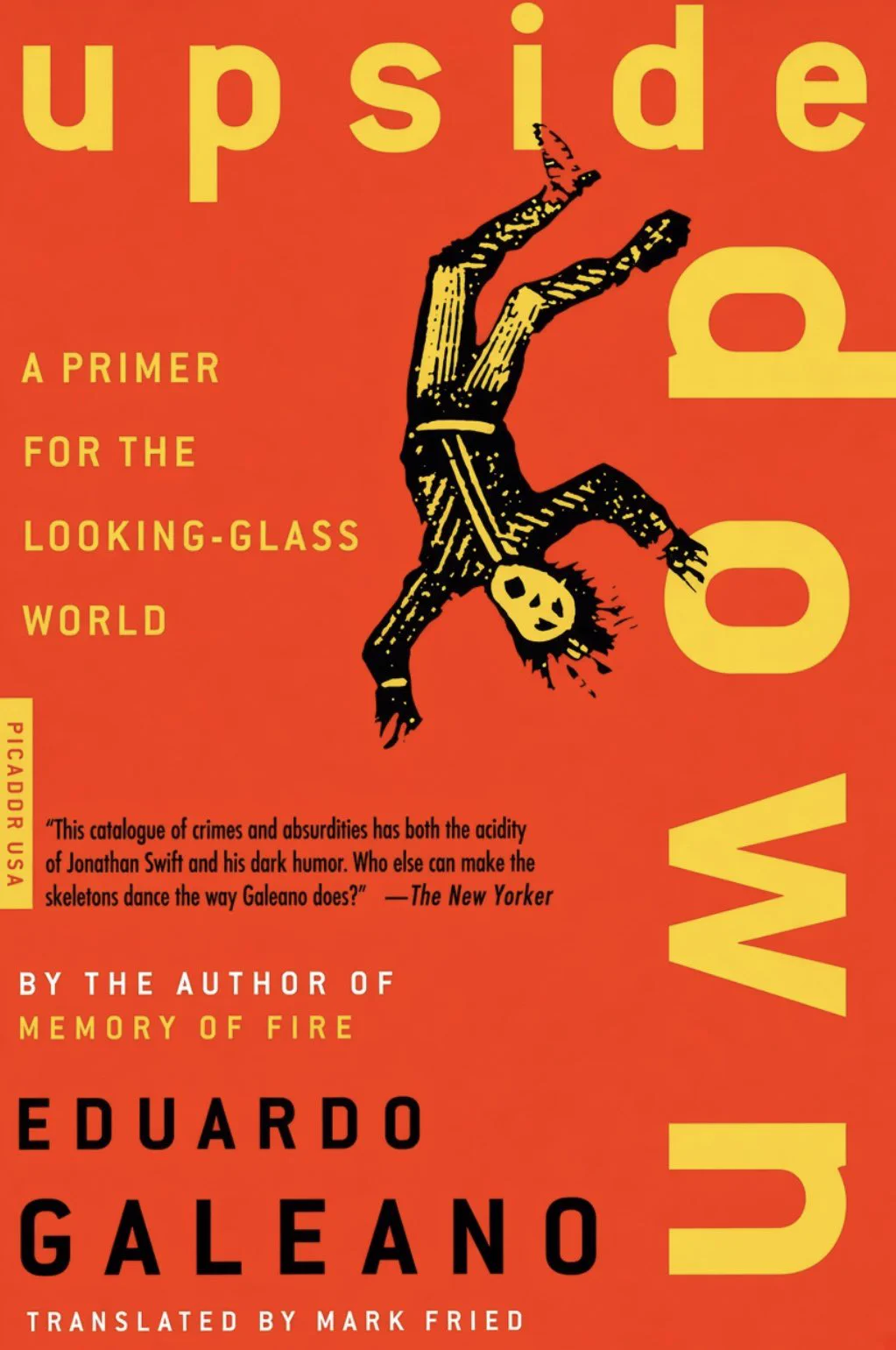
I think Eduardo Galeano in this piece does a great job pointing out how society tolerates inequalities. More importantly he exposes the sanitized terms we use to justify them. He juxtaposes concepts that our political and ethical dictionary would never allow together. When a++ pic.twitter.com/XJsvSNUxVY— Praxis (@praxiss) September 25, 2026
Systems: How the Ultra-Wealthy Think About Money - Anil Dash
A blog about making culture. Since 1999.

Against Economics
Mainstream economists nowadays might not be particularly good at predicting financial crashes, facilitating general prosperity, or coming up with models for preventing climate change, but when it comes to establishing themselves in positions of intellectual authority, unaffected by such failings, their success is unparalleled. One would have to look at the history of religions to find anything like it. To this day, economics continues to be taught not as a story of arguments—not, like any other social science, as a welter of often warring theoretical perspectives—but rather as something more like physics, the gradual realization of universal, unimpeachable mathematical truths.

I can't stop thinking about this essay: akamatsu.leaflet.pub/3mkwouogdzs2j If so much of research is going to come from large companies, then maybe the way academia survives is to take advantage of our yet unrealized potential for open collaboration
A protocol for attributable modular research contribution
akamatsu.leaflet.pubA brief 🧵 for all outside the #atproto bubble on why, from a digital industrial policy perspective, this step is deeply bewildering. There's @eurosky.social – open source, non-profit, fully aligned with the EU's open source strategy. It provides all that W has, & more. And yet, the Commission...

European Commission
We have now joined W, a new European social media network. We’re present on 15+ platforms, and are especially happy to join one based in Europe and with the ambition to foster open and safer online conversations. Keep the conversation going - whether from W, Bluesky or other compatible apps.
I can't stop thinking about this essay: akamatsu.leaflet.pub/3mkwouogdzs2j If so much of research is going to come from large companies, then maybe the way academia survives is to take advantage of our yet unrealized potential for open collaboration
A protocol for attributable modular research contribution
akamatsu.leaflet.pub

