I believe that LSTM based architectures (constant hidden state, constant flops / step) will crush transformers as we know them in 2-3 years. we will laugh about KV Caches and how dumb we were.. to achieve this, the LSTM will need to have a large external memory bank with…— Francois Chaubard (@FrancoisChauba1) July 30, 2026
alphaXiv on Twitter / X
"Metis: Memory Foundation Model"Most AI agents still use memory as an external RAG-style module, so the model retrieves old text instead of actually remembering.This paper makes memory native to the Transformer. So past interactions are compressed into dynamic layer states… pic.twitter.com/YylDDXGX3G— alphaXiv (@askalphaxiv) July 31, 2026
Can LLMs Be Computers? | Percepta
We build a computer inside a transformer — executing arbitrary C programs for millions of steps with exponentially faster inference via 2D attention heads.
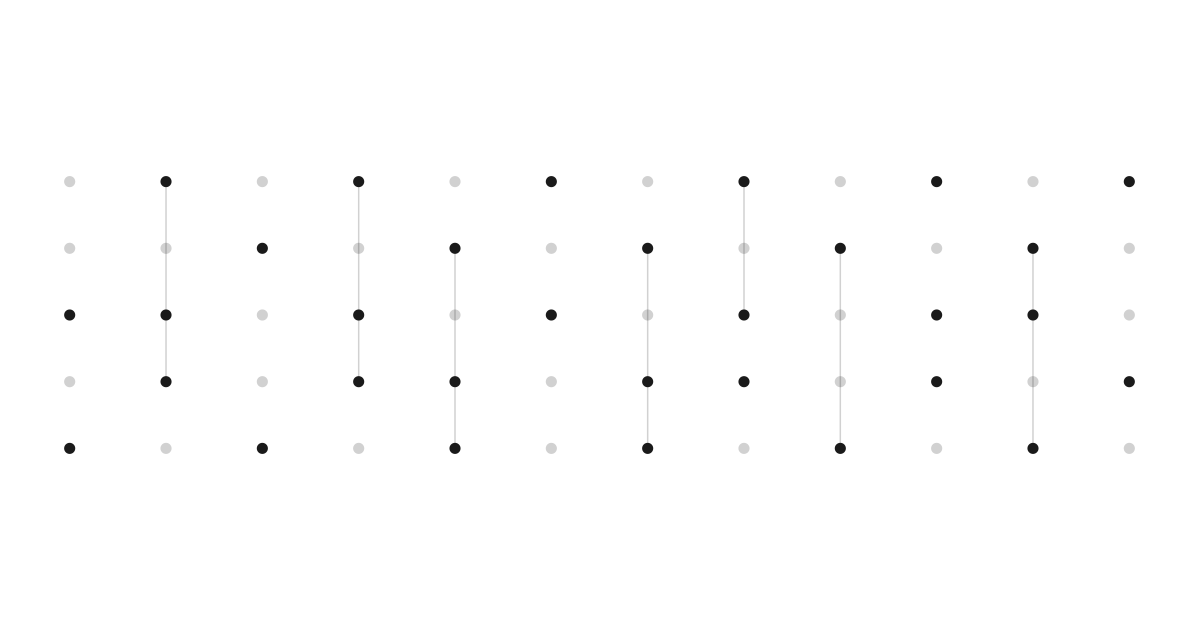
Can LLMs Be Computers? | Percepta
We build a computer inside a transformer — executing arbitrary C programs for millions of steps with exponentially faster inference via 2D attention heads.
Why Can't Transformers Learn Multiplication?...
Language models are increasingly capable, yet still fail at a seemingly simple task of multi-digit multiplication. In this work, we study why, by reverse-engineering a model that successfully...

Why Can't Transformers Learn Multiplication?...
Language models are increasingly capable, yet still fail at a seemingly simple task of multi-digit multiplication. In this work, we study why, by reverse-engineering a model that successfully...
A Controlled Study of Attention-Only Transformers
Feed-forward networks hold two thirds of a transformer's non-embedding parameters, yet the architecture has not received a necessity test that controls parameters, compute, and depth at once. We pretrain attention-only decoder transformers (Simple Attention Networks, SANs) against standard transformers matched separately for parameter count, training FLOPs, and depth (2 to 48 layers), for up to 105B tokens at 6M to 87M parameters. Deleting feed-forward layers in place is costly: the standard transformer leads by 0.47 nats at matched depth and 0.26 nats at matched FLOPs. Reallocating the freed budget into attention depth closes the gap: at matched parameters the difference is 0.006 nats (0.27 percent of loss), reproducible to one part in ten thousand across seed pairs, shrinking across 5B, 30B, and 105B budgets, and holding near 0.02 nats across a 29x size range. Three measurements localize the remaining gap to parametric recall: attention-only models are better on context-grounded answers and worse where knowledge must come from weights. Weight spectra show why: routing matrices (Q/K) crystallize early, content matrices accumulate rank slowly, and removing feed-forward layers relocates this accumulation to the attention output projection. QK-normalization, not feed-forward layers or residual gating, keeps 48-layer attention-only stacks trainable. The deficit concentrates on low-context query prediction and localizes there entirely by the largest budget. A pre-registered test confirms the account: it predicts a 0.02 to 0.05 nat gap on knowledge-dense web text; a matched pair trained on fineweb-edu measures 0.040. Within the tested regime, attention does the rest.
An Introduction to Transformers
The transformer is a neural network component that can be used to learn useful representations of sequences or sets of data-points. The transformer has driven recent advances in natural language processing, computer vision, and spatio-temporal modelling. There are many introductions to transformers, but most do not contain precise mathematical descriptions of the architecture and the intuitions behind the design choices are often also missing. Moreover, as research takes a winding path, the explanations for the components of the transformer can be idiosyncratic. In this note we aim for a mathematically precise, intuitive, and clean description of the transformer architecture. We will not discuss training as this is rather standard. We assume that the reader is familiar with fundamental topics in machine learning including multi-layer perceptrons, linear transformations, softmax functions and basic probability.
The Illustrated Transformer
Discussions: Hacker News (65 points, 4 comments), Reddit r/MachineLearning (29 points, 3 comments) Translations: Arabic, Chinese (Simplified) 1, Chinese (Simplified) 2, French 1, French 2, Italian, Japanese, Korean, Persian, Russian, Spanish 1, Spanish 2, Vietnamese Watch: MIT’s Deep Learning State of the Art lecture referencing this post Featured in courses at Stanford, Harvard, MIT, Princeton, CMU and others Update: This post has now become a book! Check out LLM-book.com which contains (Chapter 3) an updated and expanded version of this post speaking about the latest Transformer models and how they've evolved in the seven years since the original Transformer (like Multi-Query Attention and RoPE Positional embeddings). In the previous post, we looked at Attention – a ubiquitous method in modern deep learning models. Attention is a concept that helped improve the performance of neural machine translation applications. In this post, we will look at The Transformer – a model that uses attention to boost the speed with which these models can be trained. The Transformer outperforms the Google Neural Machine Translation model in specific tasks. The biggest benefit, however, comes from how The Transformer lends itself to parallelization. It is in fact Google Cloud’s recommendation to use The Transformer as a reference model to use their Cloud TPU offering. So let’s try to break the model apart and look at how it functions. The Transformer was proposed in the paper Attention is All You Need. A TensorFlow implementation of it is available as a part of the Tensor2Tensor package. Harvard’s NLP group created a guide annotating the paper with PyTorch implementation. In this post, we will attempt to oversimplify things a bit and introduce the concepts one by one to hopefully make it easier to understand to people without in-depth knowledge of the subject matter. 2025 Update: We’ve built a free short course that brings the contents of this post up-to-date with animations: A High-Level Look Let’s begin by looking at the model as a single black box. In a machine translation application, it would take a sentence in one language, and output its translation in another.
Alex Cheema on Twitter / X
.@karpathy shouted out my work on @exolabs at @ycombinator AI SUS!“we use LLMs similarly to mainframes in the ‘70s - compute is timeshared by having a slice in the batch dimension. models will compress over time, and with this we’ll be able to run more on-device” pic.twitter.com/UKSrquQGAL— Alex Cheema (@alexocheema) June 18, 2025

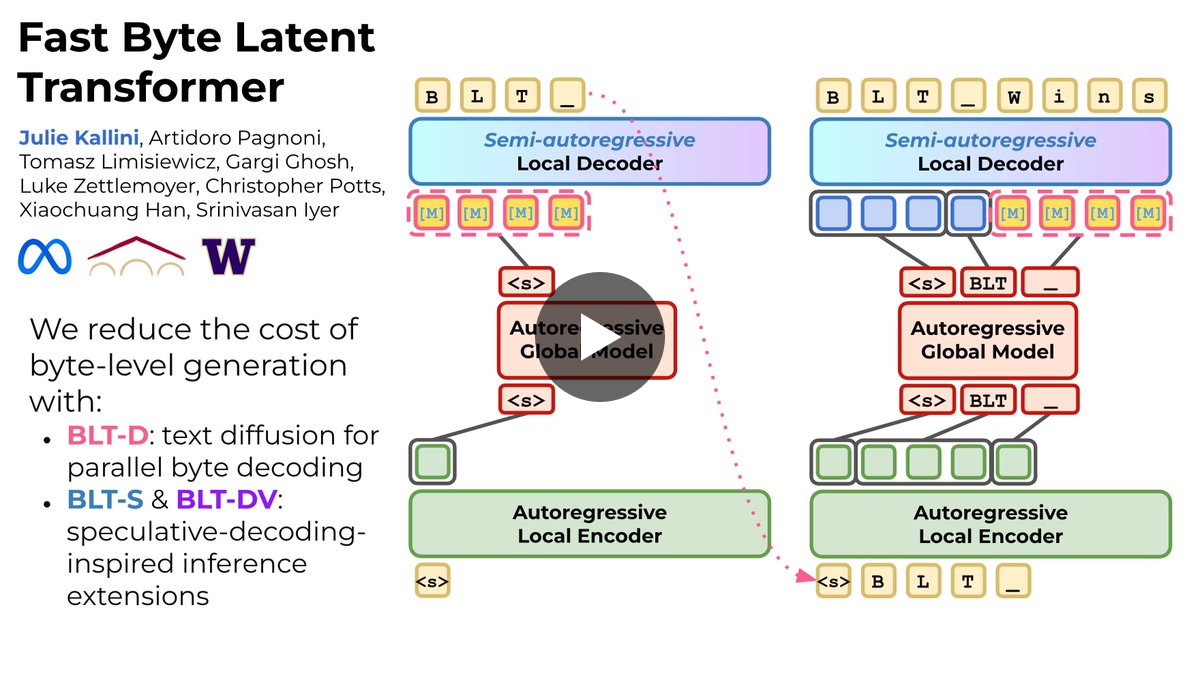
Julie Kallini ✈️ ICML✨ on Twitter / X
Fast Byte Latent Transformer is accepted to ICML 2026! ⚡🥪Byte-level LMs promise to free us from subword tokenizers, but decoding one byte at a time is super slow.We make BLT generation more efficient with BLT-D: text diffusion for parallel byte decoding. 1/ pic.twitter.com/ZIvUgavXvt— Julie Kallini ✈️ ICML✨ (@JulieKallini) May 11, 2026
The Coming AI Cataclysm | Compact
In the decade since the neural architecture version of Google Translate and the invention of transformer architecture for neural networks, we have experienced the most rapid technological breakthroughs since at least World War II, and possibly ever.
Long short-term memory
Long short-term memory (LSTM) is a type of recurrent neural network (RNN) aimed at mitigating the vanishing gradient problem commonly encountered by traditional RNNs. Its relative insensitivity to gap length is its advantage over other RNNs, hidden Markov models, and other sequence learning methods. It aims to provide a short-term memory for RNN that can last thousands of timesteps. The name is made in analogy with long-term memory and short-term memory and their relationship, studied by cognitive psychologists since the early 20th century.


Beyond Standard LLMs
Linear Attention Hybrids, Text Diffusion, Code World Models, and Small Recursive Transformers
The Memory Walled Garden
The gap between first and third party memory systems
LLMs Can Now Write GPU Kernels That Beat torch.compile - Break AI Scaling Limits in 7 Days
We're now seeing multi-agent systems that take your PyTorch code and produce CUDA or Triton kernels with 2x to 14x speedups over torch.compile(mode='max-autotune-no-cudagraphs'). Not on toy benchmarks. On real models like Llama-3.1-8B, Whisper, and Stable Diffusion. Learn proven techniques to shift the scaling law intercept and achieve 10-50% performance gains.