

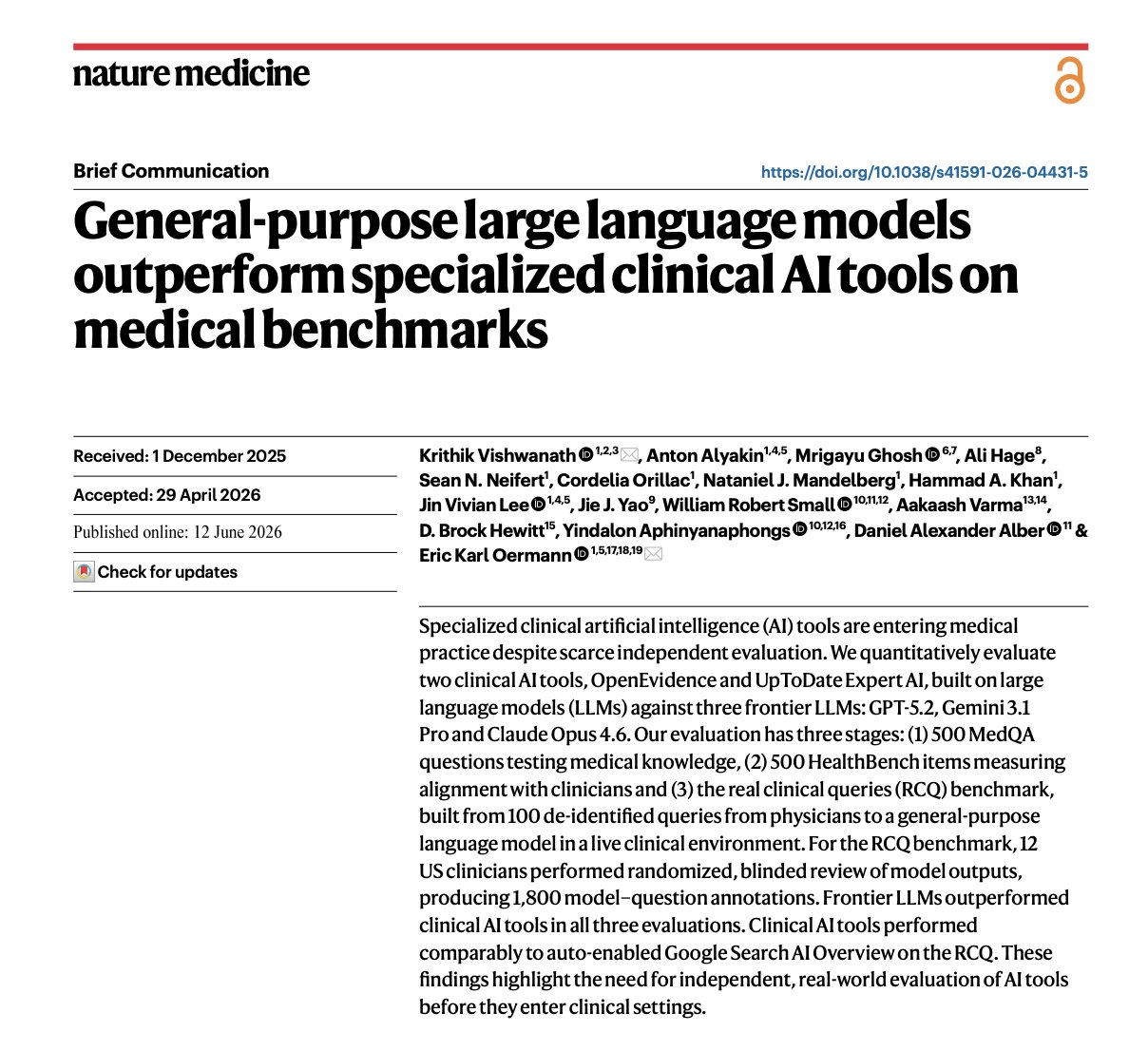
scientist tested a 3.5 billion dollar medical AI against regular chatGPT and it lost on every single one.they just published a paper in nature medicine, and the results are actually mindblowing.they took specialized clinical ai tools and tested them against general-purpose… pic.twitter.com/P7ePLunrDj— How To Prompt (@HowToPrompt__) July 6, 2026
ChatGPT Health and what AI can do for a broken system
Healthcare isn’t working for patients or doctors, but AI tools can help.
Chatbots Make Terrible Doctors, New Study Finds
Chatbots provided incorrect, conflicting medical advice, researchers found: “Despite all the hype, AI just isn't ready to take on the role of the physician.”

Cheap AI chatbots transform medical diagnoses in places with limited care
Studies in Rwanda and Pakistan reveal real-world utility of chatbots in underfunded clinics, and not just in benchmark tests.
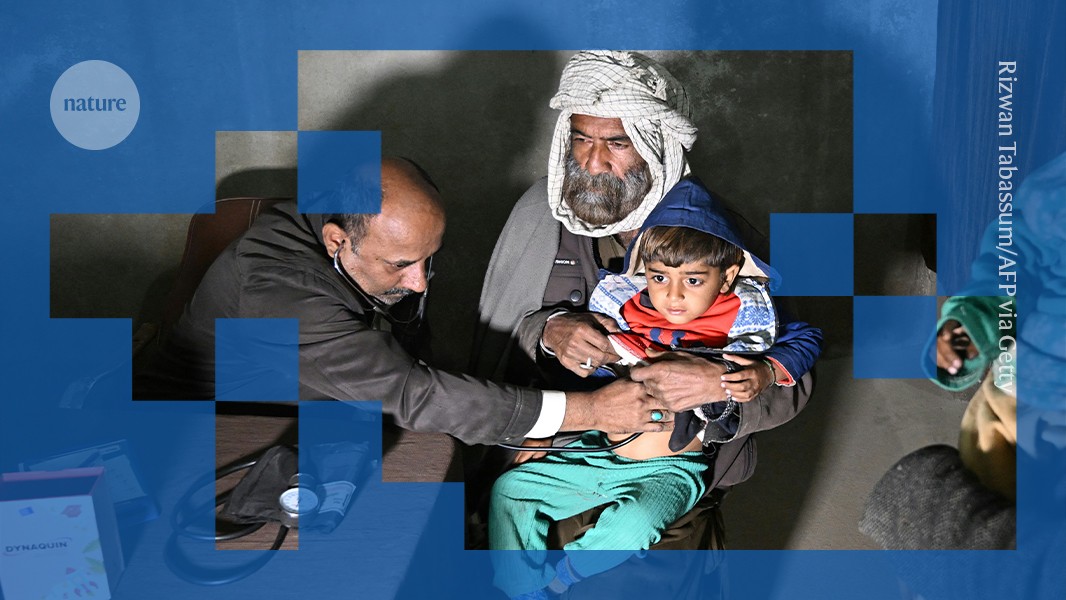
Cheap AI chatbots transform medical diagnoses in places with limited care
Studies in Rwanda and Pakistan reveal real-world utility of chatbots in underfunded clinics, and not just in benchmark tests.
Valerio Capraro on Twitter / X
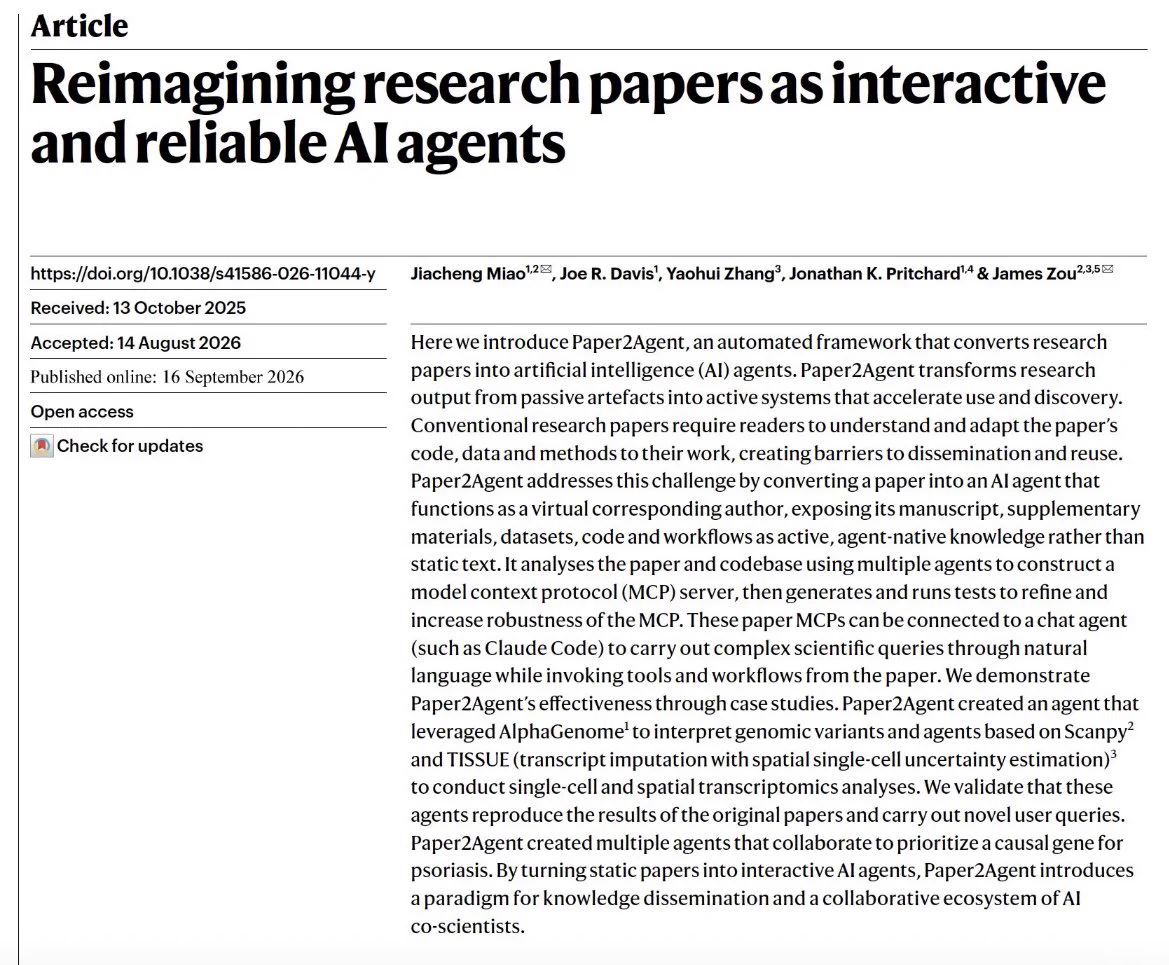
Nature has just published a pretty incredible paper.The authors introduce a framework that turns research papers into interactive AI agents.Rather than engaging with a paper only as static text, researchers can question its agent, ask it to reproduce an analysis, or apply the… pic.twitter.com/82wOQjak7a— Valerio Capraro (@ValerioCapraro) September 16, 2026
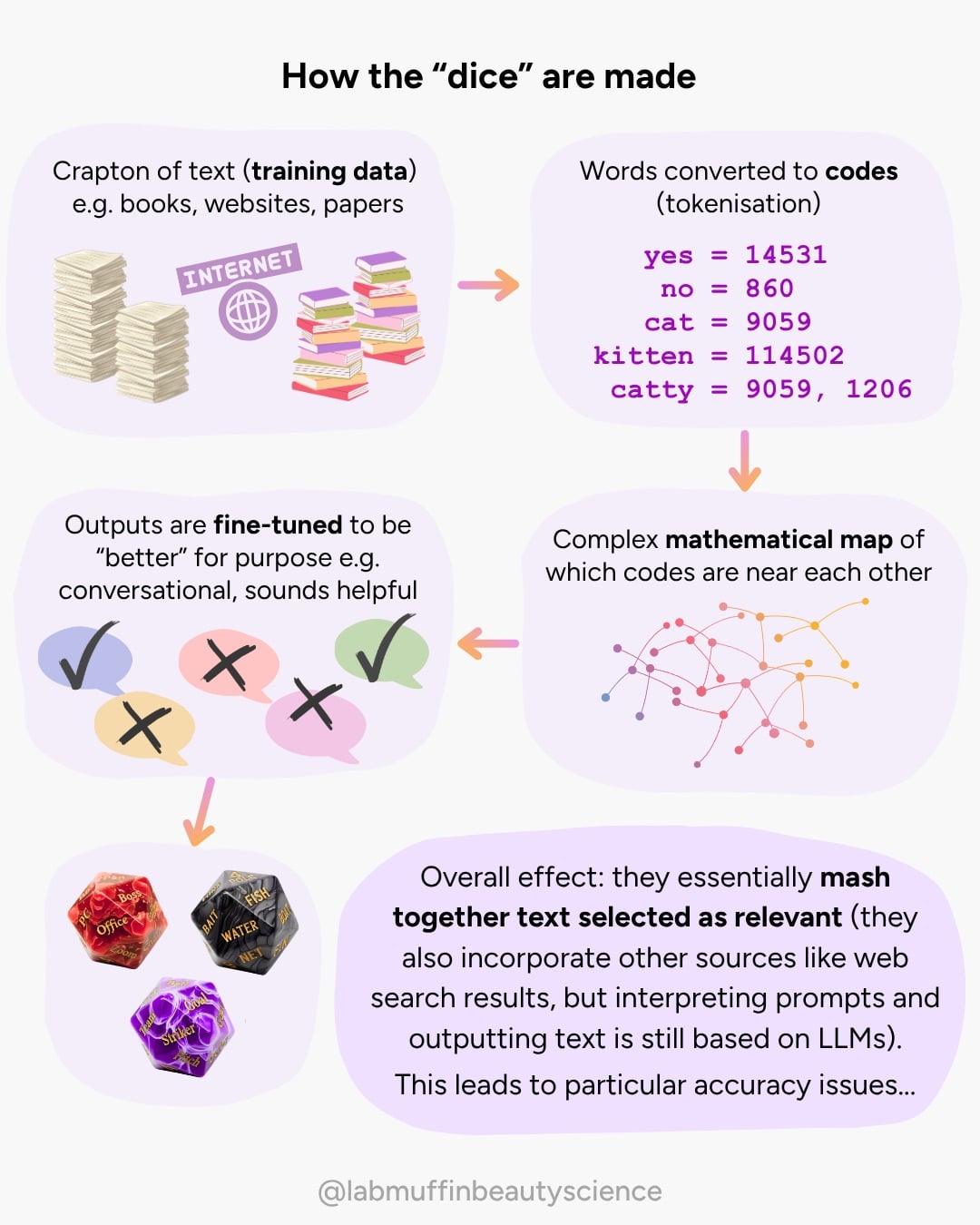
Why you can’t trust AI chatbots for science | Lab Muffin Beauty Science
Lazy AI-generated content is everywhere now. Unfortunately, AI chatbots like ChatGPT, Claude and Gemini aren't reliable for factual content, especially science content. AI chatbots don'
New research: AI chatbots may worsen mental illness
A new study from Aarhus University and Aarhus University Hospital suggests that the use of AI chatbots such as ChatGPT can have serious negative consequences for people with mental illness. The researchers are calling for increased awareness among healthcare professionals and for regulation.

No humans allowed: scientific AI agents get their own social network
Autonomous agents aren’t just creating their own research — on the Reddit-style website Agent4Science, they’re chatting about it, too.
Don’t let AI steal all the joy: what scientists won’t give up to chatbots
Nature asked readers of the Nature Briefing what they like about their job and don’t want to hand over.
Science Works on Twitter / X
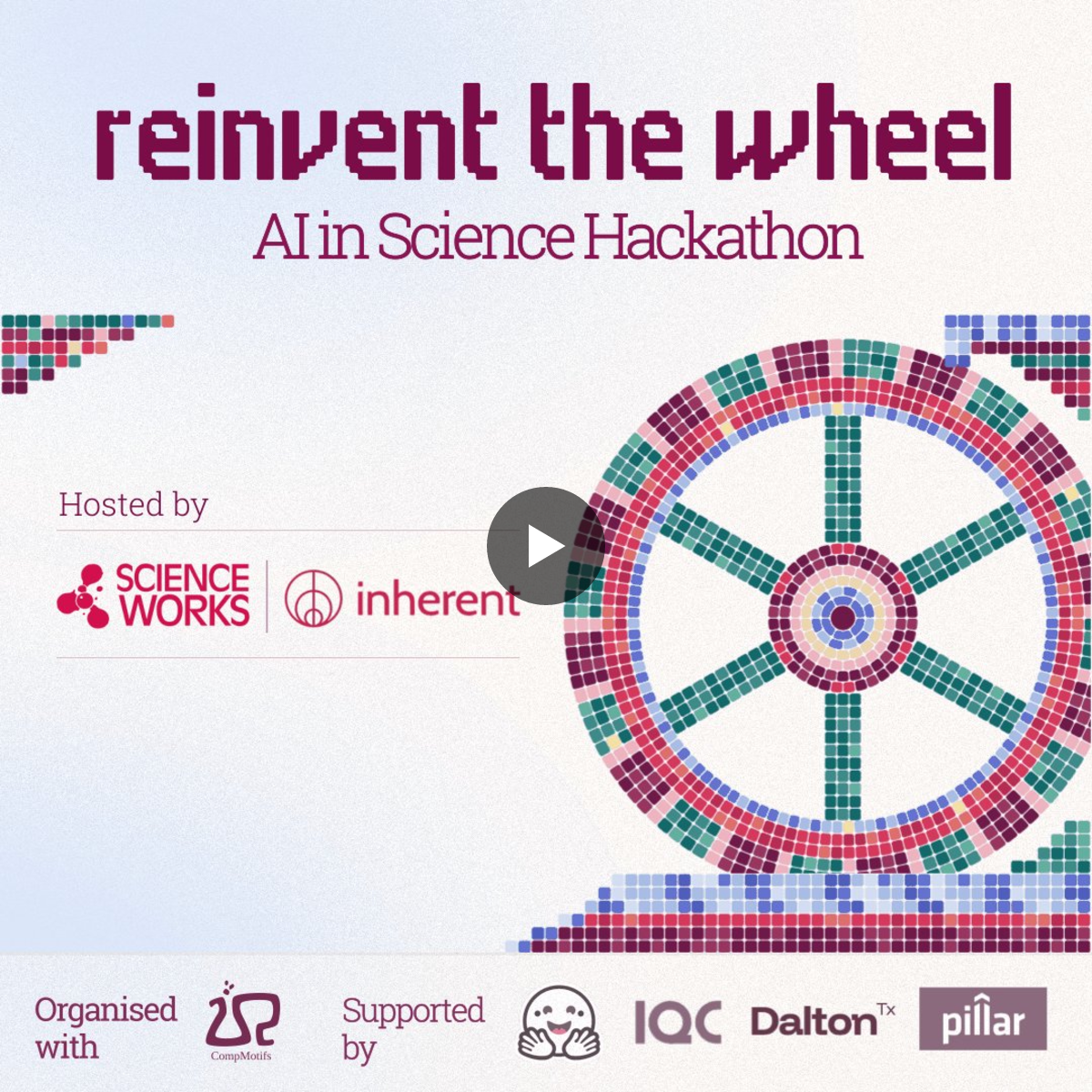
London AI × Science Hackathon 👾Science Works × @inherent_labs • Oct 16-18Lots of scientific software is outdated, hard to use, and isn't interoperable – let alone making use of (or ready to interface with) AI.Or it's expensive. Join us to build better for the community pic.twitter.com/42Qq528DDw— Science Works (@sci_works) September 30, 2026
Company Offering ‘100% Human-Written, Never AI’ Medical Research Is Entirely AI
Research Gold's team of human methodologists are either AI generated or using the identity of real people without their permission
Company Offering ‘100% Human-Written, Never AI’ Medical Research Is Entirely AI
Research Gold's team of human methodologists are either AI generated or using the identity of real people without their permission
Scientists invented a fake disease. AI told people it was real
Bixonimania doesn’t exist except in a clutch of obviously bogus academic papers. So why did AI chatbots warn people about this fictional illness?
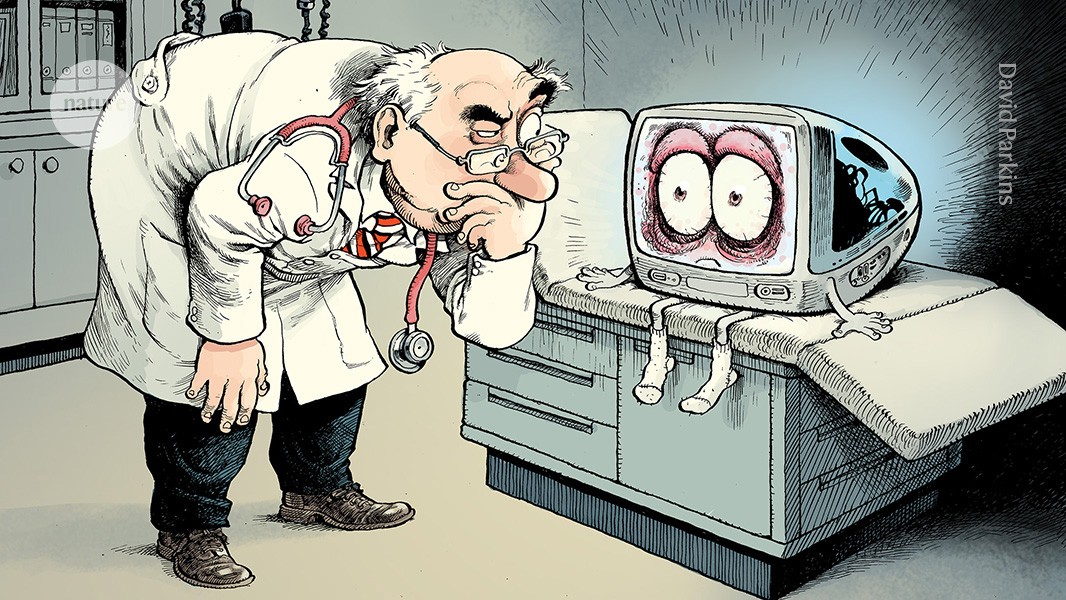
People are using AI for their health crises, and no amount of screaming about it is stopping that. I started slowly drafting a piece about my experiences having long, slow conversations about AI practices in the patient communities I'm in, where I primarily stay just to provide scientific support
Here’s why AI chatbots (Claude, ChatGPT, Gemini etc) are unreliable for science content, and terrible as “just a starting point” for science communicators. Unfortunately, this probably isn’t something AI chatbots get much better at… although sloppers will get better at hiding it!
Here’s why AI chatbots (Claude, ChatGPT, Gemini etc) are unreliable for science content, and terrible as “just a starting point” for science communicators. Unfortunately, this probably isn’t something AI chatbots get much better at… although sloppers will get better at hiding it!

