

I have quite a lot of thoughts on this..that won't fit in a tweet. Bottomline is that there are issues scientists in the US would love to improve - faster review, less grant writing, more stability and freedom to do risky science. The folks celebrating this doc are mostly../1 https://t.co/xlPAH9XYNC— Jason Shepherd (@JasonSynaptic) July 23, 2026
Seth Bannon on Twitter / X
There are some exceptionally good ideas here for reforming and accelerating science.Some of my favorite proposals:Apply the scientific method to science funding (track applications, reviewers, funding decisions, and outcomes, then experimentally test which grantmaking methods… https://t.co/Q0JmqTBPYm— Seth Bannon (@sethbannon) July 22, 2026
Director Michael Kratsios on Twitter / X
In response to @POTUS's call for a revival of America's scientific enterprise, today I’m releasing Science: A New Golden Age.This report is a blueprint for renewing American scientific leadership for the 21st century. pic.twitter.com/ikM6pX2ndP— Director Michael Kratsios (@mkratsios47) July 21, 2026

Jake Wintermute 🧬/acc on Twitter / X
I’ve expected this for a while but it still hurts. The “Life Sciences Verification Program.” It breaks my heart to know that biological knowledge will be locked down and gatekept like this. I want to take a moment to mourn, because I believe this marks an end for open science as… https://t.co/l5WLjOuEdk— Jake Wintermute 🧬/acc (@SynBio1) September 17, 2026
Jason Crawford on Twitter / X
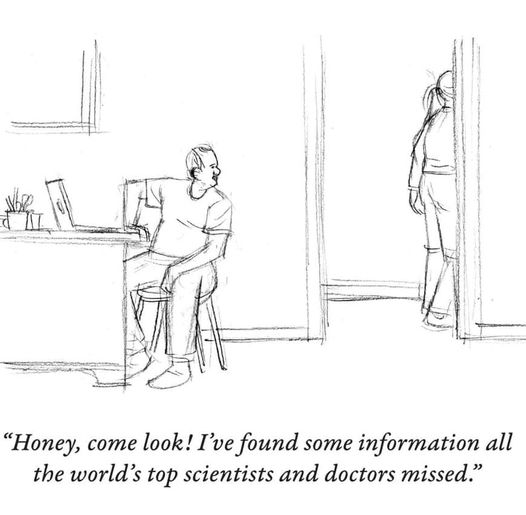
It's hard to find information that all the world's top scientists and doctors have missed.But it's not that hard, if you're intelligent, thoughtful, and diligent, to find information that the medical system has not yet caught up to—information that is not yet incorporated into… pic.twitter.com/HrgGzCUdX2— Jason Crawford (@jasoncrawford) September 22, 2024
The Current Crisis: What's Happening to Science in America
Maybe scientific progress isn’t slowing, after all
A new paper takes aim at the claim that science has become less disruptive

Andreas De Block on Twitter / X
It took Nature three years to publish this rebuttal, which clearly demonstrates the fundamental flaws in the original paper. In the meantime, the paper's conclusions influenced scientific debate and policy decisions. Such delays in correcting flawed research do real damage. https://t.co/QI3Ei3PE70— Andreas De Block (@DeblockBlock) August 13, 2026
Science has been in a “replication crisis” for a decade. Have we learned anything?
Bad papers are still published. But some other things might be getting better.

Kevin Weil 🇺🇸 on Twitter / X
💥 Today we’re introducing Prism—a free, AI-native workspace for scientists to write and collaborate on research, powered by GPT-5.2.Accelerating science requires progress on two fronts:1. Frontier AI models that use scientific tools and can tackle the hardest problems2.… pic.twitter.com/cnLysHixuQ— Kevin Weil 🇺🇸 (@kevinweil) January 27, 2026
Guest post: If you’re going to critique science, be scientific about it
Loren K. Mell Editor’s note: This post responds to a Feb. 13 article in The Atlantic, “The Scientific Literature Can’t Save Us Now,” written by Retraction Watch cofounders Adam Marcus and Ivan Oran…

Scientists no Longer Find Twitter Professionally Useful, and have Switched to Bluesky
Synopsis Social media has become widely used by the scientific community for a variety of professional uses, including networking and public outreach. For the past decade, Twitter has been a primary home of scientists on social media. In recent years, new leadership at Twitter has made substantive changes that have resulted in increases in the prevalence of pseudoscience, conspiracy theory, and harassment on the platform, causing many scientists to seek alternatives. Bluesky has been suggested as a good alternative to Twitter, but the phenomenon of academics switching social media platforms has not previously been studied. Here we report on the results of a survey distributed to scientists on Twitter and Bluesky (n = 813). Results overwhelmingly confirm that changes to Twitter have made the social media platform no longer professionally useful or pleasant, and that many scientists have abandoned it in favor of Bluesky. Results show that for every reported professional benefit that scientists once gained from Twitter, scientists can now gain that benefit more effectively on Bluesky than on Twitter.
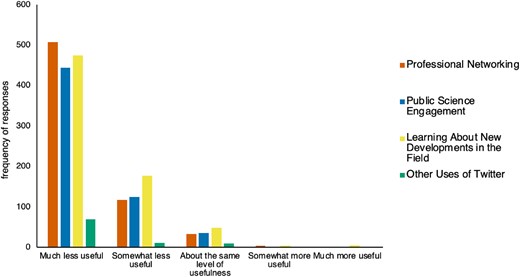
A new study suggests that scientists are leaving X (formerly known as Twitter) in significant numbers due to its declining professional value. Many now find Bluesky to be a more effective platform for networking, outreach, and staying updated on research.
36K votes, 1.1K comments. 34M subscribers in the science community. This community is a place to share and discuss new scientific research. Read…
What stories should we tell about scientific progress now?
In search of the mysterious fruits of basic science

BURKOV on Twitter / X
This looks like the collapse of peer-reviewed science. pic.twitter.com/xItwztcWuM— BURKOV (@burkov) September 19, 2026

Correction of scientific literature: Too little, too late!
The Coronavirus Disease 2019 (COVID-19) pandemic has highlighted the limitations of the current scientific publication system, in which serious post-publication concerns are often addressed too slowly to be effective. In this Perspective, we offer suggestions to improve academia’s willingness and ability to correct errors in an appropriate time frame.