


in a twist, the code below is correct!"The ^ operator indicates crossing to the specified degree. For example (a+b+c)^2 is identical to (a+b+c)*(a+b+c) which in turn expands to a formula containing the main effects for a, b and c together with their second-order interactions" https://t.co/sBErcEfV6B pic.twitter.com/RrF6bKY5Sl— Lucy D’Agostino McGowan (@LucyStats) February 21, 2024
Prologue: How to Program
Naturally, when DrRacket calculates for you, it uses the rules that you know and love from math. Like you, it can determine the result of an addition only when all the operands are plain numbers. If an operand is a parenthesized operator expression—something that starts with a “(” and an operation—it determines the result of that nested expression first. Unlike you, it never needs to ponder which expression to calculate first—because this first rule is the only rule there is.
In TypeScript, what is the ! (exclamation mark / bang) operator when dereferencing a member?
When looking at the source code for a tslint rule, I came across the following statement: if (node.parent!.kind === ts.SyntaxKind.ObjectLiteralExpression) { return; } Notice the ! operator after

levent on Twitter / X
hello there the jacobian conjecture is false thanx to my close friend akhil for asking about it and my other close friend fable for working during the world cup final((1+xy)^3 z + y^2 (1+xy) (4+3xy), y + 3 x (1+xy)^2 z + 3 x y^2 (4+3xy), 2 x - 3 x^2 y - x^3 z): \C^3\to \C^3,…— levent (@__alpoge__) July 20, 2026
Flowtype+Atom+Nuclideで安全にEventを扱う - Qiita
皆さんイベントを扱ってますか!! JavaScriptではイベントは避けては通れない道ではありますが、イベントを送る、受け取るのには文字列でイベント名を指定してあげる必要があります。 このイベント名を指定するというのが曲者で、文字列での指定になるためどうしてもtypoが発生...

Unifying fold left and fold right with Prolog
Here's a rather cool trick we noticed during a recent discussion in the NUS PLSE Lab.1
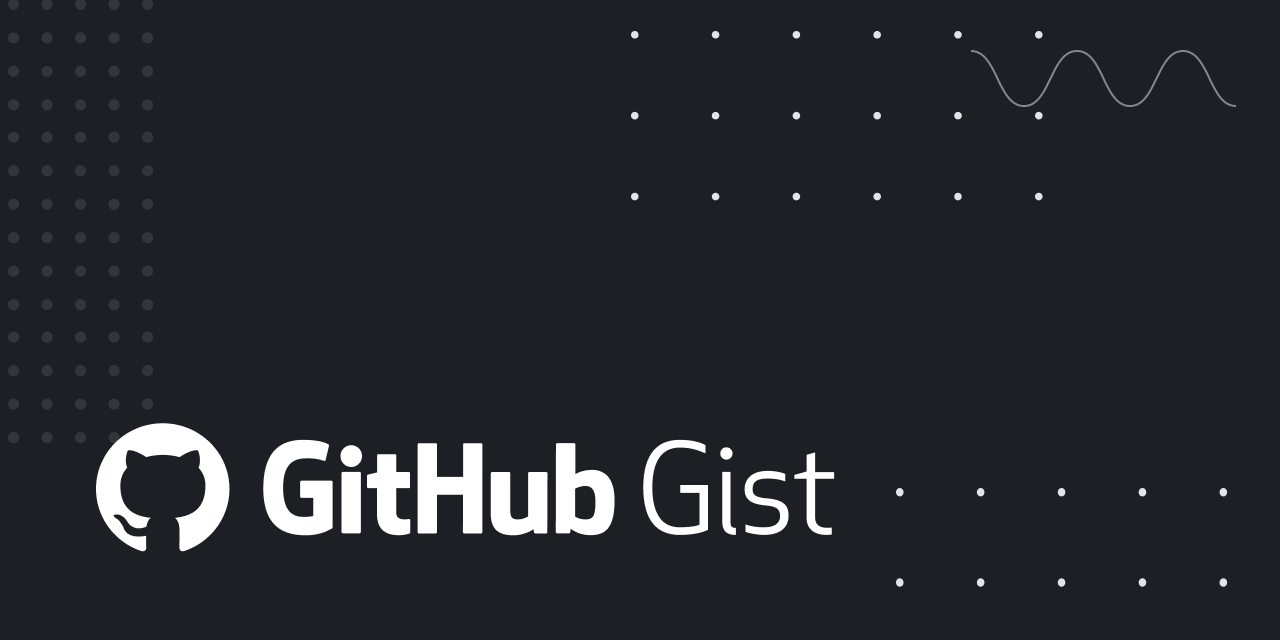
Intuiting Pratt parsing
You already know that a + b * c + d is calculated as a + (b * c) + d. But how do you encode that knowledge precisely enough for a machine to act on it?
Tony Feng on Twitter / X
I am a mathematician but I avoided commenting on this because the problems are (far) outside my domain. Even if I sat down to read the technical details (which I have not), it would be hard to appreciate the context of prior work, etc. But I've gotten enough sense of things… https://t.co/VZzosBYFto— Tony Feng (@tonylfeng) August 5, 2026
Higher Dimensional Syntax - Eric Finster
Syntax and semantics of dependent types
In this chapter we fix a particular syntax for a dependently typed calculus and define an abstract notion of model as well as a general interpretation function mapping syntactical objects to entities in a model. This interpretation function is shown to be sound with respect to the syntax.
Predicate (logic)
In logic, a predicate is a non-logical symbol that represents a property or a relation, though, formally, does not need to represent anything at all. For instance, in the first-order formula P ( a ) {\displaystyle P(a)} , the symbol P {\displaystyle P} is a predicate that applies to the individual constant a {\displaystyle a} which evaluates to either true or false. Similarly, in the formula R ( a , b ) {\displaystyle R(a,b)} , the symbol R {\displaystyle R} is a predicate that applies to the individual constants a {\displaystyle a} and b {\displaystyle b} . Predicates are considered a primitive notion of first-order, and higher-order logic and are therefore not defined in terms of other more basic concepts.
Hasharium — identities, given form
Enter a DID. Observe the form that was always inside it.
(全网首篇)Aegisub安装Aegisub-motion v1.0.9等84个自动化脚本教程 - 字幕 - 音轨 - 国语视界
(全网首篇)Aegisub安装Aegisub-motion v1.0.9等84个自动化脚本教程,技术交流,国语视界,字幕,音轨