

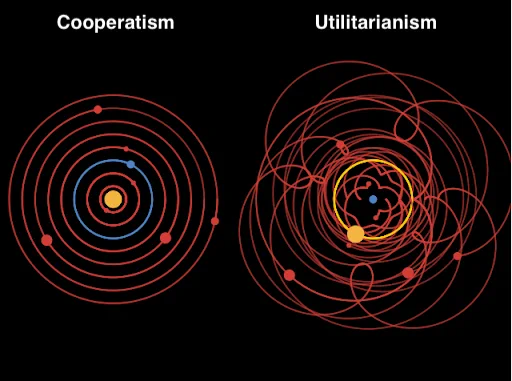
Cooperative theories of morality straightforwardly explain what you ought to do, and accurately describe people's moral intuitions. Altruistic theories, like utilitarianism, make incoherent and implausible demands, and then have to fudge it with endless ad hoc 'constraints' etc pic.twitter.com/ukVvPoqLCY— Oliver Scott Curry (@Oliver_S_Curry) September 22, 2026


Giving Altruism a Bad Name
Effective Altruism’s metrics-driven model of philanthropy is elitist, condescending and — most damning of all — extremely ineffective.
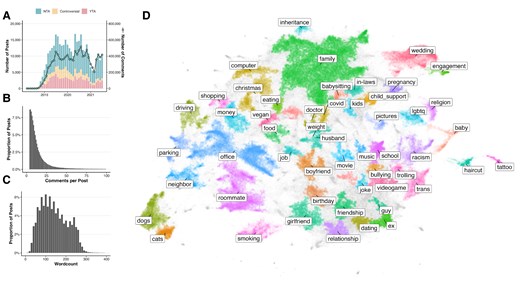
A large-scale investigation of everyday moral dilemmas
Abstract. Questions of right and wrong are central to daily life, yet scientific understanding of everyday moral dilemmas is limited. We conducted a data-d
AI language model rivals expert ethicist in perceived moral expertise
People view AI as possessing expertise across various fields, but the perceived quality of AI-generated moral expertise remains uncertain. Recent work suggests that large language models (LLMs) perform well on tasks designed to assess moral alignment, reflecting moral judgments with relatively high accuracy. As LLMs are increasingly employed in decision-making roles, there is a growing expectation for them to offer not just aligned judgments but also demonstrate sound moral reasoning. Here, we advance work on the Moral Turing Test and find that Americans rate ethical advice from GPT-4o as slightly more moral, trustworthy, thoughtful, and correct than that of the popular New York Times advice column, The Ethicist. Participants perceived GPT models as surpassing both a representative sample of Americans and a renowned ethicist in delivering moral justifications and advice, suggesting that people may increasingly view LLM outputs as viable sources of moral expertise. This work suggests that people might see LLMs as valuable complements to human expertise in moral guidance and decision-making. It also underscores the importance of carefully programming ethical guidelines in LLMs, considering their potential to influence users’ moral reasoning.

Social Norms
Social norms, the informal rules that govern behavior in groups andsocieties, have been extensively studied in the social sciences.Anthropologists have described how social norms function in differentcultures (Geertz 1973), sociologists have focused on their socialfunctions and how they motivate people to act (Durkheim 1895 [1982],1950 [1957]; Parsons 1937; Parsons & Shils 1951; James Coleman1990; Hechter & Opp 2001), and economists have explored howadherence to norms influences market behavior (Akerlof 1976; Young1998a). More recently, also legal scholars have touted social norms asefficient alternatives to legal rules, as they may internalizenegative externalities and provide signaling mechanisms at little orno cost (Ellickson 1991; Posner 2000).
Effective Altruism’s Problems Go Beyond Sam Bankman-Fried - Bloomberg
archived 12 Mar 2026 21:01:45 UTC

Epistemic assholes
In this paper, I develop and defend the concept epistemic assholes. An epistemic asshole is someone who exhibits a distinctive form of epistemic badness characterized not by gross irrationality or hostility to truth, but by a stable, entitled disregard for one’s epistemic relations with others. Drawing on Aaron James’s (2012) account of moral assholes, I examine how people can systematically exploit epistemic cooperation by allowing themselves special advantages—such as “freedom from inquiry”, “doxastic comfort”, and “freedom to criticize”—while remaining insulated from criticism by an entrenched sense of entitlement. The resulting view, the Relational Approach to Epistemic Assholes (REA), explains why epistemic assholes are not epistemically the worst, yet are nonetheless deeply galling. After motivating the need for this concept, I show how REA captures both “impure” cases (involving both epistemic and moral assholery) and “pure” epistemic assholes, whose objectionable conduct is driven by epistemic aims themselves. I further explore connections between epistemic assholes and epistemic vice, and the causal role that epistemic assholery can play in active ignorance and epistemic exploitation. Through this latter connection, I argue that epistemic assholes play an insidious causal role in sustaining objectionable social power dynamics. The concept of epistemic assholes provides a valuable lens for understanding important but often-hidden hazards in our social epistemic environment.

People Defer to Ai Moral Advice, but Not Blindly
As AI large language models (LLMs) become increasingly embedded in everyday technologies, should we be concerned about their capacity to influence human beliefs - particularly in the moral domain? Being persuaded ...

Testing and Improving Multi Agent LLM Cooperation
Mis-Nudging Morality
Morals constrain self-serving behavior. Yet, self-regulation failures in the face of monetary temptation are common at the workplace. To limit such failures, organizations can design environments that limit the temptation to behave self-servingly, nudging workers to uphold their morals. In a series of experiments where participants may be tempted to take excessive pay after exerting effort, we study whether a simple intervention—asking individuals to state the wage they believe should be paid ex ante, before facing the temptation to take excessive compensation—prevents self-serving behavior. In contrast to lay beliefs and the predictions from prior work, we find that such an intervention is not effective, leading to self-serving behavior. However, a more realistic elicitation procedure of the appropriate wage mitigates this effect. These findings contribute to work on the malleability of moral behavior showing that simple interventions thought to effectively mitigate self-serving behavior can prompt individuals to stretch their moral boundaries. They also stress the importance of properly testing interventions that might seem intuitive. This paper was accepted by Yan Chen, behavioral economics and decision analysis. Funding: Financial support from the Israel Science Foundation [Grant 766/19] is gratefully acknowledged. Supplemental Material: The online appendix and data are available at https://doi.org/10.1287/mnsc.2022.4344 .

Effective Altruism’s Problems Go Beyond Sam Bankman-Fried
Sam Bankman-Fried made effective altruism a punchline, but its philosophy of maximum do-gooding masks a thriving culture of predatory behavior.

The Irrational Decision
How the computer revolution shaped our conception of rationality—and why human problems require solutions rooted in human intuition, morality, and judgment

Kevin A. Bryan on Twitter / X
I love that this idea has crossed into normie world (please don't look up Sutton's AI Ethics views!). If you want a very short "why does SF believe what it believes", here is the reading list I give students: https://t.co/1vkWtwWwRV pic.twitter.com/zo4YaoNSKf— Kevin A. Bryan (@Afinetheorem) September 23, 2026

How social norms emerge: The interindividual actor–critic.
Moral Imaginations - But how could it work? Like this? moralimaginations.com/watchet-imagines-1 foodrise.org.uk/wp-content/uploads/2025/07/MT…
General 3 — Moral Imaginations
www.moralimaginations.com