

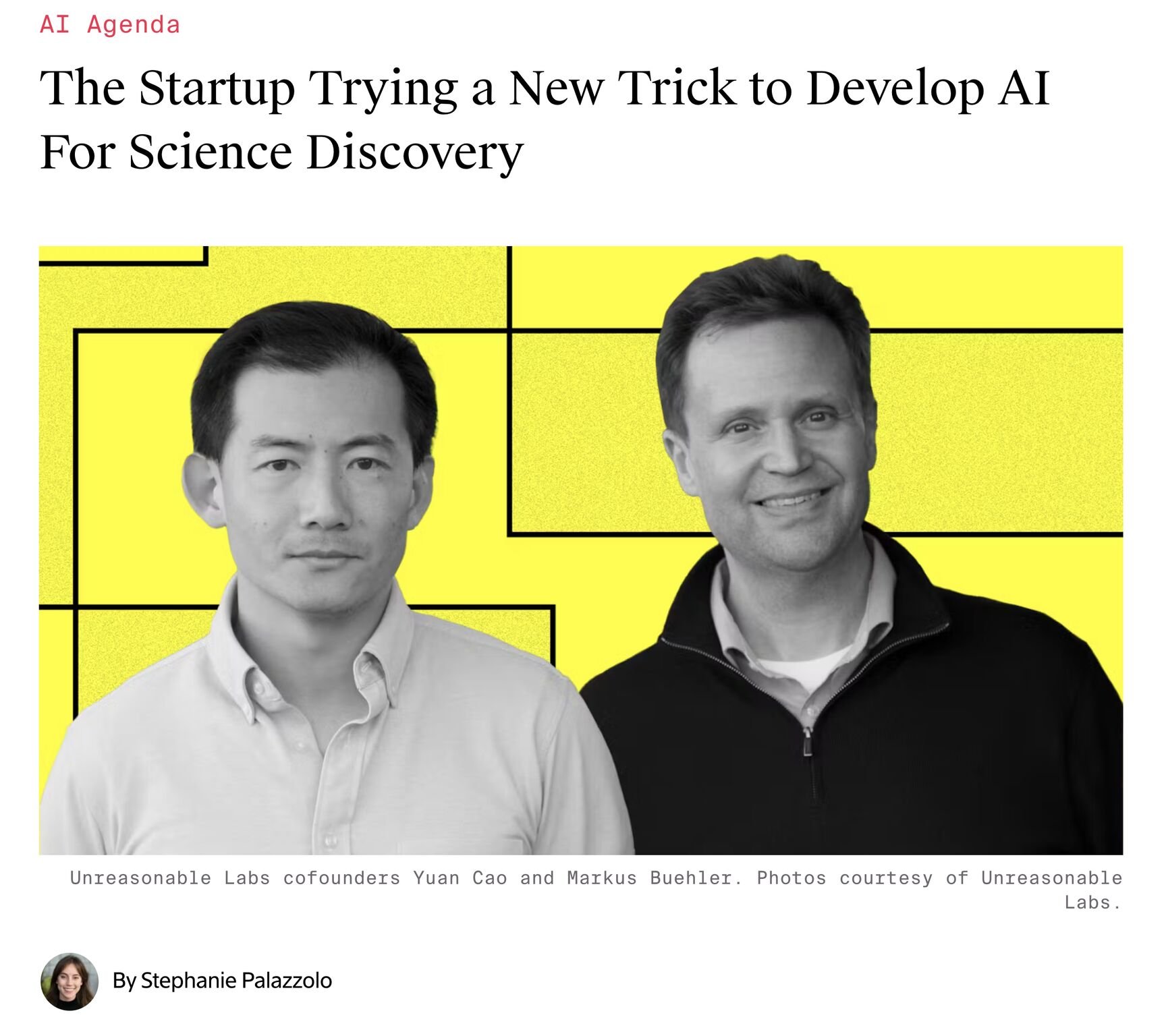
After decades at MIT studying how nature builds - from spider silk to bone to nacre - I've become convinced of something: the biggest barrier to scientific progress isn't knowledge, it's connection. The insights we need already exist, scattered across millions of papers and… pic.twitter.com/EHUomaFyPj— Markus J. Buehler (@ProfBuehlerMIT) March 10, 2026
What stories should we tell about scientific progress now?
In search of the mysterious fruits of basic science

The Engine of Scientific Discovery: How New Methods and Tools Spark Major Breakthroughs
Abstract. How do we spark new scientific discoveries? Why do some breakthroughs seem even accidental? And most importantly, how can we accelerate them and
Science Must Decentralize
Knowledge production doesn’t happen in a vacuum. Every great scientific breakthrough is built on prior work, and an ongoing exchange with peers in the field. That’s why we need to address the threat
Science has been in a “replication crisis” for a decade. Have we learned anything?
Bad papers are still published. But some other things might be getting better.

Maybe scientific progress isn’t slowing, after all
A new paper takes aim at the claim that science has become less disruptive

The Bazaar of Scientific Knowledge | shishyko!
Is the current form of the scientific paper still optimal in 2025? How do we preserve, and efficiently leverage, the uncut gems of the scientific process?
Without a theory of intelligence
The history of science — and of progress — is a series of benefits that are direct results of new tools.

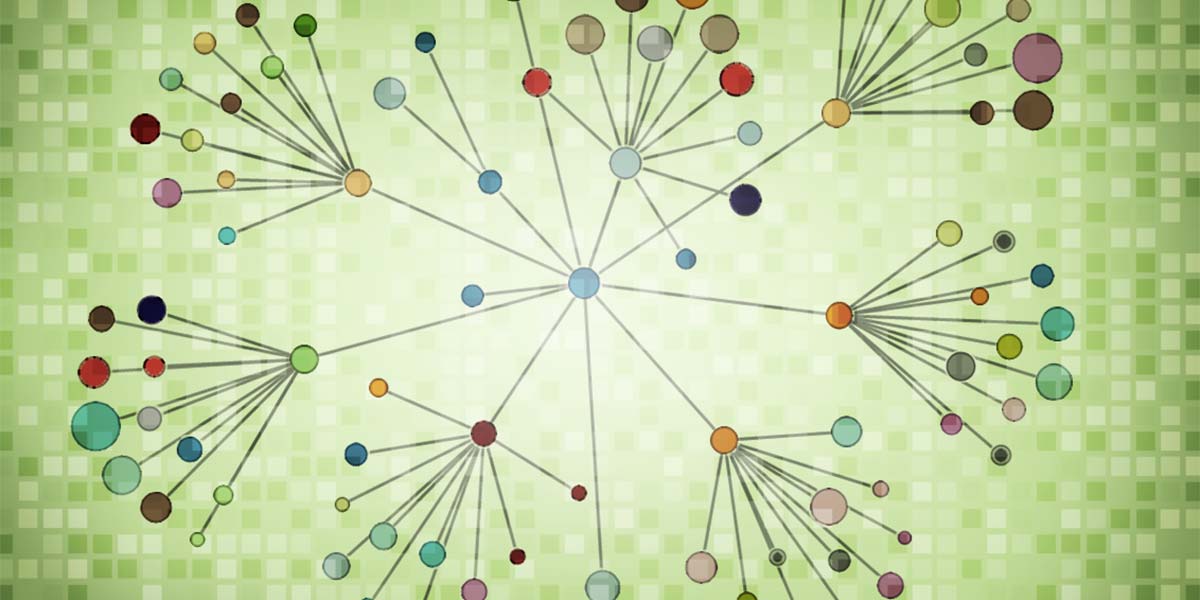
The Scientific Contribution Graph: Automated Literature-based Technological Roadmapping at Scale
Sir Isaac Newton famously wrote, “If I have seen further, it is by standing on the shoulders of giants”. Scientific contributions are rarely developed in isolation, but build upon prior contributions, such as problem framings, experimental methods, and empirical findings. Understanding these prerequisite relationships is important for studying scientific progress, and for automated scientific discovery systems that must reason about which existing capabilities can be used to develop new ones (e.g. Lu et al., 2024; Jansen et al., 2025b; Baek et al., 2025).
Rationality: What It Is, Why It Seems Scarce, Why It Matters by Steven Pinker
In the twenty-first century, humanity is reaching new heights of scientific understanding—and at ...
The Bazaar of Scientific Knowledge | shishyko!
What if we didn't collapse all the knowledge from the scientific process into one paper?
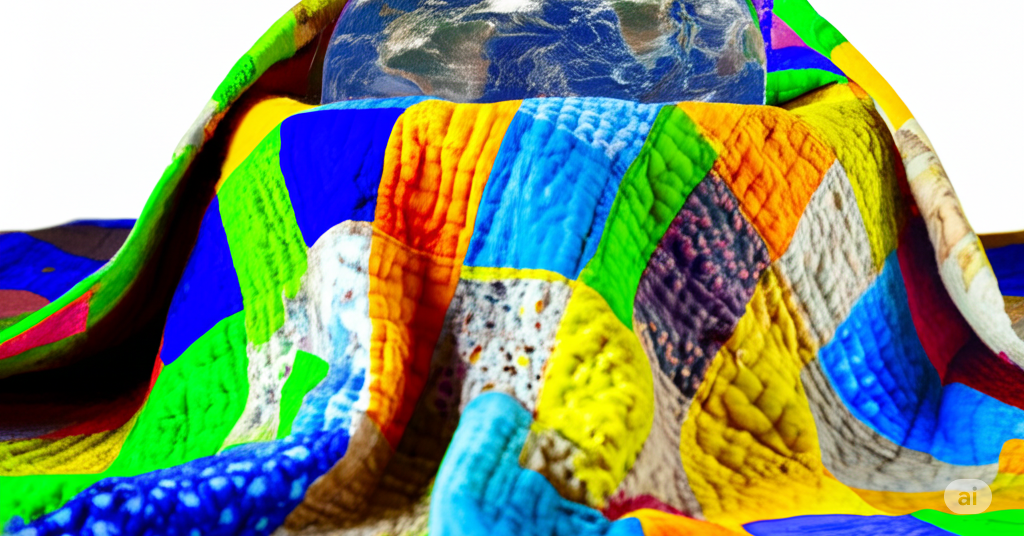
Societal and technological progress as sewing an ever-growing, ever-changing, patchy, and polychrome quilt — LessWrong
We can just drop the axiom of rational convergence.
A Vision of Metascience
How does the culture of science change and improve? Many people have identified shortcomings in core social processes of science, such as peer review, how grants are awarded, how people are selected to become scientists, and so on. Yet despite often compelling criticisms, strong barriers inhibit widespread change in such social processes. The result is near stasis, and apathy about the prospects for improvement. People sometimes start new research institutions intended to do things differently; unfortunately such institutions are often changed more by the existing ecosystem than they change it. In this essay we sketch a vision of how the social processes of science may be rapidly improved. In this vision, metascience plays a key role: it deepens our understanding of which social processes best support discovery; that understanding can then help drive change. We introduce the notion of a metascience entrepreneur, a person seeking to achieve a scalable improvement in the social processes of science. We argue that: (1) metascience is an imaginative design practice, exploring an enormous design space for social processes; (2) that exploration aims to find new social processes which unlock latent potential for discovery; (3) decentralized change must be possible, so outsiders with superior ideas can't be blocked by established power centers; (4) ideally, change would align with what is best for science and for humanity, not merely what is fashionable, politically popular, or media-friendly; (5) the net result would be a far more structurally diverse set of environments for doing science; and (6) this would enable crucial types of work difficult or impossible within existing environments. For this vision to succeed metascience must develop and intertwine three elements: an imaginative design practice, an entrepreneurial discipline, and a research field. Overall, it is a vision in which metascience is an engine of improvement for the social processes and ultimately the culture of science.
Reinventing Discovery: The New Era of Networked Science
In Reinventing Discovery, Michael Nielsen argues that w…

Infinite Researchers | AI-Powered Scientific Discovery
What happens to the speed of discovery if we have infinite researchers? Explore AI experiments accelerating breakthroughs.

