

Man, this preprint is really the gift that keeps on giving.In case people missed my previous PSA : you can't compare the carbon emissions of people and objects. Humans are more than just the work that they do. (Also, that paper makes a lot of false assumptions in general) https://t.co/bZA414J9YI— Sasha Luccioni, PhD 🦋🌎✨🤗 (@SashaMTL) September 19, 2023
Carbon Removal Technologies | YC Request for Startups
Climate change presents an existential threat to humanity. We are already seeing the effects and they are showing up faster and stronger than anticipated. A report by United Nations' scientific panel on climate change released this month expects the atmosphere-on our current trajectory-to warm up by 1.5 degrees Celsius by 2040. Even the effects of a 0.5 degrees increase will have far-reaching consequences. This research indicates that we are already past the tipping point; even if we significantly reduced emissions, climate change would continue (Source IPCC summary C3 section). We believe there's still time to make a change if we look both to renewal energy and CO2 removal.

Social Influence and Action — Jen Christiansen
I’m wary of climate solutions that are hyper focused on the action of individuals as opposed to systems and corporations. Do you experience carbon footprint guilt every time you board a plane to visit family too? Well, that whole schema was a product of the PR firm Ogilvy & Mather for British Petroleum. It was an effort to shift focus away from oil companies and onto individual responsibility to lower greenhouse gas emissions. For more, read “The carbon footprint sham” by Mark Kaufman for Mashable in 2021, and “Big oil coined ‘carbon footprints’ to blame us for their greed. Keep them on the hook” by Rebecca Solnit for The Guardian.

We Need More Research on how CO2 Affects Cognition
A growing body of research indicates there are potentially large health benefits to improving indoor air quality.
The story of CO2 is the story of everything: how carbon dioxide made our world
"How carbon dioxide, the world's most important substance, shaped the planet's past and present-and holds the key to our future Carbon dioxide: this seemingly simple and ubiquitous substance is fundamental to how our planet works. All life is made from CO2, and its behavior on this planet has kept Earth bizarrely habitable for hundreds of millions of years. In its workings lie both the splendor of our world and the potential for life's destruction. In short, it is the most important substance in history. But why is CO2 as essential to life on Earth as it is capable of destroying it? In The Story of CO2 Is the Story of Everything, award-winning science journalist Peter Brannen reveals carbon dioxide's fundamental role in the operation and maintenance of our planet. Starting at the beginning of time and working all the way up to our present reality, he illuminates how CO2 has been responsible for the planet's many deaths and rebirths, the evolution of life, and the development of modern human society. Carbon dioxide's movement through rocks, air, oceans, and life has kept our planet's climate livable, its air breathable, and its oceans hospitable to complex life for more than five hundred million years. And only by understanding CO2 in the context of deep Earth history can we see how it gave rise to today's industrial economy-and more clearly recognize what it means to be churning through hundreds of millions of years of old life in the form of fossil fuels and converting it all to carbon dioxide. With groundbreaking research and a clear-eyed perspective, Brannen shows how a deep exploration into the mechanics of the carbon cycle and the history of our planet can provide hope for averting environmental catastrophe in the future. It all starts with a richer understanding of the essential role of one substance"--

Key Principles for the Intergovernmental Science–Policy Panel on Chemicals and Waste
In 2021, the United Nations Environment Programme (UNEP) recognized chemical pollution as a planetary crisis tantamount to climate change and biodiversity

SCI — Software Carbon Intensity | Green Software Foundation
The global standard for calculating and reducing the carbon emissions of your software. ISO/IEC 21031:2024.

Carbon Captured
How the fossil fuel industry turned the plan to solve climate change into a plan to save itself

Knowledge infrastructures for the Anthropocene
The technosphere metabolizes not only energy and materials, but information and knowledge as well. This article first examines the history of knowledge about large-scale, long-term, anthropogenic environmental change. In the 19th and 20th centuries, major systems were built for monitoring both the environment and human activity of all kinds, for modeling geophysical processes such as climate change, and for preserving and refining scientific memory, i.e. data about the planetary past. Despite many failures, these knowledge infrastructures also helped achieve notable successes such as the Limited Test Ban Treaty of 1963, the ozone depletion accords of the 1980s, and the Paris Agreement on climate change of 2015. The article’s second part proposes that knowledge infrastructures for the Anthropocene might not only monitor and model the technosphere’s metabolism of energy, materials and information, but also integrate those techniques with new accounting practices aimed at sustainability. Scientific examples include remarkable recent work on long-term socio-ecological research, and the assessment reports of the Intergovernmental Panel on Climate Change. In terms of practical knowledge, one key to effective accounting may be ‘recycling’ of the vast amounts of ‘waste’ data created by virtually all online systems today. Examples include dramatic environmental efficiency gains by Ikea and United Parcel Service, through improved logistics, self-provision of renewable energy, and feedback from close monitoring of delivery trucks. Blending social ‘data exhaust’ with physical and environmental information, an environmentally focused logistics might trim away excess energy and materials in production, find new ways to re-use or recycle waste, and generate new ideas for eliminating toxic byproducts, greenhouse gas emissions and other metabolites.

Knowledge infrastructures for the Anthropocene
The technosphere metabolizes not only energy and materials, but information and knowledge as well. This article first examines the history of knowledge about large-scale, long-term, anthropogenic environmental change. In the 19th and 20th centuries, major systems were built for monitoring both the environment and human activity of all kinds, for modeling geophysical processes such as climate change, and for preserving and refining scientific memory, i.e. data about the planetary past. Despite many failures, these knowledge infrastructures also helped achieve notable successes such as the Limited Test Ban Treaty of 1963, the ozone depletion accords of the 1980s, and the Paris Agreement on climate change of 2015. The article’s second part proposes that knowledge infrastructures for the Anthropocene might not only monitor and model the technosphere’s metabolism of energy, materials and information, but also integrate those techniques with new accounting practices aimed at sustainability. Scientific examples include remarkable recent work on long-term socio-ecological research, and the assessment reports of the Intergovernmental Panel on Climate Change. In terms of practical knowledge, one key to effective accounting may be ‘recycling’ of the vast amounts of ‘waste’ data created by virtually all online systems today. Examples include dramatic environmental efficiency gains by Ikea and United Parcel Service, through improved logistics, self-provision of renewable energy, and feedback from close monitoring of delivery trucks. Blending social ‘data exhaust’ with physical and environmental information, an environmentally focused logistics might trim away excess energy and materials in production, find new ways to re-use or recycle waste, and generate new ideas for eliminating toxic byproducts, greenhouse gas emissions and other metabolites.
The Misunderstood History of CO2: The Science Behind Earth's Most Controversial Molecule with Peter Brannen
Daniel Christian Wahl: “Bioregional Futures: Reconnecting to Place for Planetary Health” - The Great Simplification
In the past century of abundant energy surplus, humanity’s globalized, large-scale approach to problem-solving

Quantifying the Carbon Emissions of Machine Learning
From an environmental standpoint, there are a few crucial aspects of training a neural network that have a major impact on the quantity of carbon that it emits. These factors include: the location of the server used for training and the energy grid that it uses, the length of the training procedure, and even the make and model of hardware on which the training takes place. In order to approximate these emissions, we present our Machine Learning Emissions Calculator, a tool for our community to better understand the environmental impact of training ML models. We accompany this tool with an explanation of the factors cited above, as well as concrete actions that individual practitioners and organizations can take to mitigate their carbon emissions.

In Deep
The numbers are simply mind-blowing: up to £264 billion for a climate “solution” that will increase emissions. Has the government lost its mind?

wholegrain / Website Carbon Badges · GitLab
Badges to display your website's carbon emissions. - Work in progress!

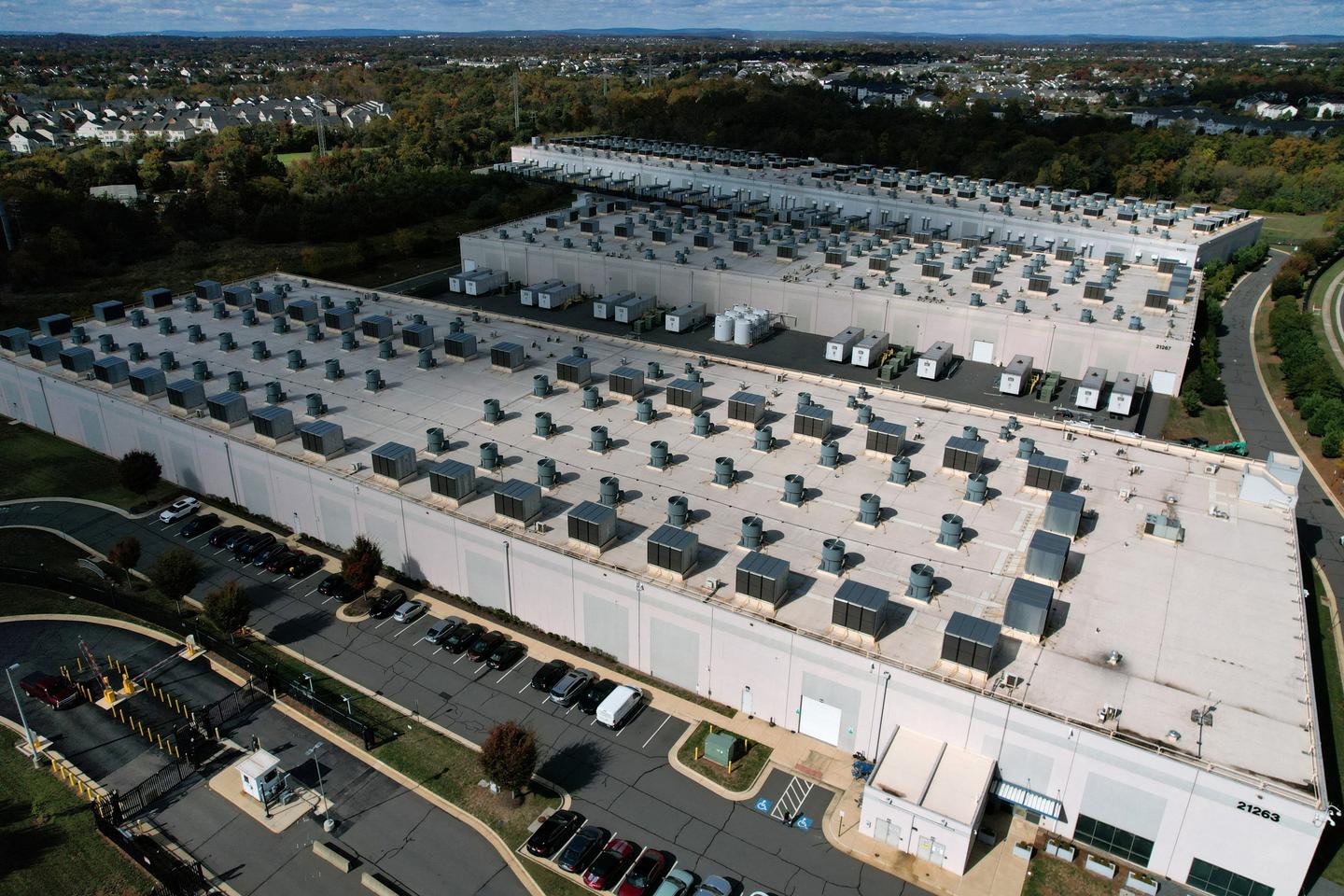
Les émissions de CO₂ de Google et d’Amazon bondissent, propulsées par l’essor de l’IA
Les émissions totales de Google ont augmenté de 82 % depuis 2019 alors que le groupe s’était engagé à les réduire de moitié d’ici à 2030. Celles d’Amazon ont grimpé de 58 % au cours de la même période, malgré une neutralité carbone promise pour 2040.
Jason Hickel on Twitter / X
The climate crisis reveals that our civilization has never really been organized around science, contrary to the usual Enlightenment narrative. It is organized around capital. Science is embraced when it serves the interests of capital, and is often ignored when it does not.— Jason Hickel (@jasonhickel) January 6, 2022