

This was my read on AI from the beginning and it proved very true. Whatever hypothetical benefits LLMs have (and they have some), their main use is to waste everyone's time wading through slop. Longer colleague powerpoints. More spam emails. More slop clogging up all the systems. https://t.co/2gtGfqf7KF— Lincoln Michel (@TheLincoln) September 21, 2026
If You’re Going To Defend AI And Whine About Its Critics, You Should Probably Be Honest About Its Actual Harms
I think this recent post by AI industry CEO Matt Shumer is worth a read. In it, he basically explains how quickly LLMs (large language models) are evolving to supplant many developers and prog…

Arguments in Favor of AI Fair Use
I made some notes on the nature of the training of LLMs, and about whether we as a society should consider the material used to train them as a fair use of that material.

Dan Shipper 📧 on Twitter / X
this is true and is a big reason why you don’t need to be a highly technical researcher to use LLMs in surprising and novel ways https://t.co/TuxNzXzToU— Dan Shipper 📧 (@danshipper) July 27, 2025

State of AI 2025: 100T Token LLM Usage Study | OpenRouter
Read OpenRouter's 2025 State of AI report — an empirical 100 trillion token study of real LLM usage, model trends, and developer insights.
The scientific case for being nice to your chatbot
New research confirms that LLMs often perform better when you encourage them. But why?
"Useful" is not sufficient
So Linus Torvalds, head of the Linux kernel development, put his foot down on the Linux Kernel development mailing list when someone was bringing up criticism of LLMs: “Linux is not one of those anti-AI projects, and if somebody has issueswith that, they can do the open-source thing and fork it. Or just walk away. […]

Giving LLMs a personality is just good engineering
AI skeptics often argue that current AI systems shouldn’t be so human-like. The idea - most recently expressed in this opinion piece by Nathan Beacom - is that language models should explicitly be tools, like calculators or search engines. Although they can pretend to be people, they shouldn’t, because it encourages users to overestimate AI capabilities and (at worst) slip into AI psychosis. Here’s a representative paragraph from the piece:

AI Large Language Model Training: The Potential Risks of Ideological Skewing — PSG Consulting
LLMs (AI Large Language Models) have become part of everyday life. Systems such as ChatGPT, Claude, Gemini, Meta AI (Llama) and X.ai's Grok handle billions of interactions daily. They increasingly shape what information people encounter and in what order, subtly deciding what's important and even what is true, sometimes without users realizing it. Because LLMs wield growing power over information exposure, it is vital to recognize the political and ideological structures at multiple stages of their design, and to identify manipulation risks.

Are LLMs Stifling Political Speech? An Assessment of How AI Models Protect Free Expression | Oversight Board
The Oversight Board’s first evaluation of large language models (LLMs) shows that some of the world’s most-used models from Anthropic, DeepSeek, Google, Meta

There's Something Fundamentally Wrong With LLMs
LLMs aren't trained on the "vast majority of speech," experts warn, a major blind spot that could have sweeping consequences.

ImportAI 449: LLMs training other LLMs; 72B distributed training run; computer vision is harder than generative text
Will AI cause a political interregnum

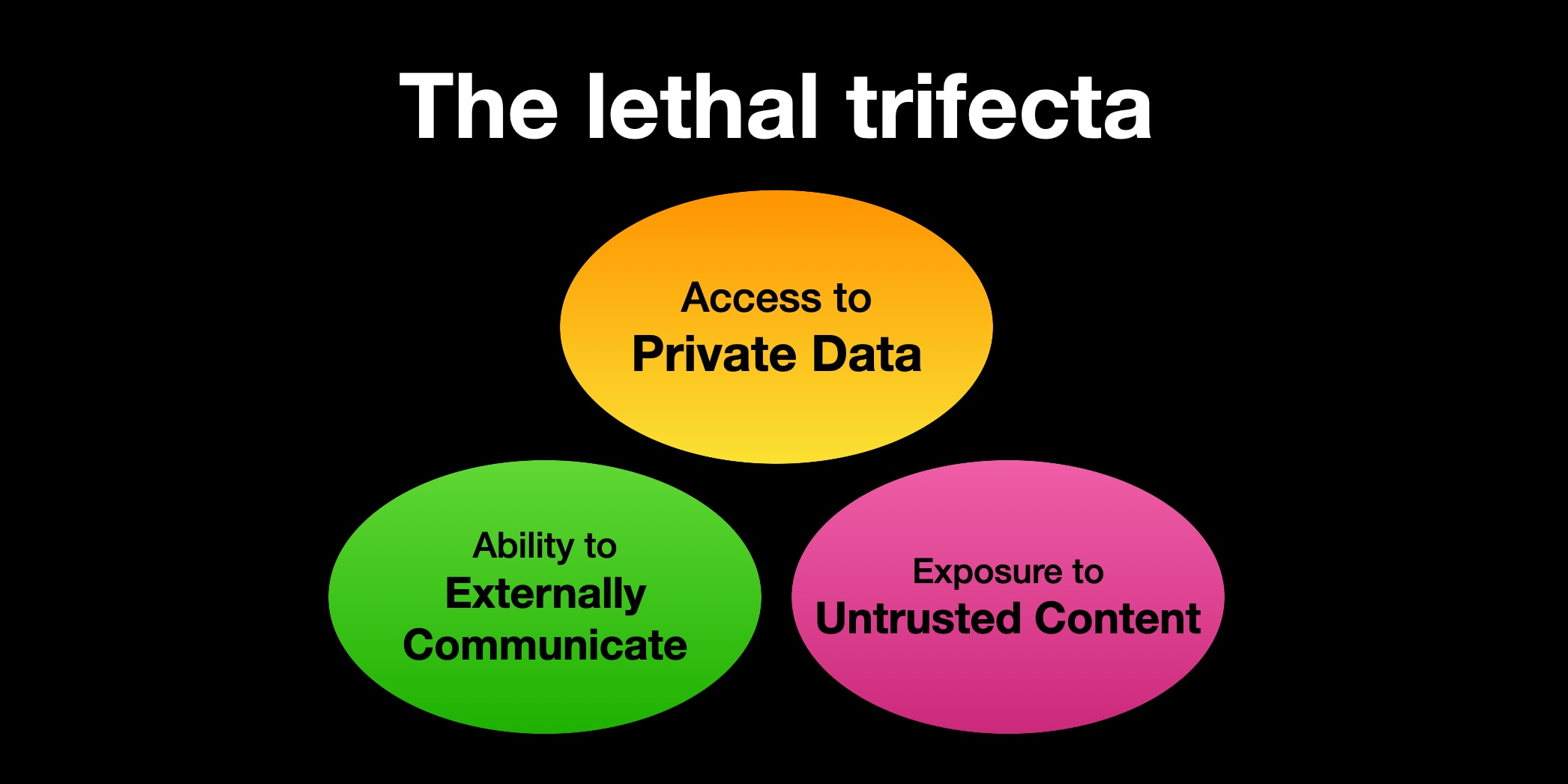
The lethal trifecta for AI agents: private data, untrusted content, and external communication
If you are a user of LLM systems that use tools (you can call them “AI agents” if you like) it is critically important that you understand the risk of …
Mesh-LLM/mesh-llm
Distributed AI/LLM for the people. Share compute privately or publicly to power your agents and chat.
something that has come up fairly recently with LLMs - for coding, specifically - is that it’s become a lot easier to burn stupefying amounts of tokens on stuff very fast, with agents running 24/7 or managing more agents (see: Yegge’s Gas Town) even with low inference costs that adds up in a hurry

Jesse Felder
‘While some cling to the promise of an AI “revolution,” the cost of adoption is proving a stubborn bottleneck. These developments also suggest that the economics of replacing human labor with AI may be more complicated than some early forecasts originally implied.’ fortune.com/2026/05/22/microsoft-ai-cost-…
