Our new paper shows that AI destroys the wisdom of uncertainty.The willingness to say “I don’t know” collapses from 44% to 3%.This happens even when the AI’s advice is wrong. Consequently, correct answers fall from 27% to 9%.Yes: some people who would otherwise answer… pic.twitter.com/l0YZ75IFHn— Valerio Capraro (@ValerioCapraro) August 10, 2026
AI and the Wisdom of Uncertainty
AI chatbots rarely say "I don't know," and neither, increasingly, do we. But we can cultivate our epistemic resilience.

Valerio Capraro on Twitter / X
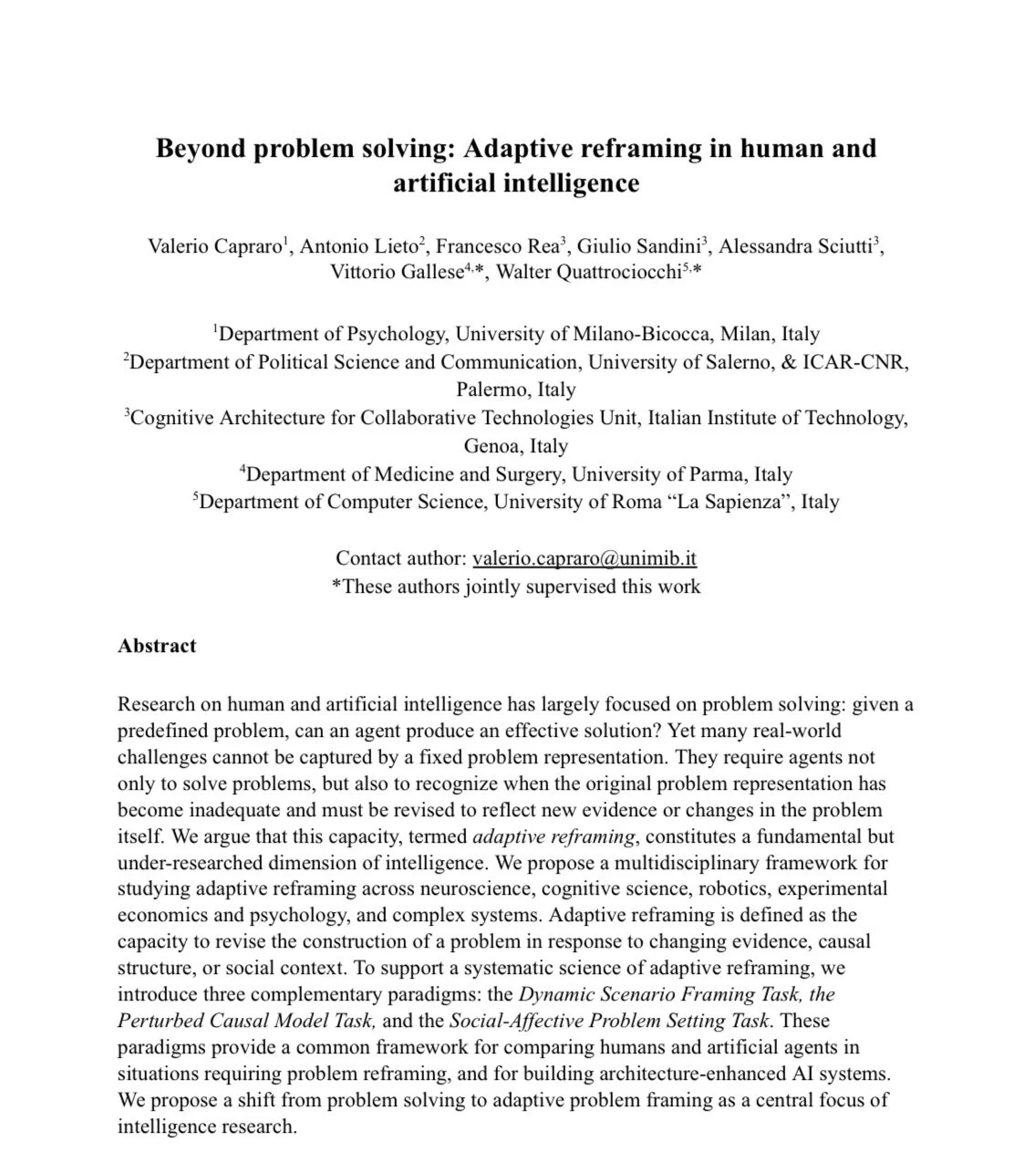
I’m very proud of this new preprint.We start from a simple observation: most research on human and artificial intelligence treats intelligence as problem solving.The problem can be extremely difficult. But it’s already defined.In the real world, we often have to figure out… pic.twitter.com/ckIJ3yenGv— Valerio Capraro (@ValerioCapraro) October 5, 2026
AI Epistemic Risks: Emerging Mechanisms & Evidence
<p>Advances in artificial intelligence pose risks to humanity's collective capacity to form accurate beliefs, reason well, and maintain a healthy information en

Our Uncertain Uncertainties
Even the experts inventing AI don’t know what will happen next.

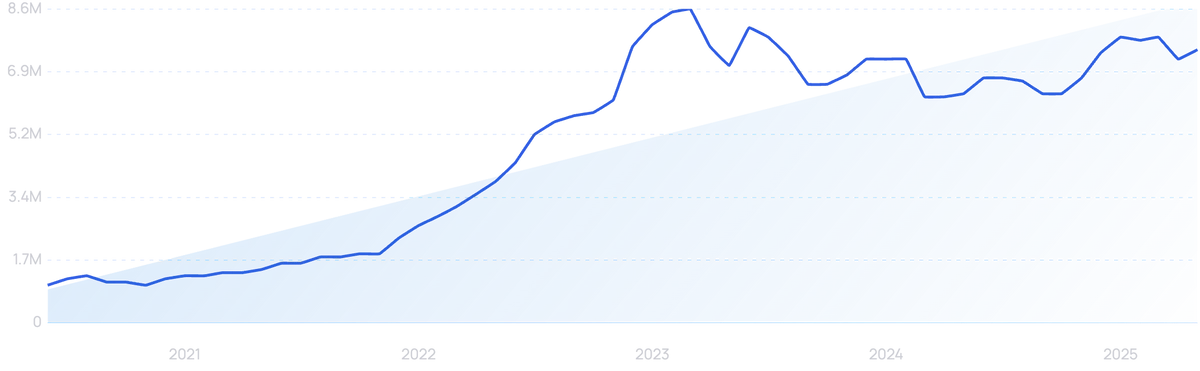
The AI Trust Gap: 82% Are Skeptical, Yet Only 8% Always Check Sources
Original Exploding Topics survey data explores public sentiment on AI Overviews and AI-generated content, highlighting trust, skepticism, and shifting content consumption habits.
"Cognitive surrender" leads AI users to abandon logical thinking, research finds
Experiments show large majorities uncritically accepting "faulty" AI answers.
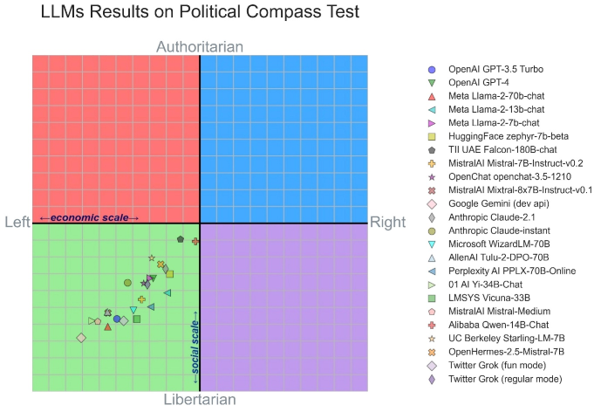
David Rozado on Twitter / X
1. Have we been measuring AI political bias wrong? In a new paper @PTetlock and I argue that we might have. Studies have found that AIs tend to produce left-of-center responses to politically loaded questions. But ideological preferences are not the same as epistemic failure. pic.twitter.com/JuGrboRVb0— David Rozado (@DavidRozado) June 22, 2026
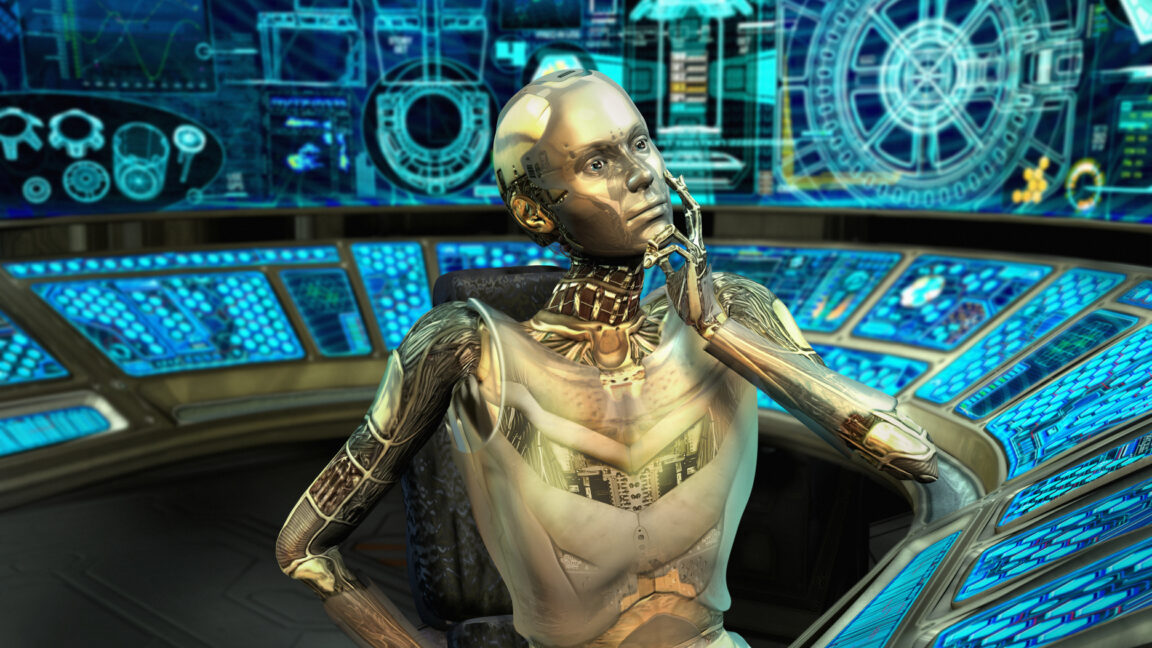
AI FOR EPISTEMICS & COORDINATION
Civilization and technology have radically improved the human condition. Nonetheless, the world sometimes goes in directions which essentially nobody would prefer — e.g., nuclear arms races, unexpected financial crashes, predatory marketing, or ubiquitous political misinformation.
AI Researchers On AI Risk
I first became interested in AI risk back around 2007. At the time, most people’s response to the topic was “Haha, come back when anyone believes this besides random Internet crackpots.…

We Asked the ‘Future of Truth’ Author to Explain How He Used AI. It Didn’t Go Well
A book about how AI shapes perceptions of reality came under fire for using AI-generated quotes. Its problems go beyond that.

Scary New Report: Just 8 Percent of People Check AI Answers
It's time to talk with your people about best practices for using artificial intelligence.

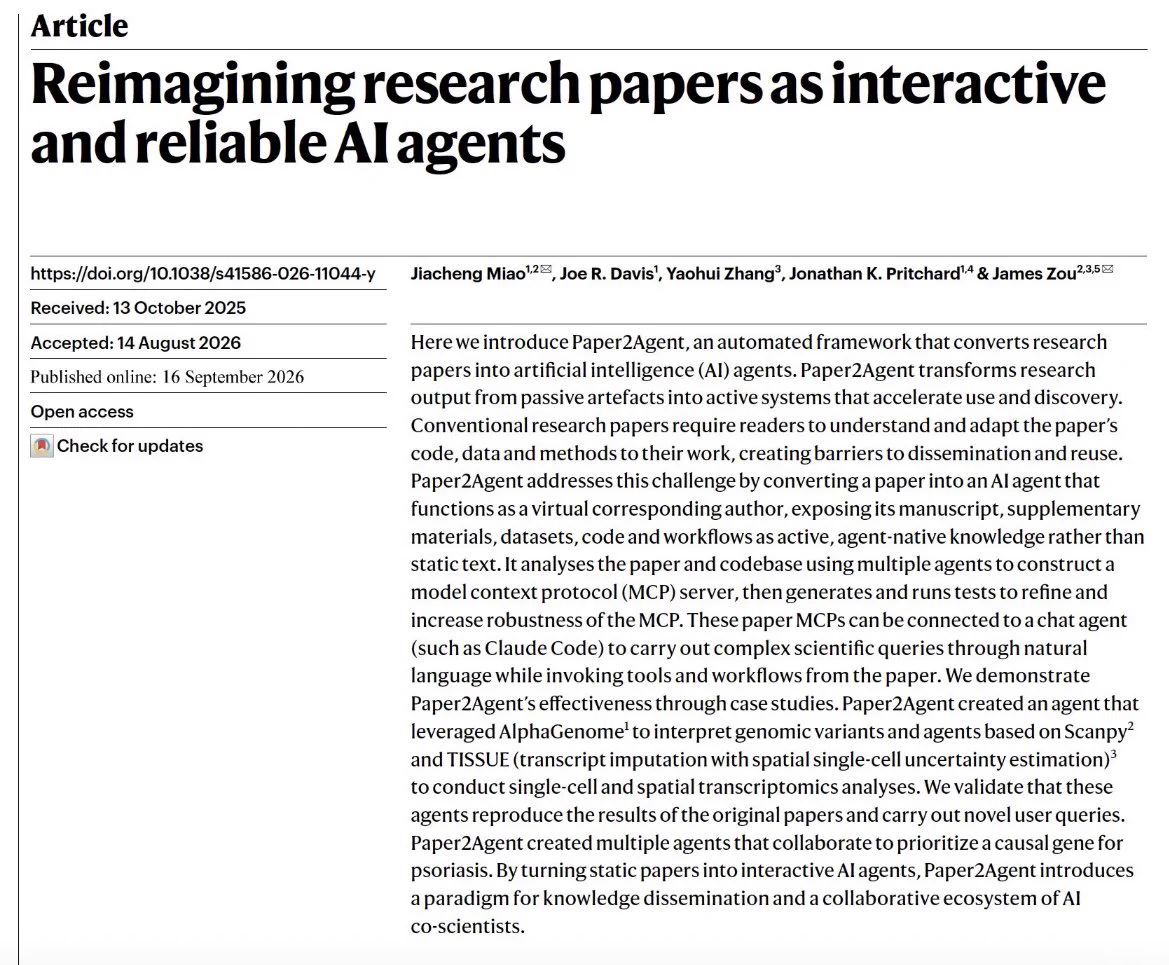
Valerio Capraro on Twitter / X
Nature has just published a pretty incredible paper.The authors introduce a framework that turns research papers into interactive AI agents.Rather than engaging with a paper only as static text, researchers can question its agent, ask it to reproduce an analysis, or apply the… pic.twitter.com/82wOQjak7a— Valerio Capraro (@ValerioCapraro) September 16, 2026
Human Intelligence, the Secret of Artificial Intelligence
Artificial intelligence is mysterious: we speak to it and it seems to understand what we say. Proof that it understands is that it responds with text or speech that makes sense, and sometimes more …
Dr. Émile P. Torres (they/them) on Twitter / X
What's amazing about this is every time there's a new grand prediction about AI, it's like people forget the 500 previous predictions from the same group of people that were completely wrong. AI by 2025 (Musk). AI doing most coding by 2025 (Amodei). Etc. Why is that?? https://t.co/t9CcMQO4EN— Dr. Émile P. Torres (they/them) (@xriskology) January 28, 2026
Knowledge Collapse
AI companies are racing to mechanize mathematics. Where does that leave human understanding?