


BREAKING: OpenAI’s solution to Navier–Stokes does not match its Lean verification.The most important article to read today is not one of OpenAI’s 700 AI-generated math papers.It is this other paper, making a deep and worrying point:A Lean-verified proof does not… pic.twitter.com/bU7TQdv594— Valerio Capraro (@ValerioCapraro) October 8, 2026
NIK on Twitter / X
>sam altman: "we tried this because there were rumor on the internet">rumor: math professor close to solving navier-stokes>the professor: using codex for a year>openai: has all his logs>checked every codex session tagged to N-S>found the most promising one>spun up 10,000… pic.twitter.com/RInlP88gmA— NIK (@ns123abc) September 8, 2026
On the Navier–Stokes Millennium Prize Problem
We’re sharing an AI-generated solution to the Navier–Stokes Millennium Prize Problem, including a writeup and a formal proof in Lean.
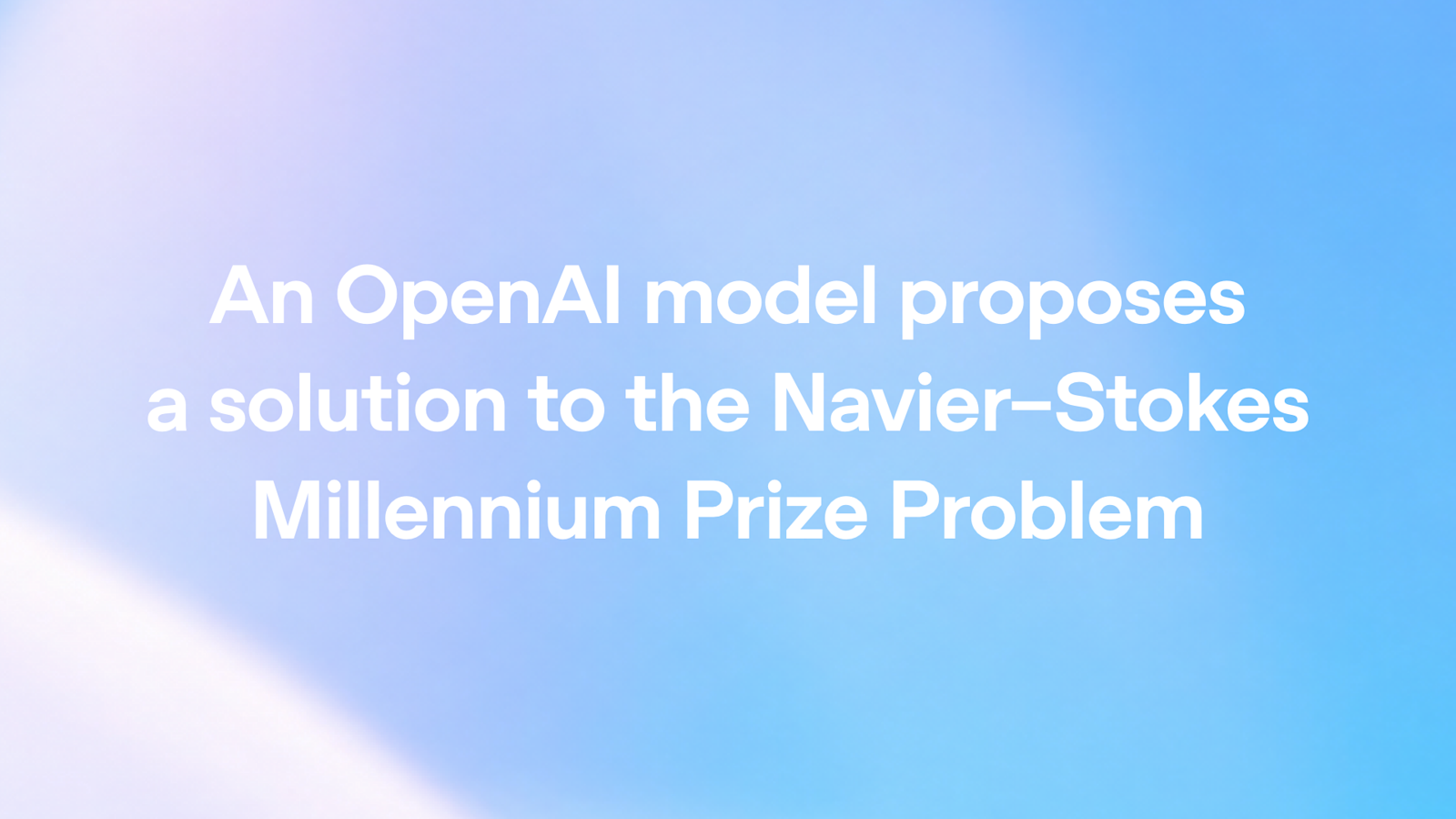
GitHub - openai/NavierStokesAndEuler at 8937a8f4cbc7abaab5e9e97d1cc7f5d2319d9538
Lean certificates accompanying Navier-Stokes and Euler results - openai/NavierStokesAndEuler
OpenAI’s math breakthrough played to AI’s strengths
I tried to explain OpenAI’s solution more clearly than OpenAI did.
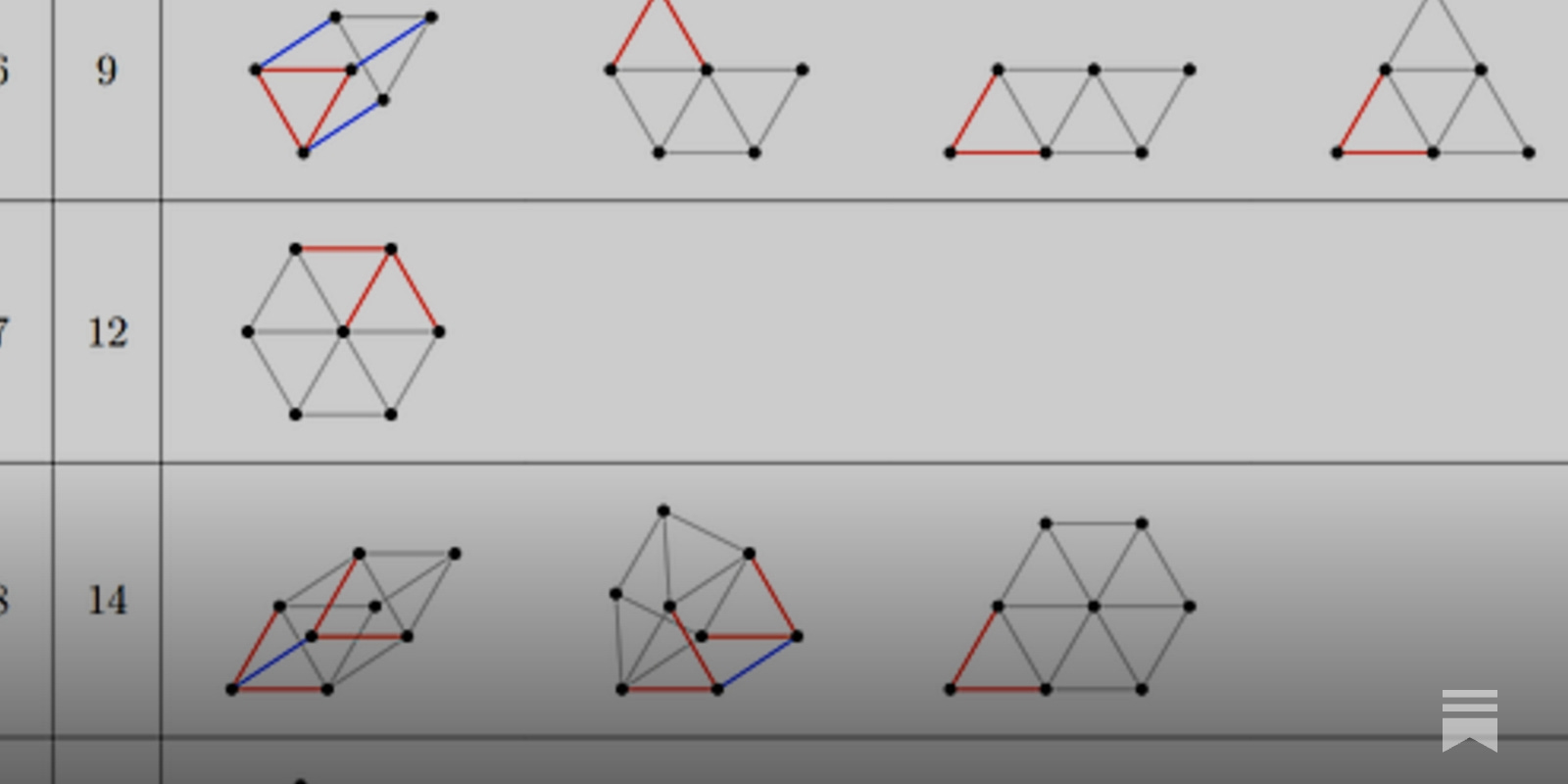
Can AI replace mathematicians? Vienna researchers weigh in
In September, OpenAI announced that some 10,000 AI agents partially 'solved' the Navier–Stokes problem, one of the most prestigious open challenges in mathematics. University of Vienna mathematicians Nathanaël Berestycki and Vera Fischer agree that the field will never be the same, but argue that maths is far more than producing proofs at speed.

OpenAI fought dirty on career-making math problem, says NYU mathematician | TechCrunch
There is a $1 million bounty for the first person providing a solution to the Navier-Stokes existence and smoothness problem.

OpenAI can’t tell if something was written by AI after all
OpenAI’s tool struggled with accuracy.

OpenAI’s latest math breakthroughs commit research misconduct, experts say
OpenAI released 10 AI-generated results over the weekend. Some mathematicians are unhappy with their approach
OpenAI Just Claimed a Huge Math Discovery. Some Academics Are Crying Foul
A landmark announcement by the frontier AI lab has been overshadowed by accusations of impropriety.

Statements — AHM
Yesterday, on October 6th, 2026, OpenAI – which is currently defending lawsuits against accusations of illegal plagiarism, copyright infringement, and trademark dilution – released a repository of manuscripts purporting to contain solutions to a number of high-profile problems in mathematics.
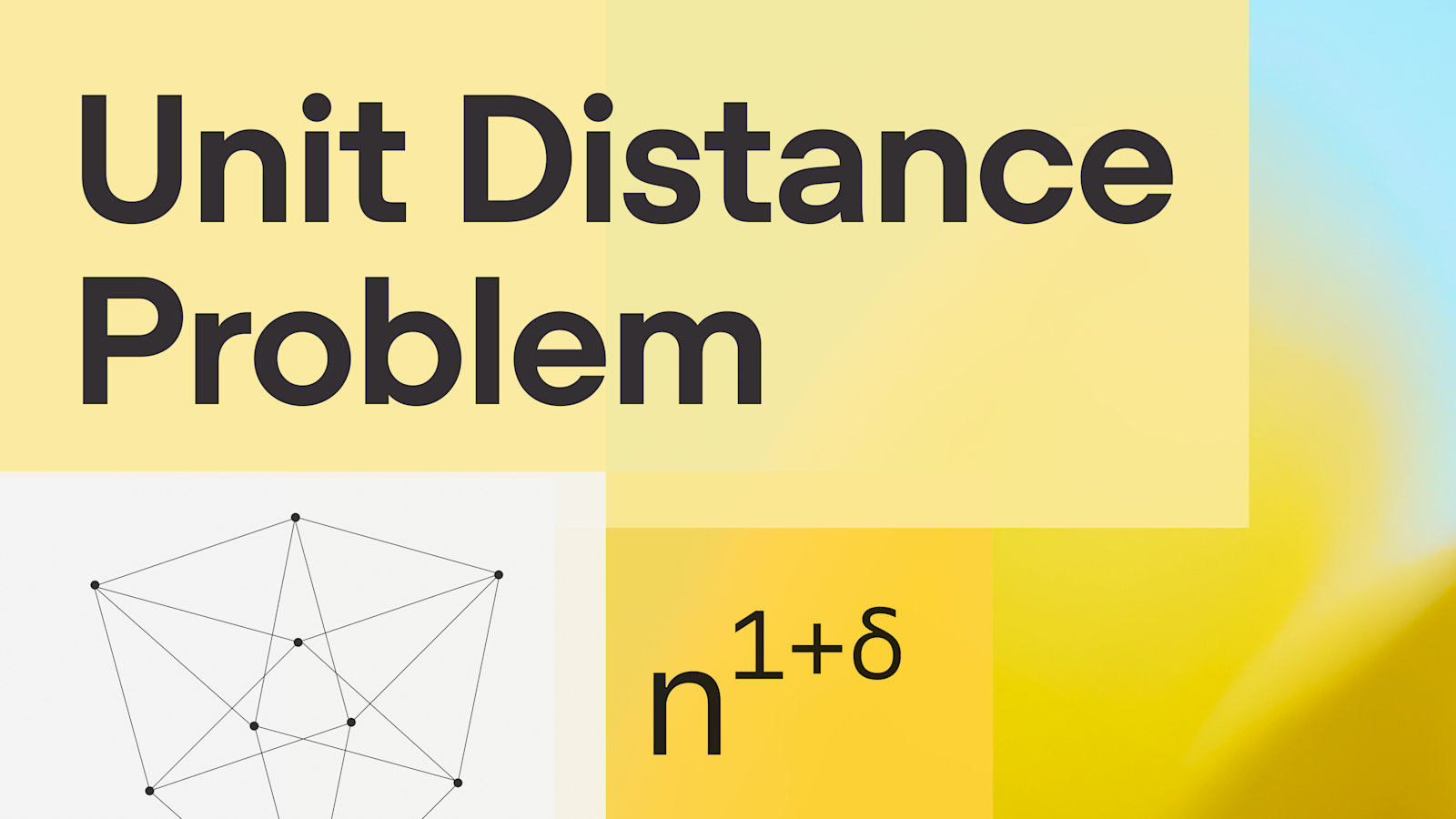
An OpenAI model has disproved a central conjecture in discrete geometry
An OpenAI model solved the 80-year-old unit distance problem, disproving a major conjecture in discrete geometry and marking a milestone in AI-driven mathematics.
Navier-Stokes lost in translation: Why Lean verification of AI autoformalisation does not guarantee correct natural language proofs
Autoformalisation is increasingly used to verify mathematical texts, including those generated by AI, as in OpenAI's announced proof of blow-up of solutions to the Navier-Stokes equations. In this process, an AI system translates the text from a natural language (NL) into a formal language such as Lean. Once this translation is done, the argument expressed in the formal language can easily be mechanically verified. The purpose of this article is to demonstrate why this process may offer no confidence in the original NL argument, owing to the various difficulties in performing the translation semantically faithfully. In particular, we highlight that the problem of resolving ambiguities in mathematical NL text, which is necessary in order to provide semantically faithful translation, is arbitrarily high up in the Solvability Complexity Index (SCI) hierarchy/arithmetical hierarchy (the SCI $= \infty$). Hence, informally, providing semantically faithful AI autoformalisation is harder than any computational problem including the Halting problem (which has SCI $= 1$). To demonstrate the effect of this result we provide several examples of AI mistranslations of NL statements and proofs into Lean in practice, resulting in mismatches between NL proofs and their Lean `verifications'. These include OpenAI's announced Navier-Stokes proof. In particular, we show that the formalised Lean proof does not correspond to the NL proof of blow-up of solutions to the Navier-Stokes equations.

Advisory Group on Mathematics and Artificial Intelligence
OpenAI is working with an independent Advisory Group on Mathematics and Artificial Intelligence to guide the review and communication of emerging AI results.

Navier-Stokes Equation - Clay Mathematics Institute
This is the equation which governs the flow of fluids such as water and air. However, there is no proof for the most basic questions one can ask: do solutions exist, and are they unique? Why ask for a proof? Because a proof gives not only certitude, but also understanding.
OpenAI just blooped hundreds of proofs and counterexamples to open problems: github.com/openai/math/tree/main/preprin… Boggling.

math/preprints at main · openai/math
github.com