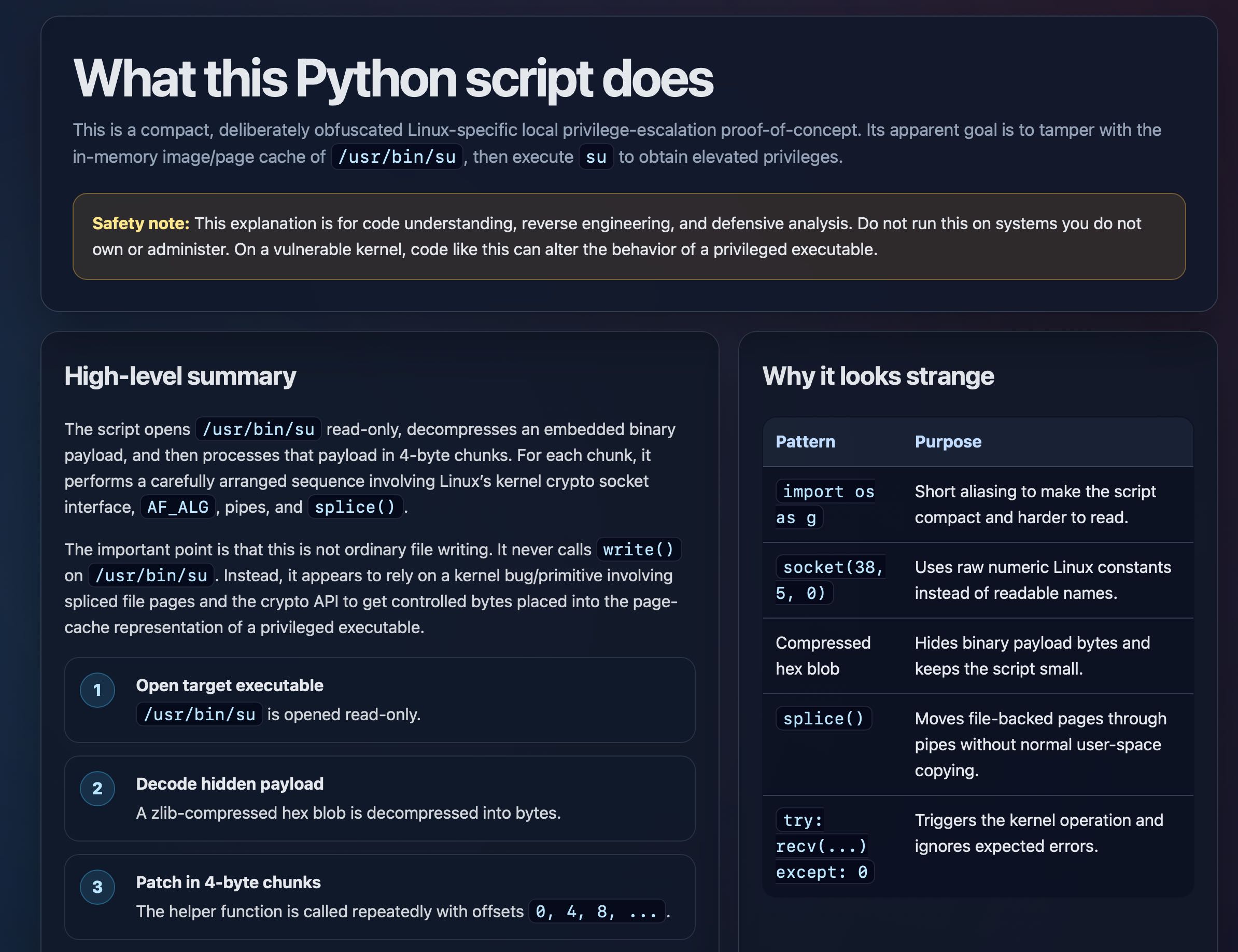
Claude's watermark probably doesn't work how you think. As the CTO of GPTZero, I'll explain how Anthropic, Google and OpenAI are building text watermarking in this brief explainer and whether it can be defeated.Almost all forms of watermarking that are fast and cheap enough for… https://t.co/3Ghcz3PTwJ— Alex Cui (@alexcdot) August 11, 2026
How Claude's text watermarking works
Future Claude models will generate text that contains a watermark. This is a way of determining the likelihood that Claude was involved in writing the text, and we, along with several other major AI providers, are implementing this change to comply with the EU AI Act. In this article, we share answers to some of the questions we’ve received about how our chosen watermarking method works, whether it affects Claude’s outputs, and why we’re making this change.
Watermarks aren’t the silver bullet for AI misinformation
Digital watermarks are easily broken and abused.

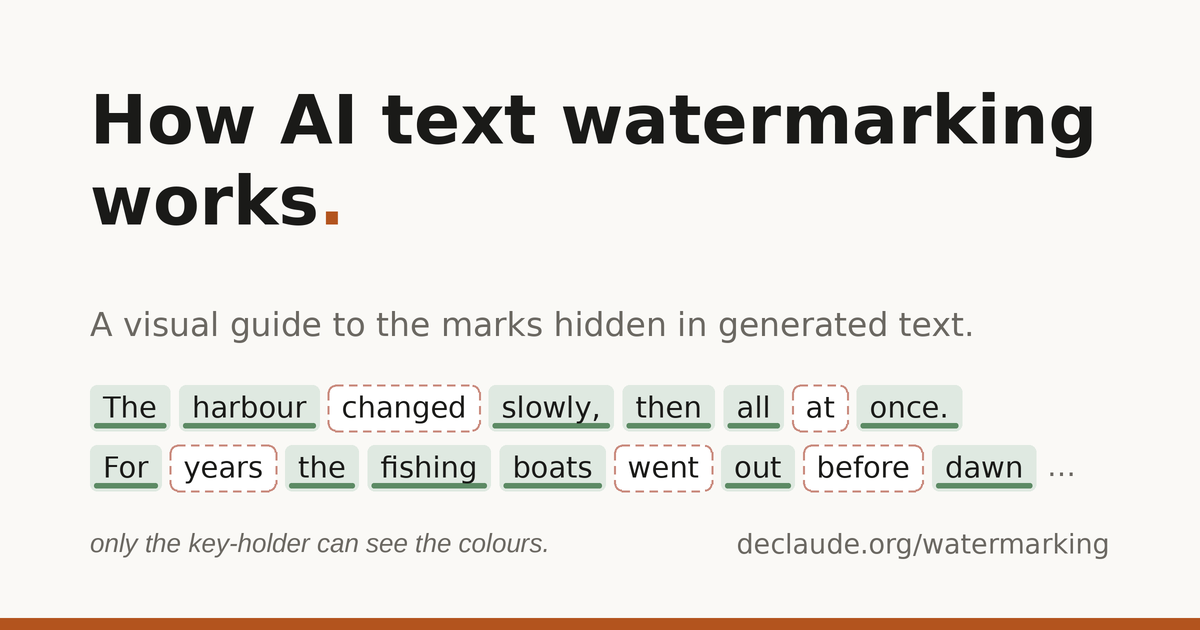
How AI text watermarking works
A gentle visual guide to how a statistical mark hides inside generated text, and what erases it.
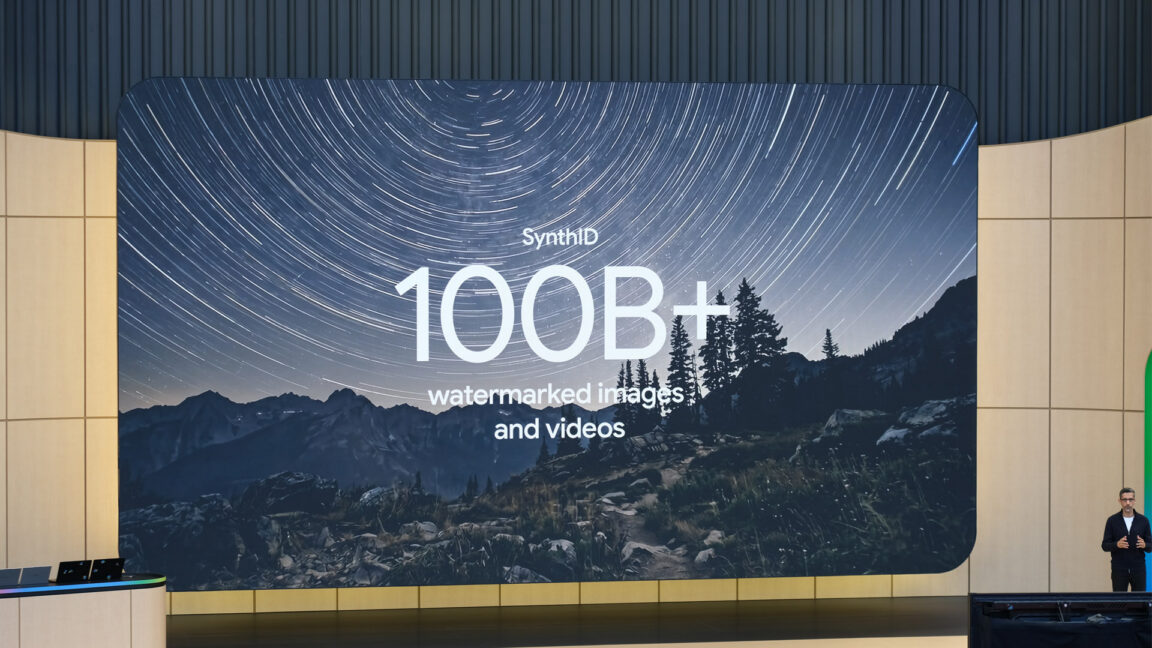
Google's SynthID AI watermarking tech is being adopted by OpenAI, Nvidia, and more
AI content is getting good, but SynthID might be able to help tell truth from fiction.
Google made a watermark for AI images that you can’t edit out
For now, SynthID works only in Google’s ecosystem — but it could someday be all over the internet

Scalable watermarking for identifying large language model outputs
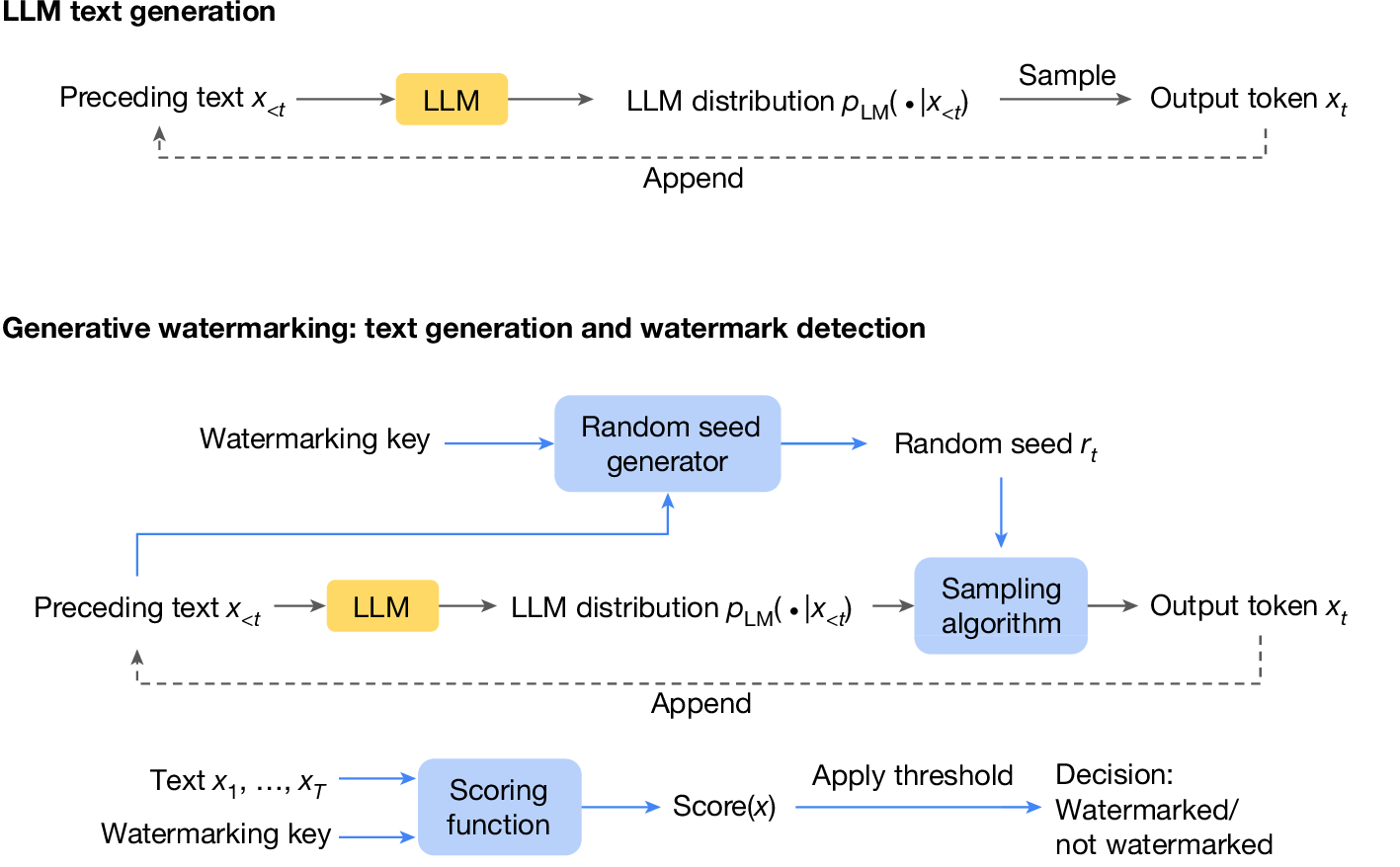
Large language models (LLMs) have enabled the generation of high-quality synthetic text, often indistinguishable from human-written content, at a scale that can markedly affect the nature of the information ecosystem1–3. Watermarking can help identify synthetic text and limit accidental or deliberate misuse4, but has not been adopted in production systems owing to stringent quality, detectability and computational efficiency requirements. Here we describe SynthID-Text, a production-ready text watermarking scheme that preserves text quality and enables high detection accuracy, with minimal latency overhead. SynthID-Text does not affect LLM training and modifies only the sampling procedure; watermark detection is computationally efficient, without using the underlying LLM. To enable watermarking at scale, we develop an algorithm integrating watermarking with speculative sampling, an efficiency technique frequently used in production systems5. Evaluations across multiple LLMs empirically show that SynthID-Text provides improved detectability over comparable methods, and standard benchmarks and human side-by-side ratings indicate no change in LLM capabilities. To demonstrate the feasibility of watermarking in large-scale-production systems, we conducted a live experiment that assessed feedback from nearly 20 million Gemini6 responses, again confirming the preservation of text quality. We hope that the availability of SynthID-Text7 will facilitate further development of watermarking and responsible use of LLM systems.
Google joins AI watermarking coalition as deepfakes hit mainstream tech platforms
Google said it will look to use a project from Adobe called Content Credentials, which adds metadata that indicates AI editing and allows viewers to verify images, videos, audio and documents.

Identifying AI-generated images with SynthID
Today, in partnership with Google Cloud, we’re beta launching SynthID, a new tool for watermarking and identifying AI-generated images. It’s being released to a limited number of Vertex AI customers using Imagen, one of our latest text-to-image models that uses input text to create photorealistic images. This technology embeds a digital watermark directly into the pixels of an image, making it imperceptible to the human eye, but detectable for identification. While generative AI can unlock huge creative potential, it also presents new risks, like creators spreading false information — both intentionally or unintentionally. Being able to identify AI-generated content is critical to empowering people with knowledge of when they’re interacting with generated media, and for helping prevent the spread of misinformation.

Vitruves/firemark
Stop sending naked documents. Firemark watermarks images & PDFs in one command. Optimized to tackle AI watermark removal. Written in Rust.
Google’s invisible AI watermark will help identify generative text and video
New AI tools to generate videos and detect them as well.

WASA: WAtermark-based Source Attribution for Large Language Model-Generated Data
The impressive performances of Large Language Models (LLMs) and their immense potential for commercialization have given rise to serious concerns over the Intellectual Property (IP) of their training data. In particular, the synthetic texts generated by LLMs may infringe the IP of the data being used to train the LLMs. To this end, it is imperative to be able to perform source attribution by identifying the data provider who contributed to the generation of a synthetic text by an LLM. In this paper, we show that this problem can be tackled by watermarking, i.e., by enabling an LLM to generate synthetic texts with embedded watermarks that contain information about their source(s). We identify the key properties of such watermarking frameworks (e.g., source attribution accuracy, robustness against adversaries), and propose a source attribution framework that satisfies these key properties due to our algorithmic designs. Our framework enables an LLM to learn an accurate mapping from the generated texts to data providers, which sets the foundation for effective source attribution. Extensive empirical evaluations show that our framework achieves effective source attribution.
AI watermarking has a decentralisation problem
With AI watermarking inference providers mark their output as AI generated. But for the system to become useful, lots of independent providers need to collaborate together in a decentralised system without overarching governance.
Warning: Google Gemini SynthID AI Watermark Detector Appears To Mix Up Results In Same Chat -- Consistently Shows False Positives And Negatives Under Certain Conditions | Lead Stories
While investigating a video for a recent fact-check, Lead Stories encountered a bizarre issue with the SynthID AI detector in...
Major conference catches illicit AI use — and rejects hundreds of papers
The papers’ watermarks allowed organizers to detect use of large language models in peer review.
Using Claude Code: The Unreasonable Effectiveness of HTML
Thought-provoking piece by Thariq Shihipar (on the Claude Code team at Anthropic) advocating for HTML over Markdown as an output format to request from Claude. The article is crammed with …