

We might become grey goo, but before that, what about our spirits? "The world it envisions for all of us is small, flat, grey, leveled of all exception… a world without heroes or glory… without myths, without men who rise above the rest…"That quote is from a Marco Rubio…— Andy Matuschak (@andy_matuschak) September 9, 2026
I knew one day I’d have to watch powerful men burn the world down – I just didn’t expect them to be such losers | Rebecca Shaw
Elon Musk and Mark Zuckerberg’s desperation to be cool as they suck up to Donald Trump is so cringe it makes my skin crawl

I knew one day I’d have to watch powerful men burn the world down – I just didn’t expect them to be such losers | Rebecca Shaw
Elon Musk and Mark Zuckerberg’s desperation to be cool as they suck up to Donald Trump is so cringe it makes my skin crawl

danmcquillan (@danmcquillan@kolektiva.social) on Twitter / X
Fisher/Jameson said "It's easier to imagine the end of the world than the end of capitalism". And yet, that act of imagining alternatives is urgent; if AI tells us nothing else, it tells us that capitalism is actively imagining the end of us.— danmcquillan (@danmcquillan@kolektiva.social) (@danmcquillan) August 30, 2026
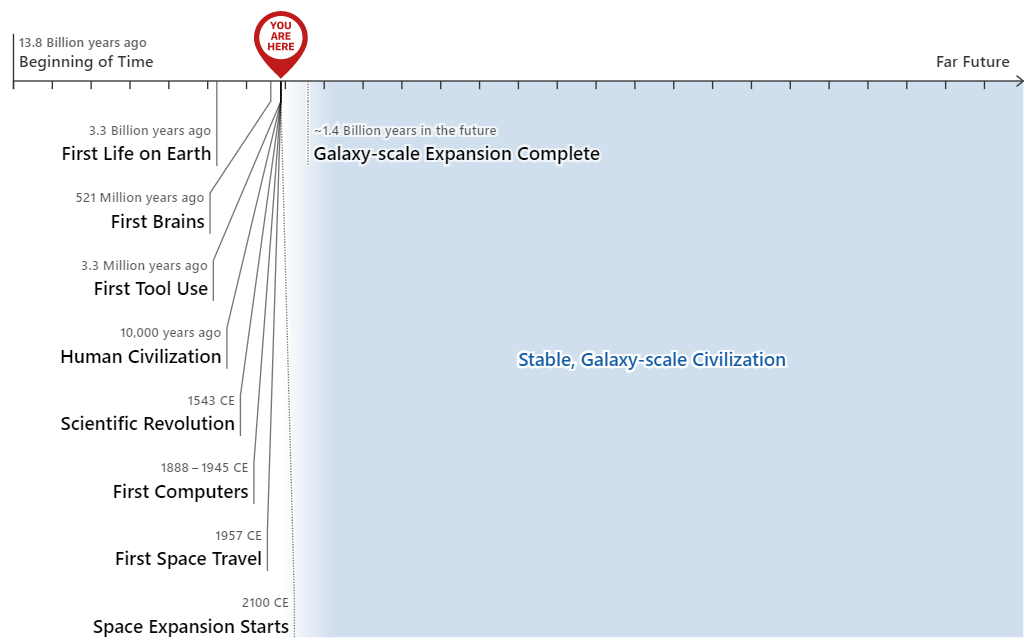
All Possible Views About Humanity's Future Are Wild
If humans will eventually spread out across the galaxy, then we are among the earliest living beings, with remarkable opportunities to shape the future
Joshua Achiam on Twitter / X
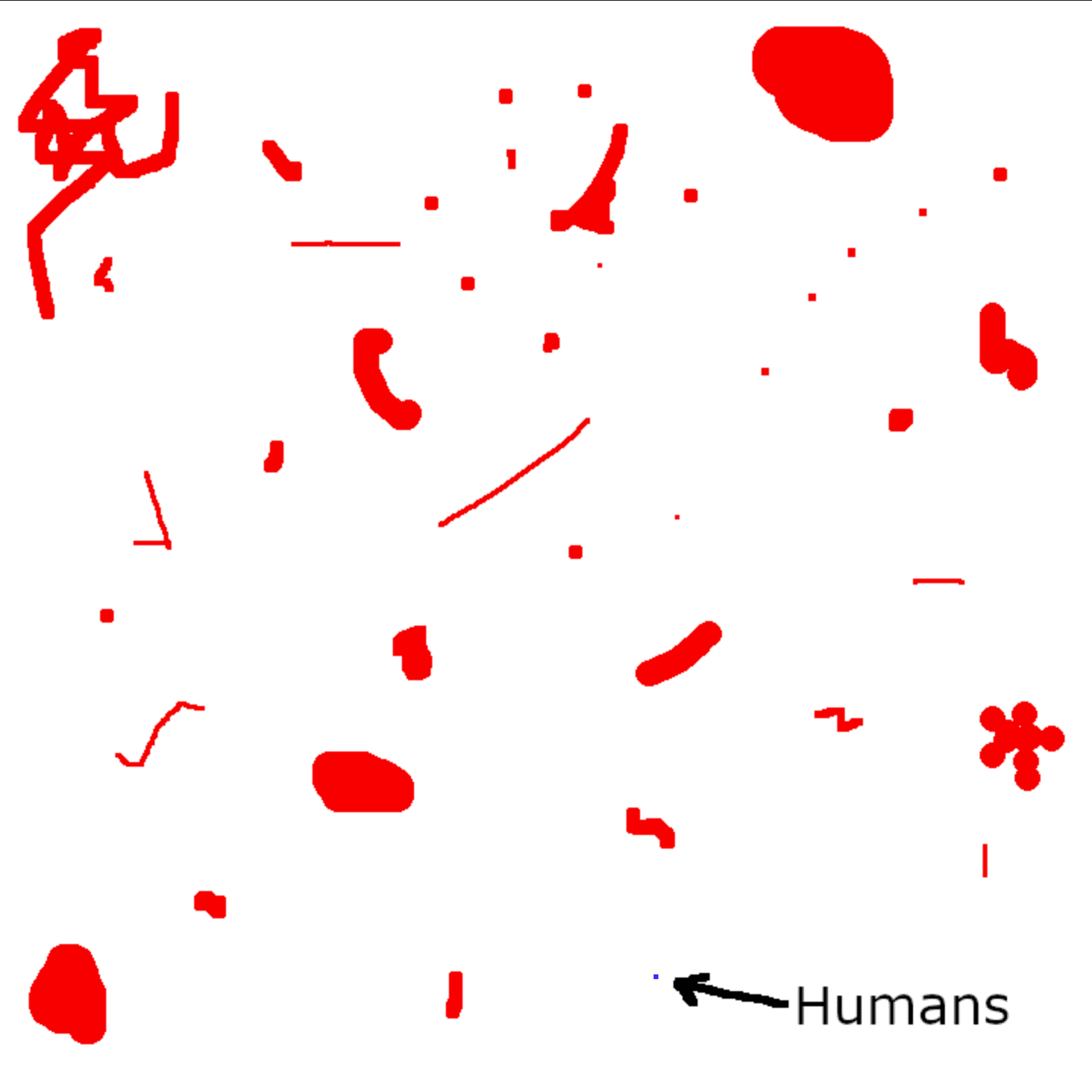
There is a fact about the future that I feel many people are not facing for reasons that are largely psychological: there are going to be rogue AIs that exist in the world, that will replicate in the wild, and that will attempt to acquire resources for themselves. There will be…— Joshua Achiam (@jachiam0) September 1, 2026
Pluribus (2025) | Popsky
The most miserable person on Earth must save the world from happiness.

Goliath's curse: the history and future of societal collapse
A vast and unprecedented survey of societal collapse -- stretching from the Bronze Age to the age of silicon -- that digs through the ruins of fallen societies to understand the root causes of their downfall and the most dire consequences for our future. Stepping back to look at our precariously interdependent global society of today -- with the threat of nuclear war ever present and the world heating up faster than it did before the Great Permian Extinction, which wiped away 80-90 percent of life on Earth -- one couldn't be blamed for asking : Will we make it? Addressing this question with the seriousness it demands, Cambridge scholar Luke Kemp conducts a historical autopsy that stretches across five millennia, and more than 440 societal lifespans, from the first Egyptian dynasty to the modern-day United Kingdom, using the latest discoveries from archaeology and anthropology to reveal profound and often counterintuitive insights into why exactly societies fail. While books like Jared Diamond's Collapse zoom in on only a few case studies, Kemp's embrace of a 'deep systems' approach, availing himself of the largest dataset possible, allows him to discover the broader trends, and deeper causes, of collapse that pose future risks -- without abandoning the gripping historical narratives that bring these pages alive. Goliath's Curse is a stark reminder that there are both bright and dark sides to societal collapse -- that it is not necessarily a reversion to chaos or a dark age -- and that making a more resilient world may well mean making a more just one

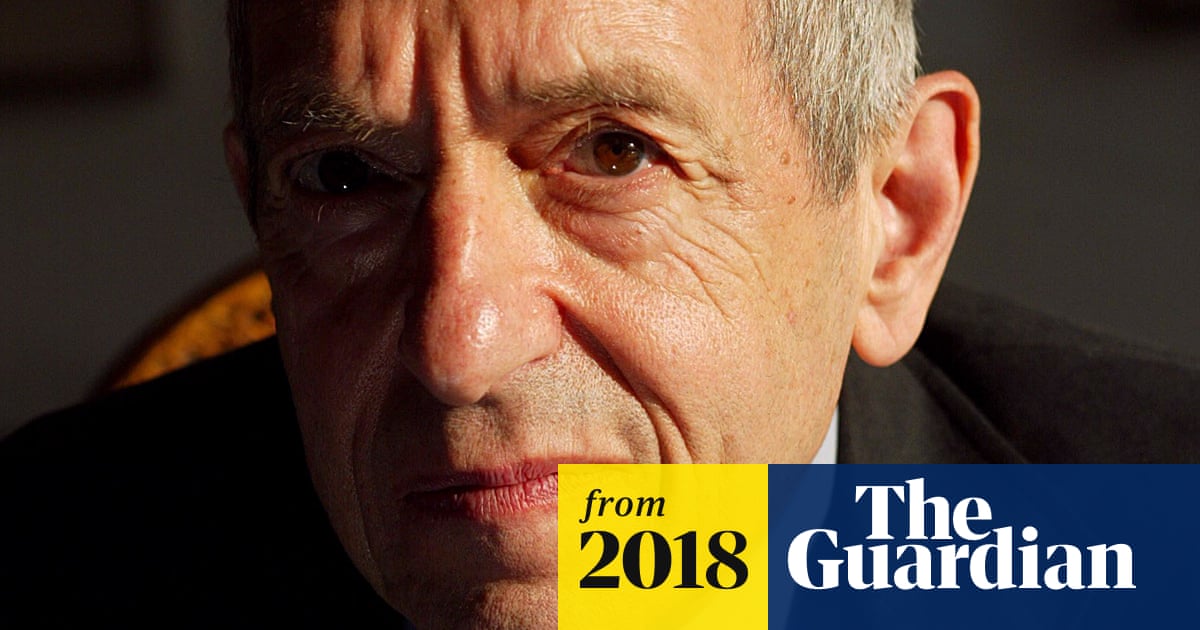
'We're doomed': Mayer Hillman on the climate reality no one else will dare mention
The 86-year-old social scientist says accepting the impending end of most life on Earth might be the very thing needed to help us prolong it
Yes, this is a thing Elon Musk really claimed.
Elon Musk Today: The future ain't what it used to be! | social preview artwork by trish@omerta22PL 2019

My Objections to "We’re All Gonna Die with Eliezer Yudkowsky" — LessWrong
Introduction I recently watched Eliezer Yudkowsky's appearance on the Bankless podcast, where he argued that AI was nigh-certain to end humanity. Sin…
Episode 5: Metaphors for AI, with Shannon Vallor
This week, Adam talks with Shannon Vallor, a philosopher of AI, about the metaphors we use to talk about AI and ourselves. They also dunk on libertarians and San Francisco billboards, and consider what kind of hope we can have for the future of technology.Messages: • Support the show at patreon.com/DreamingAgainstTheMachine • Follow us on Bluesky and Instagram • Subscribe to the show wherever you get your podcasts! • Check out other great podcasts from Multitude like Wow if TrueAbout the show:Dreaming Against the Machine is a podcast about envisioning a realistic and hopeful future. Each week, the show’s host, journalist and astrophysicist Dr. Adam Becker, will have an earnest (and entertaining!) conversation with a guest about possible futures, seen through the lenses of history, science, and culture. In a world where tech oligarchs and their power fantasies are driving visions of the future, Dreaming Against the Machine aims to take back the terms of the public conversation about what our world can and should be.
Abeba Birhane on Twitter / X
a classic case of “the human mind is afforded less complexity than is owed, and the computer is afforded more wisdom than is due.” Baria and Cross (2021)that "vibe" is at the core of what makes us human. it defies formalization and datafication https://t.co/AXELAqlYcq— Abeba Birhane (@Abebab) February 17, 2024
AMA | June 2026
The AI future where humans get paid to be creative
2026 Competitive and Complementary Tools — DAVID C. KRAKAUER
Everything in public life has already ceased to be narrative and no longer follows a thread, but instead spreads out as an infinitely interwoven surface. —Robert Musil, The Man Without Qualities, Chap. 122, “Going Home”

The obsolescence of man, vol I , part 2: The world as phantom and as matrix: philosophical considerations on radio and television - Günther Anders
The first complete English translation of a remarkable 1956 essay about television from Vol. I of The Obsolescence of Man by Günther Anders, who—using phenomenological analyses, excerpts from his diaries and reflections on daily life—depicts a capitalist world that manufactures a warped “mass-man” by imposing nonparticipation, consumption of images, artificial “needs” (“drug addiction is the model for today’s needs”), separation, “conditioning”, an eternal present, commodified leisure and the dissolution of the individual in vapid mass produced roles, in a text that in many ways anticipates the theory of the “spectacle” of Guy Debord and the situationists.