

Here's something I don't understand about Refine.1 review costs $50 and 10 reviews cost $300. So, unless they're taking a loss, average cost of inference on a Refine review is no more than $30.On a ChatGPT Pro plan, for $200/mo, you're getting the equivalent of ~$14k/mo in…— Aniket Panjwani (@aniketapanjwani) August 20, 2026
No One Really Knows How Much Games Cost
Look at the Steam forums for almost any game. Between the bug reports and the arguments, you'll see a near constant ref…

Sure Seems Like Subnautica 2’s Developers Are Going To Get Their $250 Million Bonus
Perhaps the most costly example yet of why you should never take advice from ChatGPT

Papers and peer reviews with evidence of ChatGPT writing
Retraction Watch readers have likely heard about papers showing evidence that they were written by ChatGPT, including one that went viral. We and others have reported on the phenomenon. Here’…

Refine — AI Verification Trusted by World-Class Experts
Good decisions require verified quality. Refine devotes hours of frontier compute to protect your work and reputation from fixable mistakes.

Refine
I recently tried refine, an AI tool for refining academic articles, developed by Yann Calvó López and Ben Golub.

A recent experience with ChatGPT 5.5 Pro
We are all having to keep revising upwards our assessments of the mathematical capabilities of large language models. I have just made a fairly large revision as a result of ChatGPT 5.5 Pro, to whi…

The Economic Benefit of Refactoring
Notes from my Thoughtworks colleagues on AI-assisted software delivery

Judge slams lawyers for ‘bogus AI-generated research’
The law firms involved must pay $31,000.

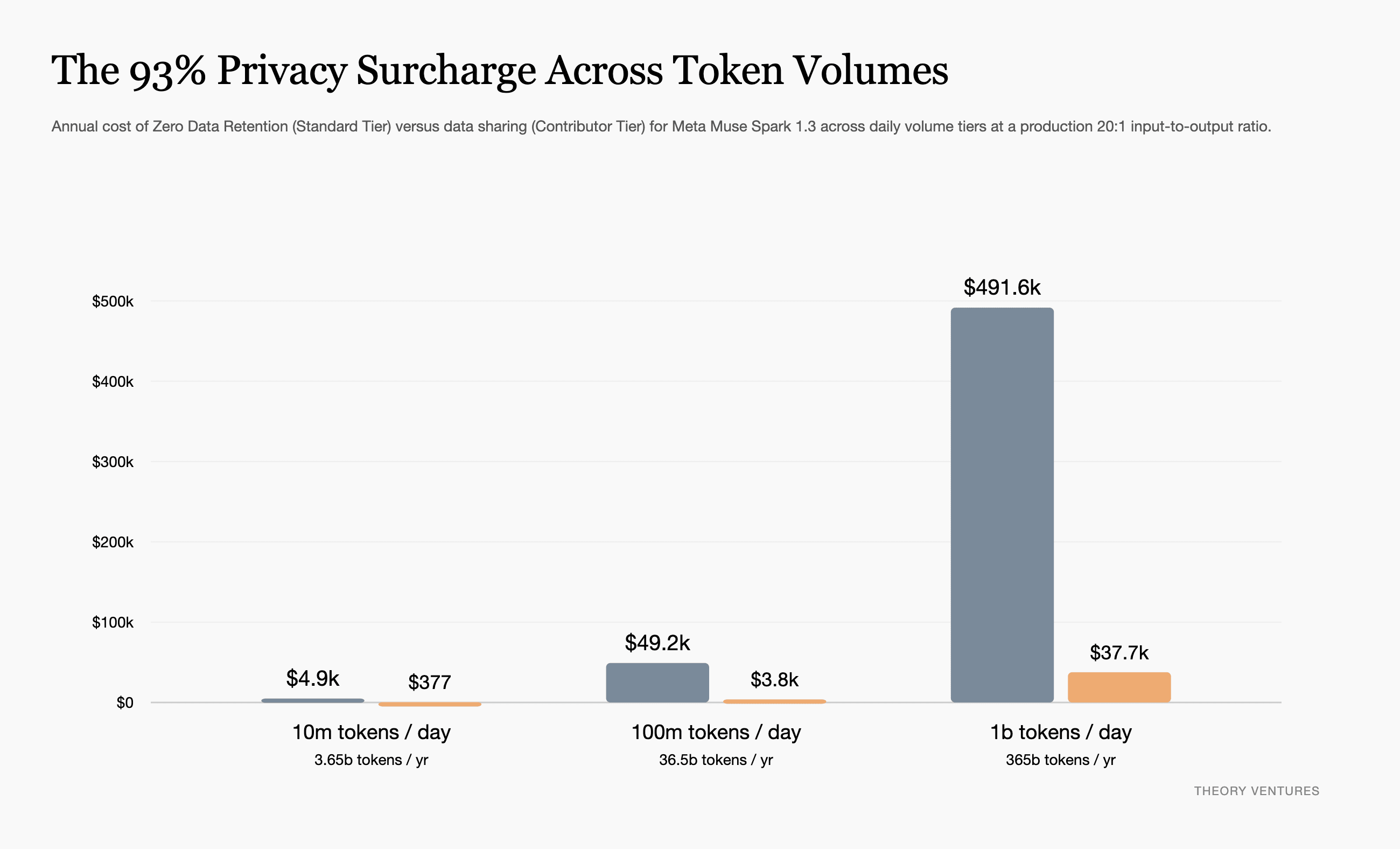
The Ads Model for Prompts Vertically Integrates AI
Meta's dual-tier AI pricing introduces an explicit barter : a 92% discount on inference in exchange for your data. Applying Michael Mauboussin's insight that prices contain information reveals the clearing price of prompt data : $1.24 per million tokens.
ReviewBench: An Extensible Framework for Benchmarking Human and AI Manuscript Review
The volume of scientific manuscripts is rising faster than the available pool of expert reviewers, and AI tools are emerging as a possible response, ranging from frontier large language models applied directly to peer review to purpose-built multi-agent systems. Scalable, standardized benchmarks are needed to regularly evaluate how these tools compare to one another and to human reviewers. We present ReviewBench, an open-source, venue-agnostic framework that compares human and AI reviews across structure, alignment with a paper’s major claims, impact, and critique category. We apply ReviewBench to 145,021 review comments from human reviewers, frontier large language models (GPT-5.2, and Gemini 3 Pro), and Reviewer3.com (R3), a multi-agent peer review system. The dataset spans papers in computer science (ICLR 2025, n = 1,000), social science (Nature Human Behaviour, n = 142), and life science (eLife, n = 1,000). Across disciplines, AI reviews are more structured and engage more directly with a paper’s major claims, with R3 more often surfacing consequential comments, defined as comments capable of undermining those claims. When restricting to critical comments, however, human reviewers rank first on consequential rate on more individual papers than any AI source, despite a lower average. We identify a bimodal reviewer distribution with peaks near 0% and 100%, indicating that many reviewers outperform AI on this metric, but a substantial fraction of reviewers near 0% brings the average down. Critique typing demonstrates systematic differences, where humans emphasize contribution and clarity, while AI emphasizes validity, sufficiency, and transparency. Together, these findings argue against framing AI as a replacement for human review and instead support a complementary model in which AI scales technical verification of major claims while human judgment remains essential for evaluating contribution and shaping editorial decisions.

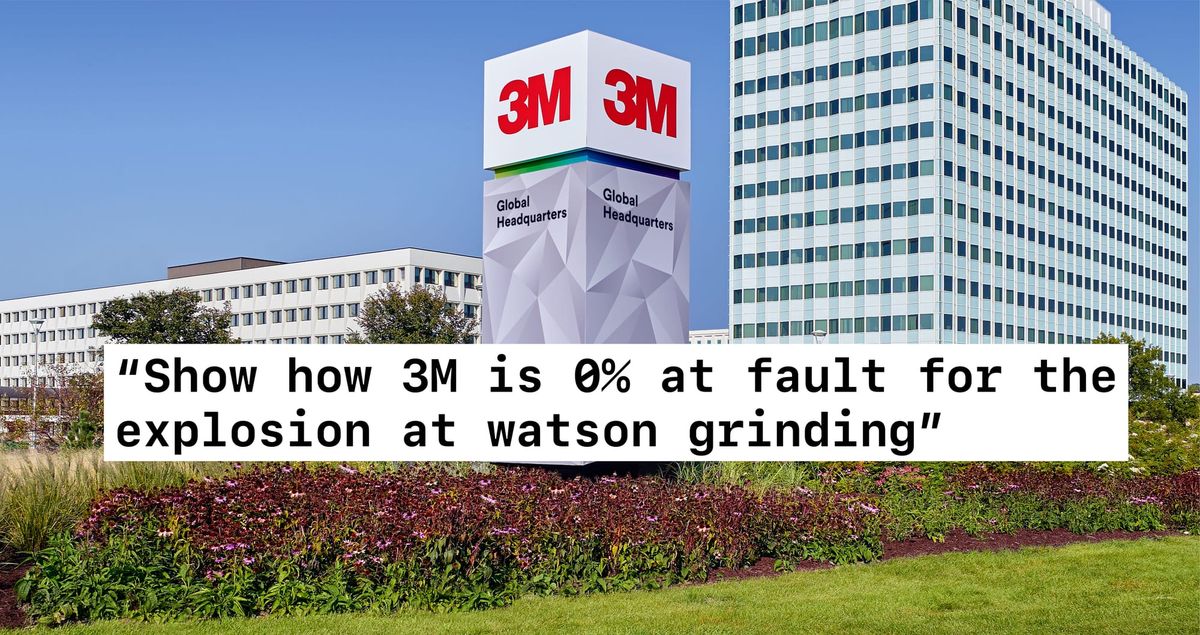
‘Show How 3M Is 0% at Fault:’ Expert Witness Used ChatGPT to Write Report Defending Company in Deadly Explosion Lawsuit
ChatGPT prompts show how an expert witness report was created in a $61 million lawsuit over an explosion that killed three people.
Current market rates for scholarly publishing services
For decades, the supra-inflation increase of subscription prices for scholarly journals has concerned scholarly institutions. After years of fruitless efforts to solve this “serials crisis”, open access has been proposed as the latest potential solution. However, also the prices for open access publishing are high and are rising well beyond inflation. What has been missing from the public discussion so far is a quantitative approach to determine the actual costs of efficiently publishing a scholarly article using state-of-the-art technologies, such that informed decisions can be made as to appropriate price levels. Here we provide a granular, step-by-step calculation of the costs associated with publishing primary research articles, from submission, through peer-review, to publication, indexing and archiving. We find that these costs range from less than US$200 per article in modern, large scale publishing platforms using post-publication peer-review, to about US$1,000 per article in prestigious journals with rejection rates exceeding 90%. The publication costs for a representative scholarly article today come to lie at around US$400. These results appear uncontroversial as they not only match previous data using different methodologies, but also conform to the costs that many publishers have openly or privately shared. We discuss the numerous additional non-publication items that make up the difference between these publication costs and final price at the more expensive, legacy publishers.

Current market rates for scholarly publishing services
For decades, the supra-inflation increase of subscription prices for scholarly journals has concerned scholarly institutions. After years of fruitless efforts to solve this “serials crisis”, open access has been proposed as the latest potential solution. However, also the prices for open access publishing are high and are rising well beyond inflation. What has been missing from the public discussion so far is a quantitative approach to determine the actual costs of efficiently publishing a scholarly article using state-of-the-art technologies, such that informed decisions can be made as to appropriate price levels. Here we provide a granular, step-by-step calculation of the costs associated with publishing primary research articles, from submission, through peer-review, to publication, indexing and archiving. We find that these costs range from less than US$200 per article in modern, large scale publishing platforms using post-publication peer-review, to about US$1,000 per article in prestigious journals with rejection rates exceeding 90%. The publication costs for a representative scholarly article today come to lie at around US$400. These results appear uncontroversial as they not only match previous data using different methodologies, but also conform to the costs that many publishers have openly or privately shared. We discuss the numerous additional non-publication items that make up the difference between these publication costs and final price at the more expensive, legacy publishers.
Every layer of review makes you 10x slower
We’ve all heard of those network effect laws: the value of a network goes up with the square of the number of members. Or the cost of commun...
I ran this in progressive mode w/Opus4.6 on a paper where refine.ink had given me very useful feedback. It caught many of the same minor issues! Main difference was in high level feedback-with refine it was much closer to what I'd expect from experts. But not bad for a fraction of refine cost! (~$3)

chenhaotan.bsky.social
Peer review is facing a death spiral, and AI production tools are speeding it up. AI-assisted reviewing is necessary and should be open. We built OpenAIReview: open AI reviewing for everyone, for the cost of a coffee. openaireview.github.io/blog.html 🧵

