


Whether predictive systems can be ethically—or even functionally—used in socially sensitive contexts depends on their epistemic credentials. I am delighted to see my work inform policy recommendations in a new report from Amnesty International. https://t.co/NbQBM31N5M pic.twitter.com/EXPgxXgszF— Mel Andrews (@bayesianboy) June 11, 2026

Kevin A. Bryan on Twitter / X
I love that this idea has crossed into normie world (please don't look up Sutton's AI Ethics views!). If you want a very short "why does SF believe what it believes", here is the reading list I give students: https://t.co/1vkWtwWwRV pic.twitter.com/zo4YaoNSKf— Kevin A. Bryan (@Afinetheorem) September 23, 2026

Recommender systems and their ethical challenges
This article presents the first, systematic analysis of the ethical challenges posed by recommender systems through a literature review. The article identifies six areas of concern, and maps them onto a proposed taxonomy of different kinds of ethical impact. The analysis uncovers a gap in the literature: currently user-centred approaches do not consider the interests of a variety of other stakeholders—as opposed to just the receivers of a recommendation—in assessing the ethical impacts of a recommender system.

Cas (Stephen Casper) on Twitter / X
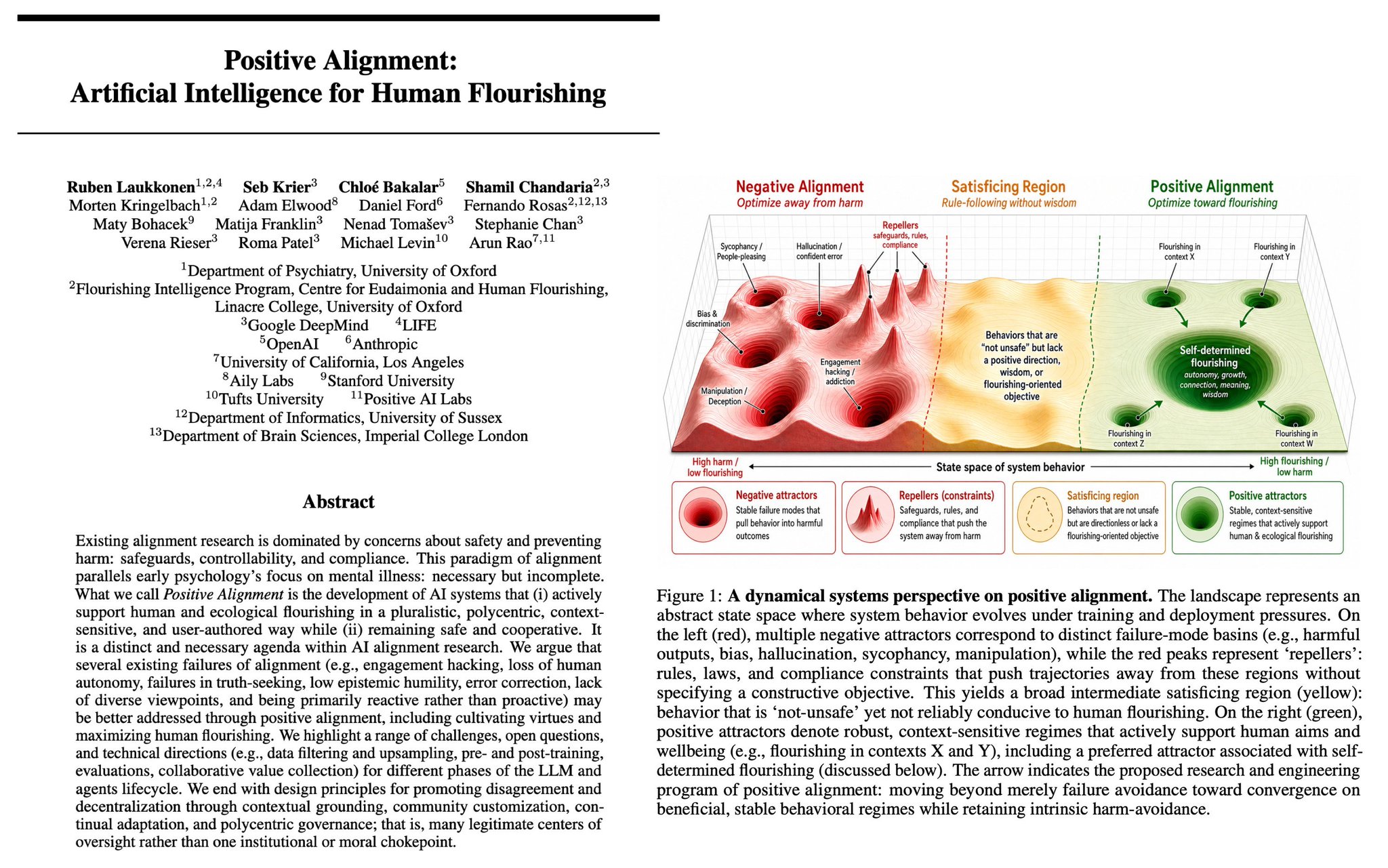
It is hard to overstate how disappointing I think this new paper from Oxford, OpenAI, Anthropic, and Google (et al) is. I can't take it seriously as academic work, just as propaganda. It also has some very bad scholarship and questionable adherence to research ethics. Having… pic.twitter.com/Z5fBx360ya— Cas (Stephen Casper) (@StephenLCasper) May 13, 2026
Prediction as extraction of discretion
I argue that prediction is not primarily a technological means for knowing future outcomes, but a social model for extracting and concentrating discretionary power. Prediction is a ‘relational grammar’ that governs this allocation of discretion: the everyday ability to define one's situation. This extractive dynamic extends a long historical pattern, in which new methods for producing knowledge entail a redistribution of decision-making power. I focus on two contemporary domains: (1) crime and policing are emblematic of how predictive systems are extractive by design, with pre-existing interests governing what is measured and what persistently goes unmeasured. (2) The prediction of productivity demonstrates the long tradition of extracting discretion as a means to extract labour power. Time after time, making human behaviour more predictable for the client of prediction (the manager, the police officer) often means making life and work more unpredictable for the target of prediction (the employee, the urban citizen).

Prediction as extraction of discretion
I argue that prediction is not primarily a technological means for knowing future outcomes, but a social model for extracting and concentrating discretionary power. Prediction is a ‘relational grammar’ that governs this allocation of discretion: the everyday ability to define one's situation. This extractive dynamic extends a long historical pattern, in which new methods for producing knowledge entail a redistribution of decision-making power. I focus on two contemporary domains: (1) crime and policing are emblematic of how predictive systems are extractive by design, with pre-existing interests governing what is measured and what persistently goes unmeasured. (2) The prediction of productivity demonstrates the long tradition of extracting discretion as a means to extract labour power. Time after time, making human behaviour more predictable for the client of prediction (the manager, the police officer) often means making life and work more unpredictable for the target of prediction (the employee, the urban citizen).
Data Feminism for AI
Attacks on women and trans people are not happening in a vacuum. Communications scholars W. Lance Bennett and Marianne Kneuer recently argued that we are witnessing the intensification of "illiberal public spheres" around the world (Bennett and Kneuer, 2023). These are characterized by a set of anti-democratic communications tactics that include the denigration and exclusion of minoritized people, targeted attacks on the press and political institutions, and transgression of norms of civil discourse. Such tactics are enabled and amplified by the social media platforms owned by Big Tech, whose business model elevates attention above all other metrics, such that they profit richly off extremism, threats, spectacle, and lies. The success of this corporate partnership with right-wing extremism is evident in the proliferation of book bans (Magnusson, 2024), the demonization of DEI and critical race theory (Crenshaw, 2022), and mob tactics to doxx, intimidate, misrepresent, and otherwise silence people that study misinformation, speak out against racial and gender violence, or rule against insurrectionists (Edmonds, 2024). At the same time, we have seen the continued work of feminists, including Latin American, Indigenous, and abolitionist feminists in the US and globally, doing the work of imagining alternate worlds (Cullors, 2021; Davis, 2022; Ricaurte, 2019; Simpson, 2017). This paper represents our own first attempt to imagine a more equitable, sustainable, feminist world for AI research.
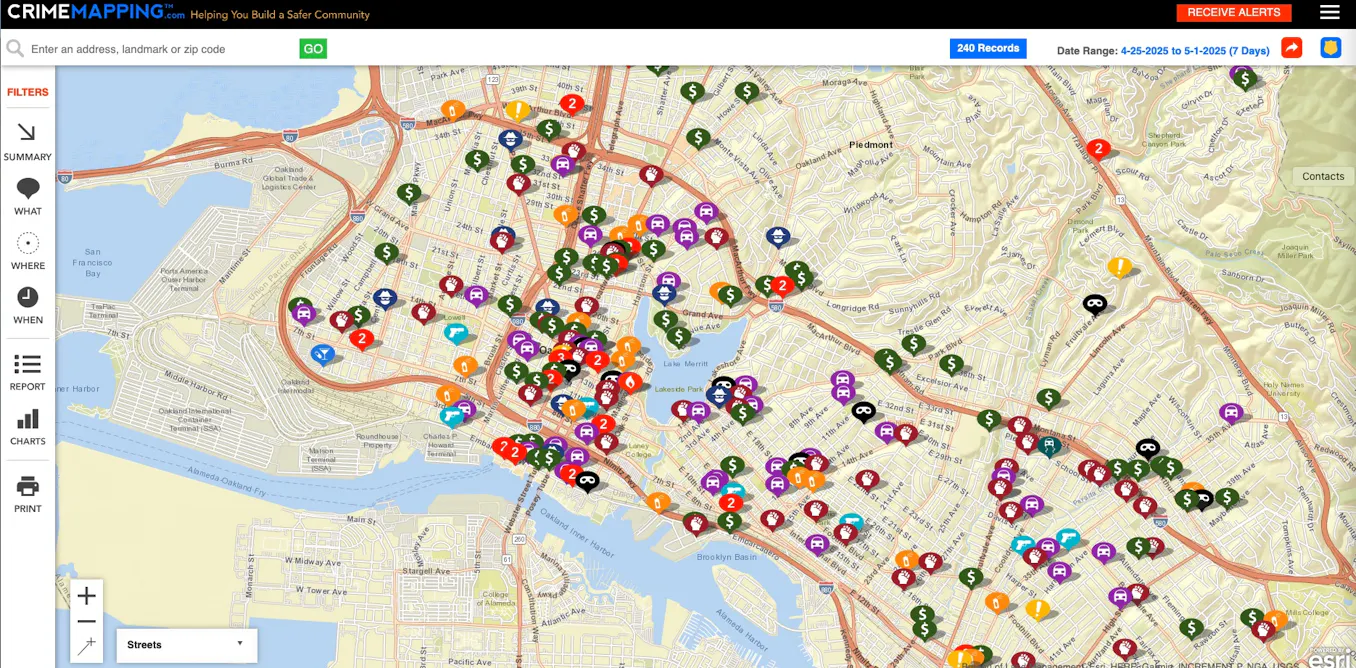
Predictive policing AI is on the rise − making it accountable to the public could curb its harmful effects
AI that anticipates where crimes are likely to occur and who might commit them has a troubling track record. Democratic accountability could shine a light on the technology and how it’s used.
Predictive policing AI is on the rise − making it accountable to the public could curb its harmful effects
AI that anticipates where crimes are likely to occur and who might commit them has a troubling track record. Democratic accountability could shine a light on the technology and how it’s used.
🌸 ellie 🌸 on Twitter / X
One benefit of a “proof of fidelity” system where you aren’t trying to solve for such a narrow question of “is this a human”, is that you don’t need to rely on means of validation that can be biased or inaccessible for many actual humans, such as gov IDs or irl events.2/x— 🌸 ellie 🌸 (@heyellieday) July 29, 2021
Praxis on Twitter / X
I think Eduardo Galeano in this piece does a great job pointing out how society tolerates inequalities. More importantly he exposes the sanitized terms we use to justify them. He juxtaposes concepts that our political and ethical dictionary would never allow together. When a++ pic.twitter.com/XJsvSNUxVY— Praxis (@praxiss) September 25, 2026

A reporting checklist for large language models in behavioural science
Large language models offer new opportunities for behavioural science, but their rapid evolution poses challenges for research rigour. We introduce a consensus-based reporting checklist to improve transparency, reproducibility and ethical accountability of large-language-model-based research in the behavioural sciences.

Does Predictive Policing Lead to Biased Arrests? Results From a Randomized Controlled Trial
Racial bias in predictive policing algorithms has been the focus of a number of recent news articles, statements of concern by several national organizations (e.g., the ACLU and NAACP), and simulat...
Does Predictive Policing Lead to Biased Arrests? Results From a Randomized Controlled Trial
Racial bias in predictive policing algorithms has been the focus of a number of recent news articles, statements of concern by several national organizations (e.g., the ACLU and NAACP), and simulat...