

Research Intimacy: Internalizing obscure knowledge, equations, relationships, and ways of thinking related to a research topic.— Chris Olah (@ch402) August 16, 2020
Shreya Shankar on Twitter / X
This problem has gotten significantly worse. As Twitter and other social media have become primary channels for sharing research, academics are now expected to make the same ideas legible and appealing to both the general public (to go "viral") and senior scholars (to get the… https://t.co/zPF3tKzbVa— Shreya Shankar (@sh_reya) July 25, 2026
Cas (Stephen Casper) on Twitter / X
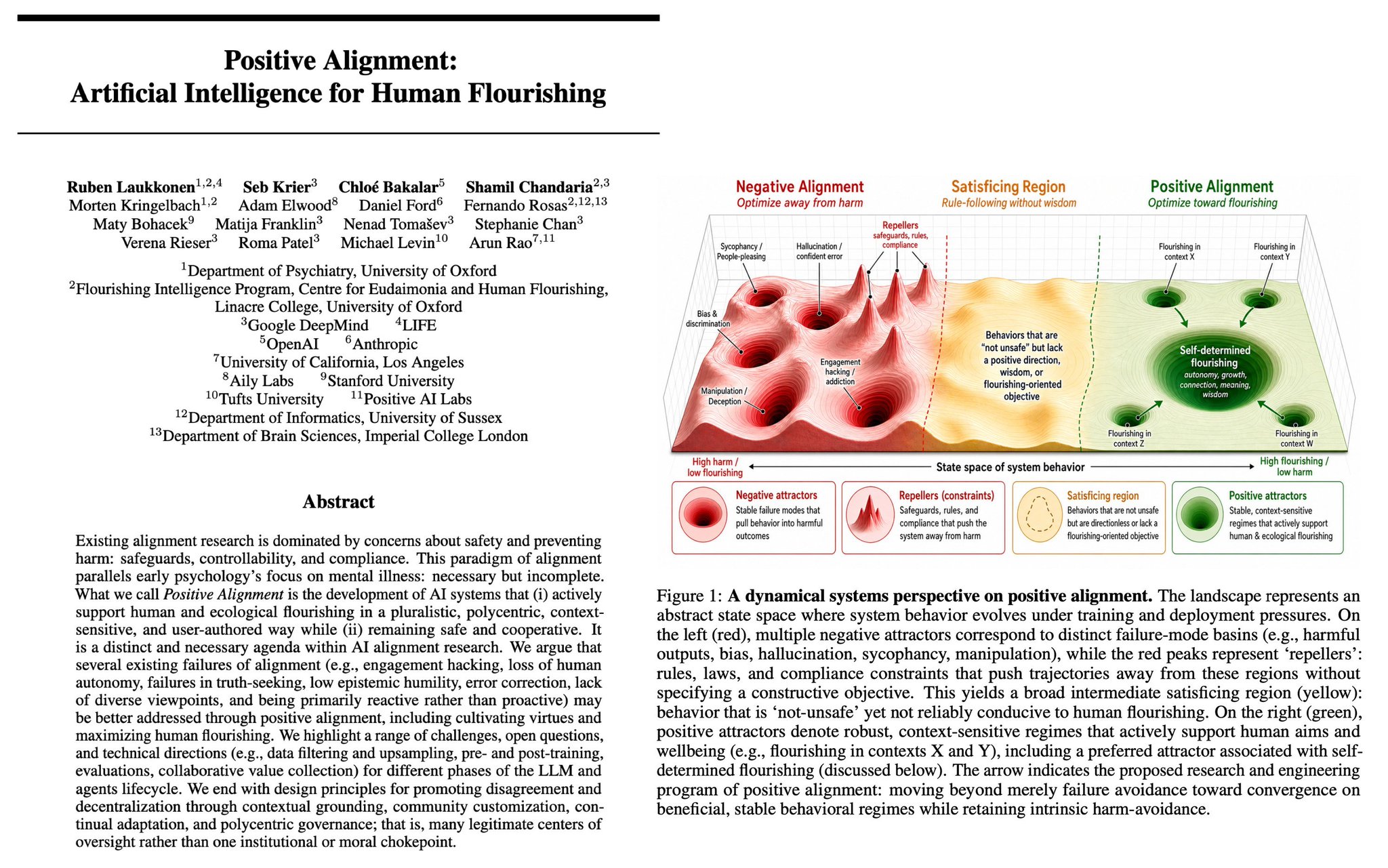
It is hard to overstate how disappointing I think this new paper from Oxford, OpenAI, Anthropic, and Google (et al) is. I can't take it seriously as academic work, just as propaganda. It also has some very bad scholarship and questionable adherence to research ethics. Having… pic.twitter.com/Z5fBx360ya— Cas (Stephen Casper) (@StephenLCasper) May 13, 2026
The Conversation: In-depth analysis, research, news and ideas from leading academics and researchers.
Curated by professional editors, The Conversation offers informed commentary and debate on the issues affecting our world. Plus a Plain English guide to the latest developments and discoveries from the university and research sector.
Open Science Network
Reclaim scientific discourse with federated digital spaces where researchers shape their own conversations, data, and collaborations

Reproducible research: methodological principles for transparent…
This Mooc proposes methodological principles for open and transparent science. It deals in a practical way with note-taking, computational documentation, replicability of analyses.

A new study suggests that scientists are leaving X (formerly known as Twitter) in significant numbers due to its declining professional value. Many now find Bluesky to be a more effective platform for networking, outreach, and staying updated on research.
36K votes, 1.1K comments. 34M subscribers in the science community. This community is a place to share and discuss new scientific research. Read…
FediForum | Growing the Open Social Web:<br>An Online Un-Workshop
Since the Twitter takeover by Elon Musk over three years ago, the Open Social Web has been adopted by an enthusiastic community. People world-wide are building and using open social platforms and open social protocols to better interact with others online.

A space to converse and connect.
An X/Twitter Spaces alternative for Bluesky and the open web. Creating good vibes in the friendly skies.

The Archivist Within – The Matrix is my Office
Twitter played a significant community role for me when I first started out in my career. Over the course of several years working in developer relations at Microsoft, focused on virtual and augmented reality, I developed a strong network of people who regularly engaged with my work (and I theirs) in a frequent and low-stakes manner. It was a (relatively) safe way to interact with people in an extended field, and I made several close friends on the platform whose work continues to influence me today.
Sharing Knowledge Openly: Author Gender, Race/Ethnicity, and Feminist Science
Open science is an increasingly important movement in contemporary social science. Many funders have begun to mandate open practices, newer journals like Socius are open access, and preprint servers have increased readership of paywalled articles. Feminist scholars have written about the values and pitfalls of open research. In this paper, we put those ideas in conversation with each other and empirical data on open-access publishing to develop a feminist framework for thinking about feminist knowledge, data, publishing, and audience. Using a survey of 19,462 social scientists, linked with their entire Web of Science publication history from 2000 to 2023 and all papers posted to SocArXiv, we replicate past work showing that articles by women are less likely to be some types of open access. We extend these findings to scholars of color and feminist scholarship, while also demonstrating a few surprising null results for all three groups.

Cataloguing and theorising open research practices in the arts, humanities and social sciences: Problematising and diversifying ‘Open Science’
Background Discourses of ‘Open Science’ have been criticised for privileging the quantitative and positivist methodologies of science, technology, engineering and mathematics (STEM) research at the expense of qualitative, interpretive, critical-theoretical, practice-based, and other forms of research more common in the arts, humanities and social sciences (AHSS). Methods In this article, which emerged from a work component of the MORPHSS (Materialising Open Research Practices in the Humanities and Social Sciences) project, we document the process, outcomes and practical implications of work to develop a catalogue of open research practices in these disciplines, which proceeded via a wide-ranging literature review followed by targeted desk research and a conceptual mapping exercise. Results Key findings include the fact that open research practices in AHSS are diverse, extending beyond the suite of practices emphasised within dominant accounts of Open Science. We identify among these practices a range of forms of openness including those focused on mobilising the involvement and expert knowledge of diverse participants and communities. Conclusions Presenting a typology of forms of openness in AHSS that is consistent with the epistemic logics of these disciplines, we conclude that openness in AHSS is highly situated and context-dependent, as well as resisting quantification and binary measurement. Drawing on these conclusions, we offer a series of recommendations for institutions, open research monitoring initiatives, funders, publishers, learned societies and researchers to enhance the inclusivity of their policy and practice around openness.

Your intellectual fly is open | The Observation Deck
Note: This was originally published as a LinkedIn post on November 11, 2025. I need to make a painful confession: somehow, LinkedIn has become an important social network to me. This isn’t necessarily due to LinkedIn’s sparkling competence, of course. To the contrary, LinkedIn is the Gerald Ford of social networks: the normal one that was left standing as the Richard Nixons and the Spiro Agnews of social media imploded around them. As with Gerald Ford, with LinkedIn we know that we’re getting something a bit clumsy and boring, but (as with post-Watergate America!), we’re also getting something that isn’t totally crooked — and that’s actually a bit of a relief.
Embracing the Atmosphere
@henryyuen.bsky.social I have heard you commented on the recent announcement by OpenAI on X, about one of the 10 problems very, very close to your own research. Would you be OK discussing it here as well?
A healthier internet isn’t just wishful thinking — our friends at the @prosocialdesign.bsky.social have a whole library of research-backed design solutions for building prosocial spaces online, organized by our Civic Signals research! 🧵

Prosocial Design Network
www.prosocialdesign.orgRemarkable how over a decade ago @michaelnielsen.bsky.social pointed the way towards solving long standing issues plaguing science to this day (issues that are all the more relevant in the age of AI mediated science)

Ronen Tamari
This is why @atproto.science is so relevant rn This compilation of essays indicates that scientists are most frustrated by insufficient “community tools and resources... Essential infrastructure for sharing, maintaining and building on existing work and data is also badly underdeveloped." >

