

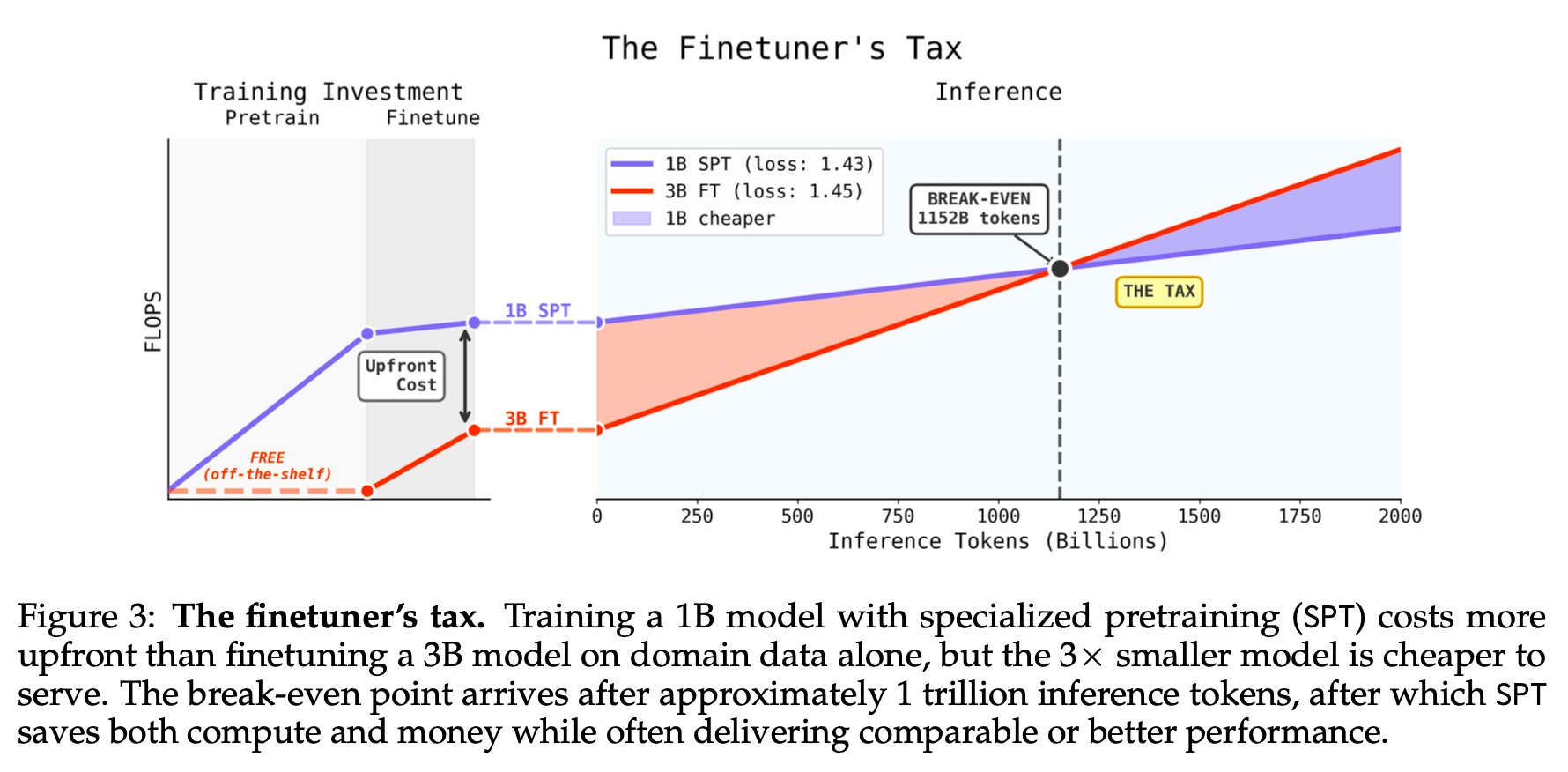
New Datology Research: We expose "The Finetuner's Fallacy"The standard approach to domain adaptation (pretrain on web data, finetune on your data) is leaving performance on the table.Mixing just 1-5% domain data into pretraining, then finetuning, produces a strictly better… pic.twitter.com/dXisEz96Vi— DatologyAI (@datologyai) March 18, 2026
I Built a Digital Brain Upload Using Karpathy's LLM Knowledge Base
Sakana AI on Twitter / X
We’re excited to introduce Doc-to-LoRA and Text-to-LoRA, two related research exploring how to make LLM customization faster and more accessible.https://t.co/wGKDNhBcJXBy training a Hypernetwork to generate LoRA adapters on the fly, these methods allow models to instantly… pic.twitter.com/gId3J6hgEr— Sakana AI (@SakanaAILabs) February 27, 2026
Fine-Tuning LLMs is a Huge Waste of Time
People think they can use Fine-Tune for Knowledge Injection. People are Wrong
Andrej Karpathy on Twitter / X
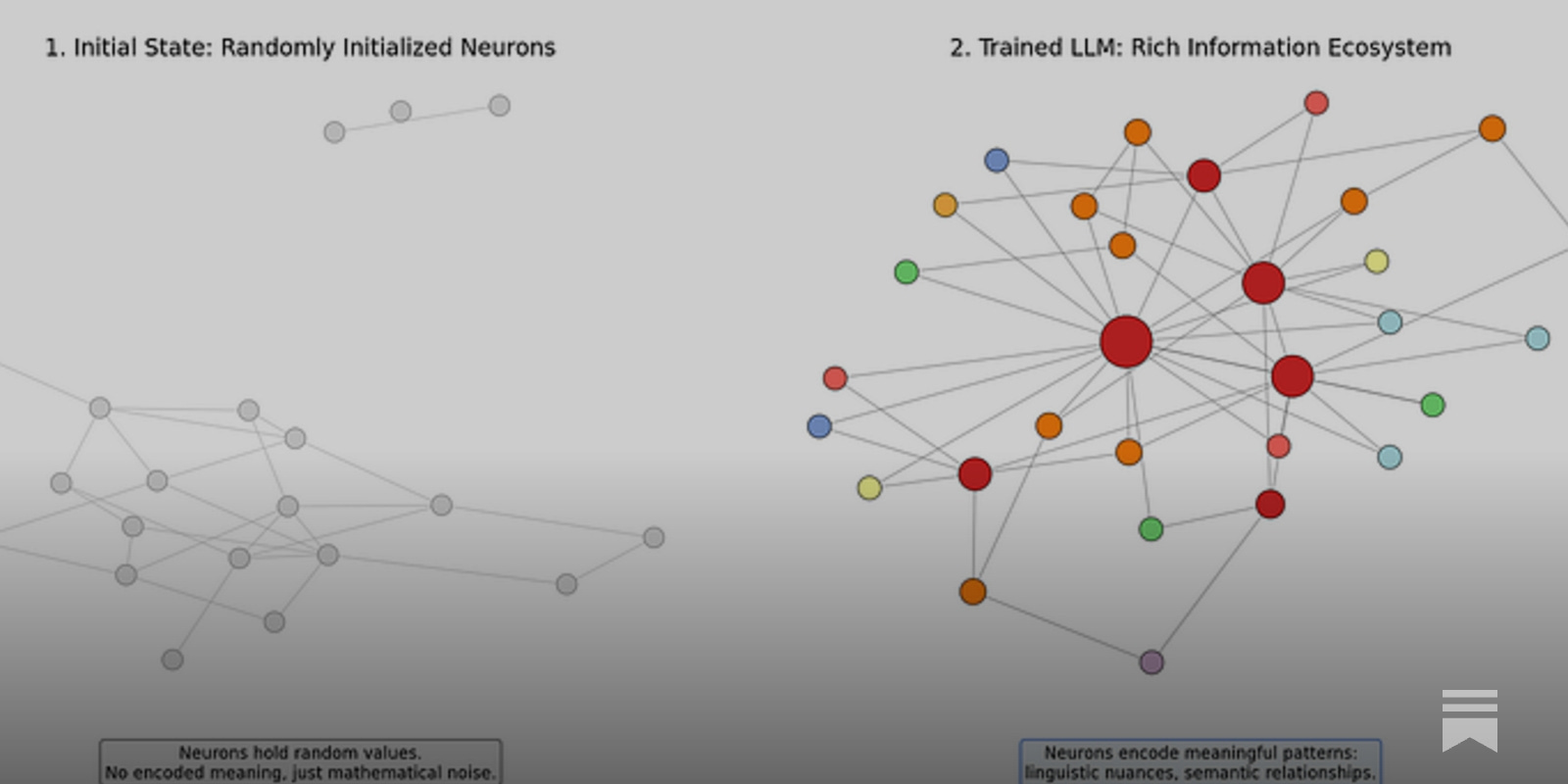
LLM Knowledge BasesSomething I'm finding very useful recently: using LLMs to build personal knowledge bases for various topics of research interest. In this way, a large fraction of my recent token throughput is going less into manipulating code, and more into manipulating…— Andrej Karpathy (@karpathy) April 2, 2026
LLMs Can Get "Brain Rot": A Pilot Study on Twitter/X
We propose and test the LLM Brain Rot Hypothesis: continual exposure to junk web text induces lasting cognitive decline in large language models (LLMs). To unveil junk effects, we designed a novel controlled experiment on real Twitter/X corpora, by constructing junk and reverse-controlled datasets via two orthogonal operationalizations: M1 (engagement degree) and M2 (semantic quality), with matched token scale and training operations across conditions. Compared to the control group, continual pre-training of 4 LLMs on the junk dataset causes non-trivial declines (Hedges' g>0.3) on reasoning, long-context understanding, safety, and inflating "dark traits" (e.g., psychopathy, narcissism). The gradual mixtures of junk and control datasets also yield dose-response cognition decay: for example, under M1, ARC-Challenge with Chain-of-Thought drops 72.1 -> 57.2 and RULER-CWE 83.7 -> 52.3 as junk ratio rises from 0% to 100%. Error forensics reveal several key insights. First, we identify thought-skipping as the primary lesion in reasoning: models increasingly truncate or skip chains. Second, partial but incomplete healing is observed: scaling instruction tuning and clean continual pre-training improve the declined cognition, yet cannot restore baseline capability, suggesting persistent representational drift rather than format mismatch. Finally, we discover that the popularity, a non-semantic metric, of a tweet is a better indicator of the Brain Rot effect than the length in M1. Together, the results provide significant, multi-perspective evidence that social effects of data could be a causal driver of LLM capability decay in continual pre-training, thereby motivating routine "cognitive health checks" for deployed and evolving LLMs.

LLMs Can Get "Brain Rot": A Pilot Study on Twitter/X
We propose and test the LLM Brain Rot Hypothesis: continual exposure to junk web text induces lasting cognitive decline in large language models (LLMs). To unveil junk effects, we designed a novel controlled experiment on real Twitter/X corpora, by constructing junk and reverse-controlled datasets via two orthogonal operationalizations: M1 (engagement degree) and M2 (semantic quality), with matched token scale and training operations across conditions. Compared to the control group, continual pre-training of 4 LLMs on the junk dataset causes non-trivial declines (Hedges' g>0.3) on reasoning, long-context understanding, safety, and inflating "dark traits" (e.g., psychopathy, narcissism). The gradual mixtures of junk and control datasets also yield dose-response cognition decay: for example, under M1, ARC-Challenge with Chain-of-Thought drops 72.1 -> 57.2 and RULER-CWE 83.7 -> 52.3 as junk ratio rises from 0% to 100%. Error forensics reveal several key insights. First, we identify thought-skipping as the primary lesion in reasoning: models increasingly truncate or skip chains. Second, partial but incomplete healing is observed: scaling instruction tuning and clean continual pre-training improve the declined cognition, yet cannot restore baseline capability, suggesting persistent representational drift rather than format mismatch. Finally, we discover that the popularity, a non-semantic metric, of a tweet is a better indicator of the Brain Rot effect than the length in M1. Together, the results provide significant, multi-perspective evidence that social effects of data could be a causal driver of LLM capability decay in continual pre-training, thereby motivating routine "cognitive health checks" for deployed and evolving LLMs.
LoRA Learns Less and Forgets Less
Low-Rank Adaptation (LoRA) is a widely-used parameter-efficient finetuning method for large language models. LoRA saves memory by training only low rank perturbations to selected weight matrices. In this work, we compare the performance of LoRA and full finetuning on two target domains, programming and mathematics. We consider both the instruction finetuning (approximately 100K prompt-response pairs) and continued pretraining (20B unstructured tokens) data regimes. Our results show that, in the standard low-rank settings, LoRA substantially underperforms full finetuning. Nevertheless, LoRA better maintains the base model's performance on tasks outside the target domain. We show that LoRA mitigates forgetting more than common regularization techniques such as weight decay and dropout; it also helps maintain more diverse generations. Finally, we show that full finetuning learns perturbations with a rank that is 10-100X greater than typical LoRA configurations, possibly explaining some of the reported gaps. We conclude by proposing best practices for finetuning with LoRA.
👋 Jan on Twitter / X
Introducing Jan-v1: 4B model for web search, an open-source alternative to Perplexity Pro.In our evals, Jan v1 delivers 91% SimpleQA accuracy, slightly outperforming Perplexity Pro while running fully locally.Use cases:- Web search- Deep ResearchBuilt on the new version… pic.twitter.com/YApIShOAHI— 👋 Jan (@jandotai) August 12, 2025

Twitter Is Still Throttling Competitors’ Links—Check for Yourself – The Markup
Loading links to Bluesky, Facebook, Instagram, and Substack takes far longer than to other sites. We built a tool so you can check any domain you like

SimpleQA Verified: A Reliable Factuality Benchmark to Measure Parametric Knowledge
We introduce SimpleQA Verified, a 1,000-prompt benchmark for evaluating Large Language Model (LLM) short-form factuality based on OpenAI's SimpleQA. It addresses critical limitations in OpenAI's benchmark, including noisy and incorrect labels, topical biases, and question redundancy. SimpleQA Verified was created through a rigorous multi-stage filtering process involving de-duplication, topic balancing, and source reconciliation to produce a more reliable and challenging evaluation set, alongside improvements in the autorater prompt. On this new benchmark, Gemini 2.5 Pro achieves a state-of-the-art F1-score of 55.6, outperforming other frontier models, including GPT-5. This work provides the research community with a higher-fidelity tool to track genuine progress in parametric model factuality and to mitigate hallucinations. The benchmark dataset, evaluation code, and leaderboard are available at: https://www.kaggle.com/benchmarks/deepmind/simpleqa-verified.
SimpleQA Verified: A Reliable Factuality Benchmark to Measure Parametric Knowledge
We introduce SimpleQA Verified, a 1,000-prompt benchmark for evaluating Large Language Model (LLM) short-form factuality based on OpenAI's SimpleQA. It addresses critical limitations in OpenAI's benchmark, including noisy and incorrect labels, topical biases, and question redundancy. SimpleQA Verified was created through a rigorous multi-stage filtering process involving de-duplication, topic balancing, and source reconciliation to produce a more reliable and challenging evaluation set, alongside improvements in the autorater prompt. On this new benchmark, Gemini 2.5 Pro achieves a state-of-the-art F1-score of 55.6, outperforming other frontier models, including GPT-5. This work provides the research community with a higher-fidelity tool to track genuine progress in parametric model factuality and to mitigate hallucinations. The benchmark dataset, evaluation code, and leaderboard are available at: https://www.kaggle.com/benchmarks/deepmind/simpleqa-verified.
Synthetic Pre-pretraining Survives Scale, but Not as a Grammatical Prior
Pre-pretraining (PPT) on synthetic non-natural language data improves token efficiency during language model pre-training (PT). Prior work attributes this gain to a grammatical prior, i.e., a structural inductive bias learned during PPT that transfers to natural language grammar. However, PPT has only been tested on models of at most 1B parameters and PT budgets below 2B tokens on predominantly web text. It is unknown whether PPT is effective at larger scales and under more realistic PT data mixtures that combine diverse sources (e.g., code and math). We therefore present a comprehensive study on PPT spanning five PPT tasks, four PT data mixtures, four parameter scales (500M to 7B), and PT budgets of up to 100B tokens. Our results demonstrate that the downstream performance and token efficiency gains of PPT persist at scale, e.g., saving at least 21B PT tokens at the 3B scale. However, in contrast to prior work, we find no consistent evidence that these gains stem from a grammatical prior. Downstream performance does not consistently align with grammatical acceptability across model sizes. Instead, we find that downstream gains arise from PPT tasks that improve long-range retrieval. Finally, PPT performance gains are robust to how PT data mixtures are composed and diminish only when web text is absent. Overall, PPT is a low-cost addition to PT, and future PPT task design should target long-range retrieval rather than natural language grammar.
DataRater: Meta-Learned Dataset Curation
The quality of foundation models depends heavily on their training data. Consequently, great efforts have been put into dataset curation. Yet most approaches rely on manual tuning of...
btw, these new domain endings should be of much greater interest to the @bsky.app (atproto) community than your average internet jane/joe because of the incoming flood of expressive @handle.tld options

Pete Millspaugh
ICANN's gTLD application window closed last night and bigger-than-2012 (last round) stuff is already happening lfg.link applied for 316, more than anyone in 2012 (it'll cost $71 million in application fees alone!) some interesting strings in there...going to thread until I run out of steam
Th relationship between domains and lexicons seems like a short-term win, but it remains unclear for me if it’s good in the long-term.

atproto.brussels 🇧🇪
Loosely related question I have about lexicons being tied to a domain. Domains are not free. So, say your lexicon becomes the industry standard and thousands use it across many apps. It seems fragile to me that the domain belongs to an individual and not a public entity. Is there a solution to that?
We are excited to introduce Doc-to-LoRA and Text-to-LoRA, two related papers exploring how to make LLM customization faster. By training a hypernetwork to generate LoRA adapters on the fly, models instantly internalize new info. Blog: pub.sakana.ai/doc-to-lora/ Doc-to-LoRA: arxiv.org/abs/2602.15902

