

Quick reminder of what's ok vs not ok with harnesses used for playing ARC-AGI-3:1. Not okay: harnesses that were custom-made to solve the benchmark or that contain knowledge about the benchmark format / contents.2. Fine: general-purpose API settings that were not developed…— François Chollet (@fchollet) July 30, 2026
Alex MacCaw on Twitter / X
I suspect generalized reasoning was solved just a few weeks ago and it flew completely under the radar.HRM, a new arch, reportedly has SOTA results on ARC-AGI 1 & 2 benchmarks with only 27 million parameters and ~1k training examples.— Alex MacCaw (@maccaw) July 25, 2025
ARC Prize on Twitter / X
OpenAI’s internal testing shows that provider-managed conversation state preserves greater continuity across turns and improves performance on long-horizon tasks like ARC-AGI-3. This is a real and useful result. We’re encouraged to see ARC used to identify useful harness design.… https://t.co/6Xk2Op0Sls— ARC Prize (@arcprize) July 30, 2026
How enabling two settings tripled our scores on the ARC-AGI-3 benchmark
How two API settings improved GPT-5.6 performance on ARC-AGI-3, boosting scores and efficiency by retaining reasoning and enabling compaction.
François Chollet on Twitter / X
GPT-6 Astra represents a step-function change in model capability for interactive reasoning problems. It scores 66% on ARC-AGI-3 using our standard harness, and nearly 100% with a continuous conversation harness and custom compaction, at a cost of roughly $360 per game.In fact,…— François Chollet (@fchollet) September 3, 2026
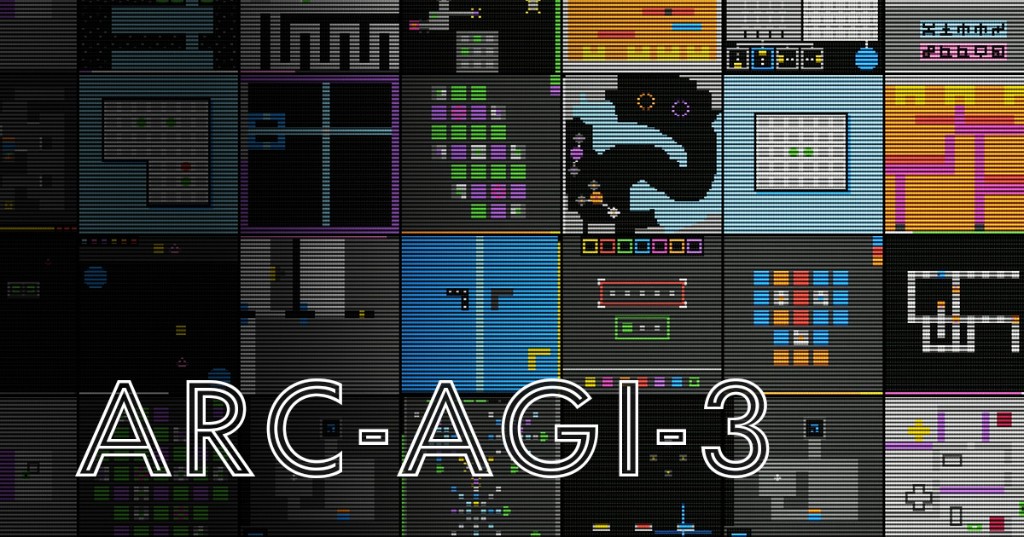
ARC-AGI-3
ARC-AGI-3 is the first interactive reasoning benchmark for AI agents—play as humans and build agents that learn in novel environments.
Why I don’t think AGI is right around the corner
Continual learning is a huge bottleneck
BetterBench: Assessing AI Benchmarks, Uncovering Issues, and Establishing Best Practices
AI models are increasingly prevalent in high-stakes environments, necessitating thorough assessment of their capabilities and risks. Benchmarks are popular for measuring these attributes and for comparing model performance, tracking progress, and identifying weaknesses in foundation and non-foundation models. They can inform model selection for downstream tasks and influence policy initiatives. However, not all benchmarks are the same: their quality depends on their design and usability. In this paper, we develop an assessment framework considering 46 best practices across an AI benchmark's lifecycle and evaluate 24 AI benchmarks against it. We find that there exist large quality differences and that commonly used benchmarks suffer from significant issues. We further find that most benchmarks do not report statistical significance of their results nor allow for their results to be easily replicated. To support benchmark developers in aligning with best practices, we provide a checklist for minimum quality assurance based on our assessment. We also develop a living repository of benchmark assessments to support benchmark comparability, accessible at betterbench.stanford.edu.

Alex Cheema on Twitter / X
This is why we need open benchmarks for local AI.Otherwise it turns into tribalism and name calling.We will be publishing the largest database of open benchmarks for local AI, tested on 1,000+ real hardware setups. Every device, every interconnect, different… https://t.co/ZsU3PCdSsZ— Alex Cheema (@alexocheema) March 9, 2026
Aperture: The fastest path to safer, easier AI deployment
Aperture by Tailscale reduces AI key sprawl, tracks usage, and upgrades security, visibility, and ease of use for agents.
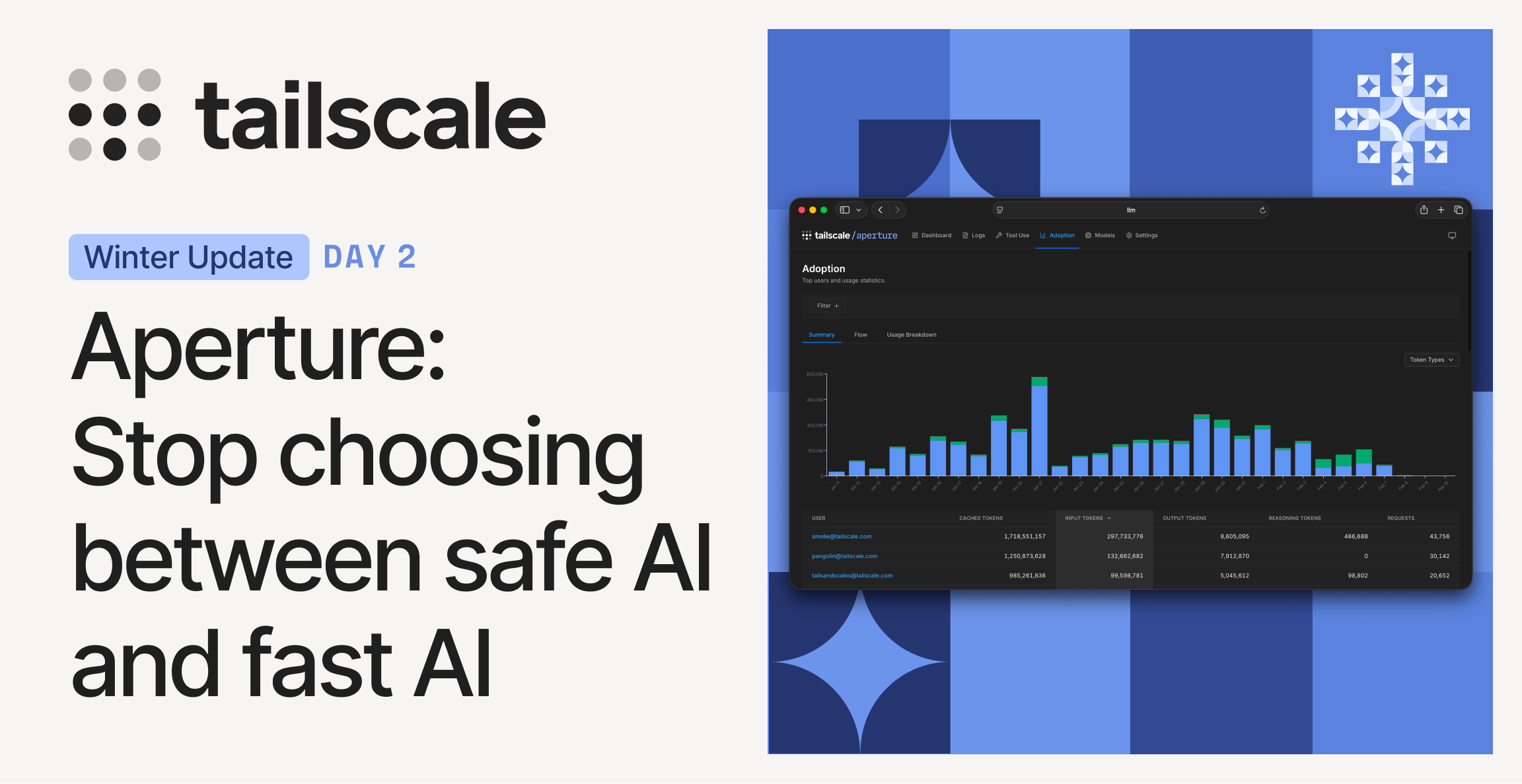
Aperture: The fastest path to safer, easier AI deployment
Aperture by Tailscale reduces AI key sprawl, tracks usage, and upgrades security, visibility, and ease of use for agents.
AI Tools Accelerates Coding, but Not Overall Software Delivery, GitLab Research Finds
GitLab's 2026 AI Accountability Report highlights an AI Paradox: although 78% of developers say they code faster, overall software delivery has not accelerated due to downstream testing and review bottlenecks and new challenges for enterprise governance and traceability.

Built to benefit everyone: our plan
A vision for the future of AI, focusing on access, safety, and shared prosperity as OpenAI works to ensure AGI benefits everyone.

DeepSeek Harness v0.1 the idea is everything is a plugin — models, tools, sessions, skills, sandboxes, loops, … github.com/deepseek-ai/deepseek-harness

GitHub - deepseek-ai/deepseek-harness: DeepSeek Harness: Everything is a Plugin.
github.com
