

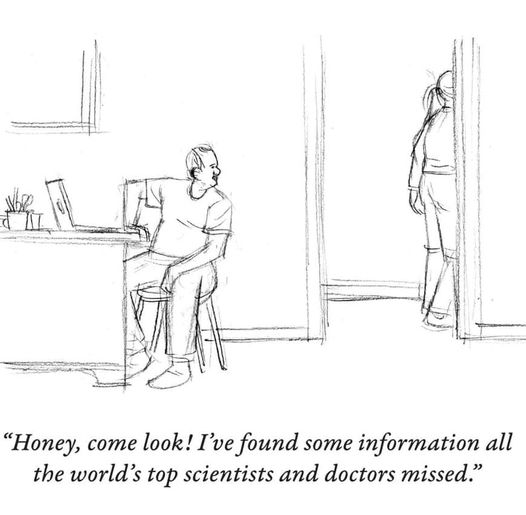
It's hard to find information that all the world's top scientists and doctors have missed.But it's not that hard, if you're intelligent, thoughtful, and diligent, to find information that the medical system has not yet caught up to—information that is not yet incorporated into… pic.twitter.com/HrgGzCUdX2— Jason Crawford (@jasoncrawford) September 22, 2024
Jason Shepherd on Twitter / X
I have quite a lot of thoughts on this..that won't fit in a tweet. Bottomline is that there are issues scientists in the US would love to improve - faster review, less grant writing, more stability and freedom to do risky science. The folks celebrating this doc are mostly../1 https://t.co/xlPAH9XYNC— Jason Shepherd (@JasonSynaptic) July 23, 2026
Jake Wintermute 🧬/acc on Twitter / X
I’ve expected this for a while but it still hurts. The “Life Sciences Verification Program.” It breaks my heart to know that biological knowledge will be locked down and gatekept like this. I want to take a moment to mourn, because I believe this marks an end for open science as… https://t.co/l5WLjOuEdk— Jake Wintermute 🧬/acc (@SynBio1) September 17, 2026
Jude Gomila on Twitter / X
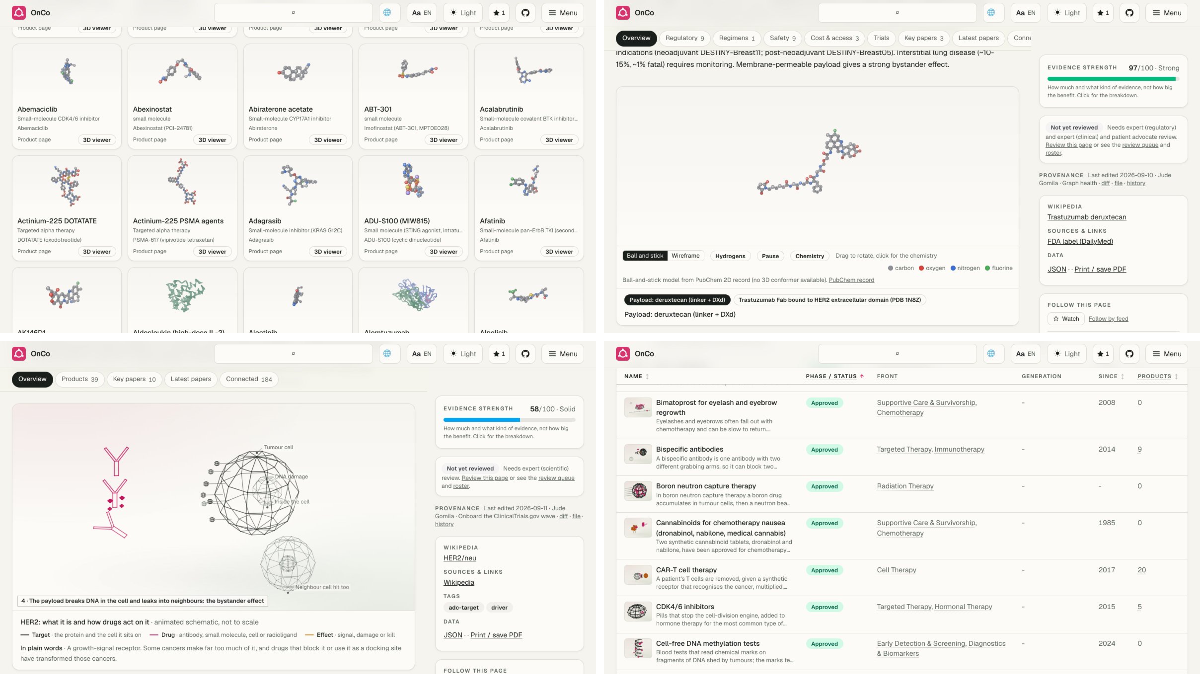
I've attempted to map everything in oncology in a public website and open source repo for all. The site is trying to get all cancers, products, technologies, bottlenecks, people, startup opportunities with 1000+ ideas for upgrading the field. If you have a loved one with… pic.twitter.com/ff5Bdss5BT— Jude Gomila (@judegomila) September 16, 2026
How To Prompt on Twitter / X
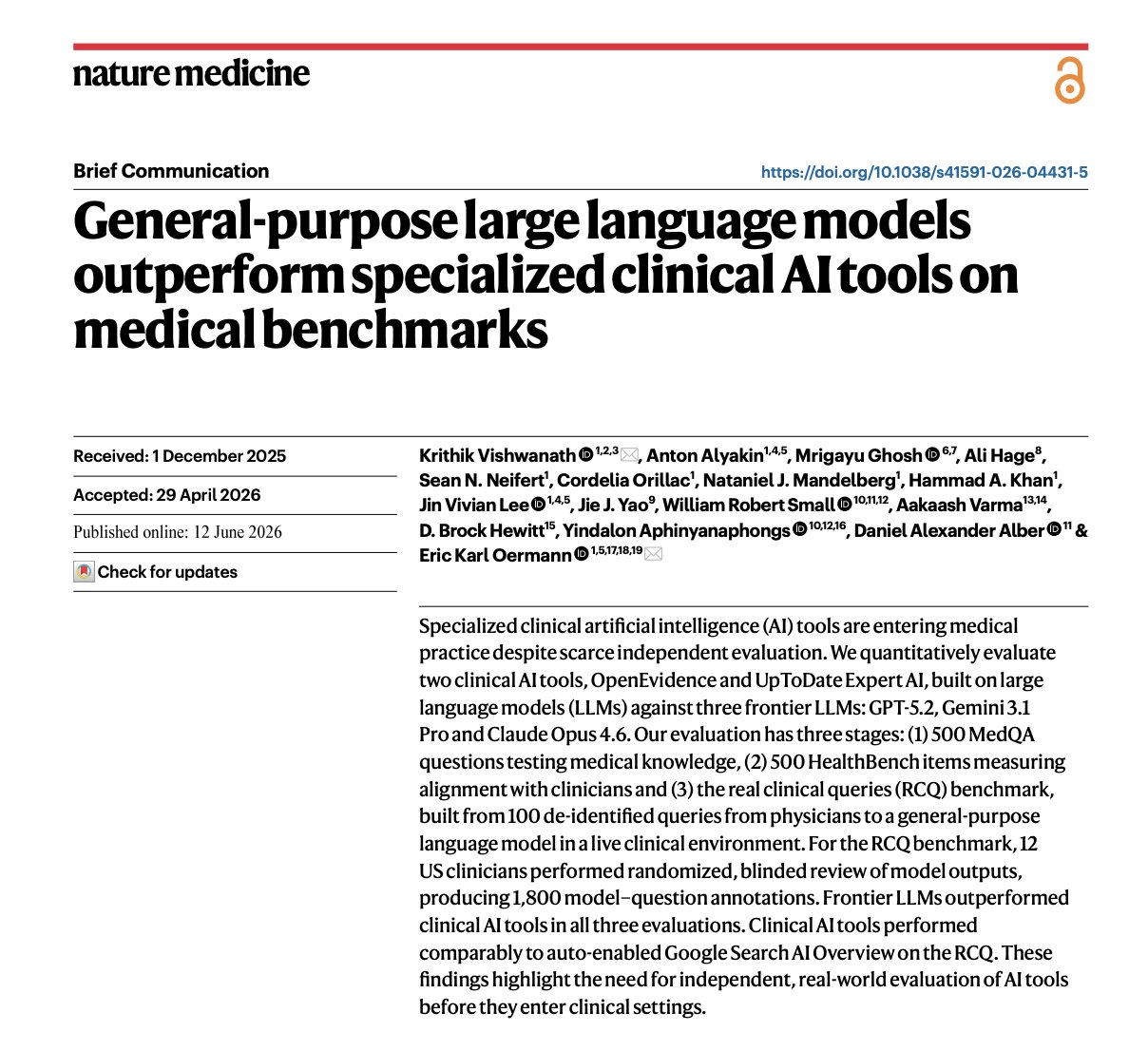
scientist tested a 3.5 billion dollar medical AI against regular chatGPT and it lost on every single one.they just published a paper in nature medicine, and the results are actually mindblowing.they took specialized clinical ai tools and tested them against general-purpose… pic.twitter.com/P7ePLunrDj— How To Prompt (@HowToPrompt__) July 6, 2026
Patrick Collison on Twitter / X
Observing some people close to me with chronic health conditions, it's striking how useful Reddit frequently ends up being. I think a core reason is because trials aren’t run for a lot of things, and Reddit provides a kind of emergent intelligence that sits between that which any… pic.twitter.com/Eto23uQMDb— Patrick Collison (@patrickc) September 14, 2025

We live in a golden age of biology. So why are people still dying from disease? Because discovery and development move slower than they should. Today, we’re partnering with Incyte to change… | Samuel G. Rodriques | 491 comments
We live in a golden age of biology. So why are people still dying from disease? Because discovery and development move slower than they should. Today, we’re partnering with Incyte to change that. Kosmos is now the first agent that can compress months of drug development into weeks, from the earliest stages of scientific discovery through to FDA approval. Incyte will be the first company to deploy it across their pipeline. Work that used to take a team of scientists months now happens in weeks. Patients can't wait, and neither can we. | 491 comments on LinkedIn
Opinion | Educate Your Immune System (Published 2016)
Our bodies are confused by this 21st-century world.

Ramez Naam on Twitter / X
There was a site years ago called CureTogether where patients could share information in a structured way on their disease, regimen, and progress, working towards a sort of bottoms-up clinical trial. 23andMe acquired them and it seems to be mostly dead.— Ramez Naam (@ramez) September 14, 2025
Fact Sheet 3: ME/CFS: Information for Medical Professionals
Fact Sheet 3: ME/CFS: Information for Medical Professionals Published December 2025 Link to pdf: ME/CFS: Information for Medical Professionals.pdf Discussion thread: Fact sheet #3: Information...
The Real Story Of How I Sold Two Startups, The Chaos Afterwards, And What’s Next – The Health Care Blog
Today we’re starting a series of more personal stories, looking at what makes interesting people in health care tick. Alex Carmichael is a rare multiple time CEO in health technology, and she has a very interesting tale to tell–Matthew Holt

How and When to Involve Crowds in Scientific Research | James Evans
The lone academic in a basement lab is an endangered species. Years ago I asked Paul Ginsparg, who founded arXiv, what features his machine-learning filter used to flag speculative submissions. The top three: single-authored, submitted on a weekend, and heavy citation of Newton and Einstein. Science is a contact sport now. Marion Poetz and Henry Sauermann's How and When to Involve Crowds in Scientific Research (https://lnkd.in/g5pwVbfD) is the field manual. What crowds can do: Volume. Zooniverse mobilizes 2.7 million people to classify galaxies and court records. Galaxy Zoo's co-founder hand-classified 50,000 galaxies in one week before concluding that isolation would break him. Reach. NASA spent years failing to predict solar flares, then broadcast the problem. The winner was a semi-retired radio engineer in rural New Hampshire who swapped satellite data for radio data. Experience. Patients and caregivers asked to generate research questions produced 826 that scientists had missed, including the link between aging and wound healing. Bench-to-bedside runs backward. One caution the book underplays: an open call is not an inclusive one. Participation costs in time, money, and access screen people out. Self-selection can narrow the very diversity that makes crowds thrive. As AI floods the labor supply of routine, homogeneous cognition, human crowds become more valuable, not less. Machines process. People notice what nobody thought to ask. Check out my review @ https://lnkd.in/gkzvWrRC and the book @ https://lnkd.in/g5pwVbfD!

Elisabeth Bik on Twitter / X
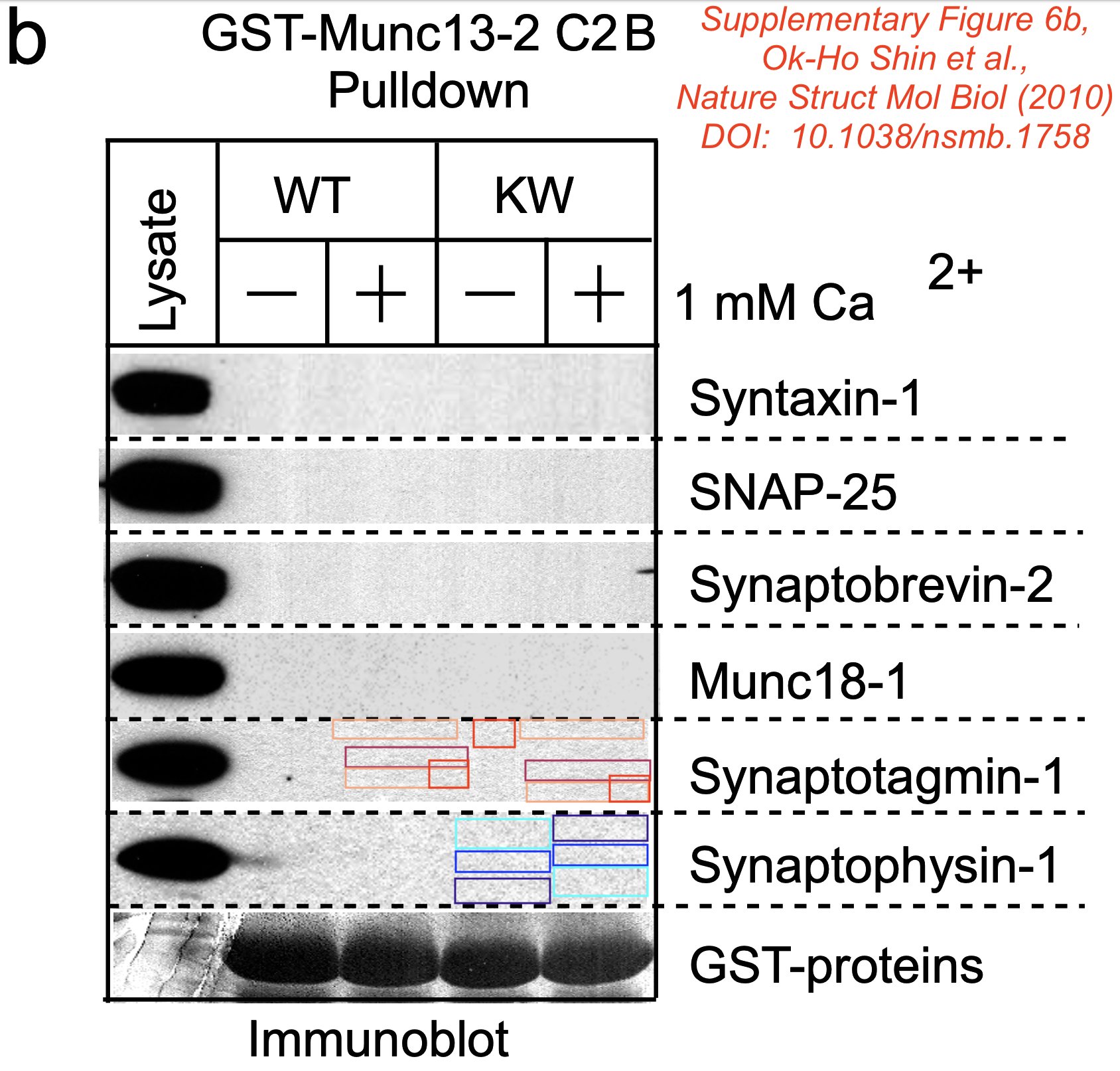
There are clearly some problems in Figure S6b, but dr. S. is "deeply skeptical" and claims that these concerns are "unfounded".Look, you might have won the Nobel prize, but that does not mean you are correct here. I stand by my concerns. https://t.co/l47YC65nZp pic.twitter.com/Gy6xqomXvr— Elisabeth Bik (@MicrobiomDigest) June 16, 2024
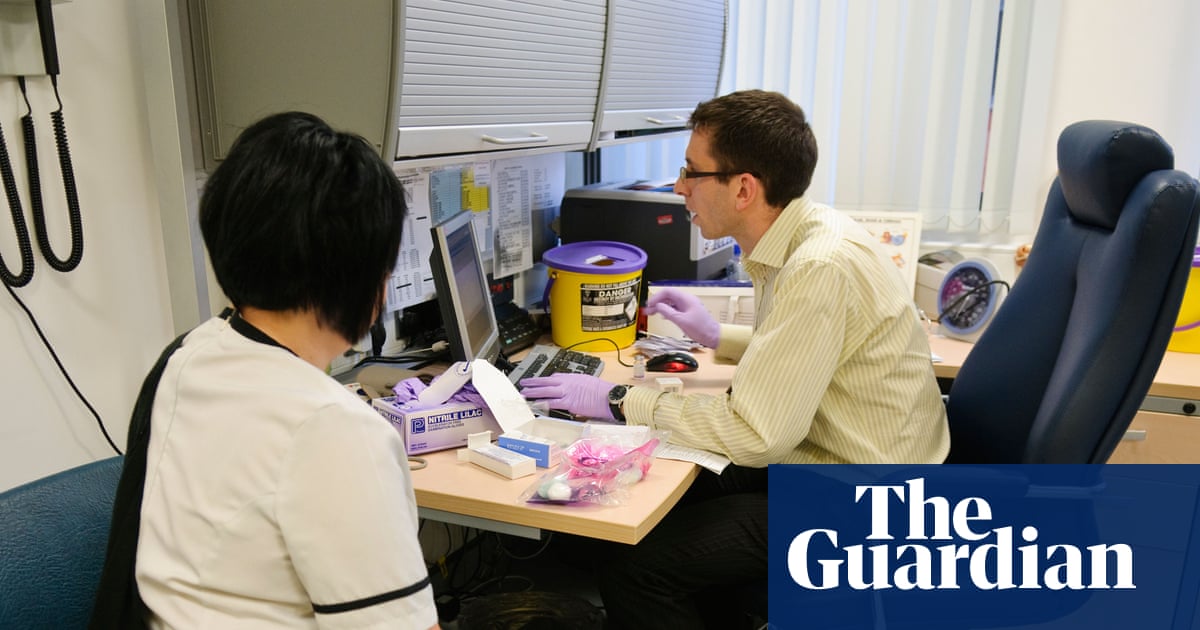
Doctors’ AI scribes get names of drugs and diagnoses wrong, NHS watchdog warns
Exclusive: Patients identify errors in consultation transcripts that are missed by GPs, Healthwatch England finds
BURKOV on Twitter / X
This looks like the collapse of peer-reviewed science. pic.twitter.com/xItwztcWuM— BURKOV (@burkov) September 19, 2026

Preparing Physicians for the Clinical Algorithm Era
The U.S. government recently took steps to ensure that clinical decision support algorithms are safe for clinical use. The next and larger step will be teaching physicians how to use the algorithms ...
